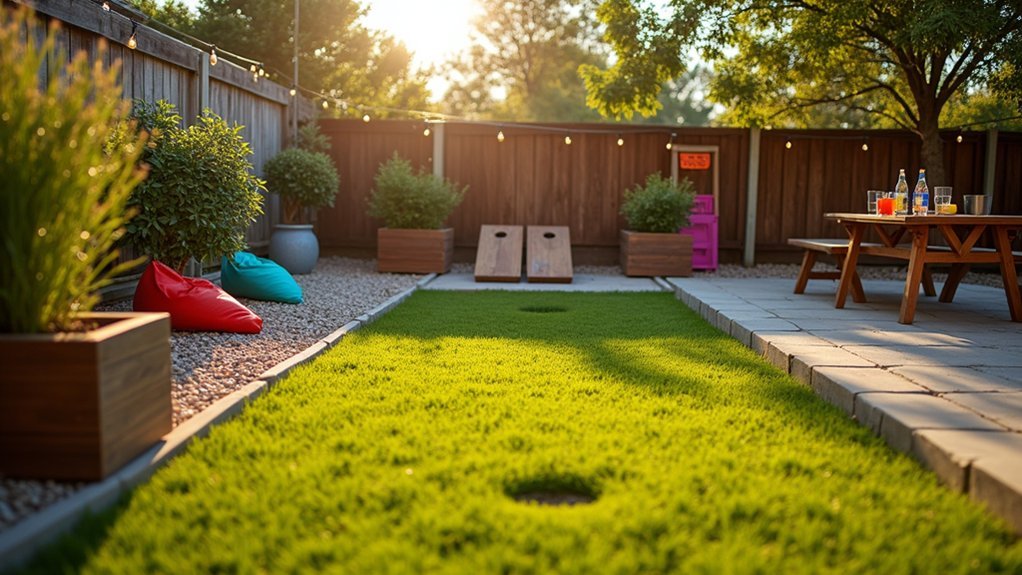
You’ll want to start by measuring your yard’s exact dimensions and noting any obstacles like trees or garden beds. Look for collapsible options like ladder toss or ring toss that pack flat and need minimal throwing distance. Don’t overlook vertical solutions—wall-mounted basketball hoops and fence-attached games free up ground space instantly. Choose weather-resistant materials like powder-coated steel and UV-resistant finishes to protect your investment. Below, you’ll discover even more strategies for maximizing your compact outdoor area.
Measuring Your Available Space Before Buying Games
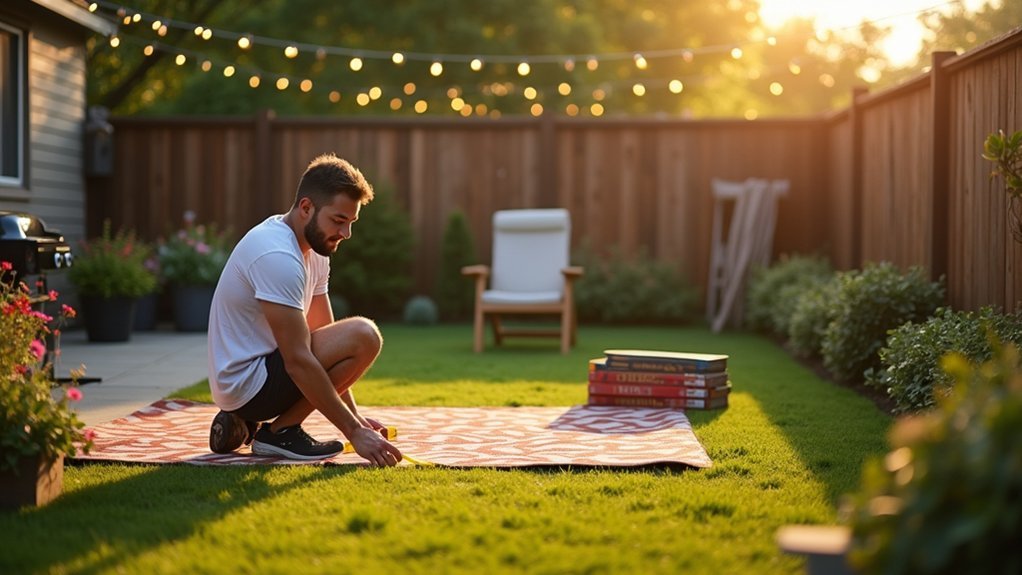
Before you start browsing online catalogs or heading to the sporting goods store, grab a tape measure and head outside. Map out the exact dimensions of your usable play area, noting any obstacles like trees, garden beds, or patio furniture. Don’t forget to account for buffer zones—most games need extra clearance for player movement and safety.
Record both length and width measurements, then sketch a simple diagram. Mark permanent fixtures and high-traffic pathways through your yard. Consider overhead clearance too, especially if you’re eyeing games involving tossed objects.
Check your measurements against product specifications before purchasing. A ladder toss game needs different spacing than bocce ball. Taking fifteen minutes to measure now saves you from returning equipment that simply won’t fit your space.
Lightweight and Portable Game Options for Compact Yards
When space runs tight, you’ll want to zero in on games that pack away easily and don’t demand a sprawling footprint. Portable games transform compact yards into entertainment hubs without permanent installations or heavy equipment cluttering your limited outdoor area.
Small spaces call for smart solutions—portable games deliver big fun without demanding permanent real estate in your yard.
Consider these lightweight options that fit tight spaces:
- Ladder toss – Collapses flat for storage and needs minimal throwing distance
- Ring toss – Requires only a few square feet of playing area
- Bocce ball sets – Adapts to any yard shape or size
- Kan Jam – Two compact discs and lightweight goals pack into a small bag
- Spikeball – Uses a small circular net that sets up in seconds
You’ll maximize fun while keeping your yard functional for other activities.
Vertical Games That Maximize Limited Ground Space
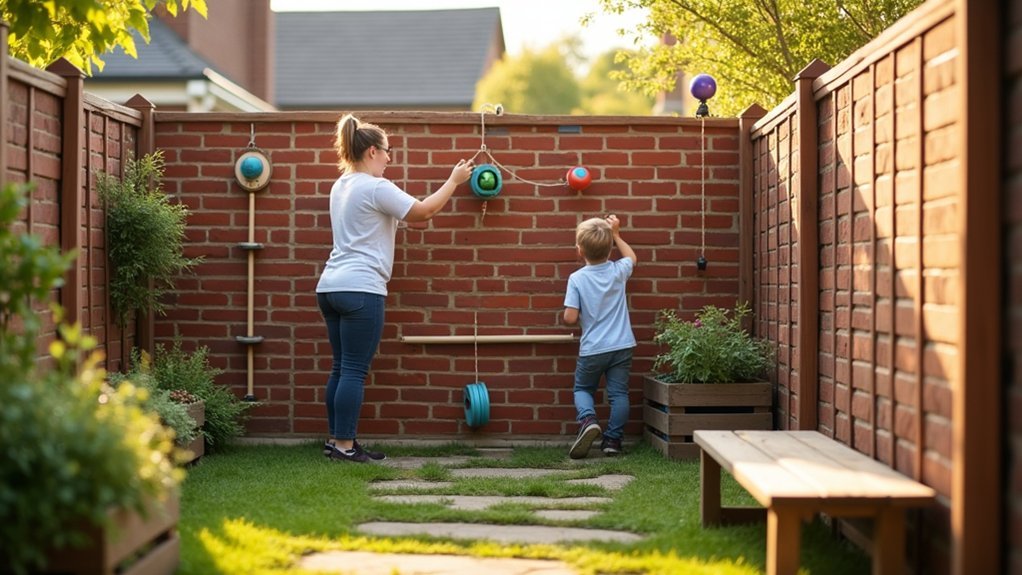
For yards where every square foot counts, vertical games offer a smart solution by directing play upward rather than outward. Wall-mounted basketball hoops, ladder toss sets, and ring toss games take advantage of fence lines and vertical surfaces you’re already not using.
Consider installing a dart board on an exterior wall or setting up a bean bag toss tower that stacks targets vertically. These options keep your lawn clear for other activities while still providing entertainment.
When selecting vertical games, measure your available wall and fence space first. You’ll want to make certain proper clearance above and around the playing area. Look for games with adjustable heights so players of all ages can participate. Magnetic or velcro versions work well for families with young children.
Multi-Purpose Equipment for Maximum Entertainment Value
Since small backyards demand smart choices, you’ll get the most value from equipment that serves multiple purposes. A convertible game table that switches between air hockey, ping pong, and pool gives you three activities in one footprint. Look for sets that stack or fold when not in use.
Smart equipment choices transform tiny yards into entertainment hubs—one versatile piece beats three single-purpose items every time.
Consider these versatile options:
- Ladder toss sets that double as ring toss games
- Adjustable basketball hoops with attachable soccer goals
- Modular balance beams that reconfigure into obstacle courses
- Reversible game boards featuring checkers, chess, and backgammon
- Inflatable pools that convert to ball pits or sensory play areas
You’ll maximize entertainment without cluttering your space. Prioritize equipment with quick setup times and weather-resistant materials to extend usability across seasons.
Age-Appropriate Selections for Family-Friendly Fun
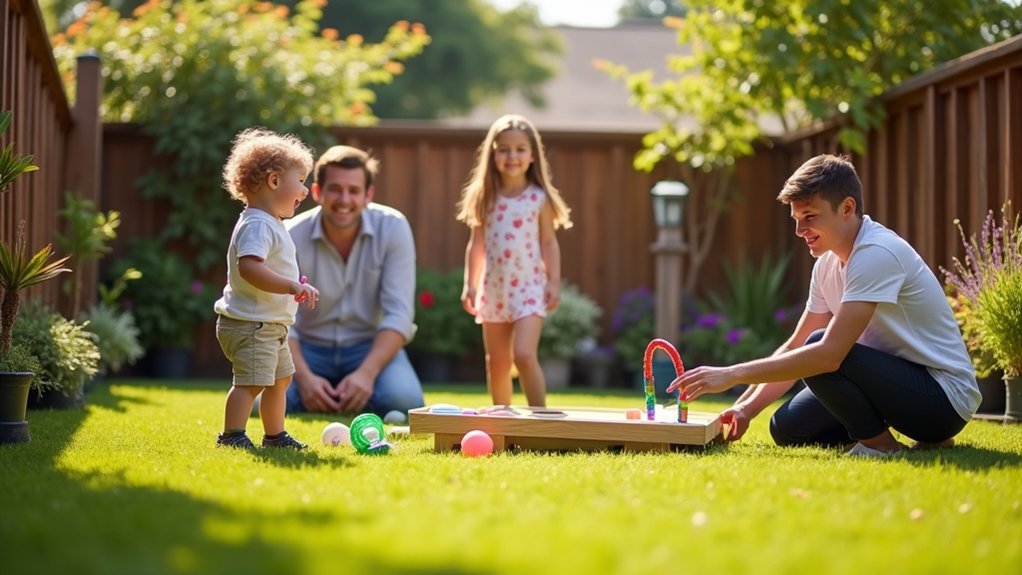
Every family member deserves games they can actually enjoy, which means you’ll want options spanning different skill levels and physical abilities.
Toddlers thrive with oversized bean bag tosses and bubble stations, while elementary-aged kids gravitate toward ladder toss and ring games.
Teenagers and adults prefer competitive options like spikeball or horseshoes.
Consider games with adjustable difficulty settings. Cornhole works brilliantly because you can move boards closer for young players or add scoring variations for experienced competitors.
Croquet accommodates mixed ages since everyone plays the same course at their own pace.
Don’t overlook safety considerations. Avoid games with small pieces around toddlers and choose lightweight equipment that won’t cause injury if thrown.
Soft foam versions of classic games offer worry-free play for households with children under five.
Storage Solutions for Small Backyard Game Collections
Once you’ve gathered the perfect mix of age-appropriate games, you’ll need a practical plan for keeping everything organized and protected.
Proper storage extends the life of your equipment and keeps your small backyard clutter-free.
Consider these effective storage solutions:
- Weatherproof deck boxes – Store multiple games while doubling as outdoor seating
- Wall-mounted hooks and racks – Utilize vertical space for items like horseshoes and ring toss sets
- Mesh bags with drawstrings – Keep small pieces together and allow wet items to dry
- Rolling carts – Transport games easily between garage and yard
- Labeled bins – Sort games by type or age group for quick access
Choose containers that resist moisture and UV damage.
Position storage near your play area for convenient setup and cleanup.
Budget Considerations When Shopping for Yard Games
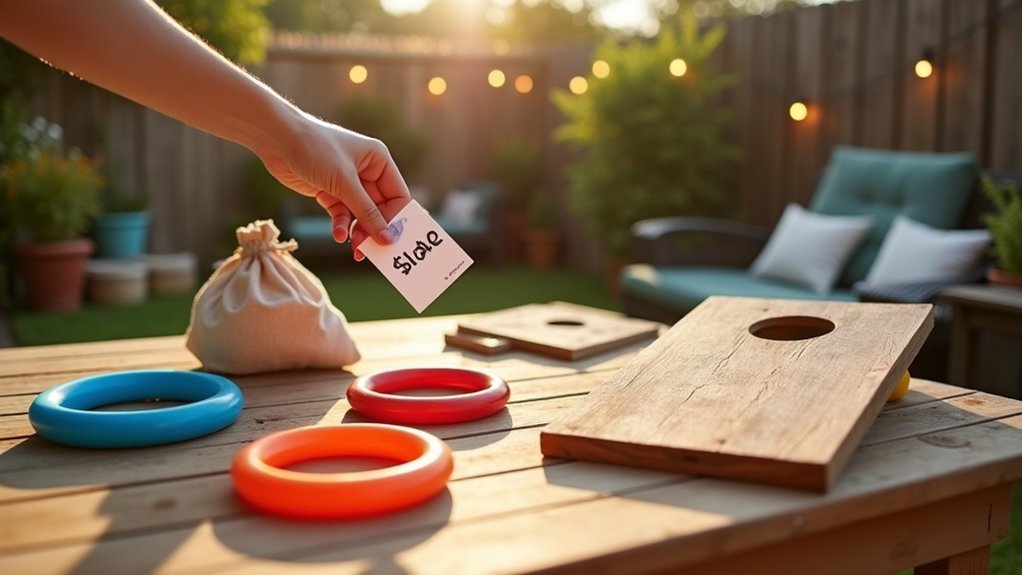
Setting aside a realistic budget before you start shopping helps you avoid overspending while still getting quality games that’ll last multiple seasons.
Entry-level yard games typically cost between $20 and $50, while premium sets range from $75 to $150 or more.
Consider cost-per-use when evaluating options. A $100 bocce set you’ll play weekly offers better value than a $30 set that breaks after a month.
Look for durable materials like solid wood, powder-coated steel, or weather-resistant resin.
Watch for seasonal sales, especially in late summer when retailers clear inventory. You can also find excellent deals on lightly used games through local marketplaces.
Don’t forget to factor in accessory costs like carrying cases, replacement parts, and storage solutions when calculating your total investment.
Weather-Resistant Materials Built for Outdoor Durability
Outdoor games take a beating from sun, rain, and humidity, so choosing the right materials determines whether your investment survives one season or ten. You’ll want to examine product specifications carefully before purchasing.
Look for these weather-resistant materials when shopping:
- Solid hardwoods like teak, cedar, or bamboo that resist rot and warping
- Marine-grade polymer for plastic components that won’t crack or fade
- Powder-coated steel hardware that prevents rust and corrosion
- UV-resistant finishes protecting against sun bleaching and deterioration
- Waterproof storage bags keeping game pieces dry between uses
Don’t assume higher prices guarantee durability. Check reviews from buyers in similar climates to yours. Store games properly when not in use, and you’ll extend their lifespan markedly regardless of material quality.
Safety Features to Look for in Confined Play Areas
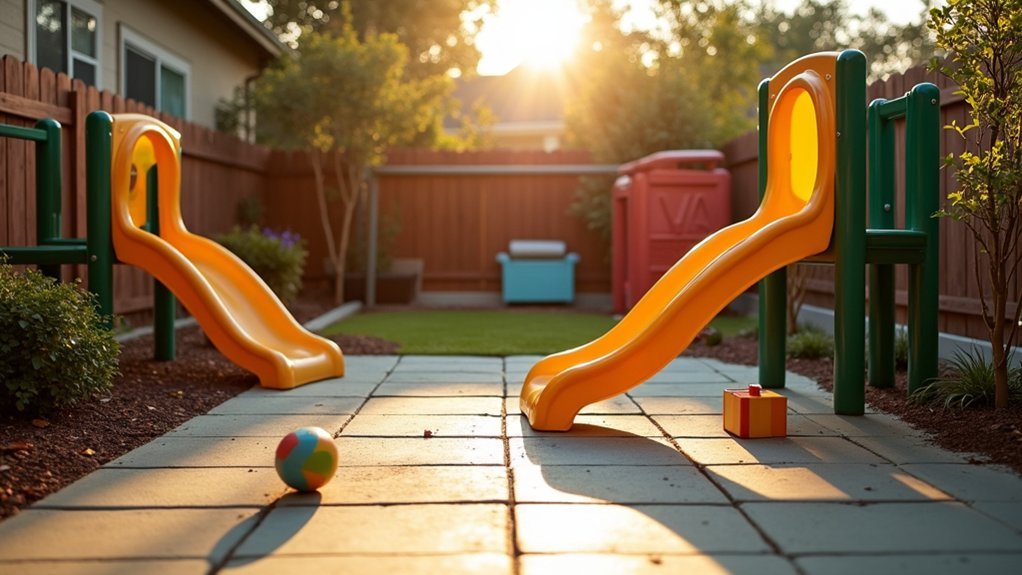
While durable materials protect your investment, safety considerations safeguard your family—especially when games occupy tight spaces where players have limited room to move.
Look for rounded edges and corners on all equipment. Sharp points become dangerous when players stumble in confined areas. Choose games with stable bases that won’t tip during enthusiastic play, and avoid top-heavy designs that could fall onto children.
Check for pinch points where fingers might get caught, particularly on folding mechanisms and hinges. Secure anchoring systems prevent equipment from shifting during use.
You’ll want soft landing zones around active games. Consider foam padding or rubber mats beneath climbing structures. Non-slip surfaces reduce fall risks on platforms and steps.
Finally, verify age-appropriate weight limits and make certain all hardware remains covered and protected.
Frequently Asked Questions
Can Small Backyard Games Increase My Property Value for Resale?
You won’t see a direct property value increase from backyard games themselves. However, you’ll attract more buyers by showcasing a functional outdoor entertainment space that helps families envision enjoying the yard together.
How Do I Handle Noise Complaints From Neighbors About Backyard Games?
You should set reasonable playtime hours, choose quieter games, and talk openly with neighbors about your schedule. Consider adding sound-absorbing landscaping like hedges, and invite neighbors over to build goodwill.
Do I Need Permits or HOA Approval to Install Backyard Games?
You should check your local zoning laws and HOA guidelines before installing permanent structures. Many areas require permits for fixed installations, while portable games typically don’t need approval. Contact your HOA board directly for specific requirements.
What Time of Year Offers the Best Deals on Backyard Games?
You’ll find the best deals on backyard games during end-of-summer sales (August-September) and Black Friday. Retailers discount outdoor items heavily when clearing seasonal inventory, so you can save 30-50% off regular prices.
How Often Should I Rotate Games to Keep Kids Interested?
You’ll want to rotate backyard games every two to three weeks to maintain excitement. Watch your kids’ engagement levels—when interest drops, swap in something different. Seasonal rotations also work well for variety.