You can transform any open space into a cinema for 50 to 200 people with three proven setups. Inflatable screens range from 12 to 40 feet wide and set up in about 15 minutes. For a permanent solution, you’ll want stadium-style seating with tiered platforms rising 12 to 18 inches per row. Portable systems work best for community events, featuring collapsible screens and wheeled road cases. Each setup has specific projector and sound requirements you’ll want to explore below.
Our Recommended Products on Amazon


As an Amazon Associate we earn from qualifying purchases.
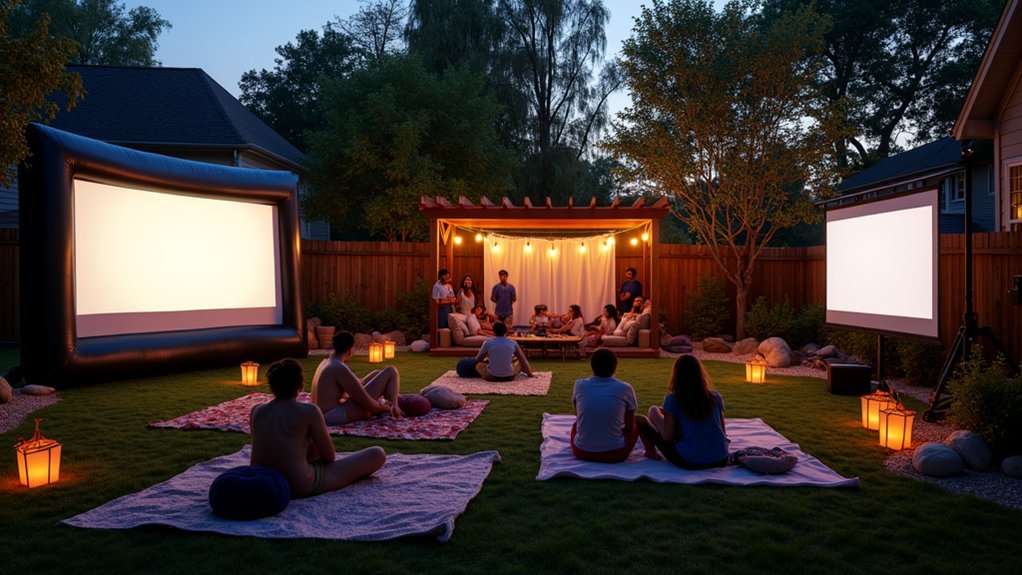
Inflatable Screen Setup for Neighborhood Movie Nights
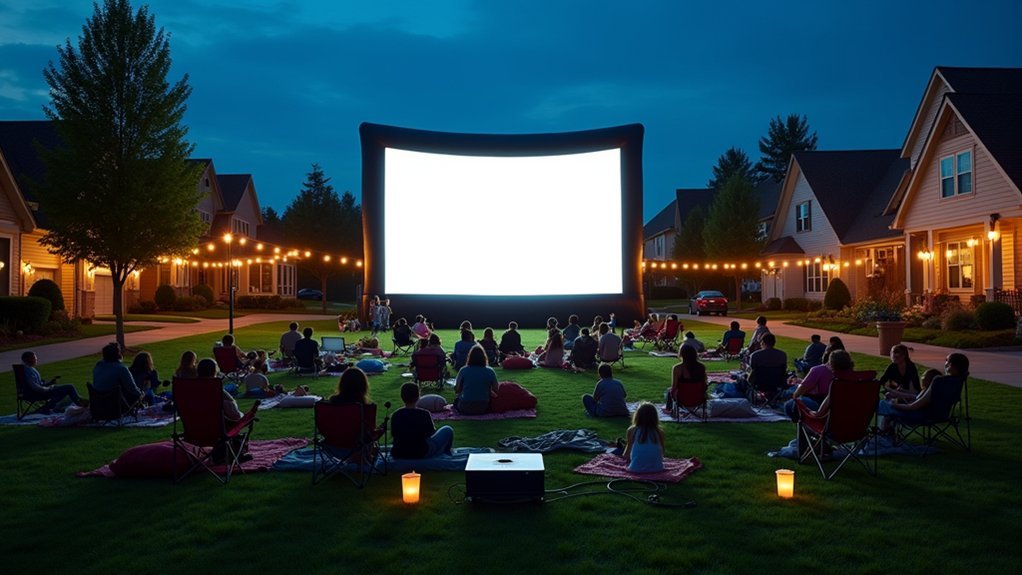
When you’re looking to bring your neighborhood together for an unforgettable movie night, an inflatable screen offers the perfect blend of portability and impressive size.
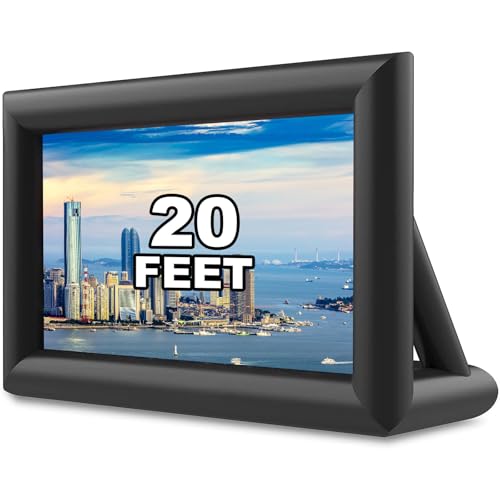
These screens range from 12 to 40 feet wide, accommodating crowds of 50 to 200 people comfortably.
From intimate backyard gatherings to block-wide celebrations, inflatable screens scale to fit any crowd size you’re planning for.
You’ll need a powerful blower fan to keep the screen inflated throughout your event.
Set up takes approximately 15 minutes once you’ve secured the base with stakes or sandbags.
Position the screen away from streetlights and ambient light sources for prime viewing.
Pair your inflatable screen with a projector delivering at least 5,000 lumens for clear images visible to your entire audience.
Don’t forget external speakers or a PA system—built-in projector audio won’t reach viewers seated in back rows.
Permanent Backyard Theater Installation With Stadium Seating
Transform your backyard into a cinematic retreat by building a permanent outdoor theater with tiered stadium seating that’ll impress guests for years to come.
You’ll need to excavate your yard to create three to four ascending levels, each rising 12-18 inches above the previous row. Pour concrete or install pressure-treated timber frames to form sturdy foundations for your seating platforms.
Install weather-resistant Adirondack chairs or built-in benches with cushioned seating along each tier.
Position your screen structure at the lowest point, using a permanent frame with tensioned fabric or a solid surface. Run underground conduit for electrical wiring to power your projector housing and outdoor speakers.
Add pathway lighting between rows for safety, and consider installing a weatherproof equipment shed to protect your audio-visual components year-round.
Portable Projector and Sound System for Community Events
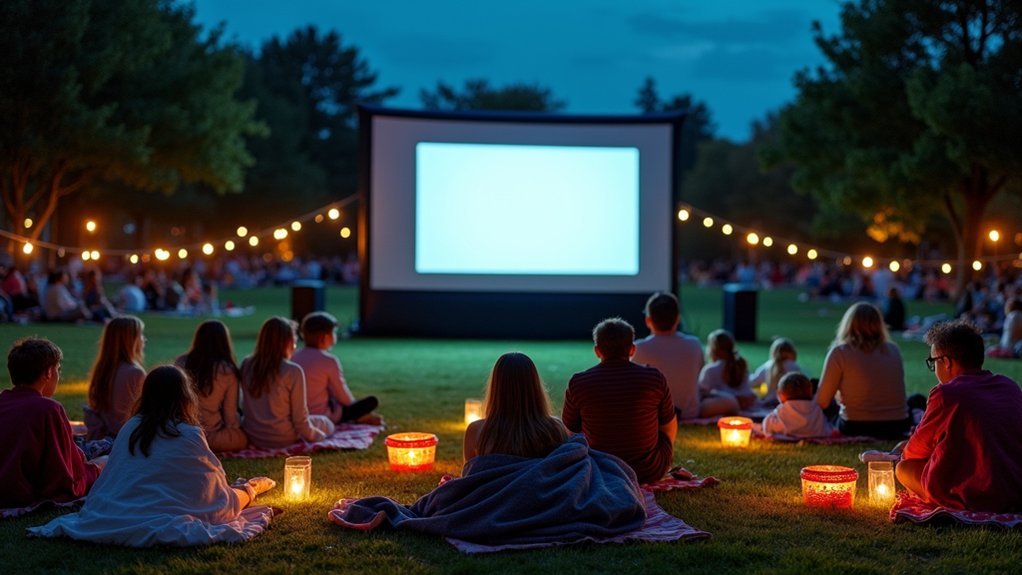
Community event organizers need a portable projection setup that’s easy to transport, quick to assemble, and powerful enough to deliver crisp visuals and clear audio for crowds of 100 or more.
You’ll want a projector with at least 5,000 lumens to guarantee ambient light and maintain image quality on screens up to 20 feet wide.
For sound, pair two powered PA speakers rated at 1,000 watts each with a portable mixer.
Position them on tripod stands flanking your screen to guarantee even audio distribution across your audience.
Invest in a collapsible inflatable screen—they pack into compact carrying cases and inflate in under ten minutes.
Store everything in wheeled road cases for easy loading.
You’ll streamline setup and create a professional cinema experience at parks, parking lots, or community centers.
Frequently Asked Questions
What Permits Are Required to Host Outdoor Movie Screenings in Public Spaces?
You’ll typically need a public assembly permit, film licensing rights (usually through companies like Swank or Criterion), noise permits, and possibly liability insurance. Contact your local parks department and city clerk’s office for specific requirements.
How Do Licensing Rights Work for Showing Movies to Large Groups?
You’ll need to obtain a public performance license from distributors or licensing companies like Swank or Criterion. You can’t legally show copyrighted films to large groups without paying licensing fees, even for free events.
What Insurance Coverage Is Recommended for Outdoor Cinema Events?
You’ll want general liability insurance covering injuries and property damage, plus equipment coverage for your screens and projectors. Don’t forget event cancellation insurance to protect against weather-related losses or unexpected postponements.
How Do Weather Conditions Affect Outdoor Movie Screening Quality?
Weather substantially impacts your screening quality. Rain damages equipment, wind distorts your screen and audio, humidity affects projector performance, and extreme temperatures can cause overheating. You’ll want backup plans and weather-resistant gear for reliable showings.
What Are the Best Food and Beverage Options for Outdoor Movie Nights?
You’ll want easy-to-eat snacks like popcorn, nachos, and hot dogs that don’t require utensils. Offer bottled drinks to prevent spills, and consider setting up a concession stand for self-service convenience.