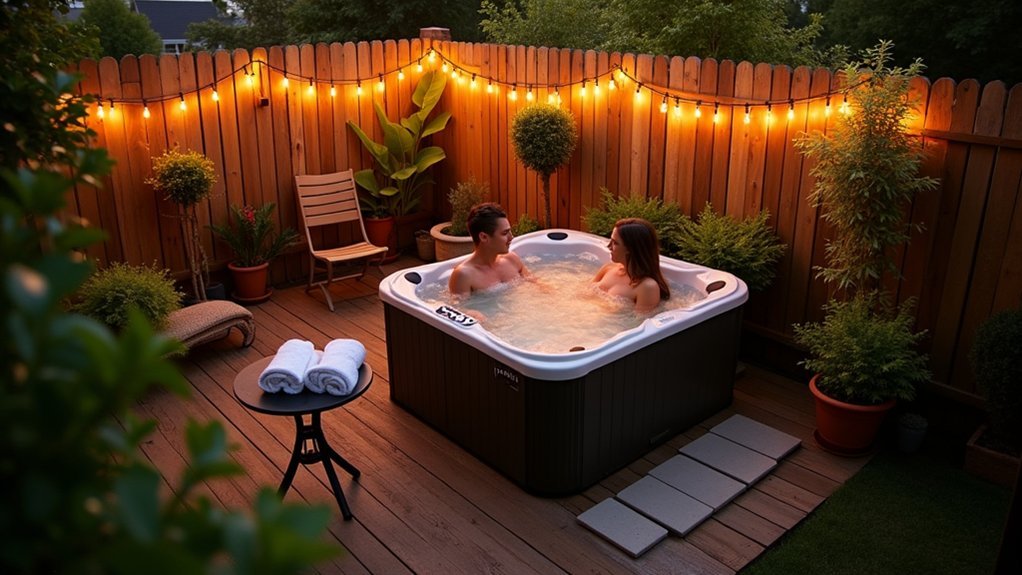
Compact hot tubs let you enjoy full hydrotherapy benefits without sacrificing your entire backyard. You’ll find models measuring just 5 to 7 feet across that tuck neatly into corners or against fences. They’re easier to install, require less site preparation, and cost markedly less to operate thanks to smaller water volumes. You’ll also save 30–50% on monthly energy bills compared to full-size options. Below, you’ll discover the key features that make these space-savers ideal for your outdoor retreat.
Space-Saving Designs That Maximize Your Outdoor Area
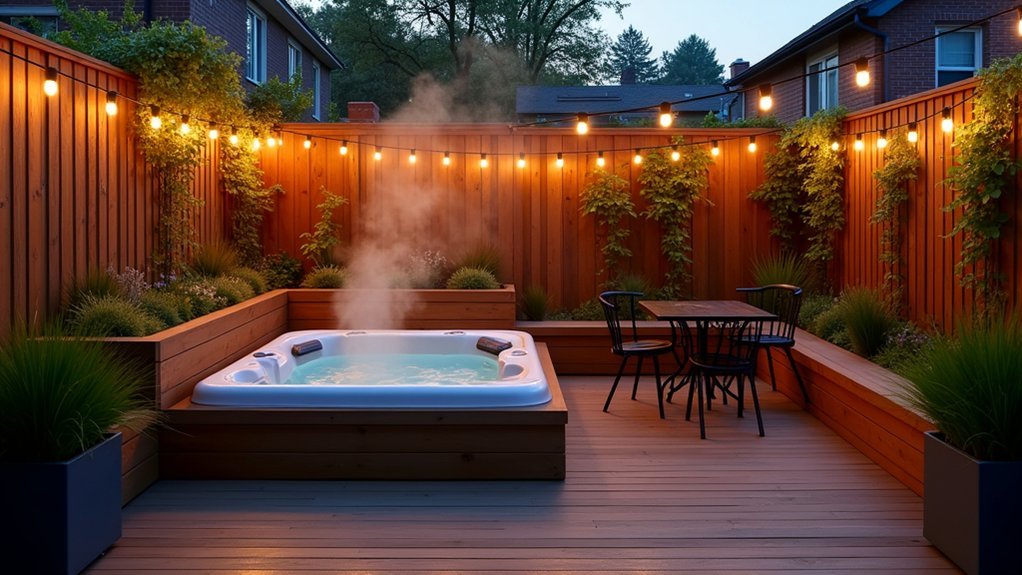
When you’re working with a limited backyard, every square foot matters. Compact hot tubs offer clever solutions that transform tight spaces into relaxing retreats without overwhelming your outdoor area. These models typically measure between 5 and 7 feet in diameter, fitting snugly into corners, against fences, or on small patios.
Manufacturers now design units with vertical seating arrangements and streamlined shells that accommodate 2-4 people comfortably. You’ll find models with squared corners that nestle against walls, eliminating wasted space behind curved edges. Some designs incorporate built-in steps that double as storage compartments.
Consider placement options like deck integration or recessed installation to further reduce the visual footprint. These space-saving approaches let you enjoy hydrotherapy benefits while preserving room for gardens, seating areas, or play spaces.
Efficient Energy Consumption and Lower Operating Costs
When you choose a compact hot tub, you’ll benefit from reduced heating requirements since smaller water volumes reach your desired temperature faster.
This efficiency translates directly into lower electricity bills that you’ll notice month after month.
You’re not just saving backyard space—you’re keeping more money in your pocket with every soak.
Reduced Heating Requirements
Because compact hot tubs contain less water than their full-sized counterparts, they require considerably less energy to heat and maintain peak temperatures. You’ll notice significant savings on your monthly utility bills since you’re heating 200-300 gallons instead of 400-500 gallons typical of larger models.
Your compact hot tub reaches ideal temperature faster, often within hours rather than an entire day. This quick heat-up time means you won’t waste energy maintaining high temperatures when you’re not using it. You can lower the temperature between uses and reheat efficiently before your next soak.
The reduced water volume also means your heating element works less intensively, extending its lifespan and reducing maintenance costs. You’ll spend less on replacement parts while enjoying the same relaxing experience.
Lower Electricity Bills
Although heating costs represent just one piece of the puzzle, your overall electricity consumption drops dramatically with a compact hot tub. Smaller pumps and fewer jets require less power to operate, meaning you’ll notice immediate savings on your monthly utility statements. You’re not sacrificing performance—you’re simply matching your equipment to your actual needs.
Your compact hot tub works smarter, not harder. Modern units feature energy-efficient components designed specifically for smaller water volumes. You’ll find that circulation pumps run shorter cycles while maintaining ideal water quality. LED lighting systems replace power-hungry alternatives, and improved insulation keeps heat locked in longer. These combined efficiencies translate directly into lower operating costs, letting you enjoy your backyard retreat without dreading the next electric bill.
Easier Installation Requirements for Limited Spaces
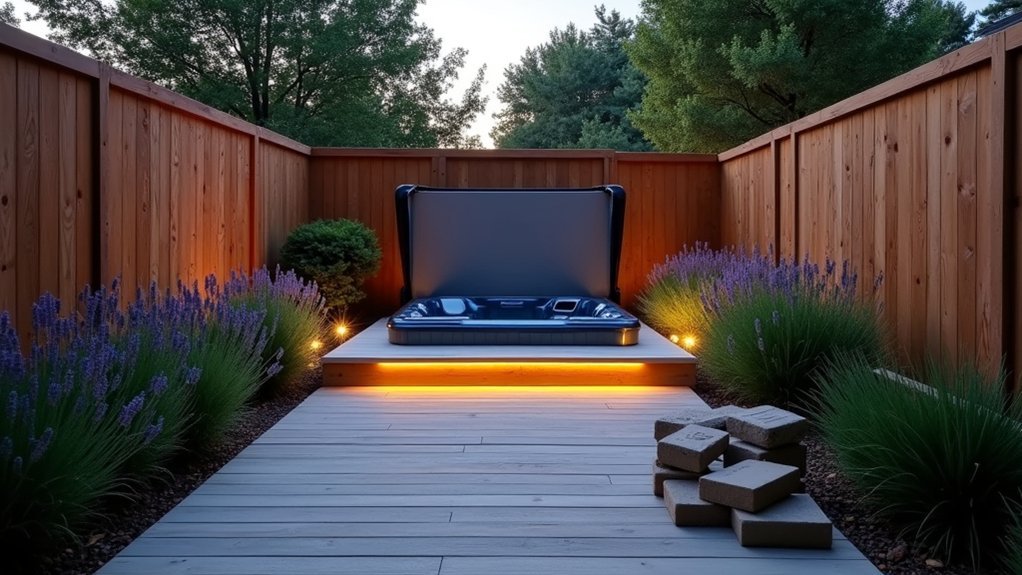
You’ll find that compact hot tubs require minimal ground preparation, often eliminating the need for extensive excavation or concrete foundations.
Their smaller footprint means you’ve got flexible delivery options, including through standard gates or even over fences when traditional access isn’t possible.
These units also demand reduced structural support requirements, making installation feasible on existing decks or patios that couldn’t handle full-sized models.
Minimal Ground Preparation Needed
When you’re working with a small backyard, the last thing you want is an installation process that tears up half your outdoor space. Compact hot tubs eliminate this headache by requiring far less ground preparation than their full-sized counterparts.
You won’t need extensive excavation or reinforced concrete pads covering large areas. A simple level surface—whether an existing patio, reinforced deck, or small gravel pad—often does the job. Many compact models weigh markedly less when filled, reducing structural requirements.
This streamlined preparation saves you time, money, and disruption to your yard. You’ll avoid weeks of construction work and preserve your existing landscaping. In many cases, you can complete the groundwork yourself over a weekend, getting you from bare space to relaxing soak much faster than traditional installations allow.
Flexible Delivery Options Available
Getting your compact hot tub into a tight backyard presents unique challenges, but manufacturers have adapted their delivery methods to match.
You’ll find that most compact models fit through standard 36-inch gates and doorways, eliminating the need for crane rentals or fence removal.
Many dealers now offer specialized delivery services designed specifically for restricted access properties. They’ll assess your space beforehand and recommend the best entry route.
Some companies provide inflatable or modular options you can carry through your home and assemble on-site.
You can also choose curbside delivery if you prefer handling the final placement yourself. With their lighter weight, compact hot tubs allow two to four people to maneuver them into position using basic dollies or hot tub carts.
This flexibility saves you significant installation costs.
Reduced Structural Support Requirements
Because compact hot tubs weigh substantially less than their full-sized counterparts, they dramatically reduce the structural demands on your installation surface. You won’t need extensive foundation work or expensive reinforcement projects that larger models require.
Here’s what reduced structural requirements mean for you:
- Standard deck surfaces often support compact models without modification
- Concrete pads can be smaller and thinner, cutting material costs
- Existing patios frequently meet weight specifications immediately
- Ground-level installations require minimal site preparation
You’ll save both time and money during the installation process. Many homeowners place compact hot tubs on reinforced decking that couldn’t handle traditional spas. Your contractor can assess your current surface and often approve it for immediate use.
This simplicity makes compact hot tubs the practical choice when you’re working with space and budget constraints.
Comfortable Seating Options for Intimate Gatherings
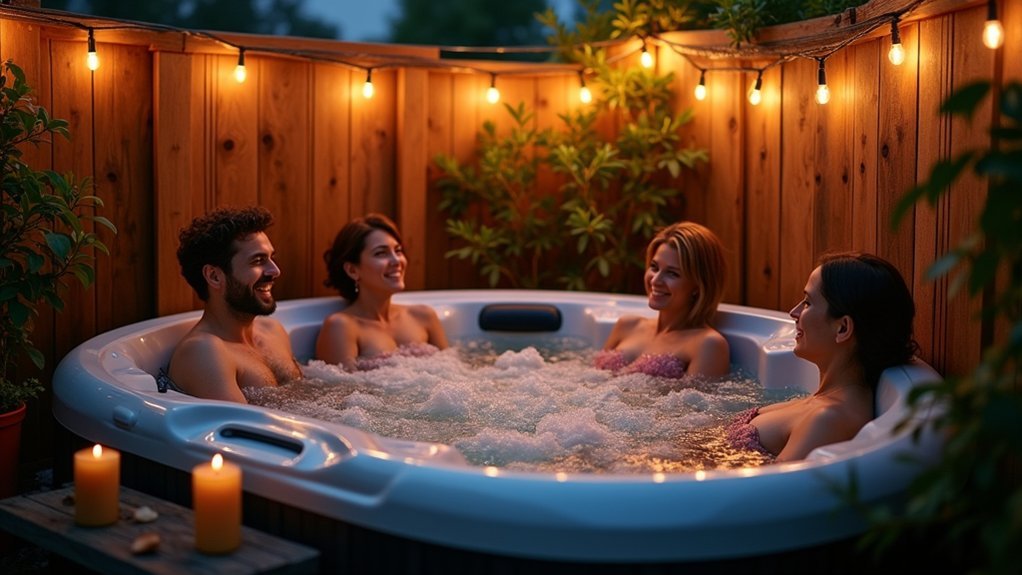
Even though compact hot tubs have smaller footprints, they don’t sacrifice comfort when it comes to seating arrangements. You’ll find ergonomically designed seats that cradle your body and provide targeted jet placement for maximum relaxation.
Many models feature varying seat depths, allowing you and your guests to choose positions that suit individual preferences.
Compact hot tubs typically accommodate two to four people, making them perfect for couples or small family gatherings. You can enjoy face-to-face conversations without shouting across a large spa.
The intimate setting creates a cozy atmosphere where you’ll connect more meaningfully with loved ones.
Look for models with contoured loungers, captain’s chairs, and corner seats that maximize every inch of space. These thoughtful designs make certain you won’t compromise on comfort despite the smaller dimensions.
Portable Models That Offer Flexible Placement
Portable hot tubs open up possibilities you won’t find with traditional in-ground installations. You can reposition your spa whenever your needs change, whether you’re rearranging your patio or moving to a new home.
Portable hot tubs move with your life—relocate them as your space and needs evolve.
These flexible models give you distinct advantages:
- No permanent construction or permits required in most areas
- Easy relocation when you want to redesign your outdoor space
- Lower upfront costs compared to built-in alternatives
- Simple drainage and maintenance access from all sides
You’ll appreciate how portable units plug into standard electrical outlets, eliminating expensive wiring projects. When seasons change, you can shift your hot tub to catch afternoon sun or find better wind protection.
This adaptability makes portable models ideal for renters or anyone who values versatility in their backyard setup.
Budget-Friendly Pricing Compared to Full-Size Options
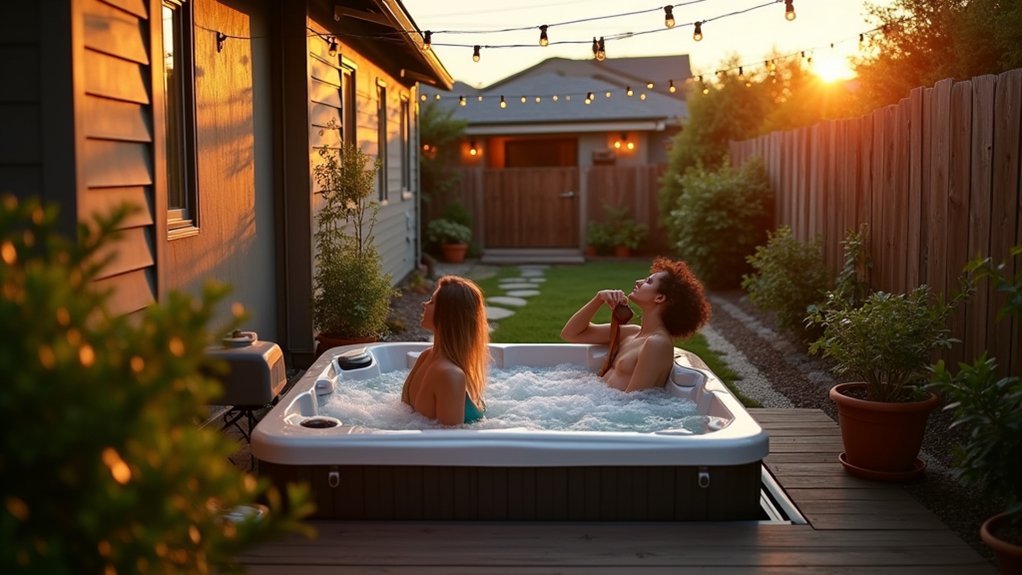
When you’re working with a limited budget, compact hot tubs deliver significant savings across every cost category. Initial purchase prices typically range from $2,000 to $5,000, while full-size models often start at $8,000 and climb past $15,000. You’ll also spend less on installation since smaller units require less site preparation and simpler electrical work.
Your ongoing expenses stay lower too. Compact tubs use fewer gallons of water, reducing your fill and chemical costs. They heat faster and maintain temperature more efficiently, which translates to monthly energy savings of 30-50% compared to larger alternatives. Replacement covers, filters, and parts cost less as well. These combined savings let you enjoy hydrotherapy benefits without straining your finances or sacrificing quality features you want.
Low Maintenance Demands for Busy Homeowners
Beyond the financial advantages, compact hot tubs also respect your most valuable resource: time. You’ll spend less effort maintaining a smaller water volume, which translates to quicker chemical balancing and faster water changes.
Here’s what makes compact hot tubs easier to manage:
- Reduced water volume means fewer chemicals needed and faster heating cycles
- Simplified filtration systems require less frequent cleaning and replacement
- Smaller covers are lighter and easier to remove, clean, and store
- Fewer jets and components decrease potential repair needs
You won’t waste weekends troubleshooting complex systems or scheduling frequent professional service calls. Instead, you’ll perform quick weekly checks and enjoy more relaxation time.
For busy homeowners juggling careers and family obligations, this streamlined maintenance schedule proves invaluable.
Top Compact Hot Tub Brands Worth Considering
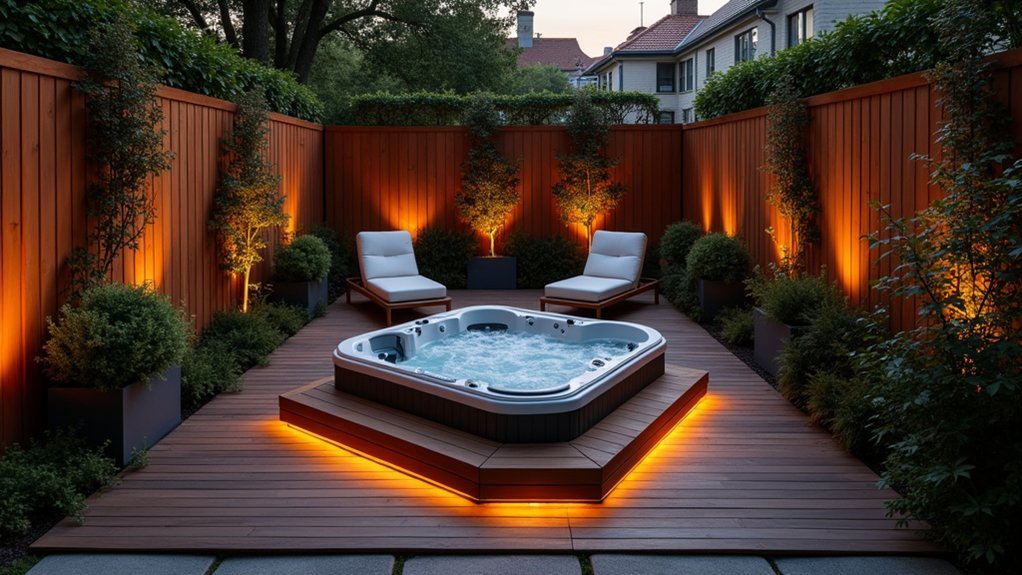
Several standout brands have carved out reputations for delivering quality compact hot tubs that fit smaller spaces without sacrificing performance. You’ll find that Sundance Spas offers excellent jet configurations in their smaller models, while Hot Spring delivers energy-efficient units perfect for tight spaces. Bullfrog Spas stands out with customizable jet packs you can personalize to your preferences.
| Brand | Key Strength |
|---|---|
| Sundance Spas | Superior jet technology |
| Hot Spring | Energy efficiency |
| Bullfrog Spas | Customizable massage options |
When you’re shopping, consider each brand’s warranty coverage and dealer support in your area. You’ll want reliable service access for maintenance needs. Don’t overlook lesser-known manufacturers either—brands like Nordic Hot Tubs and Fantasy Spas offer budget-friendly compact options that still deliver solid performance and durability.
Frequently Asked Questions
How Long Do Compact Hot Tubs Typically Last With Regular Use?
With proper maintenance, you’ll get 10 to 20 years from your compact hot tub. You can extend its lifespan by regularly cleaning filters, balancing water chemistry, and protecting the cover from weather damage.
Can Compact Hot Tubs Be Used Year-Round in Cold Climates?
You can absolutely use compact hot tubs year-round in cold climates. They’re designed with quality insulation and efficient heaters that maintain water temperature even in freezing weather, letting you enjoy relaxing soaks throughout winter.
What Safety Features Should I Look for in Compact Hot Tubs?
You should look for anti-slip surfaces, lockable safety covers, GFCI-protected electrical systems, and handrails for secure entry. Don’t overlook temperature limiters and proper drainage to prevent accidents around your compact hot tub.
Do Compact Hot Tubs Require Special Electrical Wiring or Outlets?
Yes, you’ll typically need a dedicated 120V or 240V outlet for your compact hot tub. Many plug-and-play models use standard outlets, but larger units require professional installation with a GFCI-protected circuit.
How Often Should I Drain and Refill My Compact Hot Tub?
You should drain and refill your compact hot tub every three to four months. However, you’ll need to do it more frequently if you’re using it heavily or notice the water becoming cloudy or odorous.