You can slash your spa heating costs by up to 70% by switching to one of three energy-efficient systems. Solar-powered heaters capture free sunlight to warm your water, while heat pumps extract ambient air heat and deliver up to five times more energy than they consume. Gas-electric hybrids combine rapid gas heating with efficient electric maintenance, cutting costs by half. Each system offers unique benefits depending on your climate and budget.
Solar-Powered Spa Heating Systems
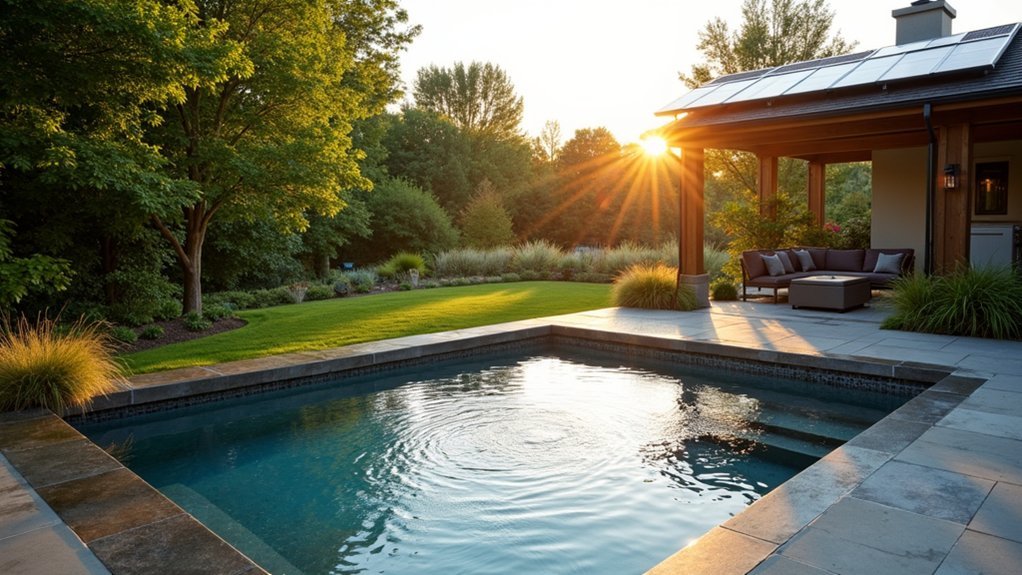
Have you ever wondered how you can heat your spa while slashing your energy bills and reducing your carbon footprint? Solar-powered spa heating systems offer an excellent solution that harnesses free energy from the sun.
These systems use solar collectors, typically mounted on your roof, to capture sunlight and convert it into heat. The heated water then circulates through your spa, maintaining comfortable temperatures without drawing from the electrical grid.
You’ll find two main types: passive systems that rely on natural water circulation and active systems that use pumps for faster heating. While installation costs run higher than traditional heaters, you’ll recoup your investment through dramatically lower operating expenses. Most homeowners see their systems pay for themselves within three to five years.
Heat Pump Spa Heaters
While solar heating works best in sunny climates, heat pump spa heaters provide consistent efficiency regardless of weather conditions. These systems extract heat from surrounding air and transfer it to your spa water, delivering up to five times more energy than they consume.
You’ll find heat pumps operate effectively in temperatures as low as 40°F, making them versatile for most regions. They cost more upfront than traditional electric heaters but reduce your energy bills by 50-70% over time.
Heat pumps work slower than gas heaters, so you’ll need to plan ahead for heating sessions. However, they produce zero emissions on-site and require minimal maintenance. If you’re seeking year-round efficiency without relying on sunlight, a heat pump offers an excellent balance of performance and savings.
Gas-Electric Hybrid Spa Heating Units
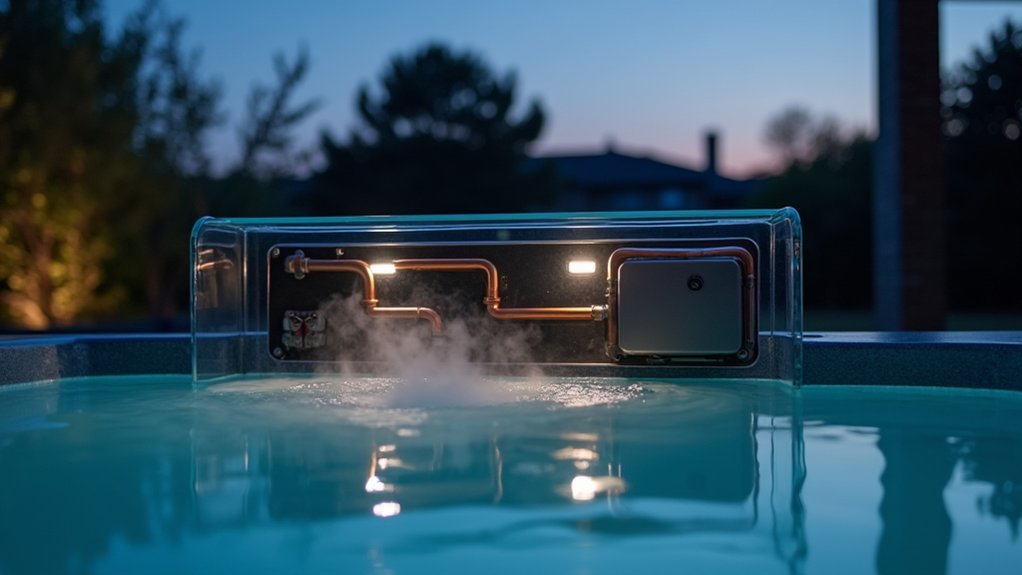
Gas-electric hybrid spa heating units combine the rapid heating power of gas with the steady efficiency of electric elements, giving you the best of both technologies.
You’ll enjoy quick initial heating when you want immediate relaxation, then seamless switching to cost-effective electric maintenance once your spa reaches the perfect temperature.
These systems automatically select the most efficient fuel source based on current energy rates and heating demands.
You’re not locked into one energy type, which protects you against price fluctuations.
Why you’ll love hybrid heating:
- You’ll cut heating costs by up to 50% compared to gas-only systems
- You’ll never wait long for your spa to reach ideal temperatures
- You’ll reduce your carbon footprint while maintaining consistent warmth
Hybrid units represent smart, future-proof investments for energy-conscious spa owners.
Frequently Asked Questions
How Much Money Can I Save Annually With an Energy Efficient Spa Heater?
You can save between $200 and $500 annually by switching to an energy-efficient spa heater. Your actual savings depend on your usage frequency, local energy rates, and the system you’re replacing.
What Is the Average Lifespan of Energy Efficient Spa Heating Systems?
You can expect your energy efficient spa heater to last 10-20 years with proper maintenance. Heat pumps typically offer the longest lifespan, while gas heaters generally need replacement sooner around the 10-year mark.
Do Energy Efficient Spa Heaters Work Well in Cold Climates?
You’ll find energy efficient spa heaters perform excellently in cold climates. They’re designed to maintain consistent water temperatures even during freezing conditions. You should choose models with good insulation and consider heat pumps rated for lower temperatures.
How Long Does Installation Typically Take for These Heating Systems?
You can expect installation to take between 2-8 hours, depending on your system’s complexity. Heat pumps typically require longer setup times, while electric heaters you’ll install much faster with basic plumbing connections.
Are There Government Rebates Available for Energy Efficient Spa Heaters?
You can often find government rebates for energy efficient spa heaters through federal tax credits, state programs, or local utility incentives. Check the DSIRE database or contact your utility company to discover available savings.