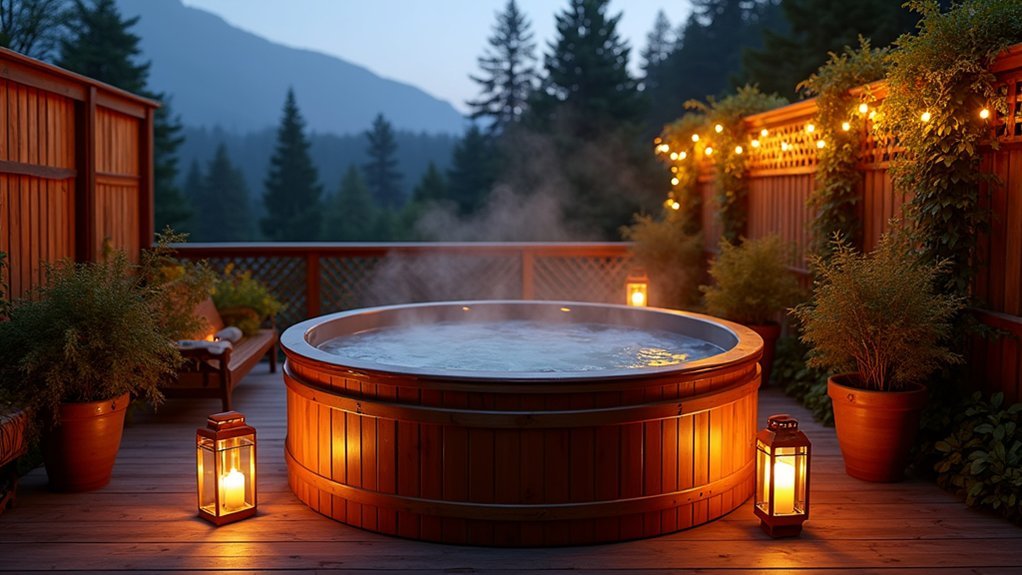
You’ve got plenty of options to create a secluded hot tub oasis. Wooden lattice panels offer timeless elegance with natural airflow, while outdoor curtains give you flexible coverage you can adjust on demand. For a resort-style vibe, bamboo fencing delivers tropical ambiance with easy installation. Living plant walls and tall hedges create organic beauty that grows denser over time. From retractable shade sails to stone wall features, each solution below offers unique benefits for your space.
Wooden Lattice Panels for Natural Elegance
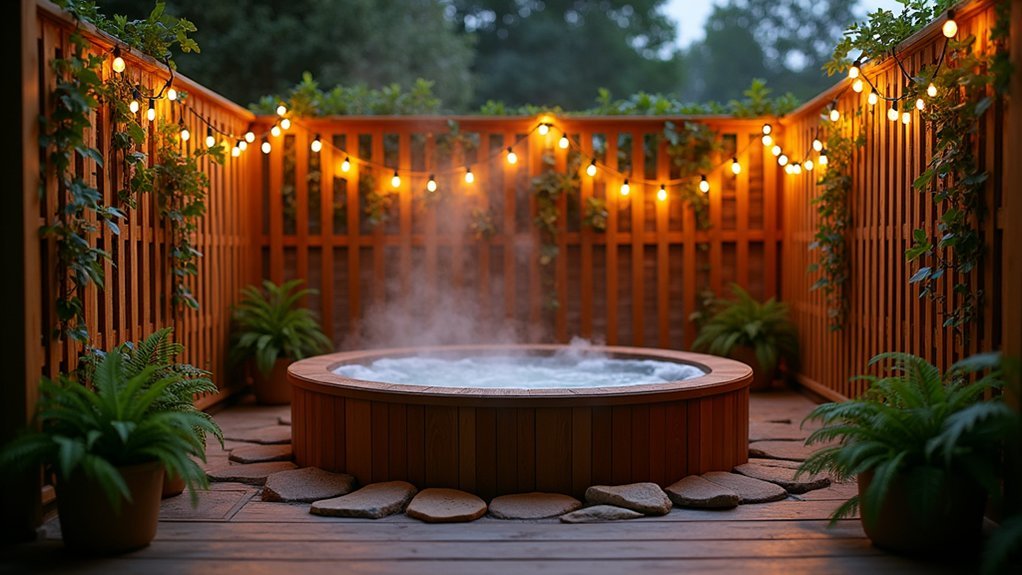
Wooden lattice panels offer one of the most timeless solutions for creating privacy around your hot tub while maintaining visual appeal. These versatile screens blend seamlessly with outdoor landscapes and complement various architectural styles. You can choose from cedar, redwood, or pressure-treated pine depending on your budget and climate conditions.
The crisscross pattern allows air circulation while blocking direct sightlines from neighbors. You’ll appreciate how the lattice creates dappled light effects, adding ambiance to evening soaks. Consider training climbing plants like jasmine or clematis along the panels for enhanced seclusion and natural fragrance.
Installation is straightforward—you can mount panels between posts or attach them to existing fence structures. Stain or paint your lattice to match your deck, or leave it natural for a rustic aesthetic.
Outdoor Curtains and Drapes for Flexible Coverage
When you want privacy that adapts to your mood and the moment, outdoor curtains and drapes offer unmatched flexibility for your hot tub area.
You’ll need to select weather-resistant fabric options like solution-dyed acrylic, polyester blends, or Sunbrella materials that can withstand UV exposure, moisture, and mildew without fading or deteriorating.
Proper curtain rod installation requires sturdy mounting hardware anchored into solid posts or beams, along with rust-resistant rods rated to handle wind loads and the weight of heavier outdoor fabrics.
Weather-Resistant Fabric Options
For hot tub owners who want adjustable privacy without permanent structures, weather-resistant outdoor curtains and drapes offer an ideal solution.
You’ll find fabrics specifically engineered to withstand outdoor conditions while maintaining their appearance. Sunbrella fabric leads the market with its fade-resistant, water-repellent properties and decades-long durability. Olefin offers similar benefits at a lower price point, resisting mold, mildew, and UV damage effectively.
Polyester blends treated with waterproof coatings provide budget-friendly alternatives that still perform well in moderate climates. Look for fabrics rated for outdoor use with reinforced grommets or tabs designed for repeated opening and closing.
When selecting your curtains, consider weight carefully. Heavier fabrics resist wind better but require sturdier mounting hardware. Lighter options move easily but may need weighted hems to prevent billowing during your soak.
Curtain Rod Installation Tips
Secure mounting forms the foundation of any successful outdoor curtain installation around your hot tub. Choose rust-resistant hardware like stainless steel or powder-coated aluminum brackets designed specifically for outdoor use. Before drilling, locate wall studs or use heavy-duty anchors rated for the combined weight of your curtains and rod.
Position your curtain rod at least 6 inches above your desired curtain height to create an elegant drape effect. Space support brackets every 4 feet to prevent sagging, especially with heavier weather-resistant fabrics.
Consider tension rods for temporary installations between existing structures. For permanent setups, ceiling-mounted tracks offer smooth operation and handle moisture exposure better than wall options. Apply silicone sealant around mounting holes to prevent water damage to your deck posts or exterior walls.
Bamboo Fencing for Tropical Ambiance
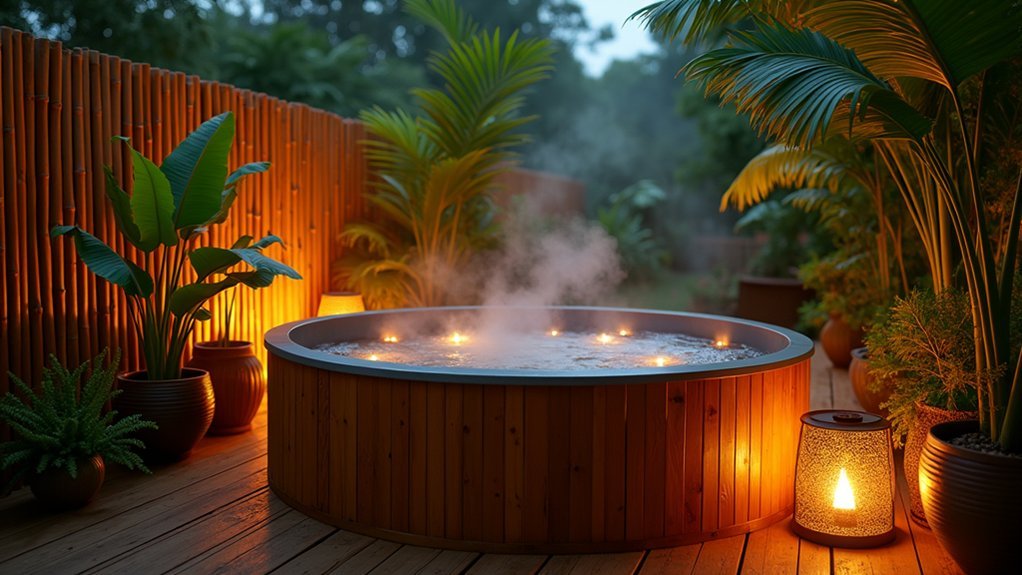
Bamboo fencing transforms your hot tub area into a lush, resort-style retreat while providing excellent privacy coverage.
Bamboo fencing delivers resort-style privacy and tropical ambiance to any hot tub space.
You’ll find bamboo panels in rolled or rigid formats, making installation straightforward for most DIYers. The natural material creates a warm, exotic atmosphere that pairs beautifully with outdoor lighting and tropical plants.
You can mount bamboo fencing to existing structures or install it as standalone panels using metal posts. Most rolls range from 4 to 6 feet tall, giving you flexibility based on your privacy needs. Bamboo naturally withstands moisture and humidity, though applying a sealant extends its lifespan markedly.
For budget-conscious homeowners, bamboo offers an affordable alternative to wood or composite fencing. You’ll achieve that vacation-worthy aesthetic without the premium price tag or complex construction requirements.
Living Plant Walls and Tall Hedges
While manufactured screens offer immediate privacy, living plant walls and tall hedges create natural barriers that enhance your hot tub’s surroundings with greenery and organic beauty.
For quick coverage, consider fast-growing options like arborvitae, privet, or Leyland cypress. These evergreens maintain year-round density and can reach heights of 10-15 feet, blocking views from neighboring properties effectively. If you prefer flowering varieties, hibiscus or oleander add color while providing substantial screening.
Living walls mounted on frames offer another approach. You can grow climbing plants like jasmine, clematis, or ivy on trellises positioned around your spa area. These vertical gardens soften hard edges and release pleasant fragrances during evening soaks.
Remember that living screens require ongoing maintenance, including watering, pruning, and fertilizing to keep them healthy and dense.
Retractable Shade Sails and Canopies
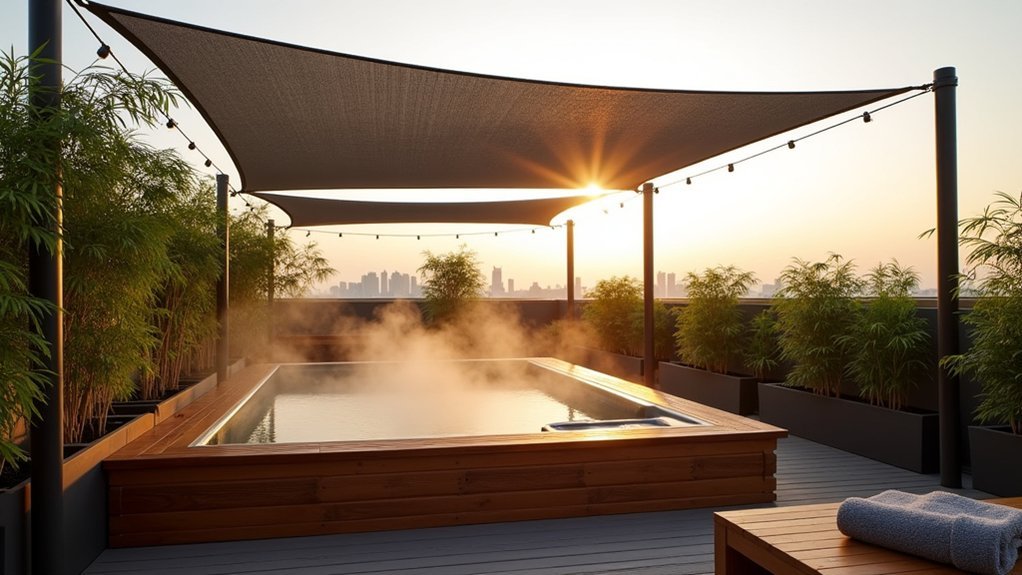
When you want flexible coverage for your hot tub area, retractable shade sails and canopies offer adjustable sun protection that you can extend or retract based on conditions.
You’ll find these structures available in weather-resistant materials like marine-grade polyester, solution-dyed acrylic, and UV-stabilized HDPE fabric that withstand the elements year after year.
Most systems feature straightforward installation methods, including wall-mounted brackets, freestanding posts, or attachment points that integrate with existing pergolas or deck structures.
Adjustable Sun Protection Options
For hot tub owners who want flexibility in their sun exposure, retractable shade sails and canopies offer the perfect solution.
These systems let you control exactly how much sunlight reaches your soaking area at any given moment. On cloudy days, you can retract the covering completely. When the midday sun beats down, you’ll appreciate full shade coverage.
Modern retractable options include motorized awnings that extend from your home’s exterior, freestanding pergolas with sliding fabric panels, and triangular shade sails on adjustable mounting points.
Many feature UV-resistant fabrics that block harmful rays while still allowing air circulation.
You’ll find manual crank systems for budget-conscious installations or remote-controlled motors for convenience.
Choose waterproof materials to maintain functionality during unexpected rain showers while you’re relaxing in your hot tub.
Weather-Resistant Material Choices
Selecting the right fabric determines how well your retractable shade system holds up against the elements. Marine-grade polyester and solution-dyed acrylic stand out as top performers, offering excellent UV resistance and color retention even after years of sun exposure.
You’ll want to look for fabrics with PTFE coatings or similar treatments that repel water and resist mold growth. These coatings prevent moisture from seeping into the material when you’re enjoying your hot tub during light rain.
Consider breathable mesh options if you live in humid climates, as they allow air circulation while blocking sunlight. For harsh winter conditions, vinyl-coated polyester provides superior durability and handles snow loads better than lighter materials. Always check the fabric’s warranty and UV protection rating before purchasing your canopy system.
Easy Installation Methods
Although retractable shade sails and canopies might look complex, most systems come with DIY-friendly mounting hardware that you can install in a single weekend. You’ll typically need a drill, ladder, and basic hand tools to complete the job.
Start by marking your mounting points on walls, posts, or existing structures. Most kits include wall brackets, turnbuckles, and stainless steel cables that resist rust and corrosion.
| Installation Step | Time Required |
|---|---|
| Marking mount locations | 30 minutes |
| Installing brackets | 1-2 hours |
| Attaching cables and hardware | 1 hour |
| Mounting the sail/canopy | 30 minutes |
You’ll want to make certain proper tension across the fabric to prevent sagging and water pooling. Adjust the turnbuckles until the material sits taut and wrinkle-free.
Decorative Metal Privacy Screens
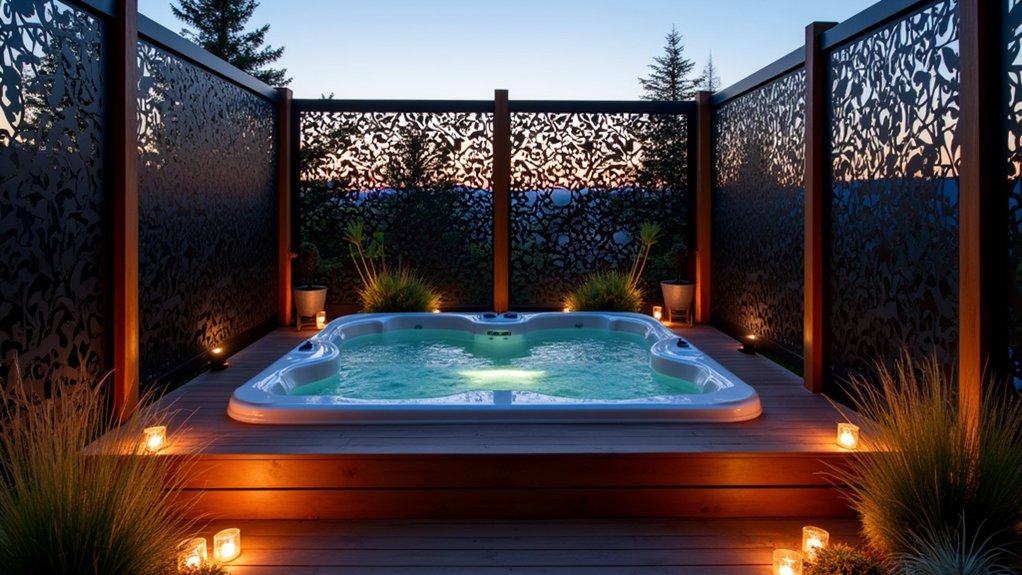
Decorative metal privacy screens bring an artistic element to your hot tub area while providing effective seclusion.
Metal privacy screens transform your hot tub space into an artful retreat while keeping prying eyes out.
These screens come in various patterns, from geometric designs to nature-inspired motifs like bamboo, leaves, or waves. You’ll find options in aluminum, steel, and wrought iron, each offering distinct aesthetic appeals.
Metal screens stand up well to outdoor conditions, especially when powder-coated for rust resistance. You can mount them directly to posts, attach them to existing fencing, or choose freestanding panels with weighted bases.
Consider laser-cut designs that cast interesting shadows when backlit at night. Black and bronze finishes create dramatic focal points, while lighter colors blend seamlessly with contemporary spaces. These screens require minimal maintenance—just occasional cleaning to remove dust and debris from the intricate patterns.
Pergola Structures With Climbing Vines
A pergola draped in climbing vines creates a living privacy screen that transforms your hot tub area into a natural retreat.
You’ll want to weigh the best vine species for your climate, whether to build with wood, metal, or vinyl, and how long you’ll wait before achieving full coverage.
Understanding these factors helps you plan a pergola structure that delivers both immediate architectural interest and long-term living privacy.
Best Vine Species Choices
Selecting the right climbing vine transforms your pergola from a basic structure into a lush, living privacy screen for your hot tub area. Consider your climate, maintenance preferences, and how quickly you need coverage when choosing species.
Here are three excellent vine options for hot tub privacy:
- Jasmine – Provides dense foliage with fragrant blooms that enhance your soaking experience, thriving in zones 7-10.
- Clematis – Offers stunning flowers in various colors and grows rapidly, reaching 10-20 feet with proper support.
- Virginia Creeper – Delivers thick coverage and brilliant fall color, tolerating shade and requiring minimal maintenance.
You’ll want to install sturdy wire supports or trellises on your pergola before planting.
Most climbing vines establish full coverage within two to three growing seasons.
Pergola Material Options
Your climbing vines need a sturdy foundation to create that private retreat around your hot tub, making your pergola’s material choice a critical decision.
Wood remains the most popular option, with cedar and redwood offering natural rot resistance.
These species withstand moisture from your hot tub while providing a rustic aesthetic that complements outdoor spaces.
Aluminum pergolas deliver durability without maintenance concerns.
They won’t warp, crack, or succumb to insect damage, though they typically cost more upfront.
Vinyl offers a budget-friendly, low-maintenance alternative that resists moisture damage.
However, it may not support heavier vine varieties as effectively.
Steel provides maximum strength for vigorous climbers like wisteria but requires powder coating to prevent rust in humid hot tub environments.
Consider your climate, budget, and chosen vine weight when selecting your pergola material.
Privacy Growth Timeline
While you’ve selected your pergola material and climbing vines, understanding realistic growth expectations helps you plan for temporary privacy solutions in the meantime.
Typical Growth Timelines by Vine Type:
- Fast-growing vines (honeysuckle, morning glory): Provide partial coverage within 3-6 months and full privacy screening by the end of year one.
- Moderate growers (clematis, jasmine): Reach meaningful coverage in 12-18 months, with dense privacy achieved by year two.
- Slow-growing vines (wisteria, climbing hydrangea): Require 2-3 years for substantial coverage but deliver exceptional long-term beauty.
During the initial growth period, you can hang outdoor curtains or bamboo shades from your pergola.
This layered approach gives you immediate privacy while your natural screen develops into a lush, permanent solution.
Stone and Rock Wall Features
Stone and rock wall features bring a timeless, natural aesthetic to your hot tub area that few other privacy options can match. You’ll find these structures blend seamlessly with landscaping while providing complete seclusion from neighbors and passersby.
You can choose from stacked natural stone, river rocks, or manufactured stone veneers depending on your budget. Natural stone costs more but offers unmatched durability and authentic texture. Manufactured options give you the same visual appeal at a fraction of the price.
Consider building your wall three to five feet high for ideal privacy without creating an oppressive feel. Add integrated planters or water features to enhance the spa-like atmosphere. Stone walls also absorb and radiate heat, extending your hot tub season into cooler months while blocking wind effectively.
Louvered Panel Systems for Adjustable Privacy
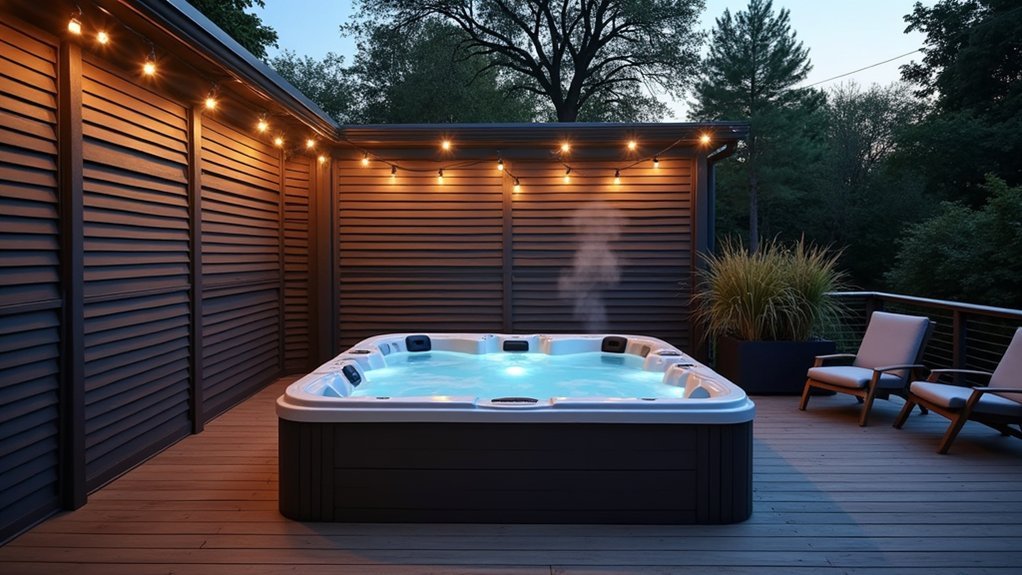
Offering unmatched flexibility, louvered panel systems let you control exactly how much privacy and airflow you want at any given moment. You can angle the slats to block views completely, open them for ventilation, or find the perfect balance between the two.
Louvered panels give you complete command over your outdoor sanctuary—adjust the slats to match your mood and the weather.
These systems work beautifully in modern outdoor spaces and complement contemporary architecture.
When selecting louvered panels for your hot tub area, consider these key factors:
- Choose weather-resistant materials like aluminum, composite, or treated cedar for longevity
- Opt for adjustable mechanisms that operate smoothly even in humid conditions
- Select panel heights between six and eight feet for ideal screening
You’ll appreciate how louvered systems adapt to changing conditions—blocking wind during cooler evenings while allowing breezes through on warm nights.
Combination Privacy Solutions Using Multiple Materials
Taking privacy screening to the next level, combination solutions blend multiple materials to create custom barriers that single-material options simply can’t match. You’ll achieve both functionality and visual interest when you pair contrasting textures and elements.
| Material Pairing | Best For |
|---|---|
| Wood + Metal mesh | Modern industrial aesthetics |
| Stone base + Wood panels | Sturdy, natural appearance |
| Bamboo + Fabric panels | Tropical, flexible coverage |
| Lattice + Climbing plants | Living privacy walls |
| Concrete + Glass inserts | Contemporary luxury settings |
You can stack materials vertically, placing solid bases beneath slatted or decorative upper sections. This approach gives you structural stability where you need it while maintaining airflow and light at eye level. Mix warm and cool tones to complement your existing outdoor décor.
Frequently Asked Questions
How Far Should a Privacy Screen Be Placed From My Hot Tub?
You should place your privacy screen at least 2-3 feet away from your hot tub. This distance allows proper ventilation, prevents moisture damage to the screen, and gives you enough room to move around comfortably.
Do I Need a Permit to Install a Privacy Screen Around My Hot Tub?
You’ll likely need a permit depending on your local regulations and the screen’s height and structure. Check with your city’s building department before installing, as requirements vary considerably by location and screen type.
What Privacy Screen Materials Best Resist Chlorine and Hot Tub Chemicals?
You’ll want materials like vinyl, PVC, aluminum, or treated cedar for your privacy screen. These resist chlorine and chemical damage effectively. Avoid untreated wood or fabrics that’ll deteriorate quickly from constant moisture and chemical exposure.
How Tall Should My Hot Tub Privacy Screen Be for Complete Coverage?
You’ll want your privacy screen to stand 6-8 feet tall for complete coverage while seated in your hot tub. Consider your neighbors’ sightlines and any elevated positions that might overlook your space.
Can Privacy Screens Affect My Hot Tub’s Ventilation and Steam Dispersal?
Yes, privacy screens can impact ventilation and steam dispersal. You’ll want to avoid completely enclosing your hot tub. Leave gaps at the top or between panels so steam escapes and fresh air circulates properly.