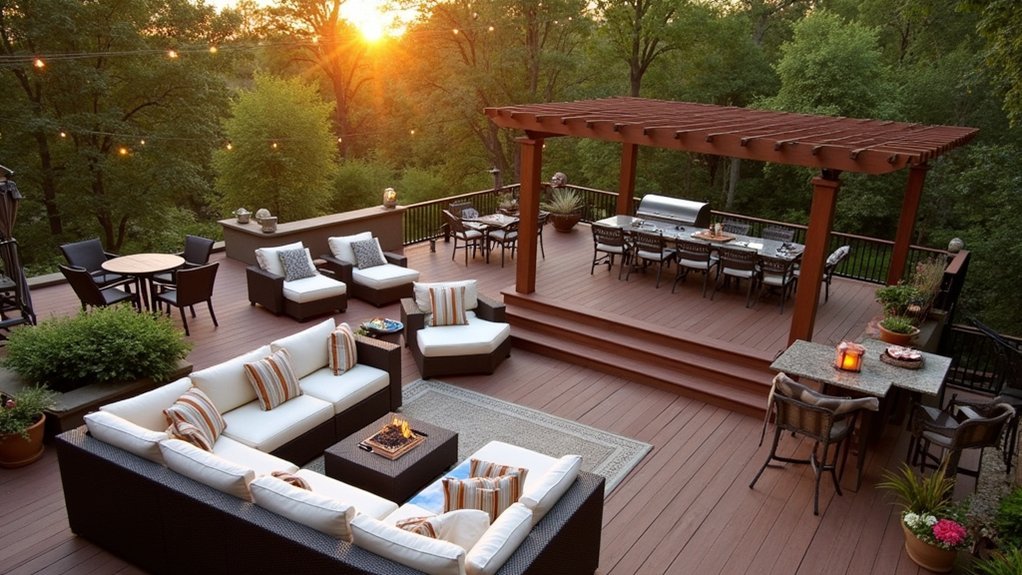
You’ll find the best deck furniture layouts for hosting parties include conversation circles with seats within eight feet, L-shaped sectionals tucked into corners to maximize floor space, and open-center designs that push furniture to the perimeter for dancing. Multi-zone setups separate dining from lounging areas, while bar-centric arrangements control guest flow and prevent clustering. Each layout below offers specific furniture placement tips to transform your deck into the ultimate entertaining space.
The Conversation Circle Layout for Intimate Gatherings
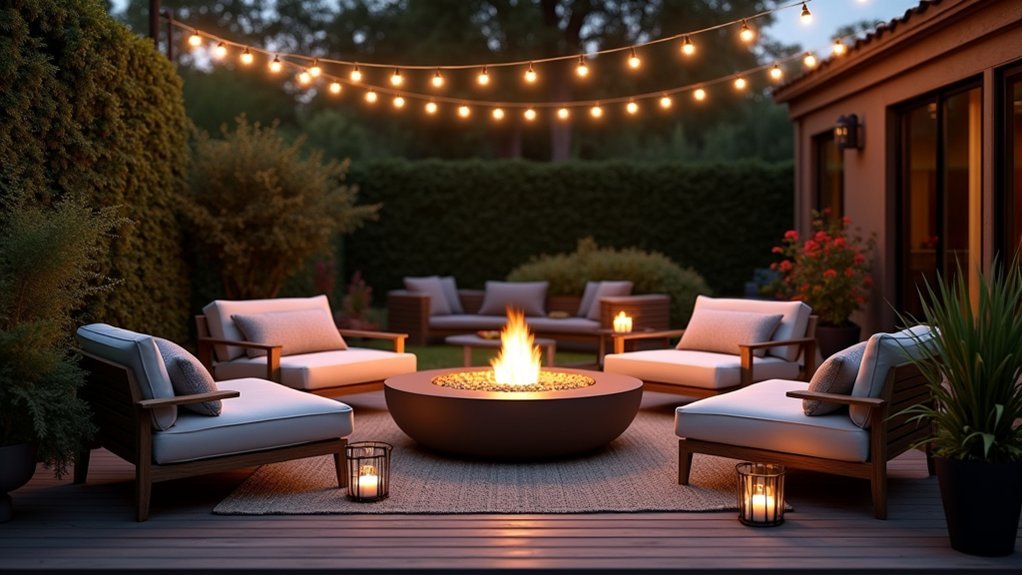
When you’re hosting a smaller gathering where meaningful conversation takes priority, arranging your deck furniture in a circular or semi-circular pattern creates the ideal setting. Position chairs and loveseats facing inward, keeping seats within eight feet of each other so guests can chat without raising their voices.
Place a central coffee table or fire pit as your anchor point. This gives everyone a natural focal point and convenient spot for drinks. If your deck has a corner, use it to create a cozy semi-circle that feels enclosed and private.
Add outdoor poufs or ottomans to expand seating flexibility without overcrowding the space. Keep pathways clear around the perimeter so guests can move freely. This layout encourages eye contact and make sure nobody feels left out of the discussion.
L-Shaped Sectional Arrangement for Maximum Seating
You’ll maximize your deck’s seating capacity by positioning an L-shaped sectional in a corner, which creates a natural gathering space while keeping traffic flow open.
This corner placement lets you accommodate more guests without furniture blocking pathways or feeling cramped.
Complete the setup by adding side tables and a coffee table within arm’s reach so everyone has a spot to set drinks and appetizers.
Corner Placement Benefits
Positioning an L-shaped sectional in your deck’s corner maximizes your available floor space while creating an intimate conversation zone that draws guests together.
You’ll free up the central deck area for mingling, dancing, or additional seating when larger crowds arrive.
Corner placement anchors your seating arrangement against two walls or railings, providing natural boundaries that make guests feel secure and settled.
This configuration eliminates awkward floating furniture that disrupts traffic flow and forces people to walk around obstacles.
You’ll also gain flexibility with your remaining space.
Add a coffee table within the L’s embrace for drinks and appetizers, keeping essentials within arm’s reach.
The open side invites newcomers to join conversations easily, while the enclosed corner offers quieter spots for deeper discussions away from the party’s energy.
Accessorizing With Tables
Strategic table placement transforms your L-shaped sectional from simple seating into a functional entertainment hub. You’ll want to position tables where guests can easily reach them without disrupting conversation flow.
Place a coffee table in the center of the L’s interior angle, giving everyone access to drinks and appetizers. Add side tables at each end of the sectional so guests aren’t passing items across laps.
Consider these essential table accessories:
- Nesting tables that you can spread out during parties and consolidate when space is needed
- Outdoor ottomans with trays that double as extra seating or footrests
- Console tables behind the sectional for buffet-style food service
Your tables should complement the sectional’s scale without overcrowding the deck’s traffic zones.
Dining-Focused Setup With Central Table Placement
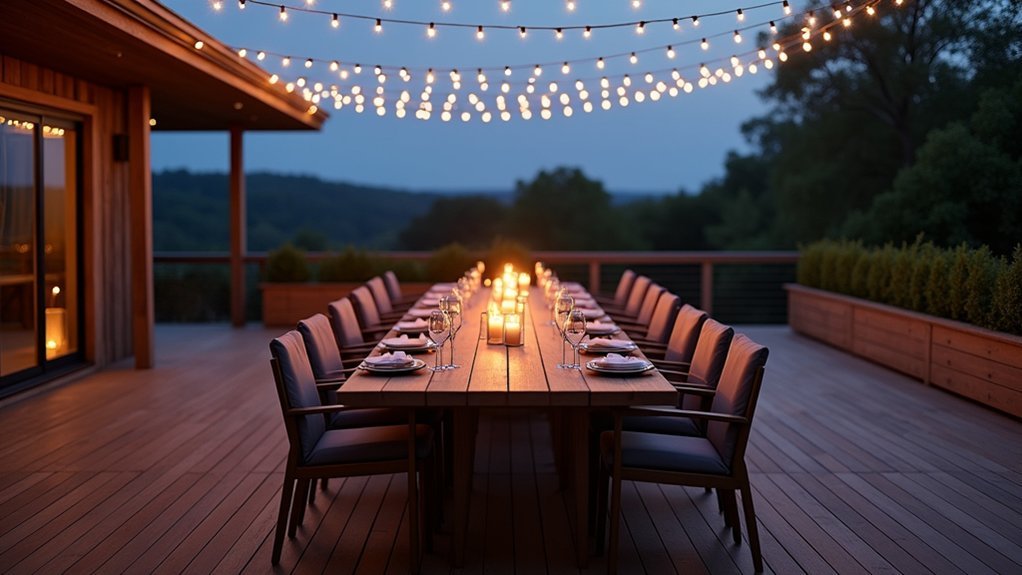
Place your dining table at the center of your deck to create a natural gathering point that draws guests together for meals and conversation. This arrangement guarantees equal access from all sides and establishes your table as the focal point of your outdoor space.
Choose a table size that leaves at least three feet of clearance around all edges for comfortable movement. You’ll want guests to push back chairs and navigate freely without bumping into railings or planters.
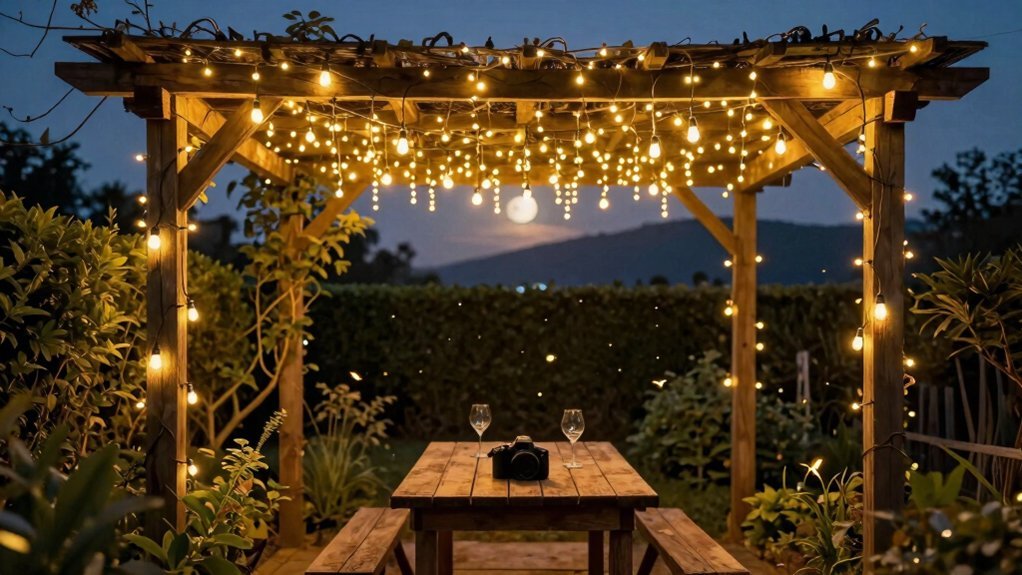
Position your chairs evenly around the table, and consider adding a statement centerpiece that won’t obstruct sightlines across the table. Install overhead string lights or a pendant fixture directly above to define the dining zone and provide ambient evening illumination. This setup transforms your deck into an inviting outdoor dining room.
Multi-Zone Layout Separating Eating and Lounging Areas
You’ll want to create distinct zones for eating and lounging by establishing clear boundaries that guests can naturally recognize.
Position your dining table and chairs in one area while placing comfortable seating like sofas or lounge chairs in a separate section, using rugs or planters to visually define each space.
Keep pathways between zones wide and unobstructed so guests can move freely without squeezing past furniture or interrupting conversations.
Define Clear Zone Boundaries
When you’re hosting a party on your deck, creating distinct zones for dining and lounging prevents the awkward shuffle of guests trying to find their place. You’ll want to establish visual and physical boundaries that guide traffic flow naturally without feeling restrictive.
Use these strategies to define your zones effectively:
- Outdoor rugs: Place different rugs under each area to anchor furniture groupings and signal shifts between spaces
- Planters and greenery: Position tall potted plants or planter boxes as natural dividers that add privacy without blocking sightlines
- Lighting variations: Install string lights over the lounge area and pendant fixtures above the dining table to differentiate atmospheres
These boundaries help guests instinctively understand where to eat, mingle, and relax throughout your event.
Strategic Furniture Placement
Once you’ve established your zone boundaries, the real work begins with positioning each piece of furniture to maximize both comfort and conversation. Place your dining table near the kitchen or grill access point, reducing the distance you’ll carry hot plates and drinks. Angle chairs slightly inward to encourage interaction among seated guests.
In your lounging zone, arrange sofas and chairs in a U-shape or circular pattern rather than rigid rows. This configuration lets everyone see each other without craning necks. Keep coffee tables within arm’s reach but leave eighteen inches of clearance for leg room.
Position accent chairs at zone shifts—they’ll serve double duty, allowing guests to float between eating and relaxing areas. Don’t push furniture against railings; pull pieces forward to create intimate groupings.
Smooth Traffic Flow Paths
Because guests naturally migrate between eating and lounging zones throughout an event, you’ll need clear pathways that prevent bottlenecks and awkward shuffling.
Position your dining table and lounge seating with at least 36 inches of walking space between zones. This width accommodates two people passing comfortably while carrying plates or drinks.
Consider these traffic flow essentials:
- Create a circular route connecting the grill, dining area, and lounge section so guests don’t backtrack
- Angle furniture corners away from main walkways to eliminate snag points
- Place drink stations at pathway intersections where they’re accessible without blocking movement
Avoid pushing all furniture against railings, which forces single-file movement.
Instead, create natural lanes that guide guests intuitively from one zone to another without verbal direction.
Bar-Centric Design for Cocktail Party Flow
A well-positioned bar station sets the stage for how guests move and mingle throughout your deck space.
Place your bar against a railing or wall to create a natural focal point that draws guests inward rather than clustering at entry points.
Position seating in a semicircle around the bar area, leaving three to four feet of clearance for guests to approach and step away with drinks.
Add a few high-top tables nearby so people can set down glasses while chatting.
You’ll want to keep the bar away from food stations to distribute foot traffic evenly across your deck.
Consider placing ice buckets and garnish trays within arm’s reach of your bartending zone.
This arrangement encourages natural circulation and prevents bottlenecks during peak serving times.
Fire Pit Surrounding Arrangement for Evening Entertainment
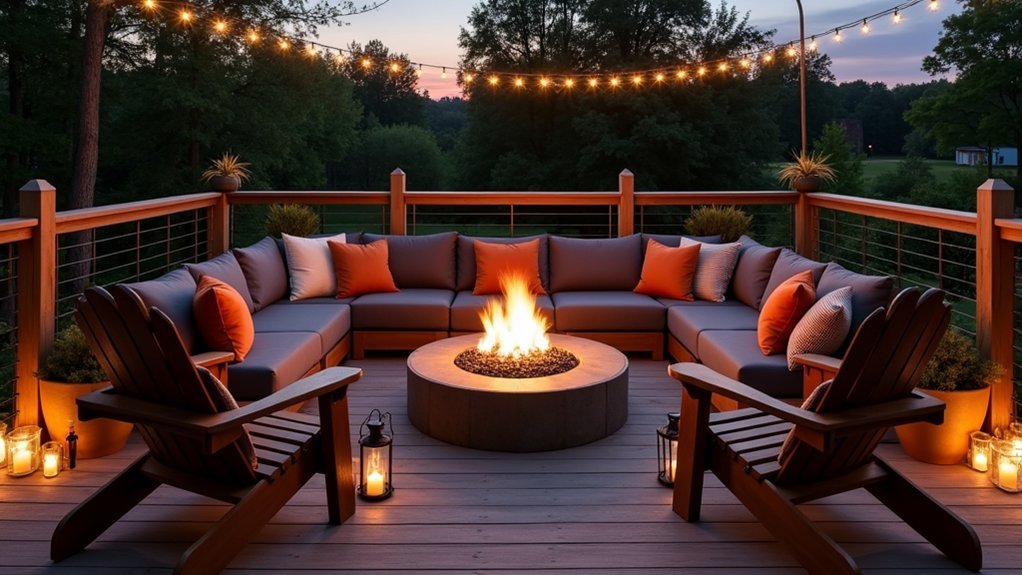
When evening falls and temperatures drop, your fire pit becomes the natural gathering hub that keeps guests comfortable and conversations flowing.
Position Adirondack chairs or deep-seated loungers in a circular arrangement, maintaining 3-4 feet from the flames for safety and heat distribution.
Create multiple seating tiers to accommodate larger groups:
- Place primary seating directly around the pit for intimate conversation
- Add a secondary ring of benches or ottomans for overflow guests
- Include side tables between chairs for drinks and snacks
You’ll want to leave one section open for easy access to the fire.
Consider weather-resistant cushions in darker colors that hide ash and smoke residue.
Strategic placement of outdoor rugs defines the space while protecting your deck surface from stray embers.
Modular Furniture Configuration for Flexible Party Sizes
When you’re hosting gatherings that range from intimate dinners to large celebrations, modular furniture gives you the flexibility to adapt your deck layout on the fly.
Sectional sofa arrangements let you reconfigure seating into L-shapes, U-shapes, or separate conversation zones depending on your guest count. Pair these with expandable seating options like stackable chairs or storage ottomans that double as extra seats, and you’ll always have the right setup for any party size.
Sectional Sofa Arrangements
Modular sectional sofas give you the flexibility to reconfigure your deck seating based on how many guests you’re hosting.
For intimate gatherings of six to eight people, arrange pieces in a U-shape to encourage conversation. When larger crowds arrive, separate the sections into distinct seating clusters throughout your deck.
Consider these arrangement strategies for maximum versatility:
- L-shaped configurations work well in corners, opening up central floor space for mingling
- Floating arrangements positioned away from railings create natural traffic flow around the perimeter
- Scattered individual pieces transform one sectional into multiple conversation zones
Choose sectionals with lightweight, weather-resistant frames so you can quickly adapt your layout. Ottomans that double as extra seating add functionality when unexpected guests show up.
Expandable Seating Options
Expandable seating lets you scale up or down based on your guest count without cluttering your deck with unused furniture.
Modular pieces connect and separate quickly, transforming a cozy four-person setup into seating for twelve when needed.
Choose ottomans that double as extra seats when guests arrive unexpectedly.
Stackable chairs store compactly against a wall or in a corner, ready for deployment.
Benches with hidden storage underneath serve dual purposes while maintaining clean sightlines.
Position your modular sections in an L-shape for intimate gatherings, then pull them apart into separate conversation zones for larger events.
Invest in lightweight pieces you can rearrange solo.
Folding side tables complement expandable seating by providing surfaces only when you need them, then disappearing after the party ends.
Poolside Deck Layout for Summer Celebrations
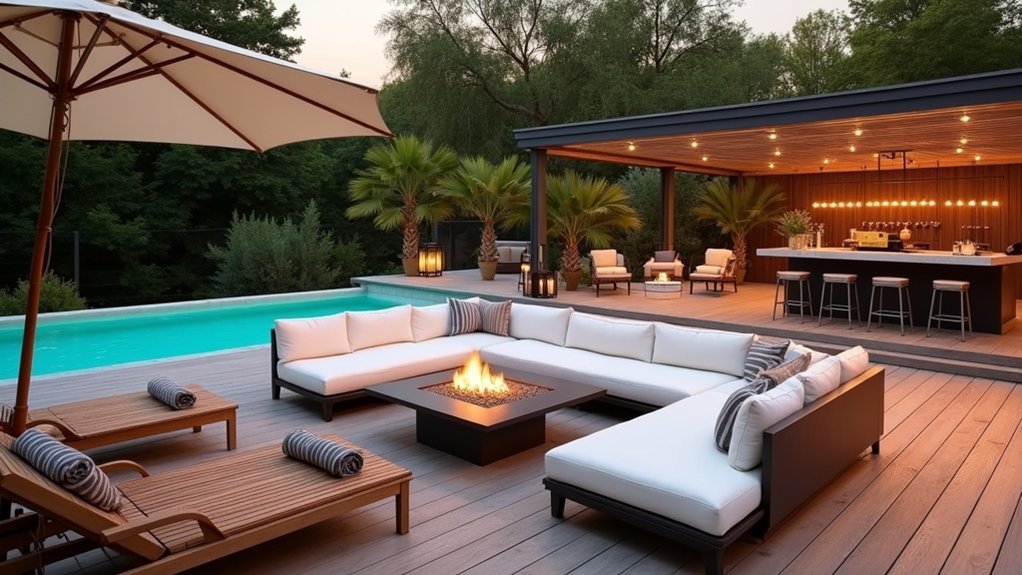
Setting up your poolside deck for summer celebrations calls for a layout that balances fun, safety, and comfort.
Position loungers and chairs at least four feet from the pool’s edge to prevent accidents while still offering easy water access. Choose quick-drying materials like resin wicker or aluminum that withstand splashes and humidity.
Create distinct zones to maximize functionality:
- Lounging area: Arrange chaise lounges with small side tables for drinks and sunscreen
- Dining zone: Place a weather-resistant table with umbrella away from the splash zone
- Beverage station: Set up a rolling bar cart near the house for convenient drink refills
You’ll want to anchor lightweight furniture to prevent wind displacement.
Add outdoor rugs with non-slip backing to define spaces and reduce slipping hazards around wet areas.
Open Center Design for Dancing and Mingling Space
While poolside layouts prioritize safety zones and splash-resistant placement, parties centered on dancing and mingling demand a completely different approach—one that puts open floor space at the heart of your deck design.
Push all furniture to the perimeter, creating an unobstructed central zone. You’ll want at least 100 square feet for comfortable movement when guests start dancing.
| Furniture Type | Placement | Purpose |
|---|---|---|
| Sectional sofas | Against railings | Perimeter seating |
| High-top tables | Corner positions | Drink stations |
| Bar cart | Near entry point | Beverage access |
| Ottoman clusters | Deck edges | Flexible seating |
| String lights | Overhead | Dance floor definition |
Anchor your dance area with overhead lighting to naturally draw guests toward the center. Remove coffee tables entirely—they become obstacles when people move freely.
Tiered Deck Arrangement for Multi-Level Socializing
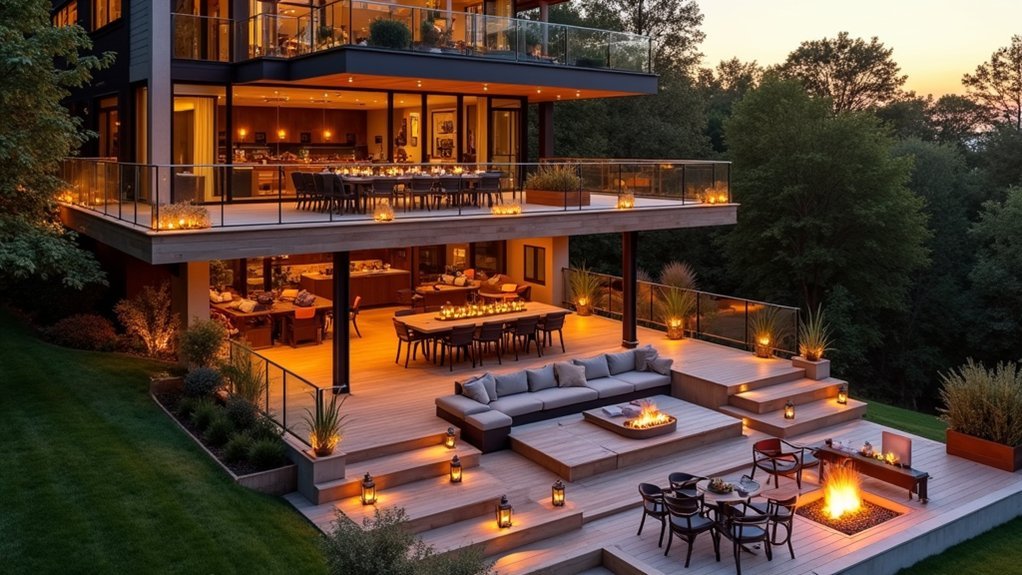
If your deck features multiple levels, you’ve got a built-in advantage for party hosting that single-plane designs can’t match. Each tier naturally creates distinct zones for different activities, allowing guests to flow between spaces while maintaining intimate conversation areas.
Position your furniture strategically across levels to maximize this architectural benefit:
- Place lounge seating on the lowest tier for relaxed conversations away from main traffic
- Set up your bar cart or beverage station on the middle level for easy access from all areas
- Reserve the highest tier for dining furniture where guests can enjoy elevated views
Connect your levels visually by using consistent cushion colors or complementary furniture styles. Add pathway lighting along steps to guarantee safe navigation as evening arrives.
Frequently Asked Questions
What Materials Are Most Weather-Resistant for Outdoor Deck Furniture?
You’ll find teak, aluminum, and all-weather wicker are your most weather-resistant options. They’ll withstand rain, sun, and humidity without deteriorating. You can also consider powder-coated steel or HDPE lumber for durability that lasts years.
How Much Space Should I Leave Between Furniture Pieces for Comfortable Movement?
You should leave at least 30-36 inches between furniture pieces for guests to walk comfortably. Around dining tables, allow 36-48 inches so people can pull out chairs and move freely during your party.
What Is the Ideal Furniture Height for Comfortable Conversation Among Seated Guests?
You’ll want seating with heights between 17-19 inches, paired with coffee tables around 16-18 inches tall. This keeps everyone’s eye level similar, so you’re not craning your neck during conversations.
How Do I Secure Lightweight Furniture on Windy Days During Parties?
You’ll want to use weighted bases, sandbags, or tie-down straps anchored to your deck’s railings. You can also place heavier items strategically or invest in furniture clips that attach directly to deck boards.
What Lighting Options Work Best to Complement Various Deck Furniture Arrangements?
You’ll want string lights overhead for ambient glow, lanterns on tables for intimate dining areas, and pathway lights around seating zones. Solar-powered stake lights work perfectly along deck perimeters without requiring electrical connections.