

Before you dig, call your local utility locating service to mark underground lines and plan a safe route. Next, select 12 AWG wire in protective conduit—gray PVC conduit works best for durability. Finally, bury your speaker wire at least 24 inches deep per local codes and mark the cable location above ground with visible markers. Follow these steps to protect your investment and ensure long-term reliability—the details below reveal exactly how to execute each one.
Plan Your Route and Call Before You Dig
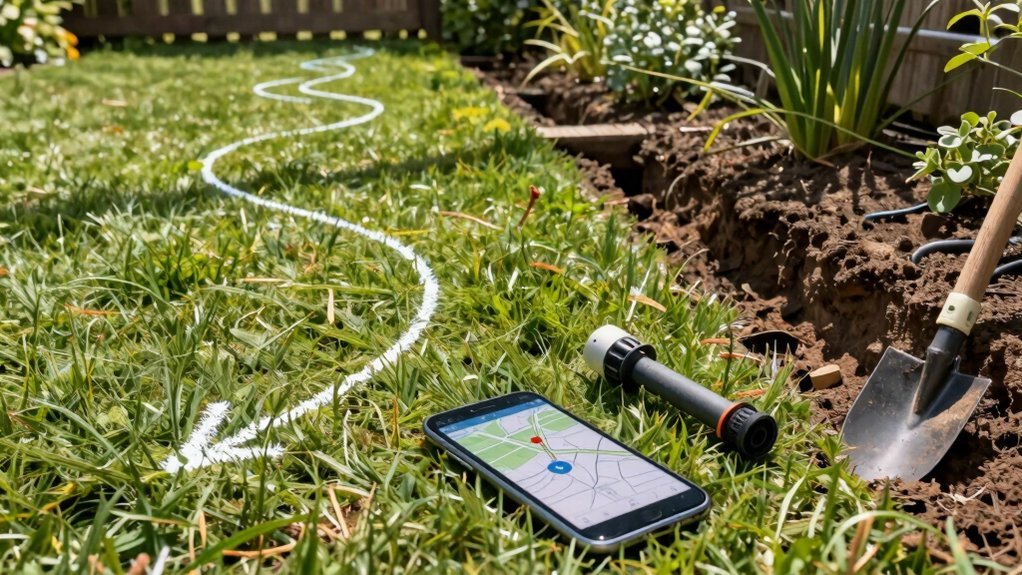
Before you break ground on your outdoor speaker installation, why not take a few precautions that’ll save you from costly mistakes? Start by calling Digger’s Hotline or your local utility locating service to identify and mark underground lines in your planned route. This step prevents you from accidentally hitting AT&T, fiber, or Spectrum cables that could result in expensive damage and service interruptions.
Next, plan your route strategically. Choose a path along fence lines or behind landscaping features to keep wiring out of sight and reduce tripping hazards. Favor direct routes that minimize crossing other service lines while maintaining appropriate burial depth for low-voltage speaker wiring.
Finally, test your route with a string pull or mock run before trenching. This anticipates fishing challenges and ensures smooth installation.
Choose the Right Wire Gauge and Protective Conduit
How do you know which wire gauge will handle your outdoor speaker setup without compromising sound quality? You’ll want to match your wire gauge to your power delivery and distance.
For a 60 ft run delivering moderate power (100–1000 W), here’s what you need to consider:
- 12 AWG wire minimizes voltage drop and maintains optimal performance over longer distances
- 1″ to 1-1/2″ conduit comfortably accommodates two-wire runs while protecting conductors from moisture and physical damage
- Direct burial or conduit-protected wire ensures long-term reliability; conduit offers superior protection for extended outdoor segments
You can cut 50 ft segments from a standard 100 ft spool, reducing waste and simplifying your burial planning. Gray electrical conduit provides durable protection for exposed or vulnerable sections, preventing degradation and extending your system’s lifespan significantly.
Bury at Proper Depth and Mark Your Cable Location
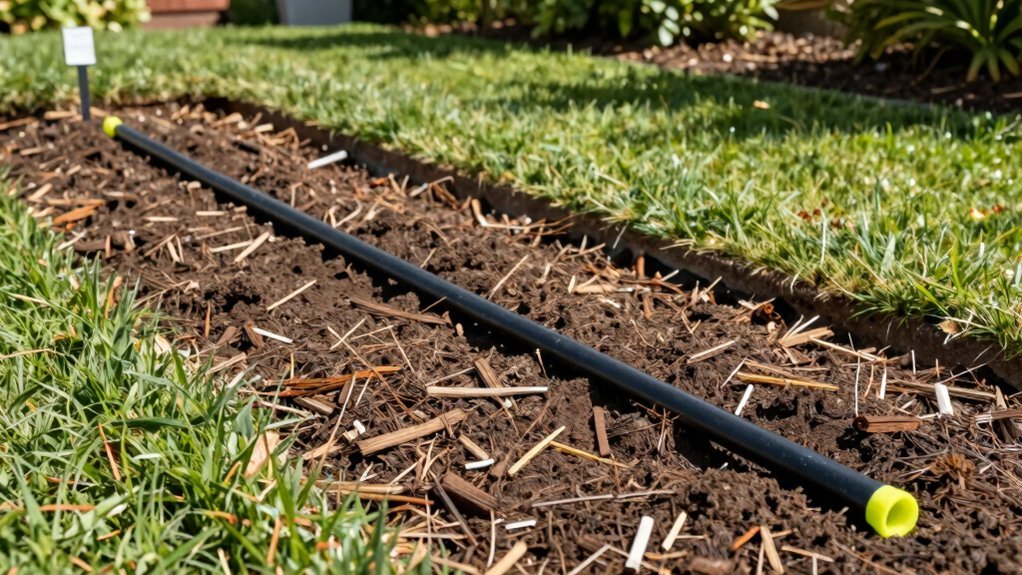
Once you’ve selected your wire and conduit, you’ll need to dig to the proper depth and mark your cable route. Most local codes require burying outdoor speaker wire at least 24 inches deep to prevent accidental disturbance. Before you dig, call your local dig hotline to confirm there aren’t existing utilities in your path and to verify permitted depths for your area.
After burying your cable, place visible markers above ground along the entire route. These markers should indicate low-voltage status, burial depth, and caution information. They’ll deter future diggers and clearly show where your wire runs. For added protection in high-traffic or landscaped areas, consider using gray PVC conduit instead of direct burial wire alone.
Frequently Asked Questions
How to Bury Outdoor Speaker Wire?
You’ll dig a 12–24 inch trench, lay 12 AWG wire on a smooth bed, use PVC conduit with sealed joints, test performance above ground first, then bury it. Finally, you’ll mark the line with color-coded markers warning future diggers.
Does Outdoor Speaker Wire Need to Be Buried?
No, you don’t have to bury outdoor speaker wire. You can route it above ground along fences, walls, or through conduit. However, burying it protects your wire from weather damage, pests, and tripping hazards while keeping your landscape clean.
How to Hide Outdoor Speaker Wire?
You can hide outdoor speaker wire by burying it in PVC conduit under hardscapes, running it along fences behind features, or using low-voltage markers. Test it first, then bury at recommended depths for durability and safety.
Does Outdoor Speaker Wire Need to Be in Conduit?
You don’t strictly need conduit for direct burial speaker wire, but you should use it. Gray electrical conduit protects your wires from moisture, mowing damage, and soil movement, especially if you’re crossing yards or running near landscape features.