
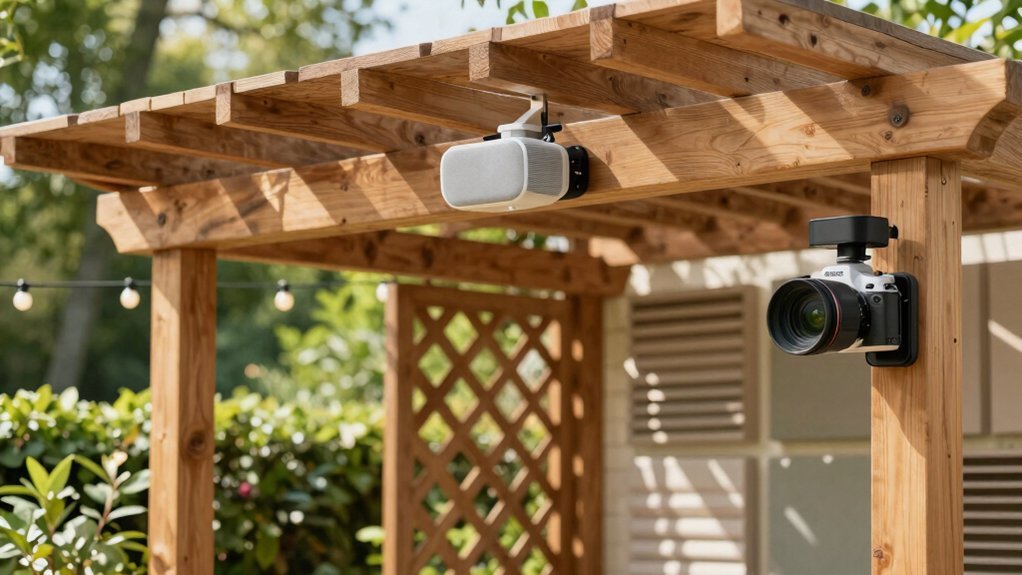
Position your speakers above head height on pergola posts, angling them toward seating areas while minimizing wall reflections. Distribute multiple speakers throughout the space for even coverage, compensating for sound dissipation in open air. Install weatherproof, outdoor-rated speakers mounted at 8–10 feet when possible. Integrate Wi-Fi and voice-controlled multi-zone amplifiers so you’ll manage volume independently across different areas. Calibrate your system with iterative testing, adjusting EQ for balanced sound quality. There’s much more to discover about creating the perfect acoustic environment for your outdoor space.
Design a Sheltered Listening Zone With Strategic Speaker Placement
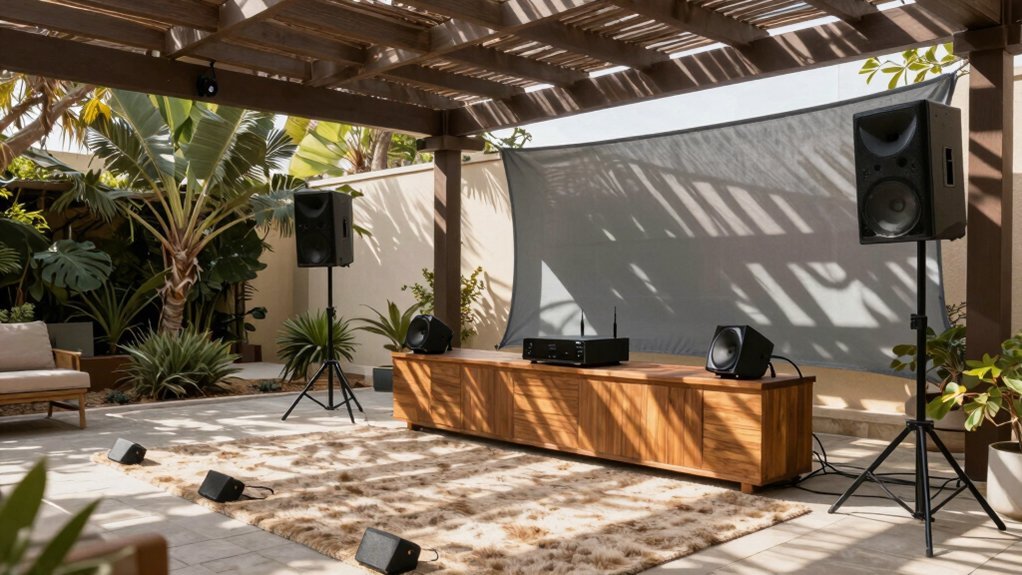
How can you create an outdoor audio experience that sounds as polished as your indoor setup? Strategic speaker placement is your answer. Mount speakers above head height on brackets, angling them toward seating areas to direct sound exactly where you need it. This positioning minimizes problematic wall reflections that muddy audio quality.
Distribute multiple speakers throughout your pergola rather than relying on one powerful unit. This approach delivers even coverage across your entire space while keeping volume levels moderate and natural-sounding.
Crucially, orient all speakers away from neighboring properties to respect boundaries and reduce complaints. Consider mounting them on pergola posts or eaves for weather protection. By thoughtfully positioning your equipment, you’ll establish a sheltered listening zone that rivals any indoor room.
Optimize Audio Coverage and Power for Open Pergola Spaces
Why does audio coverage matter more in open pergola spaces than in enclosed rooms? Sound dissipates quickly outdoors, so you’ll need strategic placement to maintain consistent volume across seating areas.
Mount multiple weatherproof speakers around your pergola—at eaves, posts, and beams—to distribute audio evenly. Position them 8–10 feet high at downward angles, which balances sound projection with audience ear level and minimizes hard-surface reflections.
Mount multiple weatherproof speakers at eaves and posts, positioned 8–10 feet high at downward angles for even audio distribution.
Use outdoor-rated cables and install a multi-zone amplifier. This setup lets you adjust volume independently for different pergola sections without affecting the entire space. Lower volumes reduce neighbor disruption while maintaining clarity.
Consider adding a subwoofer—buried or rock-style—to enhance bass perception without increasing overall loudness. This approach ensures full, balanced sound throughout your open outdoor setting.
Integrate Control Systems and Fine-Tune Sound Quality
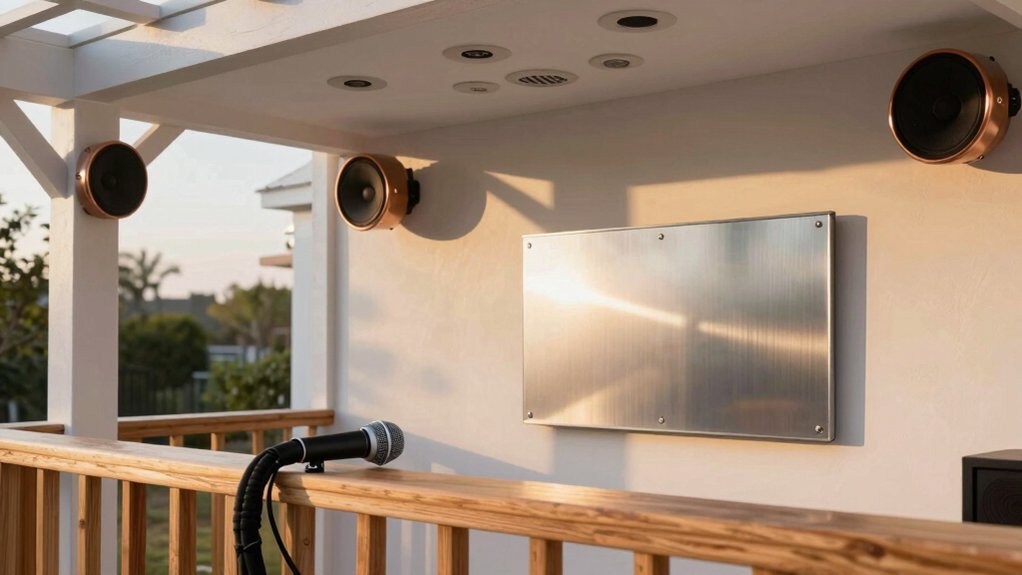
Once you’ve positioned your speakers strategically, controlling them intelligently makes all the difference. Integrate Wi-Fi and voice assistant compatibility so you’ll manage volume, playback, and zones directly from your smartphone or through voice commands—no fumbling with remotes while entertaining.
Multi-zone receivers or amplifiers let you independently adjust different pergola areas, preventing one speaker from overwhelming your setup. Mount controllers near seating zones for convenient access.
Next, fine-tune your sound quality through iterative testing. Adjust EQ settings and levels across both seating and dining areas, listening carefully for balanced audio and clear intelligibility in open-air acoustics. You’ll likely need to compensate for outdoor ambient noise and reflective surfaces. Take your time calibrating—proper tuning transforms your pergola’s audio experience from mediocre to exceptional.
Frequently Asked Questions
What Is the 1-5 Rule for Speaker Placement?
The 1-5 rule suggests you place speakers in a sequence of up to five placements to cover your listening area. You’ll typically start with two primary sources, then add up to three spread speakers for even coverage throughout your space.
What Is the Golden Rule for Speaker Placement?
You should direct sound toward your primary seating area while aiming away from neighboring properties to minimize spill. This golden rule ensures you’ll achieve quality sound without disturbing others nearby.
How to Make Outdoor Audio Sound Better?
You’ll make outdoor audio sound better by positioning speakers above head height angled downward, spreading multiple speakers throughout your space, and selecting weather-resistant models. You’ll also need adequate wattage and proper outdoor-rated wiring for optimal performance.
How to Position Speakers for the Best Sound?
You’ll achieve the best sound by mounting speakers above head height, angling them toward seating areas, and spreading multiple speakers around your space. You’ll minimize interference and create even coverage without pointing toward neighbors’ properties.

Leave a Reply