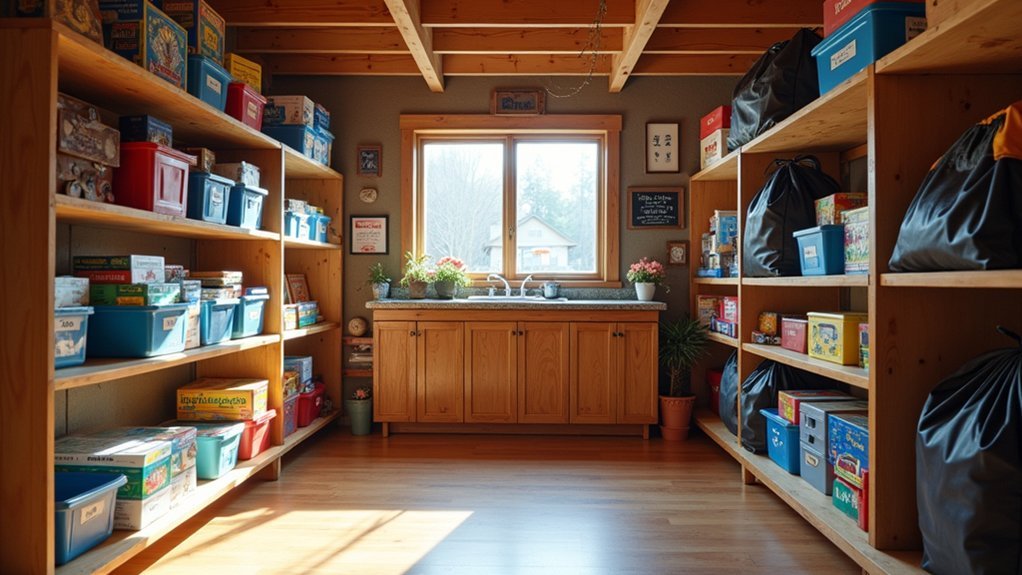
Protect your seasonal games in your basement with weatherproof containers that have snap-tight lids, and elevate them off concrete floors to prevent moisture damage. Use vertical storage solutions like pegboards and wall racks for bulky yard games. Implement a quarterly rotation system with clear labels and photos for quick identification. Maintain 60-70°F temperatures with a dehumidifier to prevent warping. Group similar items in uniform containers to maximize shelf space and create visual organization. These simple strategies will transform your cluttered basement into a game preservation haven.
Creating a Weatherproof Barrier for Outdoor Game Equipment
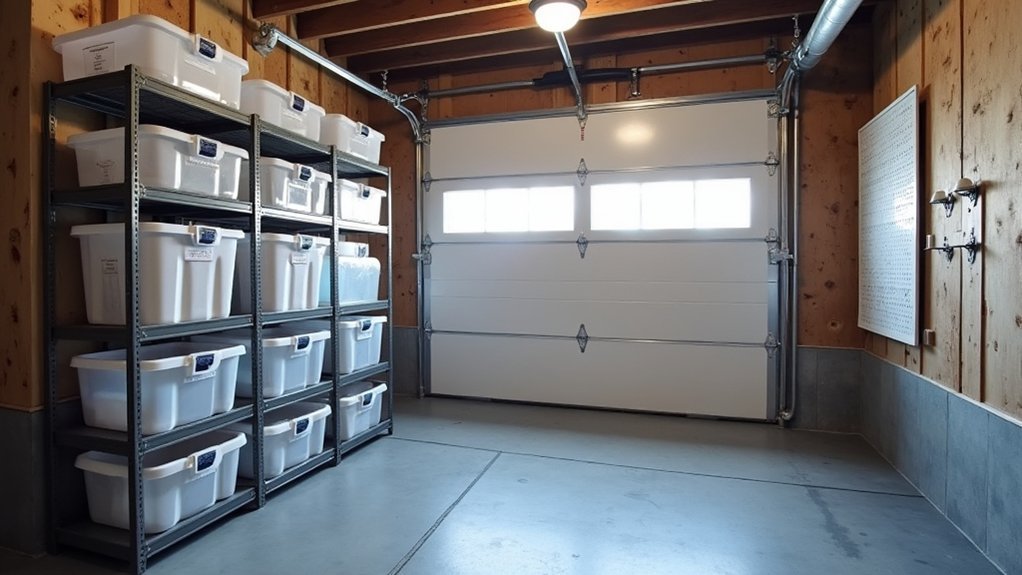
While basement storage offers protection from direct weather exposure, it still presents moisture challenges that can damage your outdoor game equipment. Invest in CX Heavy Duty Storage Containers with snap-tight lids to create an effective moisture barrier around your games and equipment.
Don’t place bins directly on concrete basement floors—moisture can wick upward. Instead, elevate containers on sturdy shelving or pallets. For seasonal items you won’t need for months, compress them in waterproof exterior bins similar to Hefty Shrink-Pak bags to save space.
Label each container clearly with contents and season so you’ll minimize time spent searching with lids open. For additional protection, place smaller game pieces and electronic accessories in sealable bags inside the main containers to prevent rust and corrosion.
Vertical Storage Solutions for Bulky Yard Games
Basement floor space becomes precious real estate when storing seasonal games. Take advantage of your walls’ vertical potential by stacking bulky yard games like lawn darts, bocce, and foldable cornhole sets on tall shelves or racks that maximize height without sacrificing accessibility.
Install wall-mounted pegboards or slatwall systems with hooks and baskets to suspend game components at various heights. For flat-packed items and seasonal accessories, consider a tall rolling bin or narrow cabinet with adjustable shelves that can be reconfigured as your collection changes.
Create a tiered visibility system with deeper lower shelves for larger items and shallower upper shelves for smaller parts. Don’t forget to label each vertical section by game type and season, making rotation effortless and preventing your favorite games from disappearing behind rarely used equipment.
Rotating Seasonal Games With Smart Labeling Systems
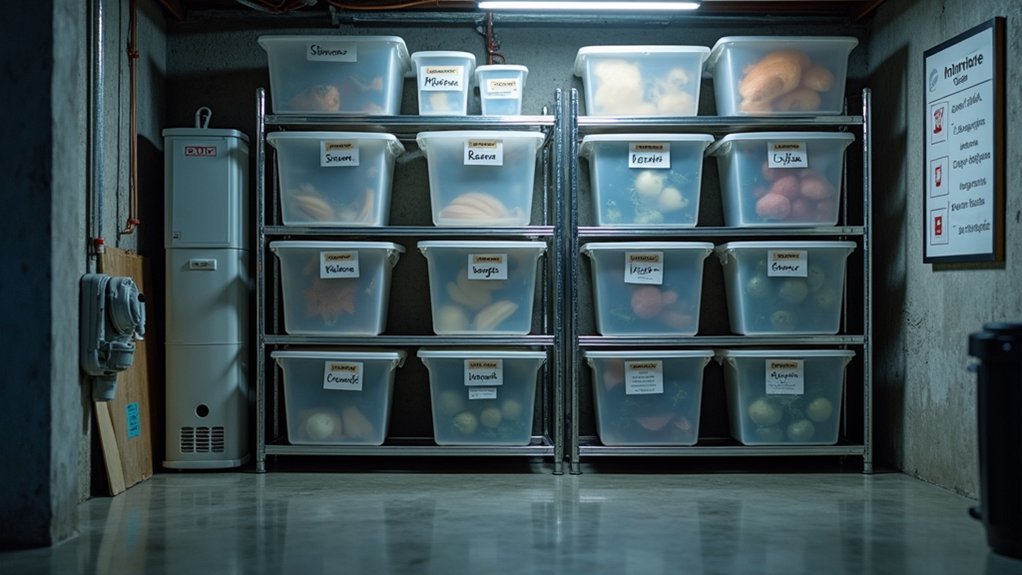
When was the last time you desperately searched for a specific game, only to find it buried beneath layers of seasonal clutter? Implementing a smart rotation system with clear labeling can transform your basement game storage from chaotic to efficient.
Use transparent storage bins sized appropriately for seasonal games, and position them at eye level on dedicated shelves or rolling carts for easy access during transition periods. Your labeling system should clearly indicate seasonality and include visual cues for quick identification.
- Create a quarterly rotation schedule and maintain a master inventory list with item details and rotation dates
- Implement a “one-year rule” by tagging unused items for donation during each seasonal switch
- Group like items together in bins with seasonal labels and small photos for instant recognition
Climate Control Essentials for Wood and Plastic Game Preservation
Your cherished board games require more than just organized storage to maintain their longevity. In basement environments, controlling humidity and temperature is critical for preserving both wooden and plastic components.
Keep your basement between 60-70°F (15-21°C) and use a dehumidifier to prevent warping, mold growth, and material degradation. For wooden games, store in breathable containers with desiccants and elevate plastic components off concrete floors to prevent moisture damage.
| Material | Threat | Solution |
|---|---|---|
| Wood | Warping & Mold | Airtight containers with desiccants |
| Plastic | Degradation | Elevated shelving, avoid concrete |
| Cardboard | Cracking | Stable temperature maintenance |
Monitor seasonal humidity changes with a hygrometer and adjust your climate control accordingly, especially during humid summer months when games are most vulnerable.
Space-Saving Organization Methods for Game Accessories
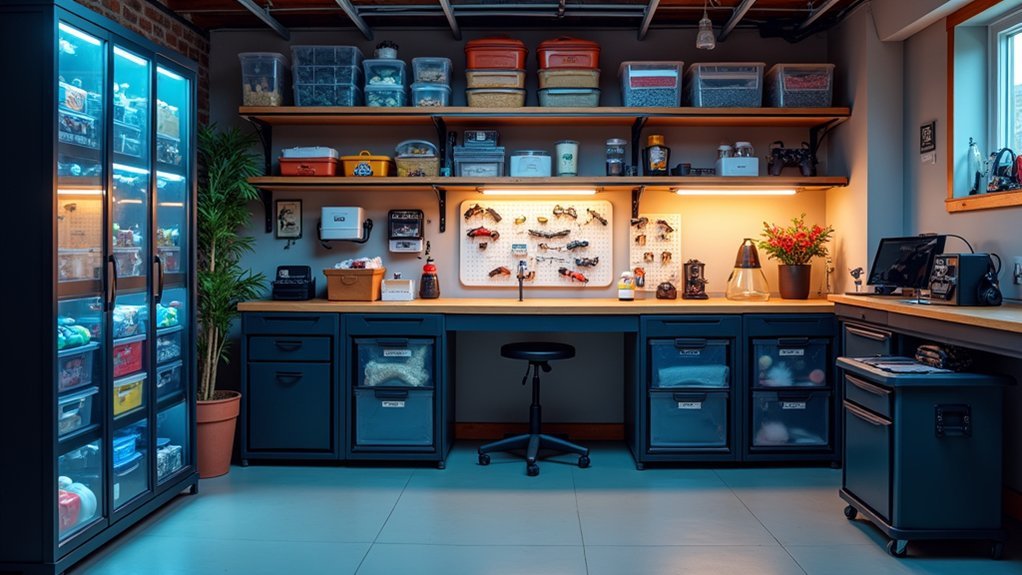
With climate control in place to protect your games, organizing the pieces and accessories becomes the next storage challenge. Maximize your basement storage space by using baskets that fit shelves perfectly to create a uniform look while corralling various game sizes.
Smart organization amplifies basement storage potential—uniform baskets create order while maximizing every inch of shelf space.
For optimal organization:
- Stack strategically – Place larger board games on bottom shelves and reserve upper shelves for smaller boxes and accessories. This improves accessibility and balances the visual weight.
- Contain small components – Use snap-tight containers or bins with lids to protect game pieces from dust while making the most of vertical space.
- Implement visual systems – Consider color-blocking your collection or installing pegboard organizers for cards and rulebooks, making items easier to locate.
Frequently Asked Questions
How to Maximize Storage in Basement?
Use fitted baskets and modular bins to organize games by size. Place large board games on bottom shelves, smaller items above. You’ll maximize space with stackable organizers and add pegboards for quick access to frequently used items.
What Shouldn’t You Store in a Basement?
Don’t store electronics, leather goods, perishable foods, temperature-sensitive items, or important documents in your basement. You’ll want to keep anything valuable off concrete floors and away from potential moisture damage.
How to Store Board Games in a Basement?
Store board games on bottom shelves for stability, using moisture-resistant containers. Stack boxes neatly, color-coordinate them, and add silica packets to prevent dampness. Don’t forget to label everything for easy access.
How to Turn a Basement Into a Game Room?
Zone your basement into play areas, add proper lighting, install moisture barriers, and include modular furniture. Organize games visually, incorporate comfy seating, and ensure adequate ventilation so you’ll enjoy gathering with friends year-round.