Installing a compact shuffleboard court requires strategic planning. Choose a flat, level concrete surface with adequate clearance around all sides. Prepare a foundation that allows proper drainage to prevent damage. Select weather-resistant materials like VersaCourt tiles with UV protection. Scale scoring zones proportionally to maintain authentic gameplay. Add comfortable features like adequate lighting and nearby seating. These tips will transform your limited space into a durable, enjoyable recreational area for years to come.
Selecting the Ideal Space for Your Compact Court
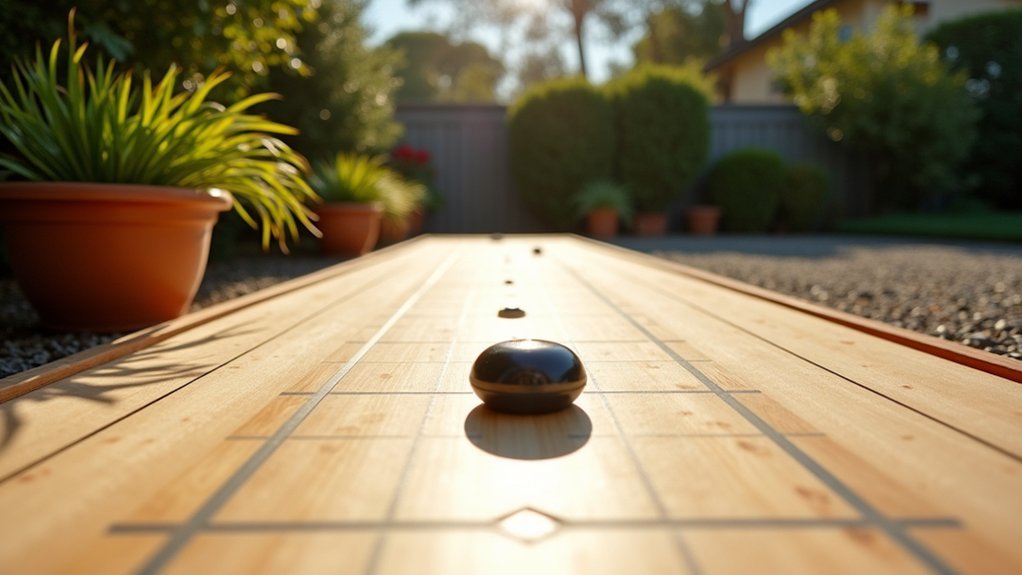
Where you place your compact shuffleboard court can make or break your playing experience. You’ll need a flat, level surface—hard concrete provides the best performance foundation for your court.
Location matters—choose a flat, level concrete surface for optimal shuffleboard performance.
While compact courts are designed for smaller areas, ensure you’ve allocated enough space for comfortable gameplay with adequate standing room and margins around the perimeter.
Don’t overlook practical considerations like drainage. Your surface should allow water to flow away from the court area to prevent pooling that can damage tiles over time.
You’ll also want to ensure proper clearance around all sides for maintenance access.
Choose locations that accommodate the curbside delivery of tile pallets, and remember that your chosen spot must withstand year-round weather exposure.
UV-protected polypropylene tiles work best for outdoor installations in any climate.
Preparing the Perfect Foundation Surface
Now that you’ve selected the ideal location, establishing a proper foundation for your compact shuffleboard court becomes your next priority. A level concrete surface delivers optimal performance, though any hard, level surface will work effectively for your compact court.
Remember that subsurface preparation requirements vary by region, and the kit doesn’t include excavation or concrete costs. Factor these local expenses into your budget before beginning installation.
For maintenance accessibility, design your foundation with cleaning in mind. If debris accumulates beneath the tiles, you’ll need to remove them in large sections by sliding them out to clean the subsurface effectively.
When planning your timeline, allow for the 7-10 business day manufacturing period plus delivery time. Ensure your installation site provides sufficient access for curbside delivery, as carriers will need space to offload the palletized tiles.
Choosing Weather-Resistant Materials for Longevity
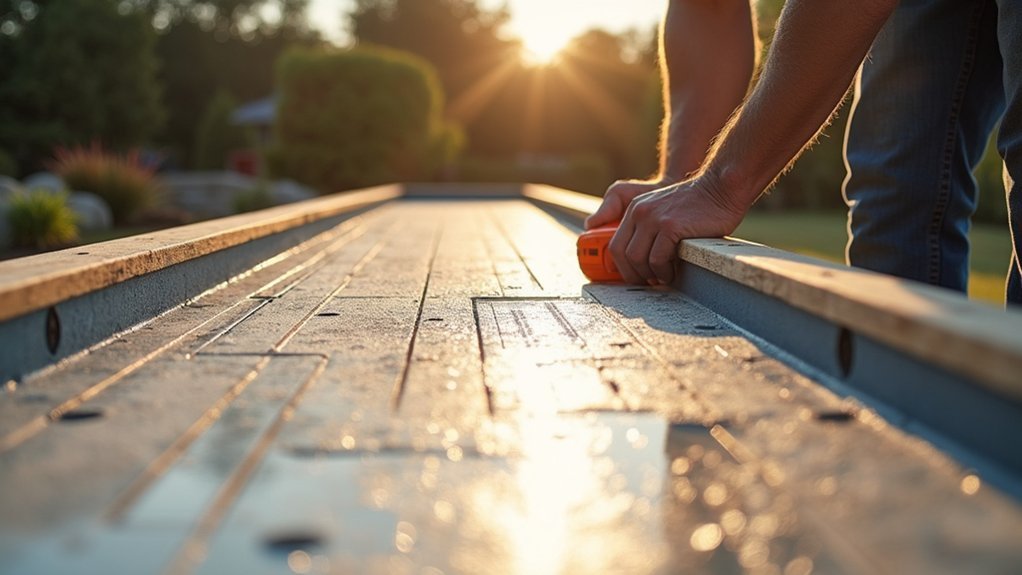
Why invest time and money in a shuffleboard court that won’t stand up to the elements? For outdoor durability that lasts, VersaCourt tiles deliver exceptional performance with their 100% virgin prime grade co-polymer polypropylene construction.
- Select tiles with UV, antioxidant, and anti-static additives for maximum weather resistance
- Install using interlocking patterns for stability in varying weather conditions
- Build on level concrete or solid subsurfaces to support tile integrity
- Keep courts clear of debris using leaf blowers for regular maintenance
- Wash occasionally with low-pressure water, avoiding painted lines
Your outdoor shuffleboard court will face years of sun, rain, and temperature fluctuations. With proper material selection and installation, you’ll enjoy a playing surface that maintains its quality year-round, backed by a lifetime warranty against weather damage.
Creating Proper Scoring Zones for Small Courts
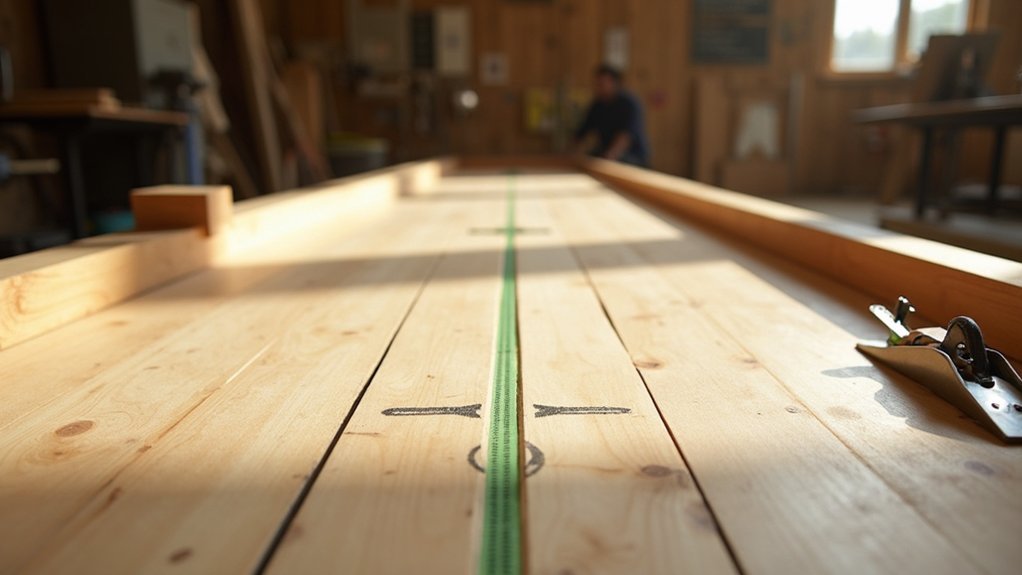
How can you maintain authentic shuffleboard gameplay when space is limited? The key is proportional scaling. Adjust your scoring zones within your shorter court while preserving the standard triangle layout. Use high-contrast paint or tape for clear visibility on smaller surfaces.
| Zone Feature | Implementation Tip |
|---|---|
| Length Ratio | Scale down from 39-foot baseline proportionally |
| Width | Maintain 6-foot court width centered |
| Dividing Line | Use contrasting color for visibility |
| Scoring Areas | Measure accurately from foul line |
| Markers | Consider removable/adjustable options |
When creating your zones, ensure accurate measurements from the foul line to the first scoring area, even on compact courts. This maintains fair gameplay despite the reduced dimensions. Consider modular scoring markers that can be adjusted as needed for different court sizes.
Adding Essential Features for Comfortable Play
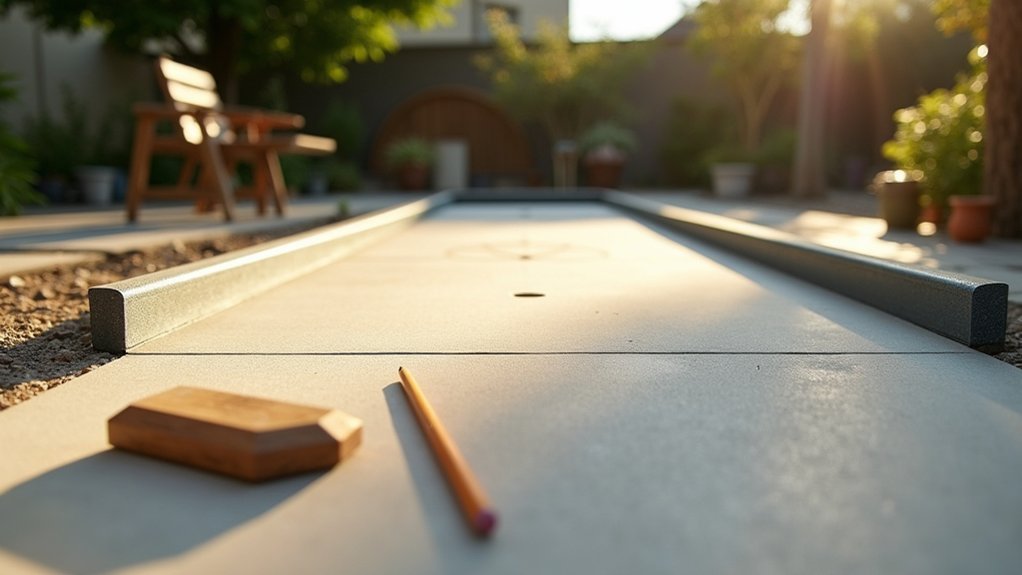
Beyond scoring zones, the comfort of players markedly impacts gameplay quality on compact courts. You’ll need to focus on these essential features to ensure enjoyable play on your VersaCourt installation:
- Create a level concrete foundation—this isn’t optional but absolutely essential for stable gameplay and proper tile performance
- Install the 10″ x 10″ outdoor tiles with the six-point locking system to minimize movement during active play
- Plan adequate space around the court for player movement and cue handling
- Incorporate regular maintenance routines including debris removal and occasional subsurface cleaning
- Consider adding shade structures or seating areas nearby, especially important for older players who may need periodic rest during matches
Frequently Asked Questions
What Is the Best Surface for a Shuffleboard Court?
A level concrete or hard surface is your best choice for shuffleboard courts. It provides optimal performance beneath VersaCourt tiles, ensuring stability and maintaining play quality long-term.
Should I Spray Silicone Spray on My New Shuffleboard Table?
No, don’t spray silicone directly on your new shuffleboard table. It’ll create inconsistent play and may void your warranty. Instead, apply it only to the underside of discs or use disc wax.
What Is the 10 off Rule in Shuffleboard?
The 10-off rule allows you to deduct 10 points from your opponent’s score when you knock their puck out of a scoring zone during your turn.
Is a 14-Foot Shuffleboard Table Too Short?
A 14-foot table is short for standard play but works fine for casual games. You’ll have limited long-range shots and strategy, but it’s perfect if your space is tight.