
To heat your backyard year-round, assess your space first—measuring dimensions and considering wind exposure. Install permanent fixtures like gas fireplaces in frequently used areas, or opt for portable propane heaters for flexibility. Create strategic heating zones by placing heaters near seating areas rather than walkways. Combine heating with windbreaks and cozy elements like outdoor rugs for maximum efficiency. The right combination of heating solutions will transform your outdoor space into a comfortable retreat regardless of season.
Assessing Your Outdoor Space for the Right Heating Solution
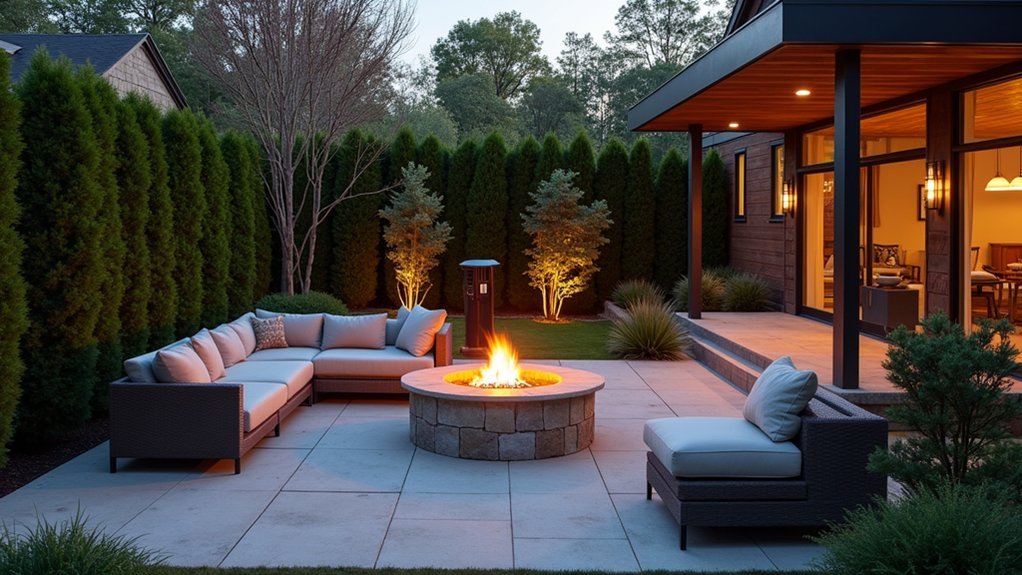
Why struggle through another season of underused outdoor space when the right heating solution can transform your backyard into a year-round retreat? The key is matching your heating needs to your specific environment.
First, measure your patio’s dimensions—larger areas need more powerful heaters, while compact spaces can thrive with smaller options. Next, evaluate wind exposure; open areas lose heat rapidly, so consider adding windbreaks alongside your heating solution for maximum efficiency.
Think about how you’ll use the space. Dining areas benefit from overhead heating, while conversation zones work better with radiant heaters at sitting level. Finally, assess your typical weather conditions—partially enclosed patios retain heat better than completely open spaces.
Permanent Heating Fixtures: Fireplaces, Fire Pits, and Built-In Options
With a solid understanding of your outdoor space’s needs, you’re ready to explore permanent heating fixtures—the gold standard for serious outdoor enthusiasts. These installations transform your patio into a year-round retreat while potentially increasing your property value.
| Feature | Benefit |
|---|---|
| Fixed installation | Streamlined look with reduced clutter |
| Overhead mounting | Even heat distribution across seating areas |
| Gas-powered options | Instant ignition and consistent warmth |
| Weather-resistant materials | Durability against elements (stainless steel, aluminum) |
| Built-in design | Seamless integration with existing landscape |
While the upfront investment is higher than portable options, you’ll enjoy long-term durability and superior performance. Remember to prioritize proper ventilation and safe placement on stable surfaces, keeping fixtures away from flammable materials according to manufacturer guidelines.
Portable Heating Solutions for Flexible Outdoor Arrangements
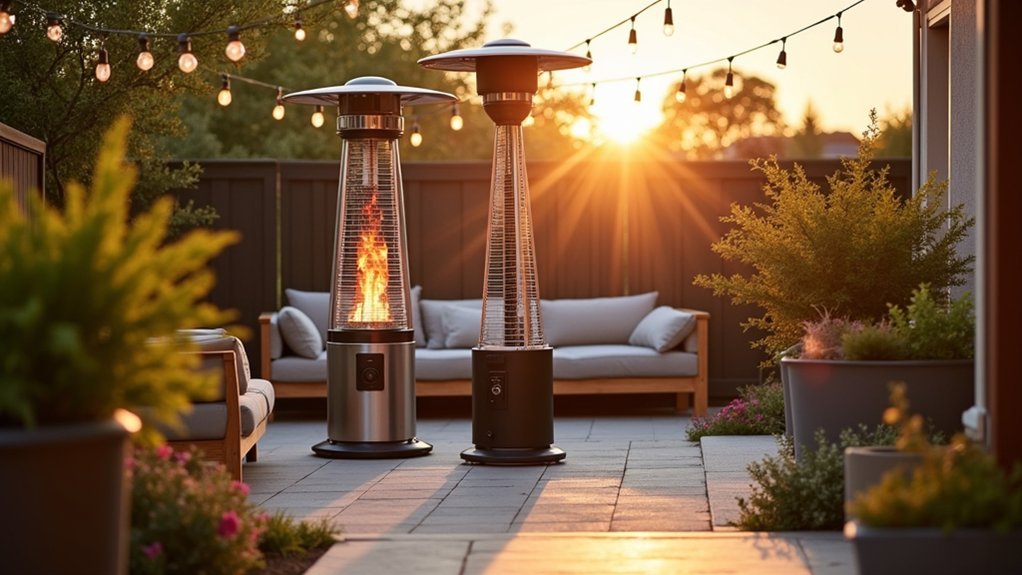
Not everyone wants to commit to permanent installations in their outdoor space. Portable heating options let you adapt your patio or deck as needed while maintaining flexibility in your layout.
Freestanding and tabletop heaters come in gas, electric, and infrared varieties to target specific seating areas. Infrared models are particularly effective in breezy conditions since they warm people and objects directly rather than the surrounding air.
For smaller spaces like compact patios or balconies, wall-mounted portable heaters maximize your floor area while delivering consistent warmth. When selecting your portable heating solution, consider your power source accessibility, preferred fuel type, safety features, and weather resistance. These factors will determine which option delivers reliable performance in your specific outdoor environment.
Creating Cozy Zones With Strategic Heater Placement
Strategic heater placement transforms your backyard from a collection of warming devices into thoughtfully designed comfort zones that invite relaxation year-round. By positioning heaters to face seating arrangements rather than walkways, you’ll create distinct warm spots where guests naturally gather without crowding a single heat source.
| Zone Type | Heater Placement | Comfort Enhancement |
|---|---|---|
| Dining Area | Ceiling-mounted above table | Add heat-retaining tablecloth |
| Lounge Seating | Wall-mounted at conversation height | Layer with outdoor rugs below |
| Transition Spaces | Portable units as needed | Install partial windbreaks |
Combine your heating approach with strategic windbreaks to prevent heat loss in breezy areas. You’ll maximize comfort by layering warmth—pair infrared or gas heaters with heat-retaining décor elements like rugs and curtains to extend the cozy feeling throughout your outdoor living space.
Weather-Resistant Heating Options for All Seasons
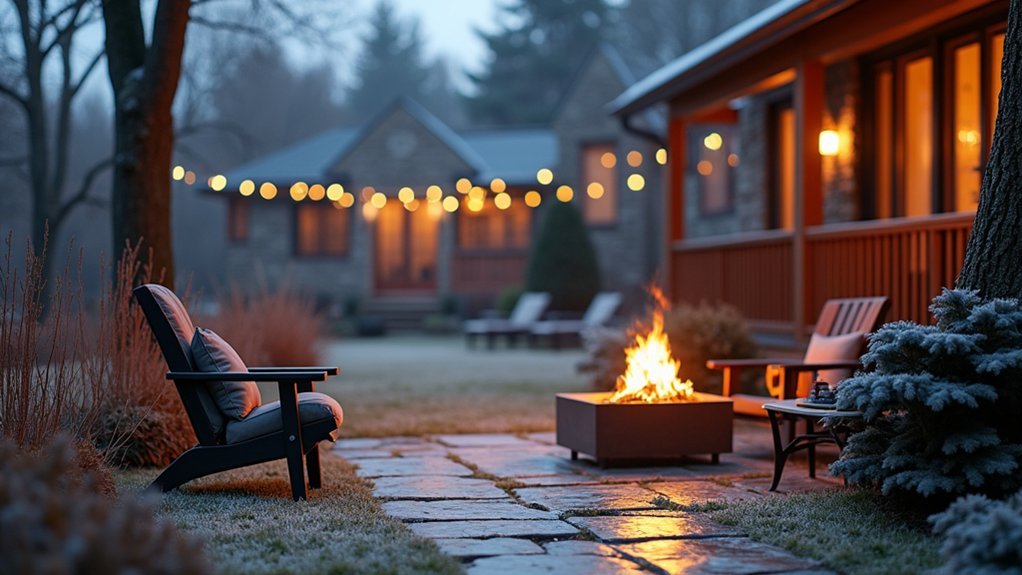
You’ll find reliable warmth throughout the year with propane fire tables, which create beautiful flame features while providing adjustable heat output for gatherings. Electric infrared heaters offer instant, targeted warmth without the need for fuel storage, making them perfect for covered patios or pergolas that need protection from rain and snow.
Patio heat lamps, available in freestanding or mounted designs, can withstand various weather conditions while directing heat downward to create comfortable outdoor living spaces even during colder months.
Propane Fire Tables
Propane fire tables offer the perfect blend of functionality and style for outdoor spaces that need year-round heating solutions. Constructed from weather-resistant materials like premium concrete, these tables are designed to withstand the elements while providing consistent warmth through built-in propane burners.
You’ll appreciate the convenience of button ignition without needing electrical wiring or power sources. The concave bowl designs typically feature lava rocks that distribute heat evenly across your seating area. This dual-purpose fixture serves as both a practical dining surface and a radiant heat source.
When planning your outdoor entertaining space, consider how a propane fire table can become a central gathering point on your patio or deck. It’s not just a heating element—it’s a design focal point that elevates your backyard’s functionality through all four seasons.
Electric Infrared Heaters
Electric infrared heaters represent another excellent option for maintaining backyard warmth throughout the year.
Unlike other heating methods, these units warm people and objects directly rather than the air, making them particularly effective in breezy conditions when traditional heaters struggle.
You’ll find both freestanding and tabletop models, offering flexibility for your patio layout.
When shopping, focus on panel wattage and emission wavelength—higher watts deliver stronger direct heat.
For year-round use, select weather-resistant models specifically designed with protective housings to withstand outdoor conditions.
The convenience factor is significant: most units simply plug into a standard outlet or outdoor-rated power supply.
You’ll appreciate their low maintenance requirements compared to gas or wood-burning alternatives, allowing more time to enjoy your comfortably heated outdoor space regardless of the season.
Patio Heat Lamps
When searching for weatherproof heating solutions that won’t surrender to seasonal changes, patio heat lamps stand as exceptional performers in the outdoor comfort arena. They deliver targeted warmth to your seating areas without consuming valuable floor space—perfect for patios, decks, and pergola settings.
You’ll find two primary options: gas or electric models, with electric variants often featuring infrared elements for efficient heat distribution. Whether mounted on your ceiling or wall, these fixtures preserve open ground area and eliminate furniture clutter.
Before installing, consider your space’s wind exposure, maintenance requirements, and manufacturer safety guidelines. The right patio heat lamp will provide durable performance regardless of temperature fluctuations, ensuring your outdoor space remains comfortable throughout the year.
Energy-Efficient Heating Choices for Year-Round Comfort
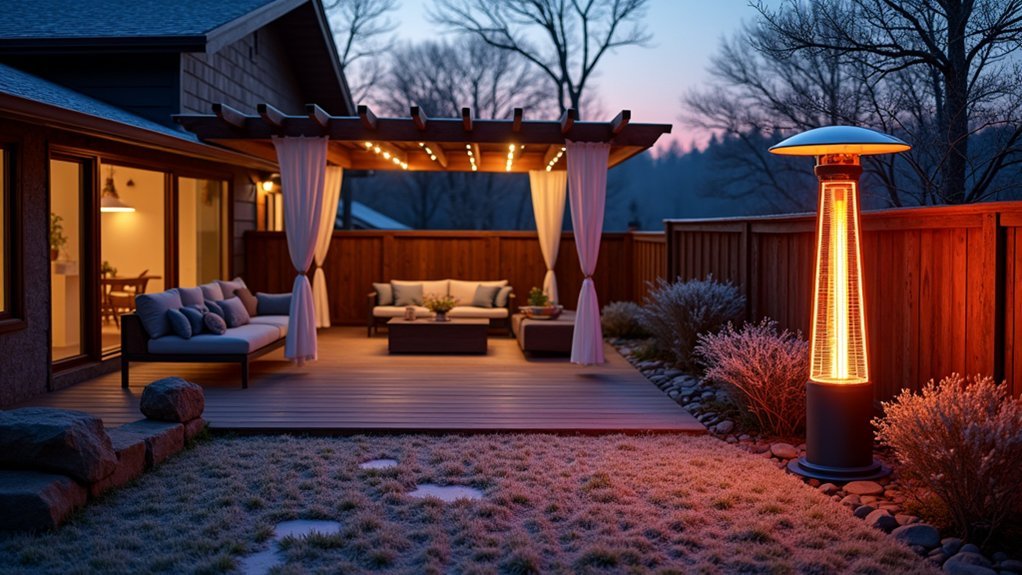
When choosing your year-round outdoor heating solution, you’ll need to compare the targeted warmth of infrared heaters with the powerful output of gas options.
Heat pumps offer exceptional energy efficiency for moderate climates, while infrared heaters provide immediate warmth that won’t blow away in breezy conditions.
Your decision between propane, natural gas, or electric infrared ultimately depends on your specific outdoor layout, local fuel costs, and whether you prioritize installation simplicity or raw heating power.
Heat Pumps Vs Infrared
Choosing between heat pumps and infrared heating for your backyard comes down to how you’ll use the space throughout the year. Heat pumps excel in providing consistent ambient warmth by extracting heat from the environment, making them ideal for moderate climates and enclosed outdoor areas where you want maintained comfort.
Infrared heaters offer targeted, instant warmth that directly heats objects and people rather than the air—perfect for breezy, open spaces where heat dissipates quickly. You’ll feel the warmth immediately, unlike the gradual heating of heat pumps.
Consider your energy needs too. Heat pumps boast impressive efficiency ratings (COP and HSPF) during moderate weather but may require backup heating during extreme cold. Infrared remains consistently effective for spot heating regardless of ambient temperatures, giving you reliable warmth exactly where you need it.
Propane or Natural Gas?
Why do so many homeowners find themselves torn between propane and natural gas options for their outdoor heating needs? Both offer impressive heat output and reliability that electric alternatives often can’t match, but they serve different situations.
- Mobility vs. Fixed Installation – Propane heaters give you freedom to rearrange your space without constraints, while natural gas units require permanent installation but eliminate refill hassles.
- Cost Considerations – Natural gas typically costs less over time if you already have a gas line, while propane’s higher initial price is offset by its portability.
- Performance Factors – Both deliver immediate, consistent heat even in cold conditions, with propane offering independence from power outages and natural gas providing uninterrupted operation without tank changes.
Frequently Asked Questions
How Do the Amish Heat Their Homes in the Winter?
You’ll find Amish families heating their homes with wood-burning stoves and fireplaces. They’ll also use coal or oil heaters while relying on thick walls, quilts, and well-sealed doors to retain warmth.
What Should I Put My Heat on if It’s 50 Outside?
You don’t need to run indoor heating at 50°F outside. Keep your thermostat at 60-65°F if you want minimal heat, or simply rely on your home’s natural insulation.
Is It Cheaper to Turn up the Heat or Use an Electric Heater?
It’s usually cheaper to turn up your central heat, as electric space heaters cost more per BTU. You’ll save money using your regular heating system for whole-house comfort.
How Long Will a Patio Heater Run on a 20 Lb Tank?
Your 20 lb propane tank will run a patio heater for 8-12 hours at medium heat or 4-6 hours at high heat. Higher BTU models consume fuel faster than lower-rated ones.