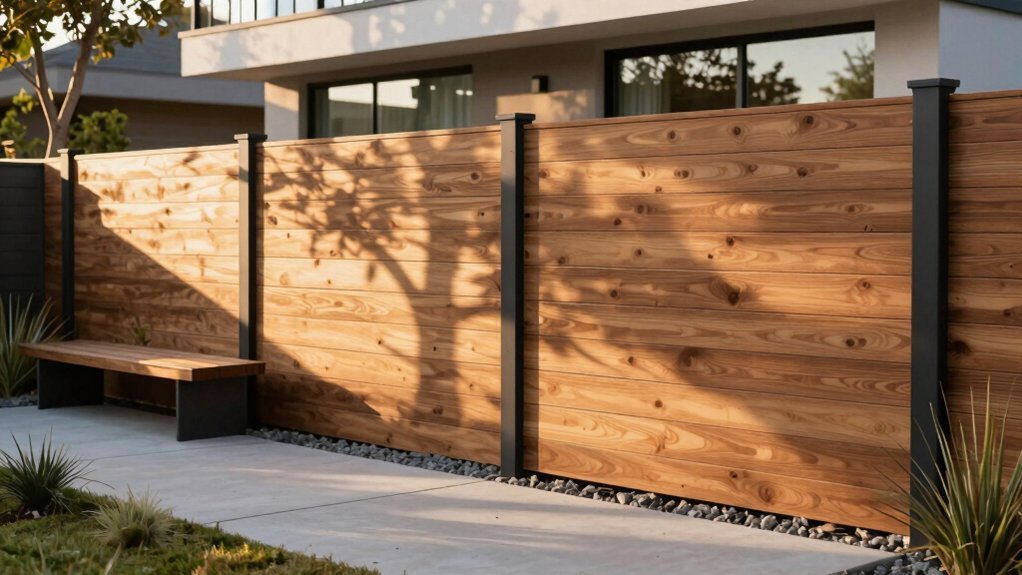
Horizontal slat fences offer a sleek, modern aesthetic while providing effective privacy for your outdoor spaces. They visually elongate your yard, making it appear larger and more open. You’ll find these linear elements complement contemporary architecture beautifully, creating dynamic shadows throughout the day. With various material options—cedar, vinyl, composite, or metal—you can balance maintenance needs with your desired look. The right spacing between slats lets you control both privacy and connection to your surroundings.
The Visual Impact of Horizontal Lines in Outdoor Design
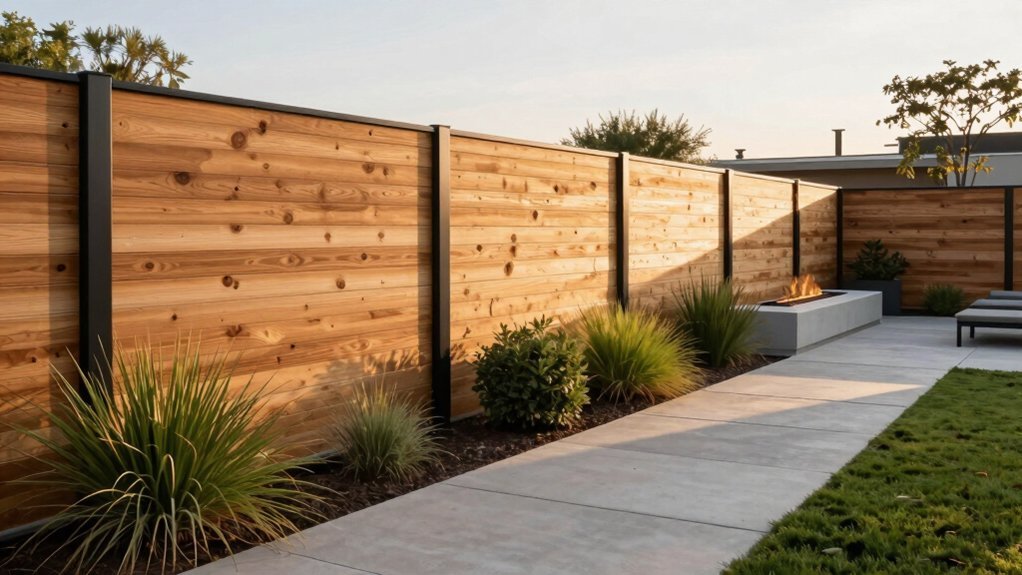
How can a simple directional choice transform your entire outdoor aesthetic? When you opt for horizontal slats in your fencing, you’re creating a sleek, modern statement that naturally draws the eye across your property. These linear elements establish a sense of continuity and flow that makes your outdoor space feel more expansive.
You’ll notice how horizontal lines visually lengthen your yard, making even modest spaces appear larger and more open. This orientation particularly complements contemporary architecture, creating a cohesive design language throughout your property. For added visual interest, consider varying your slat spacing or incorporating mixed materials like metal accents with wood. The stability conveyed by horizontal lines doesn’t just enhance your daily enjoyment—it can positively influence your property’s perceived value and curb appeal.
Modern Materials for Contemporary Slat Fencing
The landscape of fencing materials has expanded dramatically in recent years, offering you unprecedented options for your horizontal slat project.
Cedar and redwood provide natural warmth but require regular maintenance to preserve their beauty in modern designs.
Natural woods bring inviting warmth to contemporary fencing designs, though their beauty demands consistent care and attention.
If you’re seeking minimal upkeep, vinyl slats resist weather damage effectively, though you’ll find fewer color choices.
For a premium look, composite materials deliver fade resistance and superior moisture protection, justifying their higher price point.
Metal options like aluminum and steel create sleek, contemporary aesthetics with powder-coated finishes that combat corrosion while requiring little maintenance.
In San Antonio’s climate, cedar slats offer an excellent balance of affordability and durability.
Alternatively, vinyl performs exceptionally well in hot, sunny environments where you’d prefer to minimize ongoing maintenance requirements.
Balancing Privacy and Social Connection in Entertainment Spaces
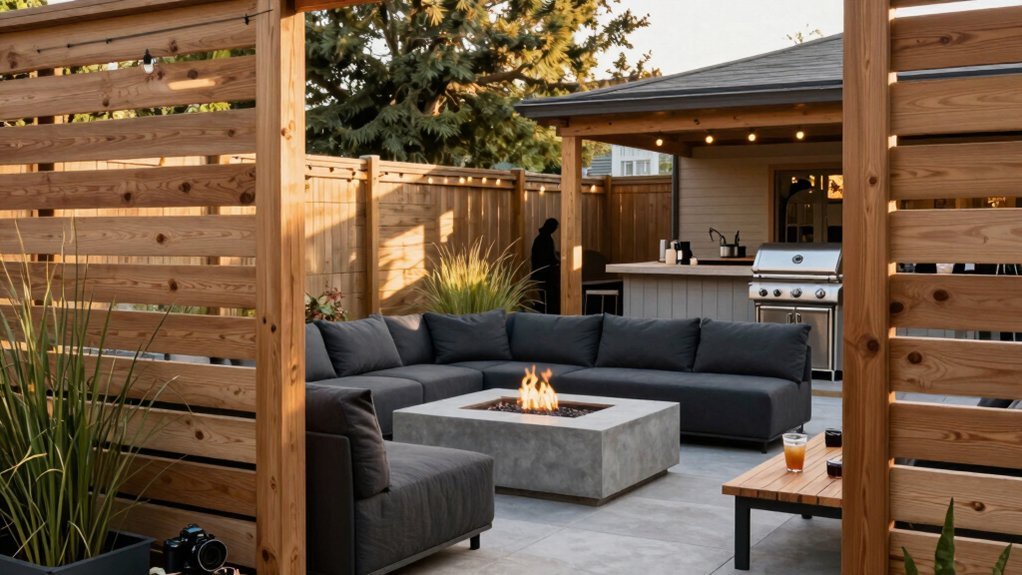
With your materials selected, designing your horizontal slat fence for entertainment areas becomes an exercise in social balance. You’ll want to strategically space your slats—tighter in areas where you need screening, with calculated gaps that preserve important views and enable neighborly conversation.
For patios and pool zones, consider adjustable spacing that lets you control both light penetration and airflow, creating the perfect ambiance for gatherings while maintaining your desired level of seclusion. Wider slats or mixed material designs can preserve a modern aesthetic while fostering an open, welcoming atmosphere.
Use your horizontal slats to thoughtfully define entertaining zones, creating natural sightlines between seating areas and the rest of your landscape. Add visual interest with decorative elements like staggered patterns or lattice tops that engage guests while preserving the fence’s primary privacy function.
Customizing Slat Spacing for Your Privacy Needs
Precisely tuning the distance between your horizontal fence slats determines your property’s ultimate privacy level. For near-complete seclusion, opt for tight 1/4 to 1/2 inch gaps that create a solid visual barrier. If you’d prefer a balance of privacy with airflow, wider 1 to 2 inch spacing offers both protection and ventilation.
You can explore mixed patterns—alternating narrow and wide gaps—for unique aesthetic appeal while maintaining your desired privacy. Metal and composite materials help preserve even spacing over time, preventing the sagging that can compromise your privacy screen.
Remember to check your HOA regulations and local building codes before customizing, as many communities specify acceptable gap measurements. This ensures your personalized fence design meets both your privacy needs and regulatory requirements.
Horizontal Fences as Defining Elements for Outdoor Rooms
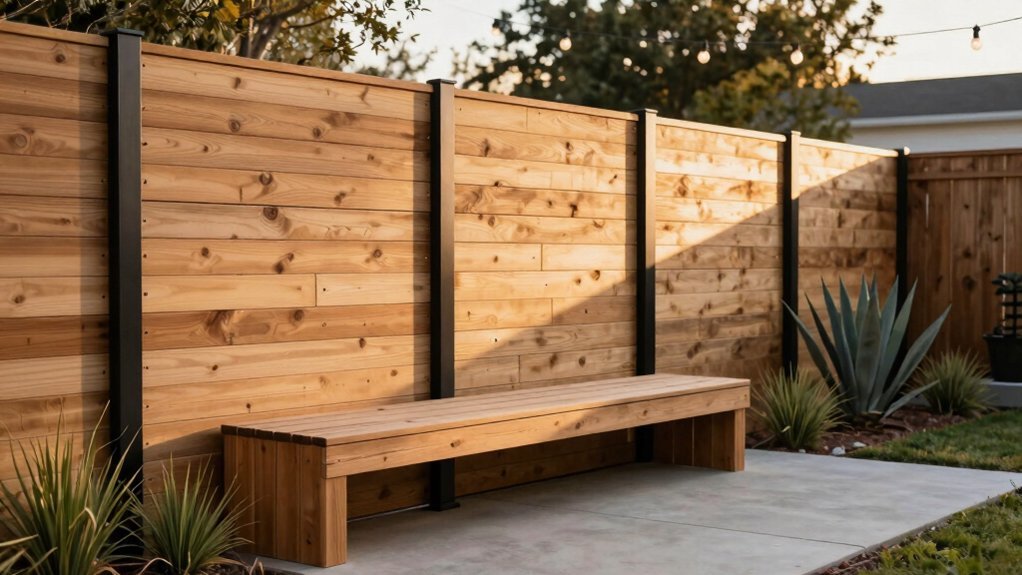
Transforming your outdoor space into distinct functional zones requires more than just furniture and plants—horizontal slat fences serve as architectural room dividers that elegantly frame your exterior living areas. The parallel slats guide your eye horizontally across the landscape, creating a sense of flow that extends your perceived space while maintaining clear boundaries.
You’ll find these fences particularly effective when paired with complementary elements like built-in seating or planters to establish cohesive outdoor rooms. The spacing between slats lets you control both privacy and atmosphere—tight spacing creates intimate retreats, while wider gaps allow light and breeze to filter through while maintaining structure. Whether in wood, metal, or composite materials, horizontal fencing defines your outdoor living space with contemporary sophistication that extends your home’s architectural language into the landscape.
Enhancing Property Value With Designer Fence Aesthetics
When you install a designer fence with horizontal slats, you’re making a strategic investment that can substantially boost your property’s curb appeal. Real estate professionals confirm that contemporary fence designs with clean lines and premium materials often yield the highest return on investment among outdoor improvements. Your horizontal slat fence creates an immediate visual upgrade that signals quality craftsmanship to potential buyers, potentially increasing your home’s market value beyond the installation cost.
Curb Appeal Booster
How dramatically can a simple fence design decision impact your home’s market value? The horizontal slat fence isn’t just a boundary—it’s an investment in your property’s visual appeal. These sleek, contemporary designs create an immediate impression that complements modern architectural styles and elevates your home’s exterior presence.
You’ll notice how horizontal layouts visually expand your property, making even modest yards appear more spacious from the street. By selecting premium materials like cedar, composite, or vinyl arranged in horizontal patterns, you’re creating a designer aesthetic that signals quality to potential buyers. For maximum impact, consider incorporating metal accents or mixed material combinations that add sophisticated contrast. With thoughtfully spaced slats, you’ll achieve both the privacy you need and the open, airy feel that today’s homebuyers crave.
Return on Investment
Beyond mere curb appeal, horizontal slat fences deliver tangible financial benefits that savvy homeowners recognize. These designer installations typically command premium pricing compared to standard vertical fences—but for good reason. Your property’s market value can significantly increase due to the contemporary, high-end aesthetic that appeals to modern buyers.
Investing in durable materials like composite or aluminum creates a flush, seamless finish that reduces long-term maintenance costs. This upfront investment translates to higher resale value down the road. Consider mixing materials, such as wood slats with metal accents, to add distinctive visual interest that enhances perceived lot value.
When designed to be HOA-compliant while maximizing both privacy and openness, these modern installations can broaden your property’s appeal, positively impacting both appraisal values and reducing time-on-market.
Weather Considerations for Horizontal Slat Installations
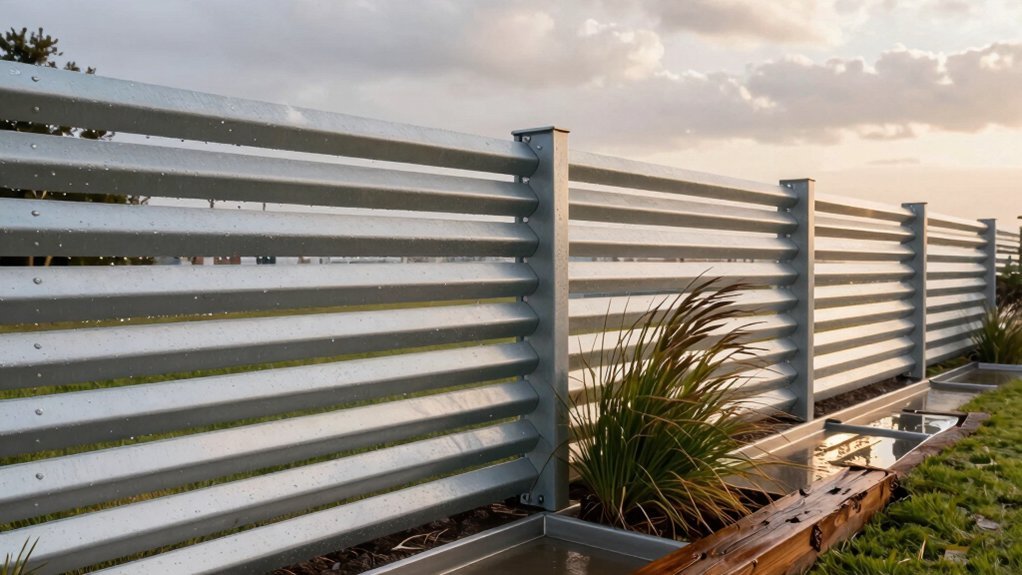
San Antonio’s extreme weather demands thoughtful planning when you’re installing horizontal slat fencing to ensure longevity and performance.
You’ll need to select materials specifically engineered to withstand our intense UV exposure and temperature fluctuations, with composite and properly sealed hardwoods outperforming standard lumber in our climate.
Your installation must account for local wind patterns through strategic post placement and appropriate bracing, especially in open areas where horizontal designs can create sail-like resistance during storms.
Wind Tolerance Factors
When planning your horizontal slat fence in windy conditions, understanding structural resilience becomes critical to long-term satisfaction.
Your fence’s wind tolerance hinges on three key factors: gap size between slats, post spacing, and panel material choice.
Tighter slat spacing significantly increases wind resistance but reduces airflow, while wider gaps offer better ventilation at the cost of stability during gusts.
For San Antonio’s open, windy areas, install your fence on level ground with reinforced posts to prevent sagging and rattling.
Metal or composite slats with solid backing will outperform wide-spaced wooden options in high winds.
Consider adding continuous vertical supports between posts for additional stability during seasonal storms.
Climate-Specific Material Selection
Climate drives nearly every material choice for your horizontal slat installation, particularly in regions with extreme weather conditions. In warm environments like San Antonio, cedar slats offer natural rot resistance while readily accepting stains, providing an optimal balance of affordability and longevity.
For minimal maintenance in sun-drenched areas, vinyl presents a practical solution despite its limited color options and potential for expansion in extreme heat. Composite materials excel in dry, sunny regions by resisting warping and UV fading.
Metal panels—aluminum or steel—withstand high heat and humidity exceptionally well but come at a premium cost and require precise installation. Remember to account for thermal expansion by incorporating proper spacing between slats and posts, especially in drought-prone areas where wood and PVC materials may contract and expand significantly.
Weather-Resistant Installation Methods
How effectively your horizontal slat installation withstands the elements depends largely on your installation methods. In humid climates, opt for corrosion-resistant fasteners and stainless steel or hot-dip galvanized brackets to prevent rust. Ensure proper drainage behind slats by installing a hidden-drainweave or sloped top rail that directs water away from the fence line.
For wood installations, you’ll need to apply UV-protective sealant every 2-3 years and choose naturally rot-resistant species like cedar. San Antonio’s climate demands fade-resistant finishes and shorter slat spans with sturdy posts to combat heat-induced bowing.
Don’t overlook airflow—vented or perforated backer panels behind slats reduce humidity buildup in hot conditions. This simple addition significantly extends your fence’s lifespan while maintaining its modern aesthetic appeal.
Integrating Lighting With Horizontal Privacy Screens
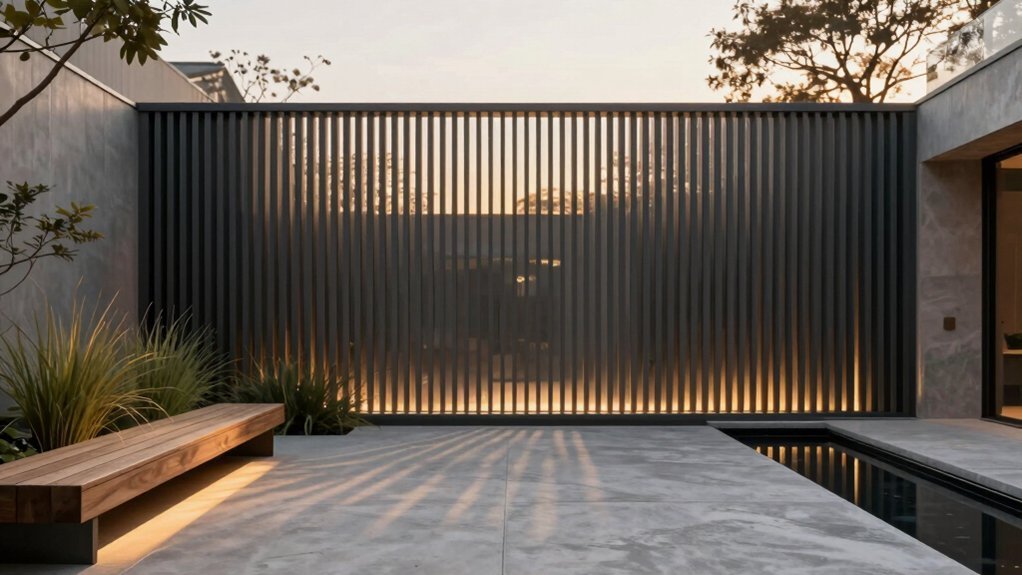
Why settle for privacy screens that disappear after sunset when you can transform them into striking architectural features with strategic lighting? By incorporating illumination into your horizontal slat design, you’ll create ambiance while enhancing security and highlighting modern clean lines.
- Backlighting behind slats creates a soft, diffused glow that maintains privacy while adding depth
- LED strip lighting wrapped around posts or recessed between slats accentuates architectural details
- Weatherproof, glare-free fixtures with warm color temperatures (2700-3000K) complement wood and composite materials
- Strategically placed lights can work with slat spacing—more light through wider gaps, less through privacy-focused sections
You’ll enjoy a fence that serves double duty: providing daytime seclusion while becoming an illuminated design element that enhances your outdoor living space after dark.
Maintenance Requirements Across Different Slat Materials
Your choice of slat material directly impacts how much time you’ll spend on maintenance over the years. Wood demands regular staining every few seasons to maintain its beauty and structural integrity, while vinyl offers remarkable weather resistance with just occasional cleaning. Composite materials strike an appealing middle ground, requiring minimal upkeep while delivering the aesthetic warmth of wood without its maintenance demands.
Wood Requires Regular Treatment
While horizontal wood slats offer undeniable aesthetic appeal, they demand consistent maintenance to preserve their beauty and functionality. You’ll need to prioritize regular treatment to prevent deterioration and maintain privacy effectiveness.
Protective care for your wooden slats includes:
- Applying stain or sealant every 2-3 years to shield against moisture and sun damage
- Cleaning periodically to prevent mold and mildew growth, especially in humid or shaded locations
- Following manufacturer guidelines for reapplication of protective finishes
- Monitoring for signs of rot, warping, or fading that can compromise structural integrity
Without proper treatment, wood slats deteriorate faster when exposed to weather, nearby plants, or soil contact. This proactive maintenance approach is essential for extending the lifespan of your investment while maintaining its modern aesthetic appeal.
Vinyl Stands Weather-Resistant
Unlike demanding wooden alternatives, vinyl horizontal slats emerge as champions of weather resistance with minimal upkeep requirements. You’ll appreciate the simplicity of maintenance—just an occasional rinse to remove accumulated dirt keeps your fence looking fresh.
In San Antonio’s challenging climate, high-quality UV-stabilized vinyl withstands intense heat, moisture, and sunlight without deteriorating. Your fence maintenance shifts from regular sealing and staining to simple inspections for cracks or brittle sections, with damaged panels being the only occasional replacement need.
The slats maintain their alignment over time, resisting the warping and rot that plague wooden options. For maximum longevity, select vinyl with heavy-gauge support structures and corrosion-resistant hardware. This combination prevents sagging and ensures your horizontal slat fence remains stable and attractive for years to come.
Composite Minimizes Upkeep
Composite horizontal slats stand as the gold standard for low-maintenance fencing, taking the weather resistance benefits even further. Unlike traditional wood that demands regular attention, composite materials free you from the cycle of annual sealing, staining, and sanding that consumes your weekends.
Your maintenance routine becomes remarkably simple:
- Occasional rinsing with water to remove dust and debris
- Spot cleaning with mild soap for tougher stains
- No need for painting, staining, or specialized treatments
- No worries about warping or color fading from sun exposure
While you’ll invest more upfront for composite slats, you’ll appreciate the long-term value as years pass without significant maintenance expenses. The material’s resistance to moisture, UV damage, and general wear ensures your privacy solution remains pristine with minimal effort on your part.
Creating Depth and Dimension With Mixed-Width Slats
How can a seemingly simple design choice transform your fence from flat to fascinating? The answer lies in mixed-width horizontal slats. By alternating between narrow and wide boards, you’ll create a visual rhythm that adds depth while maintaining privacy.
This thoughtful variation does more than please the eye—it serves practical purposes too. You’ll notice how different widths control light filtration and airflow, enhancing spatial perception around your property. When you emphasize your gate or create accent panels with contrasting slat sizes, you’re adding intentional dimensional interest.
You’ll appreciate how mixed-width designs help disguise uneven terrain by breaking up uniform sightlines. With precise spacing between your varied slats, you’ll achieve a cohesive look that casts dynamic shadows throughout the day—turning your fence into an architectural feature rather than just a boundary.
Cost Analysis: Investment vs. Long-Term Benefits
When weighing the costs of horizontal slat fencing, you’ll need to contemplate both initial investment and long-term value. While horizontal designs typically cost 10-20% more than vertical styles, they offer distinct advantages that justify the premium.
Your investment varies by material choice:
- Wood ($25-$45/linear foot) – traditional look but requires staining every 2-3 years
- Vinyl ($30-$50/linear foot) – minimal maintenance with occasional rinsing
- Composite ($40-$60+/linear foot) – premium durability with negligible upkeep
- Metal – highest initial cost but virtually maintenance-free
Local factors impact your bottom line too—rocky Comal County soil increases installation labor, while HOA requirements may dictate material options. Despite higher upfront costs, you’ll likely recoup your investment through enhanced property value and reduced lifetime maintenance, especially with vinyl or composite options.
Design Harmony: Matching Slats to Your Home’s Architecture
Why do architectural experts consistently recommend horizontal slats for modern homes? They create continuous, eye-guiding lines that perfectly complement contemporary architecture’s clean, minimalist silhouette. You’ll achieve maximum visual impact when you match slat spacing, materials, and color to your home’s exterior features.
The horizontal orientation works especially well with flat rooflines and cantilevered balconies, reinforcing your property’s horizontal emphasis. For a sleek, seamless boundary that mirrors modern design language, maintain uniform slat widths and consistent gaps.
Don’t be afraid to introduce subtle variations like mixed-width slats or contrasting textures—pairing cedar with a natural stain alongside metal posts, for instance. These thoughtful combinations can echo your home’s architectural details while preserving the cohesive, unified aesthetic that makes horizontal slats so appealing.
Frequently Asked Questions
Are Horizontal Fences Trendy?
Yes, horizontal fences are extremely trendy in 2025. You’ll love their sleek, modern look that expands your space visually while offering customizable privacy and contemporary curb appeal.
What Are the Disadvantages of a Horizontal Fence?
You’ll face higher costs, more complex installation, potential sagging, less airflow, stricter HOA regulations, and increased maintenance needs with horizontal fences compared to vertical designs.
Are Vertical or Horizontal Fence Panels Better?
Neither is definitively “better.” You’ll prefer horizontal slats for modern aesthetics and visual space extension, while vertical panels work better for uneven terrain and typically offer easier, more affordable installation.
How to Decide Between a Vertical or Horizontal Slat Wall?
Choose horizontal slats for modern aesthetics and customizable privacy, but consider your terrain—they’re best on level ground. Vertical slats are more economical and work better on uneven landscapes.