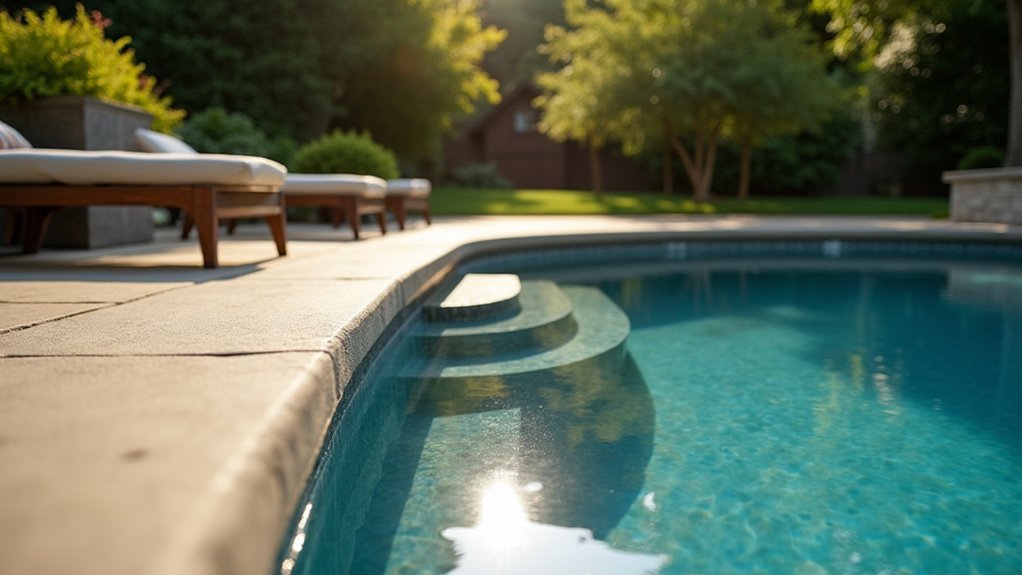
You should choose a concrete pool over fiberglass when you want unlimited design freedom and long-term durability. Concrete lets you create any shape, size, or depth—from slim lap pools to expansive resort-style designs with integrated spas and tanning ledges. You’ll get a steel-reinforced structure that lasts 50+ years and handles soil shifts better than fiberglass shells. Understanding the full range of benefits will help you make the right investment for your property.
Unlimited Design Options and Custom Shapes
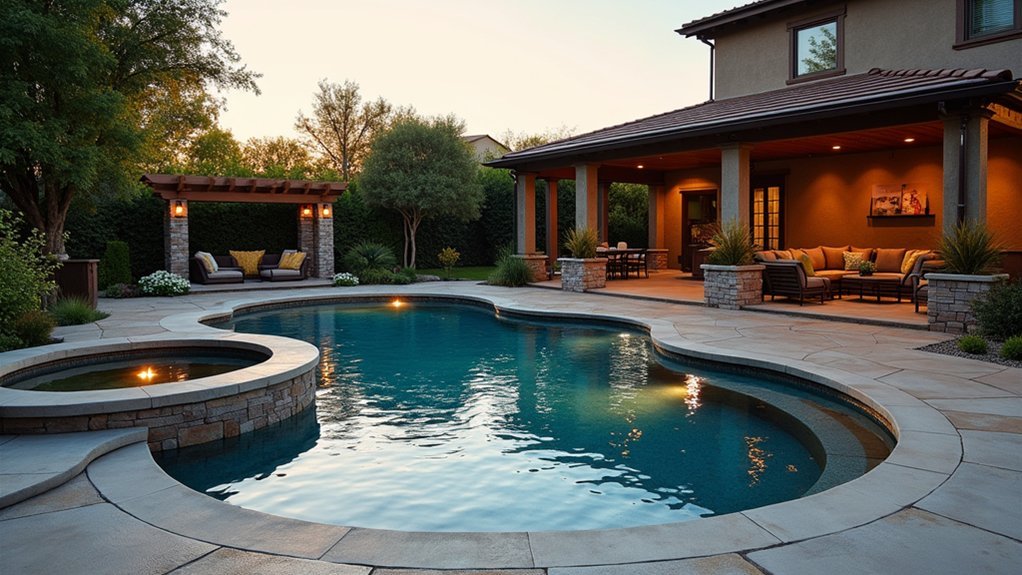
When you choose a concrete pool, you’re not limited to pre-made molds or standard dimensions. You control every aspect of the design, from the exact length and width to the depth at various points. Want a custom beach entry, integrated spa, or unique geometric shape? Concrete makes it possible.
Your backyard’s layout shouldn’t dictate your pool’s shape. Concrete pools adapt to irregular lot sizes, slopes, and existing landscaping features. You can incorporate built-in benches, tanning ledges, and swim-up bars exactly where you want them.
Fiberglass pools arrive as finished shells with fixed dimensions. You’re selecting from a catalog rather than creating something uniquely yours. With concrete, skilled craftsmen build your vision from scratch, ensuring your pool complements your home’s architecture and matches your lifestyle perfectly.
Superior Durability and Longevity
Because concrete pools use steel-reinforced structures, they deliver unmatched strength that lasts for decades. You’re investing in a pool that can withstand ground movement, temperature fluctuations, and heavy use without cracking or warping. Unlike fiberglass shells that can bulge or pop out of the ground, concrete stays firmly anchored.
Here’s what you can expect from a concrete pool’s durability:
- 50+ year lifespan with proper maintenance and periodic resurfacing
- Resistance to punctures from sharp objects or pet claws
- Structural integrity that handles soil shifts and seismic activity
- No fading or chalking like fiberglass gel coats experience
- Repairable surfaces that don’t require full shell replacement
You’ll pass this pool down to future generations without worrying about structural failure.
Size Flexibility for Any Backyard Space
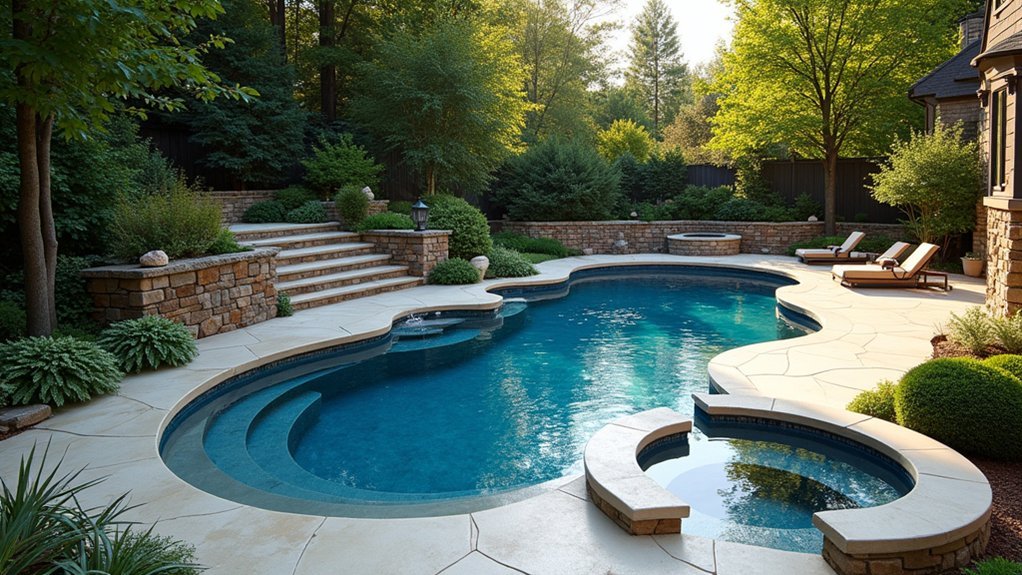
When you’re working with an unusual backyard layout, concrete pools offer unmatched flexibility that fiberglass simply can’t provide.
You can specify custom dimensions that fit your exact space requirements, whether you need a narrow lap pool or an expansive entertainment area.
Concrete also allows for irregular shapes that follow your property’s natural contours, wrap around existing landscaping, or incorporate unique design features like built-in spas and tanning ledges.
Custom Dimensions Available
Every backyard presents unique challenges, from narrow side yards to sprawling estates, making size flexibility a critical factor in your pool selection. With concrete pools, you’re not limited to pre-manufactured shells. You’ll work with designers to create exact dimensions that maximize your available space while meeting your swimming needs.
Concrete construction adapts to your property’s specific requirements:
- Narrow lots benefit from lap pools as slim as 8 feet wide
- Irregular shapes accommodate L-configurations or curved designs around existing landscaping
- Shallow play areas segue seamlessly into deep diving zones
- Extended lengths support serious swimmers needing 50+ feet for training
- Compact plunge pools fit tight urban spaces without sacrificing style
You’ll never force your yard to conform to a mold—instead, your pool conforms to you.
Irregular Shapes Possible
While fiberglass pools restrict you to factory-produced molds, concrete pools break free from geometric constraints entirely. You’re not limited to standard rectangles or predictable kidney shapes.
Instead, you can design curves that follow your property’s natural contours or create angles that complement your home’s architecture.
Want a pool that wraps around existing trees? You’ve got it. Need to incorporate a natural rock formation into your design? Concrete makes it happen. You can add beach entries, hidden grottos, or swim-up bars without compromise.
Your backyard likely has unique characteristics—slopes, odd dimensions, or landscape features worth preserving. Concrete adapts to these challenges rather than forcing you to work around prefabricated limitations. You’ll achieve a truly custom result that maximizes your available space while creating the exact aesthetic you envision.
Enhanced Property Value and Return on Investment
Although both concrete and fiberglass pools can boost your home’s market appeal, they differ substantially in their long-term return on investment. Concrete pools typically add more value to your property because buyers recognize their durability, customization potential, and premium construction quality.
Concrete pools deliver superior resale value thanks to their unmatched durability and endless customization possibilities.
When you invest in a concrete pool, you’re building a permanent structure that integrates seamlessly with your landscape design. This permanence translates directly into higher appraisal values and stronger buyer interest when you decide to sell.
- Concrete pools last 50+ years with proper maintenance, outliving fiberglass alternatives
- Custom designs create unique selling points that distinguish your property
- Premium materials signal quality construction to potential buyers
- You’ll recover 50-70% of your investment at resale
- Landscaping integration options maximize aesthetic appeal and property cohesion
Seamless Integration With Water Features and Landscaping
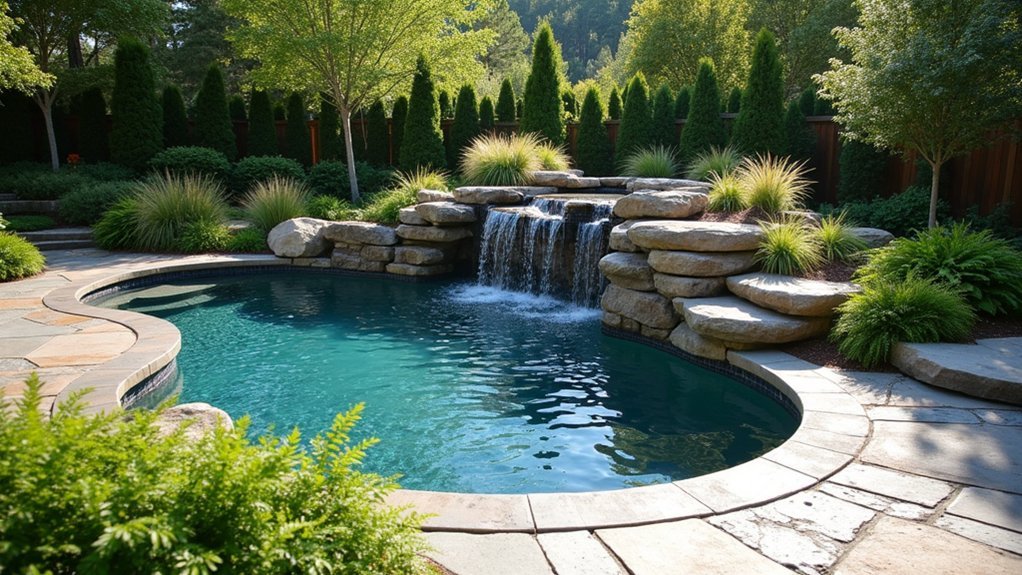
Beyond their structural advantages, concrete pools excel at integrating with water features and landscaping elements that fiberglass simply can’t match. You can design custom waterfalls, grottos, and infinity edges that flow naturally from your pool’s structure. Rock formations, beach entries, and built-in planters become seamless extensions rather than awkward additions.
With concrete, you’re not limited to bolt-on accessories. Your contractor can embed lighting, fountains, and jets directly into the pool’s shell during construction. This creates a cohesive aesthetic that looks intentional rather than afterthought.
You can also match your pool’s shape and finish to existing hardscaping, stone walls, or garden designs. The result is a backyard oasis where every element connects organically. Fiberglass pools, with their predetermined shapes, simply can’t offer this level of environmental harmony.
Surface Finish Variety and Aesthetic Appeal
When you choose a concrete pool, you’re gaining access to an extensive range of surface finishes that fiberglass manufacturers simply can’t replicate.
You’ll select from dozens of textures, colors, and materials that transform your pool into a personalized masterpiece.
Your finish options include:
- Pebble aggregate – natural stone embedded in plaster creates slip-resistant, durable surfaces with organic appeal
- Glass bead finishes – reflective particles produce shimmering, jewel-toned water effects
- Polished marble plaster – smooth, classic elegance in virtually any color
- Quartz finishes – crushed quartz crystals offer exceptional durability and vibrant hues
- Tile accents – custom mosaics, waterline designs, and full tile interiors for ultimate luxury
You’re not limited to a factory mold’s predetermined appearance.
Instead, you’re crafting a surface that reflects your exact vision.
Structural Strength and Ground Movement Resistance
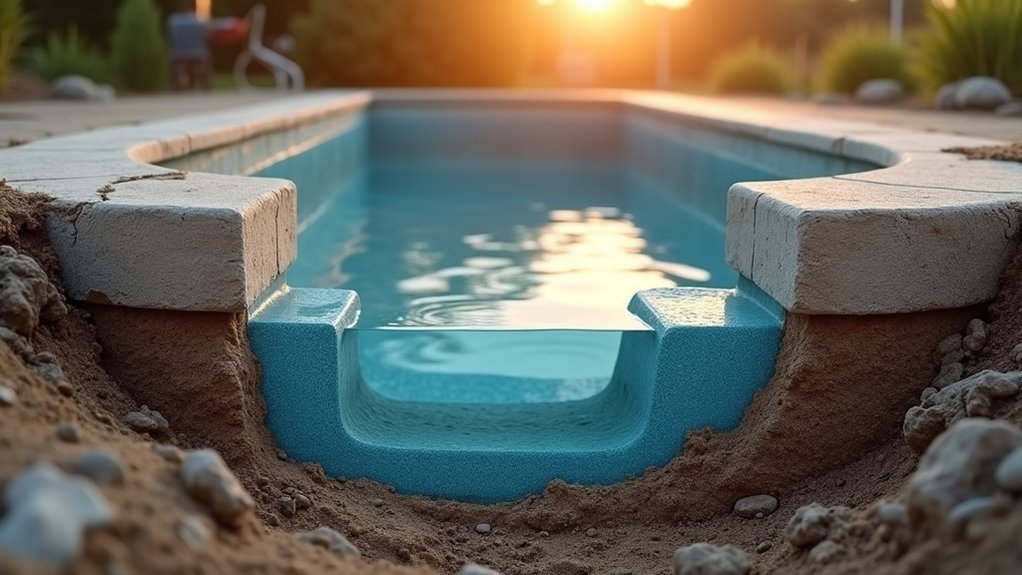
Because concrete pools form a rigid, monolithic shell that bonds directly with the surrounding soil, they’ll withstand ground movement and soil pressure far better than their fiberglass counterparts.
The steel-reinforced structure distributes stress evenly across the entire pool, preventing cracks and structural failures during seismic activity or soil shifts.
Fiberglass pools sit as separate units within the excavated hole, making them vulnerable to “popping” out of the ground when hydrostatic pressure builds beneath them.
You won’t face this risk with concrete.
Your pool becomes part of the landscape itself.
If you live in an area with expansive clay soils, freeze-thaw cycles, or earthquake zones, concrete’s superior strength gives you lasting peace of mind.
The investment protects your property for decades.
Long-Term Cost Benefits and Maintenance Considerations
While fiberglass pools often tout lower maintenance costs, you’ll find that concrete pools deliver superior long-term value when you factor in their extended lifespan and customization potential.
Concrete pools typically last 50+ years with proper care, far exceeding fiberglass options. You’re investing in a permanent structure that adds significant property value.
Consider these long-term advantages:
- Resurfacing flexibility – You can update your pool’s finish every 10-15 years without full replacement
- No structural limitations – Repairs address specific areas rather than requiring complete overhauls
- Customizable upgrades – Add features like tanning ledges or spas anytime
- Higher ROI – Premium construction commands better resale value
- Local repair accessibility – Most contractors can service concrete pools
You’ll spend more upfront, but you’re building lasting value that fiberglass simply can’t match.
Frequently Asked Questions
How Long Does It Take to Install a Concrete Pool?
You’ll typically wait 3 to 6 months for your concrete pool installation. The process involves excavation, steel framework, plumbing, gunite application, curing time, tile work, and finishing—each step requiring careful attention for lasting quality.
Can Concrete Pools Be Built in Cold Climates?
Yes, you can build concrete pools in cold climates. Contractors install proper reinforcement, use freeze-resistant materials, and apply specialized finishing techniques. You’ll need to winterize your pool properly each season to prevent damage.
What Permits Are Required Before Constructing a Concrete Pool?
You’ll typically need a building permit, zoning approval, and electrical permit before construction begins. You should also check for fencing requirements and potential HOA restrictions. Contact your local building department for specific regulations.
How Often Should a Concrete Pool Be Resurfaced?
You should resurface your concrete pool every 10 to 15 years, depending on wear and water chemistry. Regular maintenance extends this timeline, but you’ll notice rough textures or staining when it’s time.
Are Concrete Pools Safe for Saltwater Systems?
Yes, you can safely use saltwater systems with concrete pools. You’ll need to guarantee your pool’s surface has a saltwater-compatible finish and you’re maintaining proper chemical balance to prevent erosion over time.

Leave a Reply