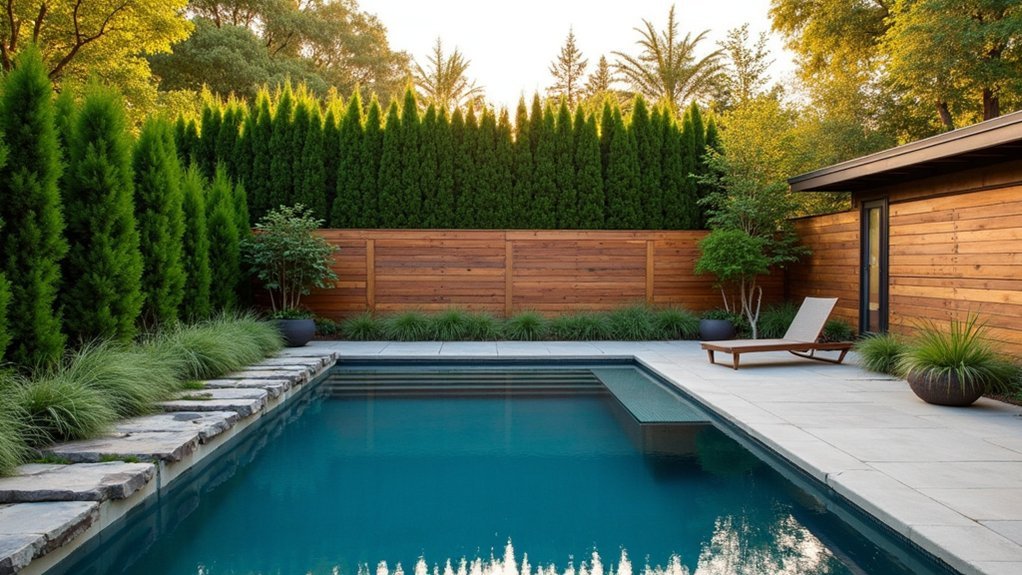
You can create a private pool oasis with five effective landscape solutions. Tall ornamental grasses like miscanthus form natural curtains reaching 6–8 feet high. Evergreen hedge walls using arborvitae or privet block views year-round. Bamboo screens deliver rapid growth and resort-style ambiance. Layered shrub borders combine multiple plant heights for complete coverage. Living wall systems maximize vertical space on existing fences and walls. Each option offers unique benefits worth exploring for your specific backyard situation.
Tall Ornamental Grasses for Natural Pool Seclusion
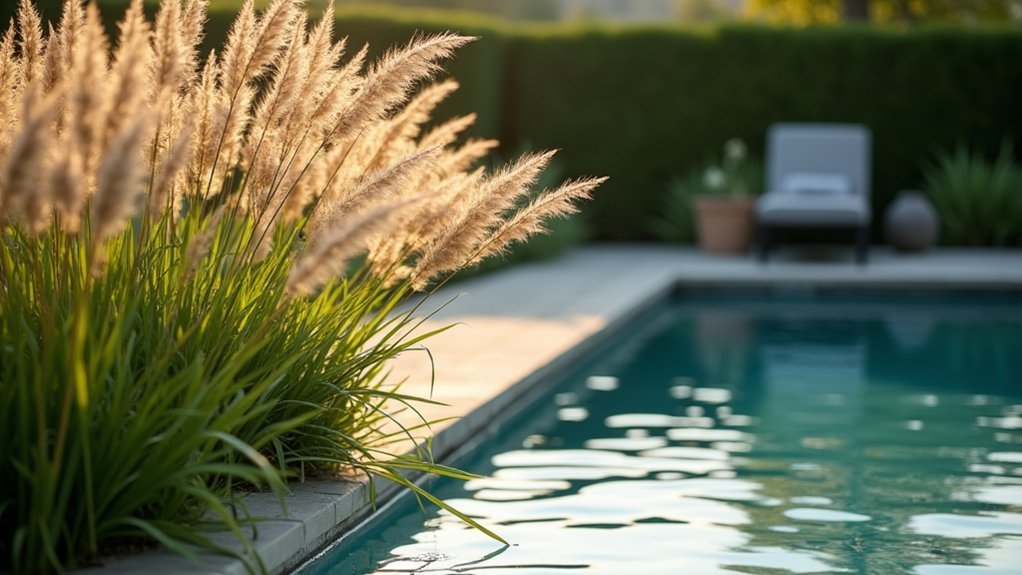
Creating a private oasis around your pool doesn’t require expensive fencing or permanent structures when you’ve got tall ornamental grasses at your disposal.
These graceful plants offer a natural, flowing screen that sways gently in the breeze while blocking unwanted views.
Consider planting Miscanthus varieties, which reach heights of 6 to 8 feet and create dense curtains of foliage.
Pampas grass delivers dramatic impact with its feathery plumes, while switchgrass provides excellent coverage in various soil conditions.
You’ll want to plant your grasses in clusters or rows along your pool’s perimeter for maximum screening effect.
Space them according to their mature width to guarantee complete coverage.
These low-maintenance plants thrive in full sun, tolerate poolside splash, and provide year-round interest with minimal care required from you.
Evergreen Hedge Walls That Block Unwanted Views
Evergreen hedge walls consistently rank among the most reliable privacy solutions for pool owners who want permanent, year-round screening. Unlike deciduous plants that drop their leaves, evergreens maintain dense foliage through every season, ensuring your pool area stays hidden from neighbors and passersby.
Consider these top-performing evergreen options for your hedge wall:
- Arborvitae – Grows quickly and forms a tight, columnar shape that’s easy to maintain
- Privet – Tolerates heavy pruning and creates a formal, manicured appearance
- Leyland Cypress – Reaches impressive heights fast, making it ideal for blocking second-story views
You’ll want to plant your hedges at least three feet from the pool edge to prevent root intrusion and leaf debris. Space plants according to their mature width for seamless coverage.
Bamboo Screens for Tropical Poolside Ambiance

Bamboo screens transform any pool area into a lush, resort-style retreat while delivering excellent privacy coverage.
You’ll find these natural barriers grow quickly, reaching heights of 15 to 20 feet within just a few seasons. Clumping varieties like Golden Bamboo or Buddha Belly work best near pools since they won’t spread aggressively into unwanted areas.
You can install bamboo in large planters for flexible positioning or plant directly in the ground for permanent screening. The dense foliage creates rustling sounds in the breeze, adding an auditory element that enhances your tropical atmosphere.
Bamboo thrives in full sun and tolerates poolside humidity exceptionally well. For immediate results, consider pre-grown bamboo panels that you can mount to existing fences or freestanding frames.
Layered Shrub Borders for Year-Round Coverage
While bamboo offers dramatic vertical screening, layered shrub borders provide a more traditional approach that delivers dense, consistent privacy throughout every season.
Layered shrub borders deliver dense, year-round privacy that single bamboo screens simply can’t match.
You’ll want to arrange plants in tiers, placing taller evergreens at the back and shorter flowering shrubs in front.
This strategy eliminates gaps and creates visual depth that single-row plantings can’t match.
Select a mix of evergreen and deciduous varieties to maintain coverage when some plants drop leaves.
Best shrubs for layered pool borders:
- Arborvitae or holly for your back row, reaching 8-15 feet tall
- Privet or viburnum for middle layers, growing 6-8 feet
- Boxwood or dwarf varieties for front edging, staying under 4 feet
You’ll achieve natural-looking privacy that improves as plants mature together.
Living Wall Systems to Maximize Vertical Privacy

Transforming bare walls and fences into lush vertical gardens gives you maximum privacy without sacrificing valuable poolside square footage. You’ll find modular panel systems that attach directly to existing structures, creating instant green screens that block sightlines from neighboring properties.
Choose climbing plants like star jasmine, creeping fig, or Boston ivy for self-clinging coverage. For faster results, install pocket planters or felt-based systems that hold soil and support a variety of trailing plants. Ferns, pothos, and lipstick plants thrive in these setups and tolerate pool splash zones well.
You’ll need to take into account irrigation—drip systems work best for maintaining consistent moisture without water waste. Position your living wall on the side receiving the most unwanted views, and you’ll enjoy both privacy and a stunning natural backdrop.
Frequently Asked Questions
How Close to My Pool Can I Legally Plant Privacy Screening in My Area?
You’ll need to check your local zoning codes and HOA rules, as setback requirements vary widely—typically 3 to 10 feet from property lines. Contact your city’s planning department for your area’s specific regulations.
Will Pool Chemicals Damage My Privacy Plants Over Time?
Yes, pool chemicals can damage your privacy plants over time. Splashed chlorinated water may burn foliage and stress roots. You’ll want to choose salt-tolerant, chlorine-resistant species and rinse nearby plants regularly with fresh water.
How Long Until My Privacy Landscaping Reaches Full Screening Height?
Your privacy plants typically reach full screening height within 2-5 years, depending on the species you’ve chosen. Fast-growing options like bamboo or arborvitae will establish quicker, while slower varieties take longer to mature.
What Permits Are Required for Installing Pool Privacy Landscaping?
You typically don’t need permits for planting privacy hedges or trees, but you should check local setback requirements and height restrictions. Some HOAs require approval before you install any landscaping near your pool.
Can Privacy Plants Attract Unwanted Pests or Insects Near My Pool?
Yes, certain privacy plants can attract pests near your pool. You’ll want to avoid flowering varieties that draw bees and choose low-maintenance evergreens instead. Regular pruning and proper spacing help minimize insect problems markedly.