
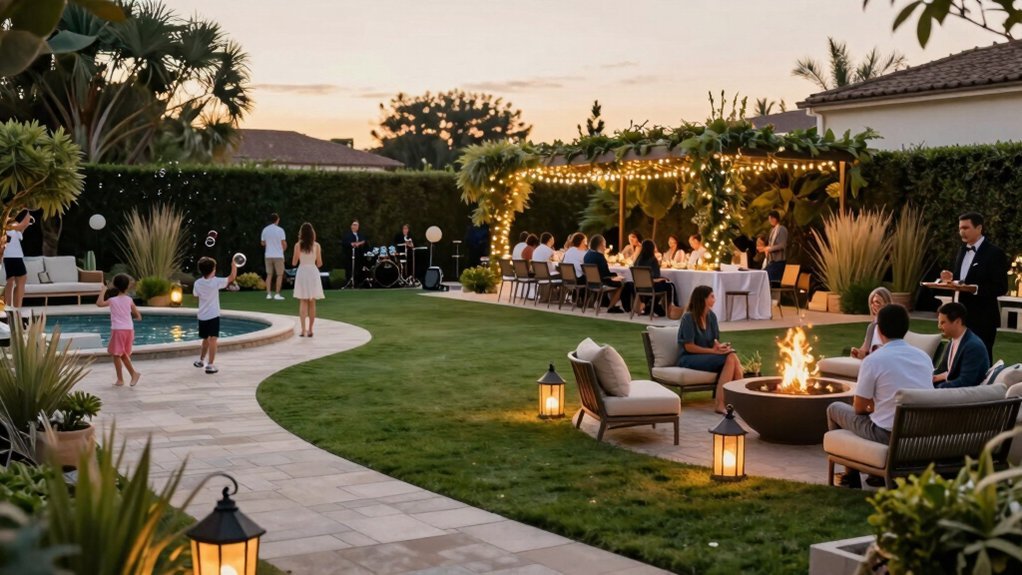
Choosing landscaping designed for party entertainment creates clear zones for dining, lounging, and cooking, so guests move smoothly without crowding. You’ll enjoy layered lighting that extends gatherings, cozy outdoor rooms, and seamless indoor-outdoor connections that feel like one living space. Thoughtful shade, kid-friendly zones, and flexible game areas keep everyone comfortable and engaged. Outdoor kitchens, bars, and hubs guide conversations and flow. Stick with this approach and you’ll uncover more ideas for unforgettable gatherings tonight.
Visual Zoning and Flow for Party Spaces
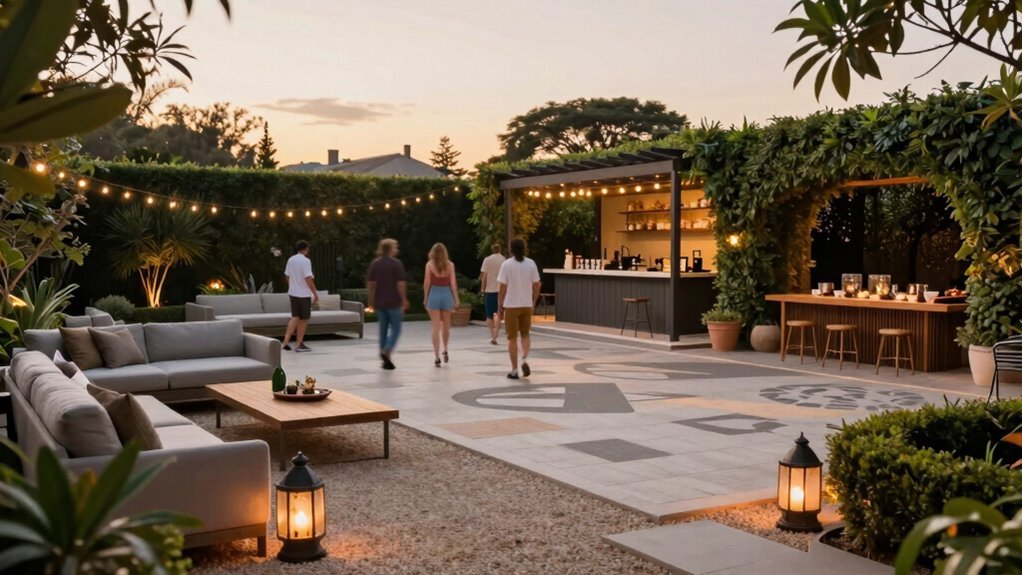
Where should you start when shaping party spaces? Visual zoning divides your yard into dining, relaxing, and cooking zones, which improves function and cuts crowding during gatherings. Use clear focal points like a fire pit or outdoor kitchen to anchor areas and guide guests through the layout. Plan pathways that connect seating, yard features, and your home entrance, creating cohesive movement between zones.
Delineating zones helps you manage traffic, airflow, and noise, so you can host confidently while kids play away from the dining area. Consider seasonal lighting and shade features to illuminate and define each zone from dusk onward, boosting safety and ambiance. If you lay it out thoughtfully, guests flow, linger where it matters, and your party feels spacious without feeling crowded.
Layered Outdoor Lighting for Evening Gatherings
Layered lighting blends string lights, pathway lighting, and focal fixtures to extend your party from day into night.
You’ll balance warm ambience with safe routes and targeted highlights on focal points like fire pits, pergolas, or outdoor kitchens.
Choose energy-efficient, programmable options to keep the mood steady while trimming energy use.
Layered Lighting Concepts
How can layered lighting transform your outdoor evenings? Layered lighting blends string lights, pathway lighting, and built-in fixtures to create functional zones for dining, relaxing, and cooking after sunset. You’ll get ambient overhead glow from string lights that softens the space without overpowering features. Pathway lighting guides circulation, improving safety and flow between seating, dining, and entertainment zones. Built-in fixtures provide targeted illumination for tasks and highlights, while smart options let you schedule and dim for mood shifts. Layering also emphasizes focal points like fire pits or water features, adding depth and texture to your landscape design. With energy efficiency in mind, you can tailor intensity to match events, seasons, and guest counts. This approach stays flexible, scalable, and visually balanced throughout gatherings outdoors.
Pathway and Focal Lighting
Why add pathway and focal lighting to your outdoor setup? Layered outdoor lighting combines string lights, pathway lighting, and built-in fixtures to extend gatherings from day into evening. Illuminating pathways and stairs improves safety while guiding guests toward dining, relaxing, and social zones. Outdoor lighting should highlight focal points, such as a dining area or water feature, to create visual anchors in the landscape. A cohesive plan enhances texture and depth across zones, improving flow and mood for evening entertaining. Pathway lighting guides guests smoothly, while focal lighting draws attention to your most inviting spaces. Energy-efficient options offer adjustable ambiance for different party settings. With careful layering, you create intimate nooks, lively patrols, and scenic silhouettes that stay crisp as night settles around you.
Energy-Efficient Night Lighting
Building on your pathway and focal lighting, you can extend gatherings after dark with energy-efficient night lighting that keeps safety and mood in balance. Layered outdoor lighting combines string lights, pathway lights, and built-in fixtures to guide movement and create inviting depth. Energy-efficient options like solar yard lights and LED fixtures reduce power use and maintenance compared to incandescent options. Use strategic focal lighting to highlight dining zones, seating areas, and water features, drawing guests’ eyes where you want them most. Smart lighting controls let you schedule and dim, so you can adjust ambiance without wasting energy. Choose weather-resistant, outdoor-rated fixtures to ensure longevity from late spring to early fall and beyond. This approach minimizes glare while maintaining safety, comfort, and visual interest throughout.
Flexible Game Areas to Keep Guests Engaged
Designate a dedicated game zone away from dining and seating to keep play flowing. Make it age-inclusive so kids, teens, and adults can join without crowding the main entertaining spaces. Keep it safe and uncluttered with clear sightlines and simple layouts so lawn games run smoothly.
Zoning for Games
Where should you zone for games to keep guests engaged without interrupting meals? Designate a dedicated green space away from seating and dining to host lawn games, so conversations at tables stay uninterrupted. Place zones in accessible, open areas with clear pathways to dining and lounging spots to maintain smooth guest flow. Use focal points and distinct boundaries to separate gaming from cooking and chatting, while keeping sightlines to the fire pit and entertainment focal points. Plan for adults and families by mixing high-energy games with tabletop activities in the same area, ensuring safe, efficient layouts with ample clearance and low edging.
- Separate zones with clear markers
- Provide safe clearance around equipment
- Use sightlines to focal points
- Mix energetic games with tabletop options well
Age-Inclusive Zones
Use the existing lawn-game setup to create age-inclusive zones by carving flexible play areas in green space away from dining to minimize disruption and let guests of all ages join in. Designate one zone with Spikeball, Cornhole, and Giant Jenga to give kids and adults accessible options without crowding the table area. A well-planned layout keeps active entertainment out of dining lanes, preserving flow between lounging, dining, and play. Place diverse games in the same zone for quick transitions so younger guests stay engaged while adults mingle nearby. Prioritize safe, open layouts with clear sightlines to improve supervision and comfort across ages, ensuring everyone can participate without feeling sidelined. You’ll notice smoother conversations and fewer cross-traffic interruptions when zones are clearly marked for guests.
Safe, Uncluttered Play Areas
How can you keep lawn games engaging without crowding dining zones? Designate a green, open space away from seating to host activities like Spikeball or Cornhole, keeping play areas compact and non-disruptive to meals. Position game zones away from food prep and serving areas to prevent crowding and ensure smooth traffic flow for guests and hosts. Use soft, level turf or cushioned ground cover to minimize tripping hazards and provide comfortable play for all ages. Create clear sightlines and unobstructed paths between the game space, seating, and exits to enhance safety and supervision. Include storage solutions or designated boundaries, such as cones or border edging, to keep equipment organized and prevent clutter in entertaining areas.
- Move gear.
- Use turf.
- Keep clear sightlines.
- Edge borders.
Seamless Indoor-Outdoor Connectivity
Why settle for separate indoors and outdoors when large sliding doors blur the line and extend your entertaining space into a single, fluid zone? You create seamless indoor-outdoor connectivity with glass doors that push open, blending dining, lounging, and cooking zones in one cohesive area.
An indoor-outdoor room blends home interiors with exterior spaces, expanding hosting capabilities while you move guests between spaces without barriers.
Structural design should ensure smooth transitions and aligned floor levels to prevent trips and maintain the continuous feel you want.
Shadow and climate considerations, like shade structures or curtains, keep comfort high as you switch between indoors and outdoors.
Prioritize circulation, anchor focal points outdoors, and guide guests naturally between seating, dining, and kitchen areas for effortless party flow.
Cozy Outdoor Living Rooms and Seating Clusters
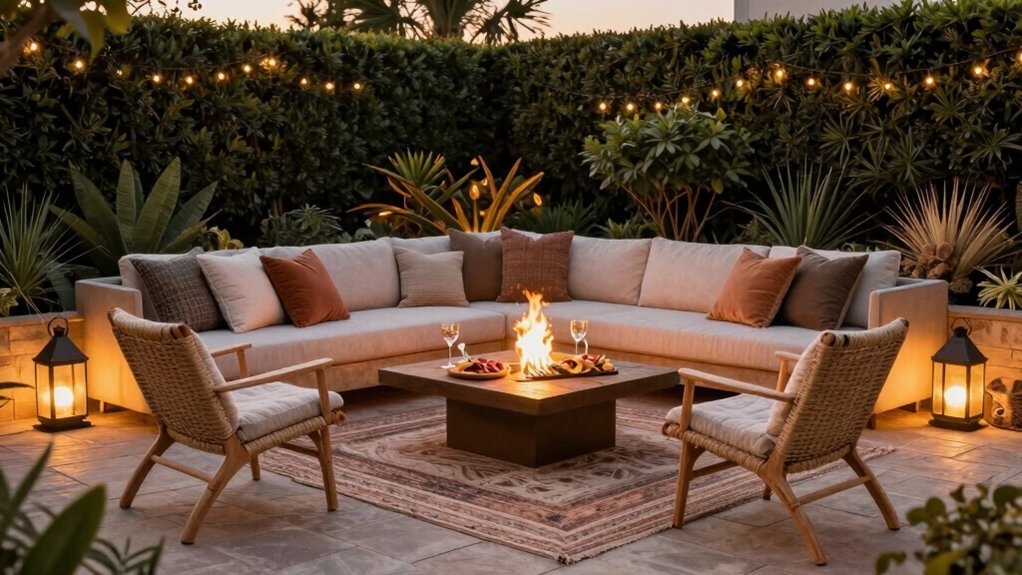
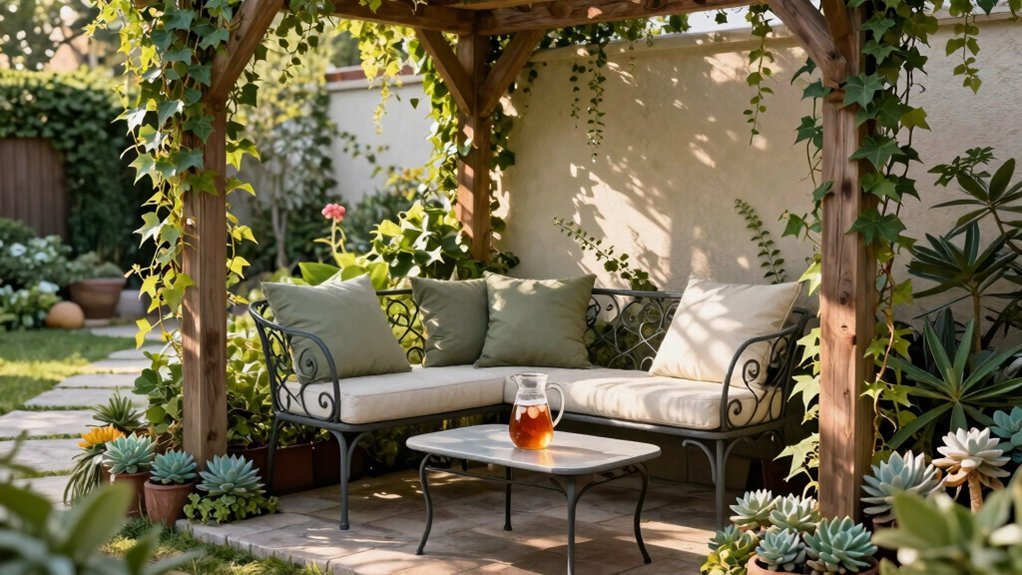
You can create a warm, welcoming outdoor living room with soft seating, blankets, and candles to invite guests to settle in. Layered textiles and greenery add texture and define comfortable seating clusters for easy conversation. Arrange defined conversation circles with strategic lighting and durable, all-weather pieces to keep gatherings cozy across the evening.
Warm Welcoming Seating
Cozy outdoor living rooms create inviting lounge zones with an outdoor rug, sofas or chairs, and blankets or pillows. You group seating into intimate clusters near dining or fire pits to encourage conversation without crowding pathways. Outdoor lighting, such as lanterns and candles, enhances warmth and ambiance around seating areas after sunset.
- Choose weather-friendly, durable materials and covered cushions so your seating stays inviting through sun, rain, and seasonal entertaining.
- Layer textures with throws, pillows, potted plants, and varied seating heights to add richness and comfort for guests.
- Arrange clusters near dining areas or fire pits, guiding conversation without blocking footpaths or limiting movement at night.
- Incorporate soft lighting like lanterns and candles to create warmth around seating as dusk settles for guests outside.
Layered Comfort and Texture
How can layered comfort transform outdoor living into inviting zones? You combine outdoor rugs, sofas or seating clusters, throws, and pillows to create spaces that invite guests to linger. Clustering seating into intimate groups best facilitates conversation without crowding dining or cooking areas. Add ambient elements like outdoor candles, lanterns, and soft lighting to increase warmth after dark. Mix textures with soft fabrics, woven furniture, and potted plants, and vary heights with planters or trees to add depth and a welcoming atmosphere. Design clear circulation paths between dining, lounging, and activity zones to improve flow and reduce disruption during entertaining. This layered approach keeps every area distinct yet cohesive, supporting conversations, comfort, and visual rhythm across your yard. All while maintaining easy maintenance too.
Defined Conversation Circles
Why do defined conversation circles work so well for outdoor living? They group seating around a focal point, like a fire pit or coffee table, to foster intimate chats during gatherings. Outdoor rugs, blankets, pillows, and lanterns delineate the clusters and add warmth. Placing seating away from dining and activity zones reduces crowding, improves flow, and keeps conversations from interrupting meals or games. Weatherproof furniture and gradual transitions between indoor and outdoor spaces boost usability for year‑round entertaining. Lighting clusters with string lights or powered lanterns creates a welcoming ambiance and extends social time after dark.
- Cozy focal seating with rugs and throws
- Clear separation from dining or activity zones
- Durable, weatherproof furniture for year-round use outdoor
- Ambient lighting to extend conversations after dark
Elevated Decks for Dining and Socializing
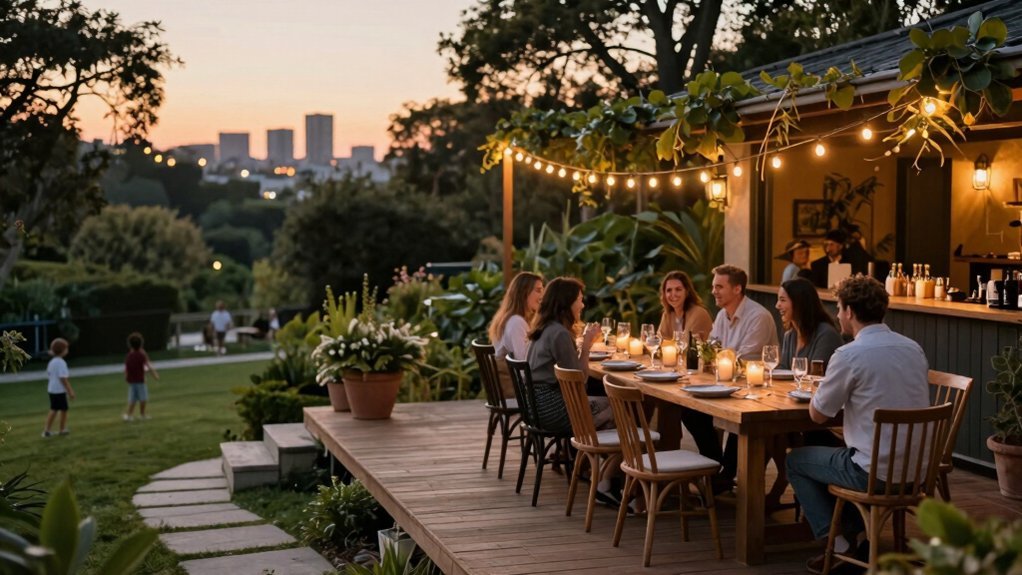
Elevated decks redefine outdoor entertaining by extending dining and lounging into a weather-protected space that connects seamlessly with indoor kitchens or living areas.
Elevated decks redefine outdoor entertaining, extending dining and lounging into weather-protected space that links with indoor kitchens.
A second-story deck maximizes yard usability by creating a defined zone for outdoor meals, sunbathing, and socializing without crowding the ground level.
Decks offer versatile design options, including built-in seating, planters, and bar-height dining, which enhance guest interaction and viewing angles for events.
Elevation helps define traffic flow, guiding guests from entry points to seating and dining areas while keeping outdoor activities organized.
Elevated platforms can improve accessibility and safety by enabling clear transition between levels and reducing mud or standing water on entertaining spaces.
This setup also preserves yard views, inviting conversations from multiple seating angles for cohesive party flow.
Defined Patios for Dining and Grilling
From elevated decks that frame dining and social zones, you can anchor outdoor entertaining with a defined patio for dining and grilling. A defined patio creates a dedicated dining and grilling zone with a stable, flat surface for tables, chairs, and the grill. Using materials like stone, brick, pavers, or gravel distinguishes the dining area from the surrounding yard while delivering durability and easy maintenance. Integrating a dining table on the patio encourages cohesive entertaining, especially for backyard cookouts and social meals. A clearly defined patio helps organize flow, guiding guest movement between seating, cooking zones, and fire pit areas without crowding the dining space. Pair the patio with lighting, rugs, and cushions to boost ambiance.
- Distinct materials
- Defined dining
- Flowing layout
- Ambient lighting
Shade Structures: Pergolas, Awnings, and Canopies
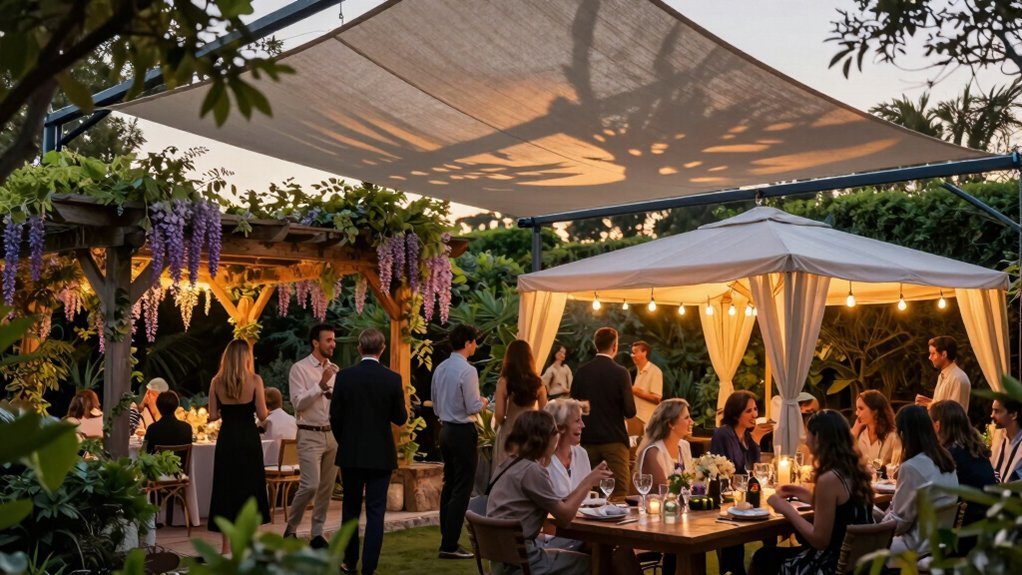
Want to extend shade and comfort across your outdoor entertaining spaces without sacrificing light or airflow? Pergolas give partial shade with lattice beams, so you can dine on decks and patios without losing sun. Retractable awnings provide a budget-friendly, install-and-retract solution to shade patios or decks as you need. Outdoor canopies offer flexible shade over seating, kitchens, and dining zones, and you can find them widely at home improvement stores. Hang patio curtains or linings to boost privacy, shield guests from sun, and add a tropical vibe under pergolas or patios. Lighting and shade structures work together to extend evenings, shaping zones while keeping guests comfortable. Choose materials that resist weather, align with your theme, and allow airflow for year-round enjoyment for gatherings outside.
Bug-Protected and Weather-Resilient Lanai Options
Need a bug‑proof, weather‑ready outdoor living space that can host gatherings year‑round? A lanai delivers bug protection and weather resilience, so you can plan for CA and FL climates without worrying about interruptions. It commonly covers pools or patios, extending usable time even in light rain. The design emphasizes tropical aesthetics while focusing on practical protection, keeping guests comfortable and engaged as events run longer. By shielding people from insects and weather, lanais create a seamless indoor‑outdoor flow that feels cohesive and inviting.
- Extends usable season with rain drizzle tolerance and insect barriers
- Integrates indoor and outdoor spaces for cohesive entertaining, year‑round for flow and social connection
- Tropical aesthetics meet practical protection and durable framing
- Keeps guests comfortable during longer events with steady airflow
Practical Shade Solutions for Sunny Days
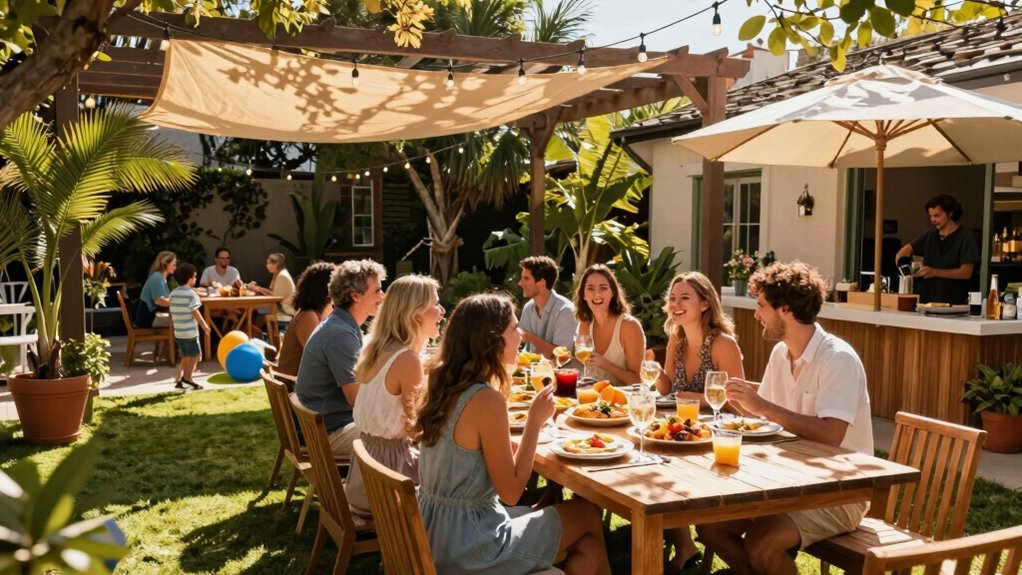
How can you keep patios comfortable on bright days without sacrificing style? Retractable awnings give sun-shade on patios with quick installation and adjustable coverage, so you tailor protection as the sun moves.
Retractable awnings provide sun shading with quick installation and adjustable coverage, tailoring protection as the sun shifts.
Outdoor canopies offer flexible shade over decks, kitchens, or seating areas and are widely available in most home improvement stores, making upgrades simple.
Pergolas and arbors deliver partial shade while keeping that open-air feel, helping you define entertaining zones without closing them off.
Outdoor umbrellas are portable and budget-friendly, easily deployed over tables and loungers as needed.
Layered shading, mixing structures with movable elements like shade canopies, umbrellas, and curtains, extends comfort across different sun angles and times of day. This approach keeps guests comfortable while preserving outdoor ambience at all times.
Kid-Friendly Play Zones and Safe Retreats
Create a dedicated, kid-friendly play zone away from dining and cooking areas to minimize disruptions and keep supervision easy during outdoor parties. Design boundaries with soft ground surfaces like mulch, rubber, or turf to reduce injuries and boost overall comfort for active play. Choose age-appropriate activities such as a swing set, treehouse, sandbox, or in-ground trampoline to keep kids engaged. Keep sight lines from seating areas so adults can monitor easily without wandering. Add shade, caregiver seating, and toy storage to create a comfortable retreat for both kids and adults, and ensure supervision remains effortless throughout the event.
- Secure storage for toys and equipment.
- Shade structures that cover play and seating.
- Soft ground surfaces for soft landings.
- Clear sight lines from any seating area.
Outdoor Kitchens, Bars, and Cooking Stations
Outdoor kitchens and bars extend entertaining options by letting you cook, prep, and serve right in the yard, keeping guests engaged instead of drifting indoors.
A built-in outdoor kitchen typically includes a grill, countertops, storage, sink, and sometimes a pizza oven or meat smoker to support diverse cooking tasks. An integrated bar area, from a simple cart to a full backyard pub, keeps beverages accessible and encourages socialization around the cooking and dining zones. Properly designed layouts prioritize flow between dining, cooking, and seating, reducing cross-traffic and improving guest comfort during parties. Lighting and shade features surrounding outdoor kitchens and bars enhance usability after sunset and maintain a welcoming ambiance for entertaining. With thoughtful placement, you invite guests to linger and mingle comfortably together.
Entertainment Hubs: Pools, Theaters, and Bar Areas
Where should you place entertainment hubs like pools, theaters, and bar areas to guide guest flow and keep conversations going? Pools create cooling zones and recreation, with built‑in games and lounging around the water that boost summertime entertaining.
Place pools as cooling social hubs that invite play and conversation.
Outdoor theaters use projectors or screens with blankets on the ground, offering a cozy movie‑night vibe for casual gatherings.
Outdoor bars centralize drinks and garnishes, encouraging mingling and easy circulation. A dedicated hub defines social zones, helping guests move naturally between lounging, watching, and sipping, while lighting and seating around these hubs enhance safety and comfort for extended evenings.
- Position hubs to balance sightlines and pathways
- Use warm lighting to extend usability after sunset
- Arrange seating to invite conversation
- Centralize bars to promote mingling and flow
Frequently Asked Questions
Why Is Landscape Design Important?
Landscape design is important because it creates functional, beautiful outdoor spaces that boost comfort, flow, and social interaction; it guides movement, supports durability, and connects your home with the outdoors, helping you host gatherings effortlessly.
What Is the Rule of Three in Landscape Design?
The rule of three in landscape design is grouping elements in threes to create balance and rhythm. You can trio plants, textures, or lighting, repeat thrice in zones, and vary scale to guide the eye.
How to Transform Your Backyard for a Party?
You’ll transform your backyard for a party by zoning areas for dining, relaxing, and cooking, adding shade structures and layered lighting, a fire pit, kid-friendly games, seating groups, an outdoor bar, and a focal feature.
What Are the Three Major Principles of Landscape Design?
The three principles of landscape design are balance, cohesion (unity), and rhythm. You’ve got balance in your yard, create cohesion across plants, hardscape, and lighting, establish rhythm by repeating patterns and focal points for flow.

Leave a Reply