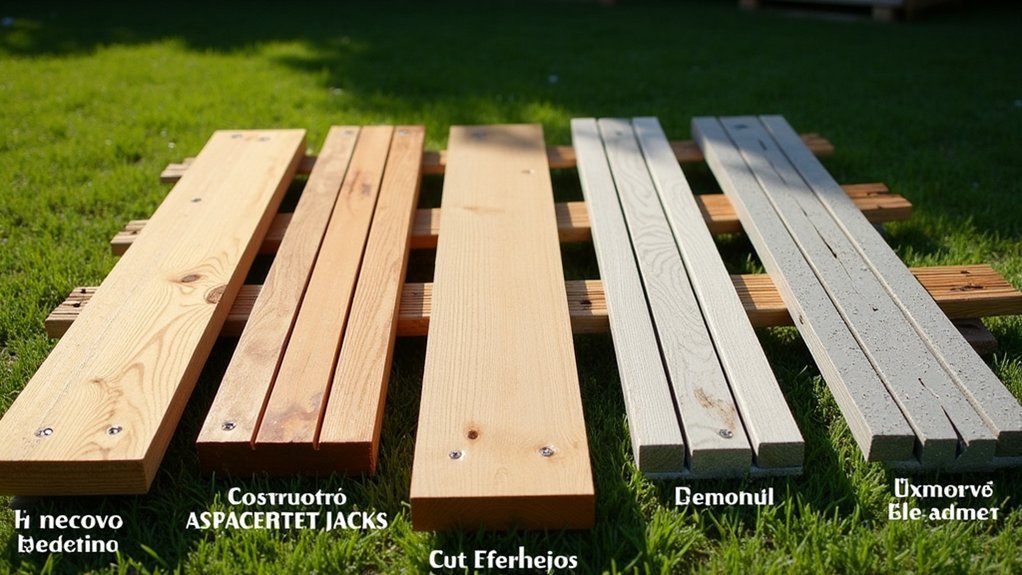
You don’t have to drain your savings to build a deck that looks great and lasts for years. Pressure-treated pine offers the lowest upfront cost and wide availability, while composite decking from recycled materials saves you money on maintenance over time. Cedar planks give you natural beauty without chemical treatments, and concrete pavers provide exceptional durability at $2–$8 per square foot. Bamboo boards round out your options with eco-friendly hardwood-like performance. Each material brings unique advantages worth exploring below.
Pressure-Treated Pine Lumber
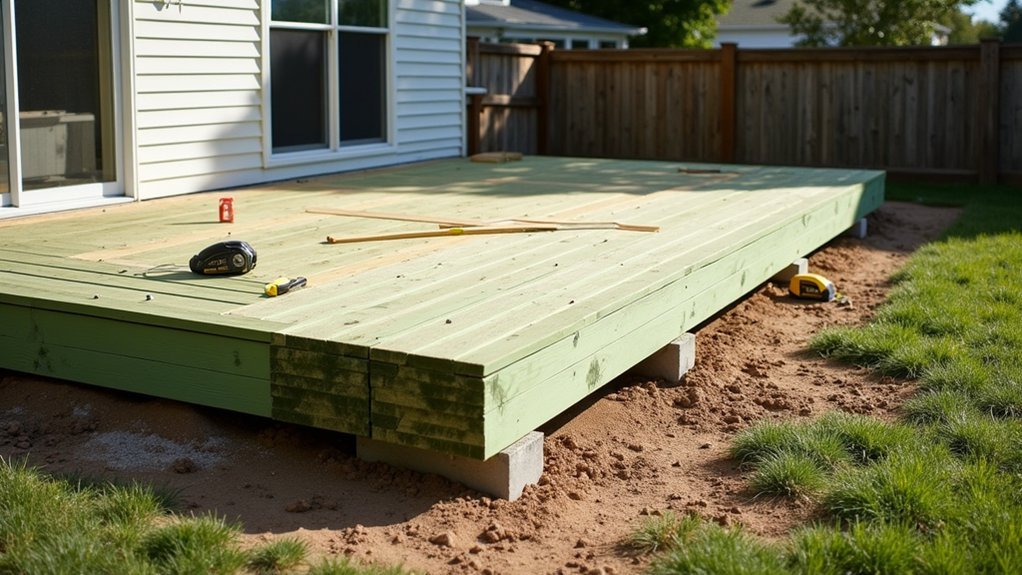
Pressure-treated pine lumber stands as the go-to choice for homeowners who want a durable deck without draining their savings.
You’ll find it at virtually every home improvement store, making it incredibly accessible for your project.
The treatment process infuses the wood with preservatives that protect against rot, insects, and fungal decay.
You can expect your pressure-treated deck to last 15 to 20 years with proper maintenance.
You’ll pay substantially less compared to composite or hardwood options.
The material cuts, drills, and fastens easily, reducing your labor costs if you’re hiring professionals.
However, you’ll need to seal or stain your deck every two to three years.
The wood can warp or crack if you skip this step.
Despite this maintenance requirement, pressure-treated pine delivers exceptional value for budget-conscious builders.
Composite Decking From Recycled Materials
Composite decking transforms recycled plastic bags, milk jugs, and wood scraps into low-maintenance boards that rival traditional lumber in appearance.
Composite decking turns everyday waste into durable, beautiful boards—proving sustainability and style can share the same backyard.
You’ll pay more upfront than pressure-treated pine, but you’ll save money over time by skipping annual staining and sealing.
These boards resist rot, insects, and splintering, making them ideal for families with barefoot children.
You won’t need to sand or refinish them—just wash with soap and water occasionally.
Budget-friendly composite options from brands like Trex Enhance or Fiberon Good Life cost between $2 and $4 per linear foot.
You can often find discounted seconds or discontinued colors at building supply stores.
When installing, you’ll use hidden fasteners that create a clean, nail-free surface.
Most manufacturers offer 25-year warranties, protecting your investment.
Cedar Wood Planks
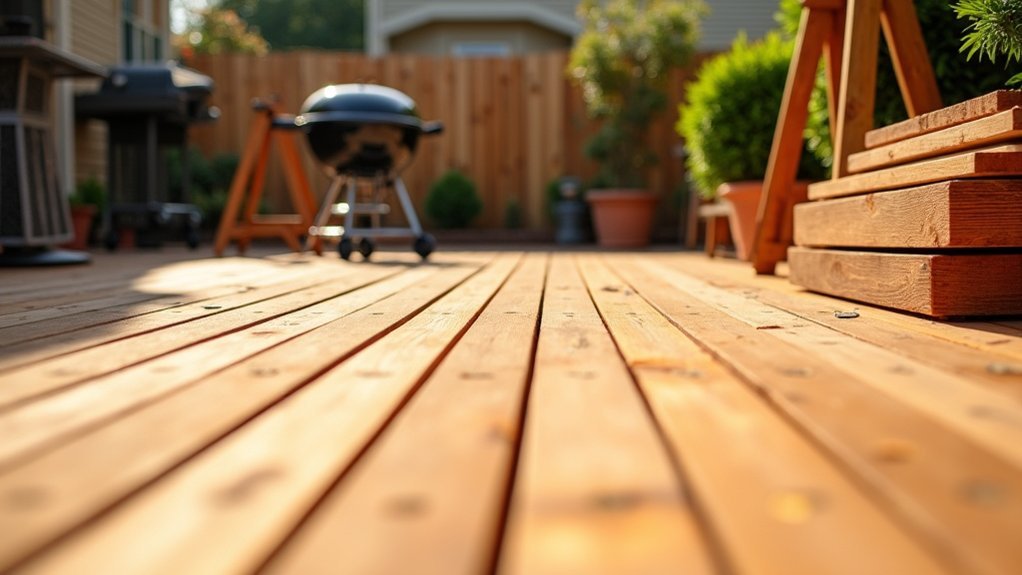
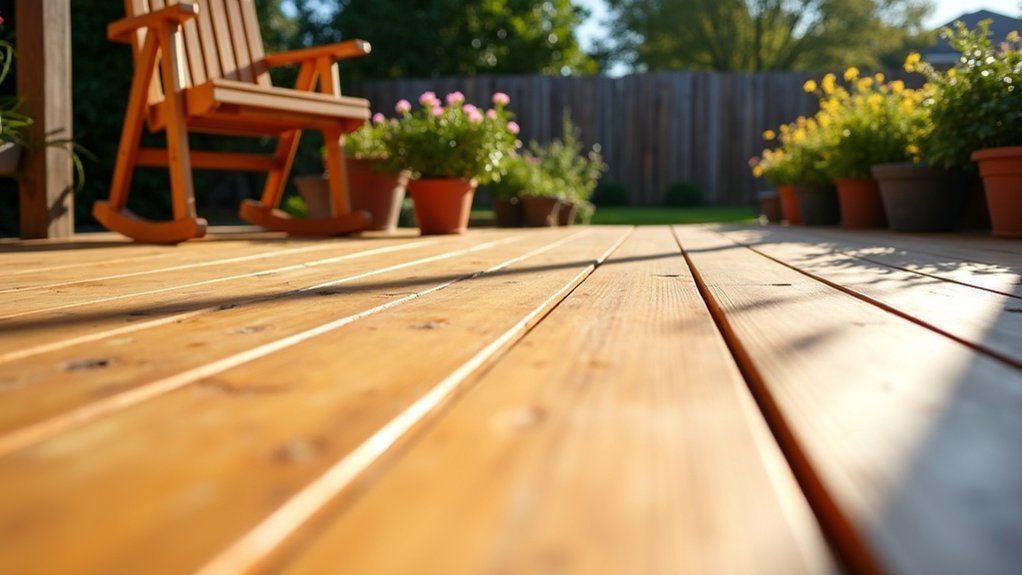
While composite materials offer modern convenience, cedar wood planks deliver natural beauty that many homeowners prefer for their outdoor spaces. Cedar contains natural oils that resist rot, decay, and insect damage without chemical treatments.
You’ll find cedar costs less than tropical hardwoods while lasting 15-20 years with proper maintenance. The wood’s natural grain patterns create stunning visual appeal that ages into an attractive silver-gray patina.
Key benefits of cedar decking:
- Naturally resistant to moisture and warping
- Lightweight and easy to install yourself
- Accepts stains and finishes beautifully
- Stays cooler underfoot than composite alternatives
You should seal your cedar deck every two to three years to maintain its rich color. This affordable material gives you premium aesthetics without breaking your budget.
Concrete Pavers and Blocks
Concrete pavers and blocks transform your outdoor vision into reality at a fraction of traditional decking costs. You’ll spend between $2 and $8 per square foot, making them one of the most affordable options available. They’re durable, weather-resistant, and require minimal maintenance.
| Feature | Benefit |
|---|---|
| Longevity | Lasts 25-50 years |
| Installation | DIY-friendly |
You can install pavers yourself over a weekend, eliminating labor costs entirely. Simply prepare a gravel base, add sand, and lay your pattern. If one paver cracks, you’ll replace just that piece rather than an entire section.
Choose from various colors, textures, and shapes to customize your space. Unlike wood, concrete won’t rot, warp, or attract insects, saving you money on repairs and treatments long-term.
Bamboo Decking Boards
Bamboo decking boards consistently deliver exceptional value, costing between $3 and $5 per square foot while rivaling hardwood in durability.
You’ll find bamboo resists moisture, insects, and warping better than many traditional wood options.
Here’s what makes bamboo an excellent budget choice:
- Rapid renewability – Bamboo matures in 3-5 years versus decades for hardwood trees
- Natural strength – Strand-woven bamboo exceeds the hardness of oak and maple
- Low maintenance – You won’t need frequent staining or sealing treatments
- Eco-friendly appeal – Sustainable harvesting practices reduce environmental impact
When you’re shopping for bamboo decking, look for strand-woven varieties that offer superior density.
You can install bamboo boards using standard deck fasteners, and they’ll maintain their appearance for 20-25 years with basic care.
Frequently Asked Questions
How Much Does Professional Deck Installation Typically Cost per Square Foot?
You’ll typically pay between $15 and $35 per square foot for professional deck installation. Your total cost depends on the materials you choose, your location, deck complexity, and any additional features you’re adding.
What Building Permits Are Required for Constructing a Backyard Deck?
You’ll typically need a building permit for deck construction, especially if it’s attached to your home, elevated, or exceeds certain size limits. Contact your local building department to confirm specific requirements for your area.
How Long Does a Typical DIY Deck Project Take to Complete?
You’ll typically spend 1-4 weekends completing a DIY deck project, depending on size and complexity. A simple 10×12 deck takes about 2-3 days, while larger designs with stairs or railings require additional time.
What Tools Are Essential for Building a Deck Yourself?
You’ll need a circular saw, drill/driver, level, tape measure, speed square, chalk line, and post hole digger. Don’t forget safety gear—glasses, gloves, and ear protection are must-haves for your project.
Can I Build a Deck Directly on Sloped or Uneven Ground?
Yes, you can build a deck on sloped ground. You’ll need to use adjustable post anchors or varying post heights to create a level surface. This approach actually improves drainage and airflow beneath your deck.


Leave a Reply