
Discover three gazebo fire pit integration plans that balance safety, style, and comfort. You’ll place gas-powered pits for covered spaces, maintain at least three feet of clearance from walls, and add heat-proof bases. Choose Rustic with cedar and stone, Modern with sleek pits and concrete surrounds, or Luxe with built-in seating and upscale fire tables. Each plan covers lighting, weatherproofing, and cozy details so your retreat stays inviting—there’s more to come if you keep going.
Planning a Safe Gazebo and Fire Pit Layout
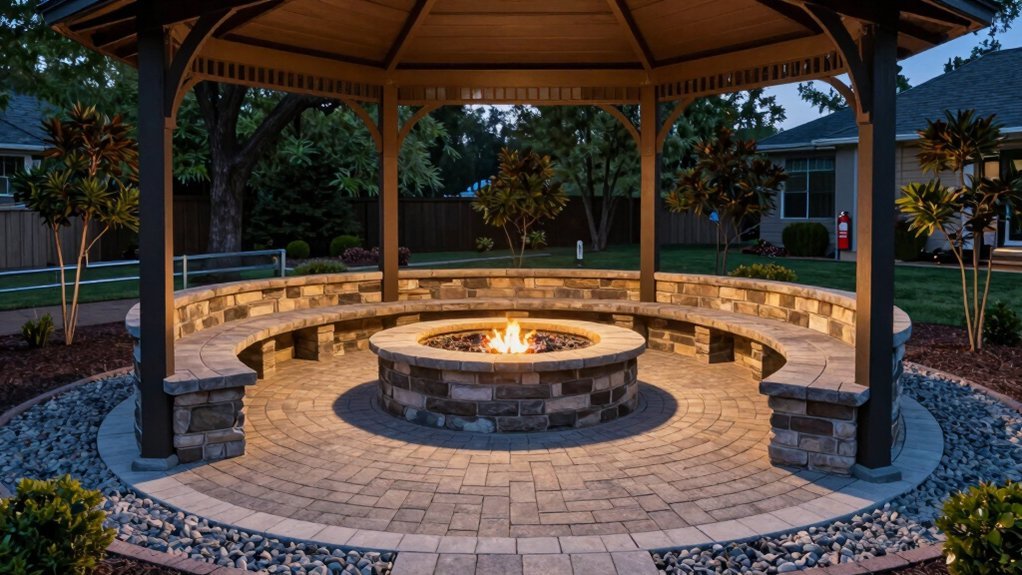
Where should you start when planning a safe gazebo and fire pit layout? Begin by prioritizing a gas-powered fire pit for safety in covered or gazebo-adjacent spaces, to minimize sparks and simplify venting requirements. Check that you maintain at least a 3-foot clearance between the fire pit and gazebo walls or roof, and place a heat-resistant base or fireproof mat beneath it. Choose a fire pit size and shape that scales with your gazebo—compact for smaller structures, elongated or square for larger, open layouts. Ensure proper ventilation by using open-sided gazebos or well-ventilated roofs to prevent smoke buildup. Plan centralized placement that allows safe seating, keeps flammables away, and preserves clear paths for guests and service access. Review regulations and adjust as needed ahead.
Design Vignettes: Rustic, Modern, and Luxe Gazebo Fire Pit Setups
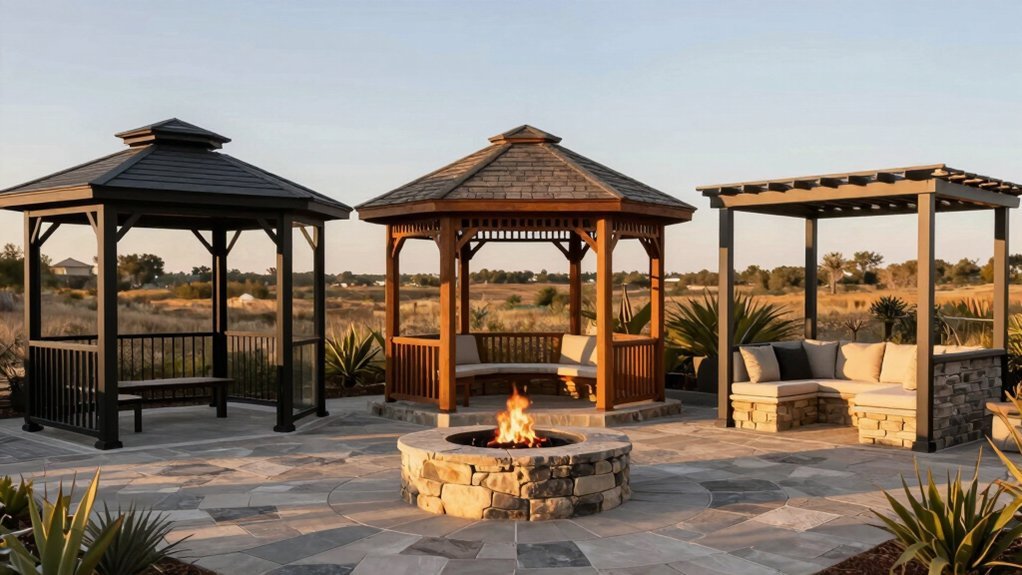
Building on safe layout concepts, you’ll explore three design vignettes—Rustic, Modern, and Luxe—that pair gazebos with fire pits to create distinct outdoor rooms. Rustic setups pair wood-finished gazebos with stone or brick pits, cedar accents, and natural textures for a cozy cabin feel you can live in. Modern gazebos feature sleek, low-profile or gas-powered pits as focal points, with clean lines and minimalist seating for a contemporary retreat. Luxe configurations blend large covered spaces with built-in seating and upscale fire tables to evoke a resort vibe.
> Three design vignettes pair gazebos with fire pits: Rustic warmth, Modern minimalism, Luxe resort ambiance.
- Stone pits, cedar accents, natural textures.
- Sleek pits, clean lines, concrete surrounds.
- Built-in seating, upscale fire tables.
- Safe spacing, 3 ft minimum clearance.
Together, these vignettes offer cohesive lighting and textures to harmonize your gazebo-fire pit duo overall.
Comfort, Lighting, and Weatherproofing for Year-Round Gazebo Retreat
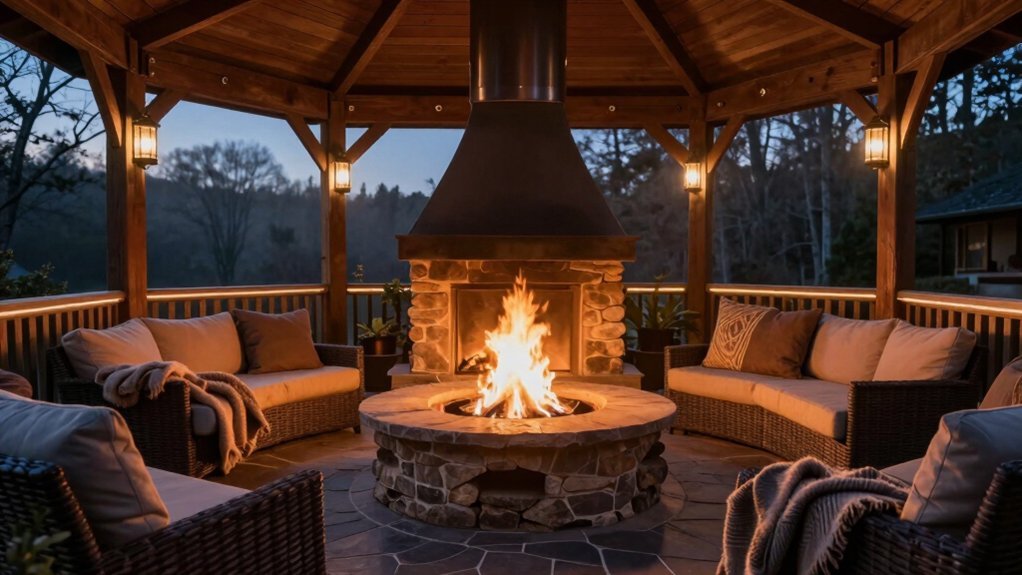
How can you keep a gazebo retreat cozy and safe year-round?
String lights around the posts or roofline create a warm, intimate glow that extends usability into evening gatherings year-round.
Weatherproof cushions and throws with quick-dry fabrics and removable covers boost comfort while withstanding rain, moisture, and sun exposure.
Infrared or electric patio heaters, like Infratech, installed under the gazebo extend comfort for cool seasons without open flames.
Fire pit placement should maintain at least three feet of clearance from walls and roof, with a heat-resistant base or mat to protect surfaces.
Covered or partially open designs with good ventilation help prevent smoke buildup from the fire pit while keeping the space comfortable and safe.
You’ll enjoy year-round gatherings without sacrificing comfort or safety.
Frequently Asked Questions
What Are Typical Installation Costs for a Gazebo Fire Pit?
Expect installation costs to range from $300 to $2,000, depending on fire pit type, lines, permits, and electrical work. You’ll pay more for custom masonry, stone surrounds, or models, plus safety clearances and site prep.
Do Permits or Codes Apply to Outdoor Fire Pits in Gazebos?
Yes, permits and codes apply; you’re to check fire and building codes, zoning, and HOA rules. An enclosed gazebo with a fire pit often requires permits, inspections, clearance, fire-rated construction, and suitable ventilation or prohibition.
What Maintenance Schedule Ensures Safety and Longevity?
Follow a maintenance schedule: inspect weekly, clean after use, and empty ash; check gas lines, connections, and venting; service yearly; replace worn parts; test safety shutoffs; document results and don’t overlook issues to stay safe.
Can Solar-Powered or Electric Alternatives Be Integrated?
Yes, you can integrate solar-powered or electric alternatives. Choose weatherproof, low-voltage options, mount safely, and use a dedicated controller or dimmer. Ensure wiring per code, include a GFCI, and schedule inspection for safety and reliability.
How Does Wind Exposure Affect Fire Pit Performance?
Wind exposure cools the flame, redirects heat, and can fan embers, lowering efficiency, causing uneven burn, and increasing smoke. You’ll shield the pit, choose a low-wind site, and consider wind guards or a hood nearby.

Leave a Reply