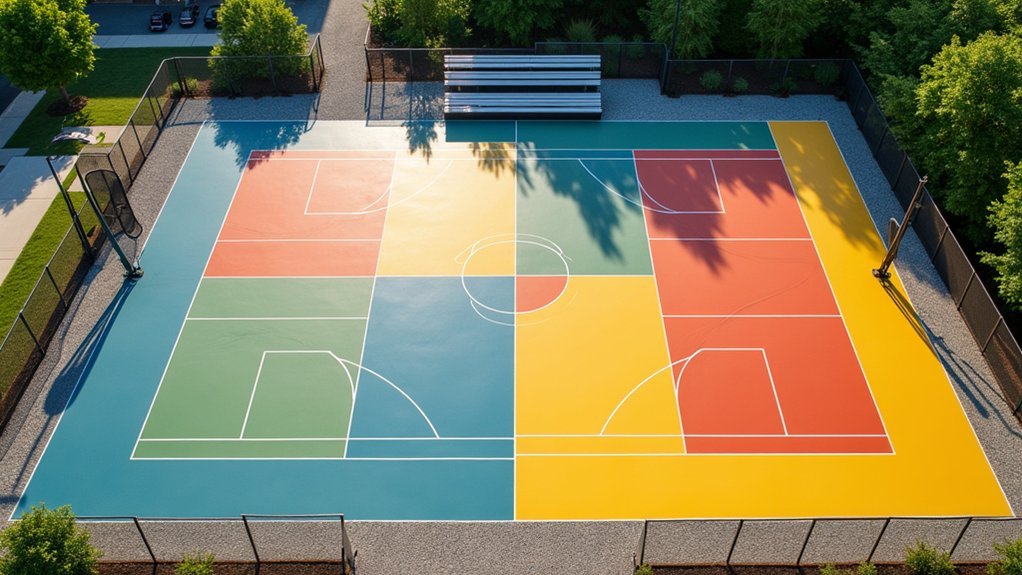
Designing your dream multi-sport court starts with measuring your available space and checking local regulations. Choose durable, slip-resistant surfaces that support multiple activities while prioritizing safety. Map out game lines with different colors to distinguish sports, and select equipment that can be permanent or adjustable based on your needs. Add personal touches like custom logos, coordinated colors, and LED lighting. The perfect court balances aesthetics, functionality, and longevity for years of family enjoyment.
Assessing Your Space and Setting Court Dimensions
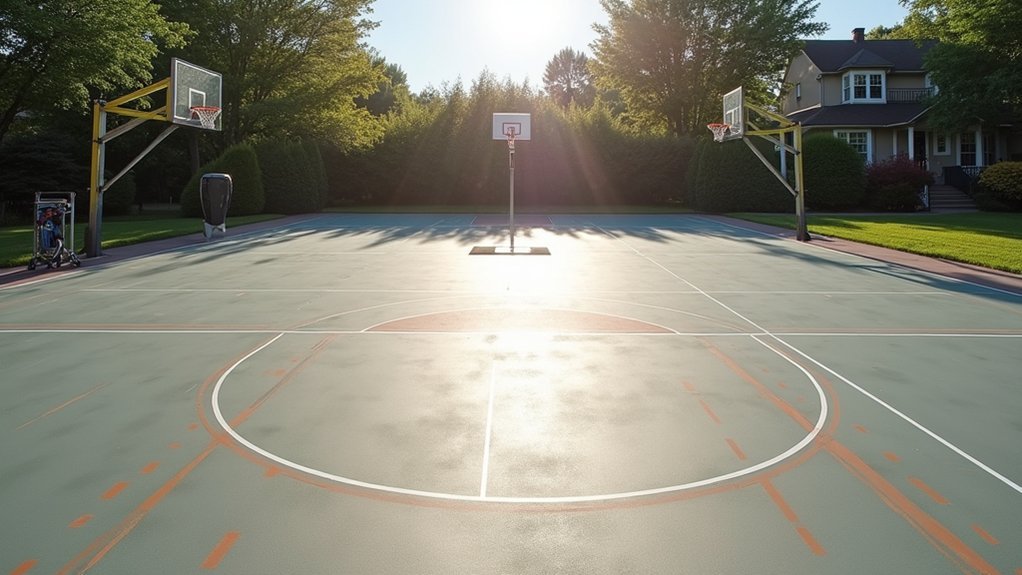
When planning your dream multi-sport court, where should you begin? Start with a comprehensive measurement of your available yard space. Grab a tape measure and map out the area, noting any obstacles like trees, utility lines, or structures that might impact your court design.
Next, consider vertical clearance—you’ll need adequate height for basketball shots, volleyball serves, and other airborne activities. Check for overhanging branches or wires that could interfere with gameplay.
With your space mapped, design your court dimensions to accommodate multiple sports with shared boundaries. Standard markings can overlap to maximize functionality while minimizing confusion. Remember to verify local regulations and HOA restrictions before finalizing your design—these might dictate setbacks, maximum sizes, or require permits for construction.
Selecting Durable Surfaces for Multi-Sport Functionality
Why do surface materials matter so much for your multi-sport court? They’re the foundation of both performance and safety, determining how your court withstands time and protects players. The right surface offers consistent ball response while reducing injury risk through proper shock absorption.
Your court’s surface isn’t just what you play on—it’s what keeps you playing safely year after year.
- Choose modular, interlocking options like Top Court Met Flex tiles that eliminate cracks and maintain uniform play across different sports
- Look for surfaces with UV resistance and weather adaptability to ensure your investment lasts through seasonal changes
- Prioritize materials with slight vertical flex that cushion impact on joints while maintaining slip-resistant traction
When considering synthetic turf areas, integrate them strategically to enhance aesthetics without compromising playability. The ideal surface balances durability with maintenance requirements, saving you time and extending your court’s lifespan.
Mapping Game Lines for Maximum Versatility
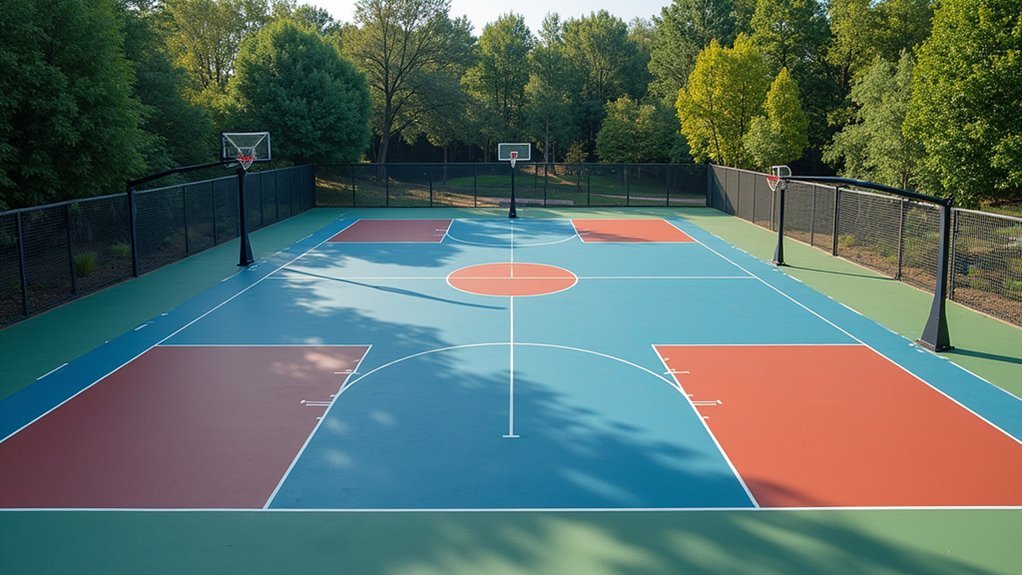
Game lines transform a simple court surface into a vibrant hub for multiple sports, but they require thoughtful planning to avoid visual chaos. When mapping your court’s lines, prioritize your primary sport with the most prominent markings while designing secondary game boundaries in complementary colors that don’t overwhelm players.
Center your layout around dominant features like basketball hoops, ensuring these anchor points serve multiple purposes. For instance, the basketball free-throw line can double as a volleyball service marker with thoughtful positioning.
Consider using different line weights and colors that create visual hierarchy—perhaps thicker lines for basketball and thinner ones for pickleball. This approach helps players quickly identify relevant boundaries during play.
For quick transitions between sports, invest in adjustable components and ensure all lines support precise gameplay while maintaining safety across all activities.
Incorporating Essential Equipment and Adjustable Features
When designing your multi-sport court, you’ll need to choose between portable equipment that offers flexibility and permanent installations that provide durability and stability.
Multi-game court lines can be color-coded for clarity, with pickleball in blue, basketball in white, and volleyball in yellow to minimize confusion during play.
Select weather-resistant features such as marine-grade nets, powder-coated metal equipment, and UV-protected surfaces to ensure your court withstands sun, rain, and seasonal temperature fluctuations.
Portable vs. Permanent Equipment
How should you choose between portable and permanent equipment for your multi-sport court? Consider your priorities between versatility and regulation-quality play. Permanent installations like in-ground posts and fixed court lines deliver consistent performance but limit your ability to reconfigure your space. Portable systems with modular components and adjustable features allow quick transitions between sports without permanent commitment.
- Adjustable nets and risers enable seamless switching between badminton, pickleball, and volleyball while maintaining proper height regulations
- Lightweight, durable materials like interlocking tiles and foldable nets offer easy storage and year-round versatility
- A strategic mix of portable and permanent elements can maximize flexibility while preserving performance, safety, and property value
The best solution often combines both approaches based on your primary sports and space limitations.
Multi-Game Court Lines
Why struggle with separate spaces when you can design a multi-game court with strategically placed lines that accommodate various sports on the same surface? The key is prioritizing precision and color-coding for easy identification. Use contrasting colors—blue for basketball, green for pickleball, and yellow for badminton—to minimize confusion during transitions.
When mapping your court, start with the largest game (typically basketball or tennis) as your primary outline, then work inward with smaller court boundaries. Position critical markings like the free throw line and three-point arc for basketball alongside pickleball’s non-volley zone without overlap. Consider permanent lines for your most frequently played sports and temporary tape for occasional activities. This strategic approach maximizes your investment while creating a versatile space that adapts to whatever game you’re in the mood for.
Weather-Resistant Feature Selection
Beyond court lines, your multi-sport paradise needs weather-resistant features that stand up to the elements year-round. Choose UV-stable materials with open-grid drainage to prevent fading and water puddles, allowing you to play shortly after rainstorms. Incorporate slip-resistant textures with slight vertical flex to protect knees and ankles while improving traction across seasonal temperature changes.
- Select corrosion-resistant hardware, including stainless steel and rust-proof aluminum components that won’t seize after exposure to moisture
- Install cushioned finishes and padding options designed for climate variations similar to Long Island’s seasonal extremes
- Schedule routine seasonal maintenance to clear debris, inspect for wear, and address weather damage before it affects performance
Don’t forget to plan for bi-annual inspections to ensure your court maintains its playability through hot summers and cold winters.
Adding Custom Elements to Enhance Your Experience
Elevate your multi-sport court’s appeal with personalized elements like custom logos that showcase your family name or favorite team. LED lighting solutions not only extend your playing hours but also create an impressive ambiance that transforms evening games into memorable experiences. Your court’s custom color scheme can reflect your personal style, team colors, or complement your home’s exterior for a cohesive look.
Personalized Court Logos
The personal touch of a customized court logo transforms an ordinary playing surface into a statement piece that truly belongs to you. Your family crest, team emblem, or custom graphic becomes a permanent fixture that enhances your court’s identity while integrating seamlessly with multi-sport lines. These logos use UV-stable materials specifically designed to withstand sun exposure and weather conditions without fading.
- Coordinate your logo’s color scheme with your court’s overall palette for a cohesive, professional appearance
- Increase your property’s appeal with a memorable focal point that showcases your personal style
- Create a branded experience that makes guests and family members feel connected to your space
Your designer can help balance your logo placement to ensure it complements gameplay rather than interfering with it, creating both functionality and visual impact.
LED Lighting Solutions
While your court logo showcases your personal style during daylight hours, strategic LED lighting extends your playing experience well into the evening. Modern LED systems offer superior color rendering, ensuring you’ll clearly see ball movement and court lines under consistent illumination.
Consider integrated LED layouts wired into court edges or under-floor tiles to minimize glare and eliminate shadows that can affect gameplay. You’ll benefit from programmable options that adjust brightness levels for different activities—brighter settings for fast-paced basketball games and softer illumination for evening pickleball matches.
Beyond extending playing hours, today’s energy-efficient LEDs significantly reduce power consumption while offering impressive lifespans. This means you’ll enjoy lower maintenance requirements and decreased long-term ownership costs while creating the perfect nighttime atmosphere for your multi-sport court.
Custom Color Schemes
Your court’s color scheme serves as both a reflection of your personality and a functional design element in your multi-sport space. Choose colors that complement your surrounding landscape while expressing your personal style—whether that means matching favorite team colors or creating a permanent design that accommodates multiple sports simultaneously.
Custom patterns deliver a unique court experience while maintaining safety with slip-resistant textures and shock-absorbing surfaces. You can extend your color coordination beyond the court itself to include lighting fixtures, fencing, and other adjacent features.
- Incorporate team logos or branding elements without compromising court performance
- Create multi-sport line designs using complementary colors for different activities
- Balance bold aesthetic choices with durable, safety-focused materials that withstand weather and heavy use
Optimizing for Safety, Drainage and Lighting
Creating a safe, well-drained, and properly lit multi-sport court requires careful planning from the ground up. Begin with proper drainage foundations, incorporating open-grid designs and drainage-grade grading that directs water away from your court and structures, preventing puddles that compromise playability.
When selecting surface materials, prioritize slip-resistant options with shock-absorbing qualities that reduce the risk of knee and ankle injuries during intense play. These materials should balance traction and durability across all seasons, minimizing maintenance needs.
For evening games, strategic lighting placement is crucial. Position fixtures to eliminate glare and shadows that can compromise player safety and performance. Remember to consider your neighbors by installing directional lighting that won’t flood their properties with unwanted brightness. This thoughtful approach ensures your court remains functional after sunset without creating neighborhood tension.
Frequently Asked Questions
How Long Does a Multi-Sport Court Installation Typically Take?
You’ll typically see your multi-sport court installation completed in 2-4 weeks, depending on the court size, materials, weather conditions, and your contractor’s schedule.
Can Courts Be Installed Over Existing Concrete or Asphalt?
Yes, you can install courts over existing concrete or asphalt surfaces if they’re structurally sound with proper drainage. You’ll need to repair cracks and ensure a level foundation first.
What Ongoing Maintenance Do Multi-Sport Courts Require?
You’ll need to regularly sweep debris, wash surfaces, repair cracks promptly, replace damaged tiles, maintain proper drainage, and refresh court lines annually for optimal performance and safety.
How Do Extreme Weather Conditions Affect Court Materials?
Extreme heat can warp materials and fade colors, while freezing causes cracks. Heavy rain damages porous surfaces. You’ll need UV-resistant, temperature-stable materials for durability in harsh climates.
Are There Financing Options Available for Court Installation?
Yes, you’ll find financing options through court installers, banks, home equity loans, and specialized recreation lenders. Many contractors offer payment plans with manageable monthly installments to fit your budget.

Leave a Reply