
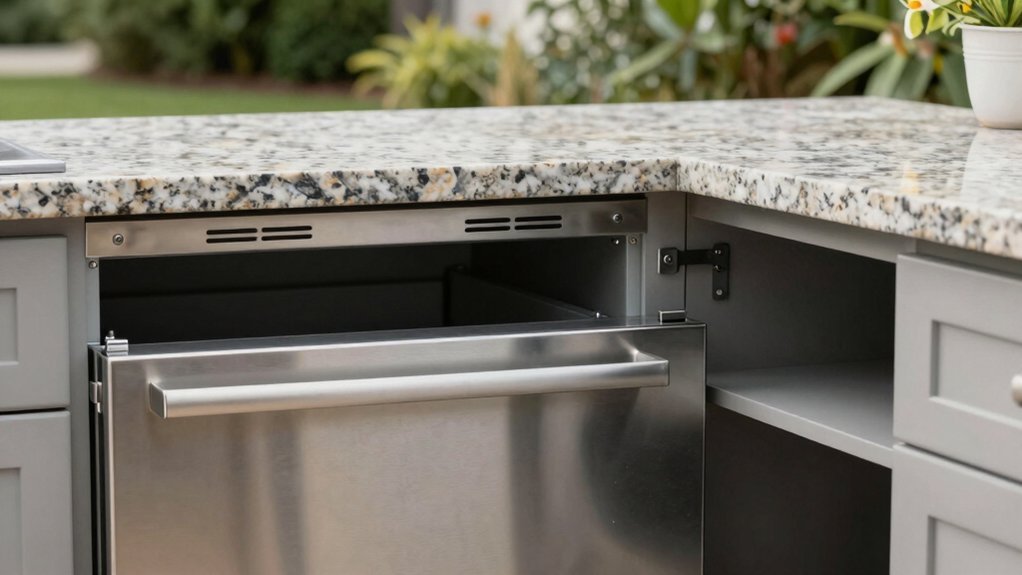
You’ll need to select an outdoor-rated refrigerator with UL certification, then position it away from heat and direct sunlight. Ensure you’ve got proper GFCI-protected electrical outlets installed by a licensed electrician. Verify your compressor can handle temperature extremes with built-in overload protection. Finally, integrate the unit seamlessly into your kitchen layout using weatherproof cabinetry that matches your design. These foundational steps set you up for success, but there’s more you should know about maximizing performance.
Choose an Outdoor-Rated Refrigerator With UL Certification
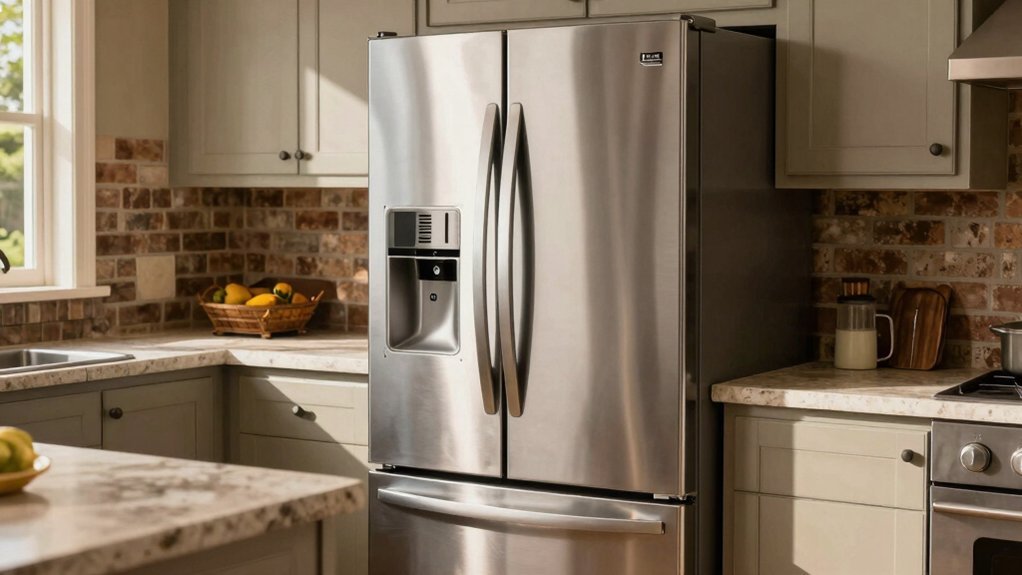
Why settle for an indoor refrigerator that’ll struggle in your backyard? You’ll want to invest in an outdoor-rated model with UL certification, which guarantees the unit’s been tested and approved for external use.
UL certification matters because it confirms your fridge can handle temperature fluctuations, humidity, and moisture exposure that standard indoor models can’t withstand. You’re getting assurance that the electrical components, seals, and materials meet strict outdoor safety standards.
UL certification confirms your outdoor fridge withstands temperature swings, humidity, and moisture while meeting strict electrical safety standards.
When shopping, verify the UL rating on the product documentation or manufacturer’s website. This certification protects your investment and ensures your refrigerator won’t develop rust, electrical issues, or cooling failures prematurely.
Don’t skip this critical step. An uncertified unit risks malfunction, safety hazards, and wasted money.
Plan Strategic Placement Away From Heat and Direct Sunlight
Where you position your outdoor refrigerator matters just as much as which model you choose. You’ll want to select a shaded spot that minimizes heat absorption, since direct sun forces your unit to work harder and drain energy faster. Keep it away from grills, fireplaces, and other heat sources that raise internal temperatures unnecessarily.
Ensure adequate ventilation on all sides, especially for front-venting models. Install your fridge under sheltered areas like covered islands or pergolas to shield it from rain while maintaining proper airflow.
| Location Factor | Problem | Solution |
|---|---|---|
| Direct sunlight | Increased energy use | Position in shade |
| Heat sources nearby | Elevated temps | Distance from grills |
| Poor ventilation | Cooling failure | Space on all sides |
Finally, position doors where they swing freely toward cooking and serving zones for convenient access.
Ensure Proper Electrical Setup With GFCI Protection
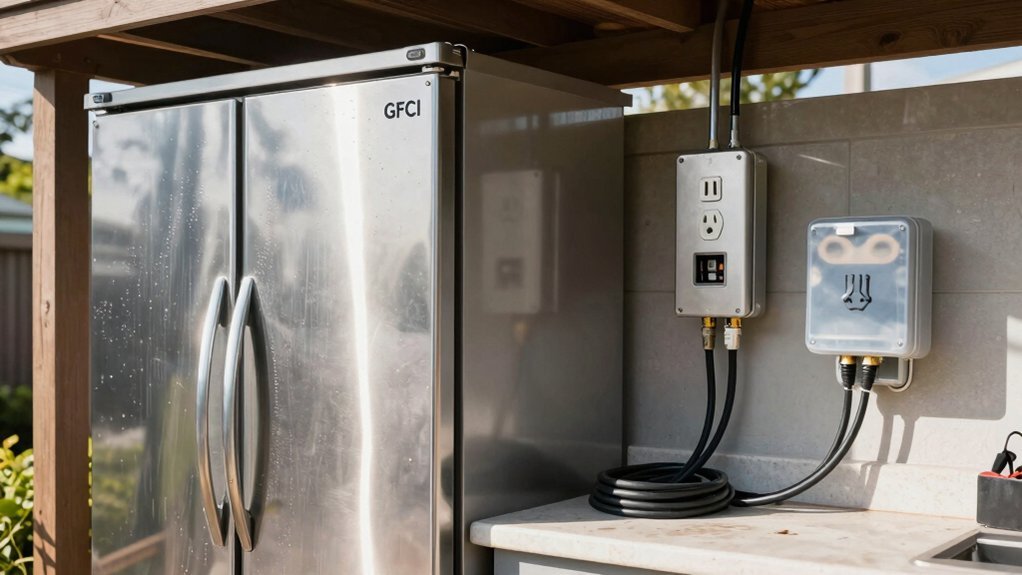
Once you’ve positioned your outdoor refrigerator in an ideal spot, you’ll need to address the electrical infrastructure that powers it. You must use outlets specifically rated for outdoor use with GFCI protection, which automatically shuts off power if moisture or electrical faults occur. Don’t plug your fridge into standard indoor outlets or extension cords—they’ll overheat and create fire and shock hazards.
Install weatherproof, sealed outlets and enclosures to protect connections from rain, dust, and UV damage. Ensure your dedicated circuit has sufficient capacity to handle the refrigerator without overloading, and avoid sharing circuits with high-draw appliances. If you’re uncertain about your wiring, hire a licensed electrician to verify proper outdoor-rated circuits and secure grounding for safety.
Verify Compressor Specifications for Temperature Extremes
How well does your outdoor refrigerator handle temperature swings? You’ll want to verify that your compressor’s rated operating range covers both extreme summer heat and winter cold in your region.
Look for these key compressor features:
- Dual- or variable-speed options that automatically adjust cooling output based on ambient temperature fluctuations
- High-efficiency ratings that maintain consistent performance without overworking during temperature extremes
- Built-in overload protection to prevent damage from power surges or environmental stress
Additionally, confirm your compressor is specifically designed for outdoor use with proper ventilation requirements. Outdoor-rated units withstand exposure to elements better than standard models. Check noise levels too—quieter compressors won’t disturb your entertaining space. These specifications ensure your refrigerator operates reliably year-round, protecting your investment while keeping food fresh regardless of seasonal temperature changes.
Integrate the Unit Seamlessly Into Your Outdoor Kitchen Layout
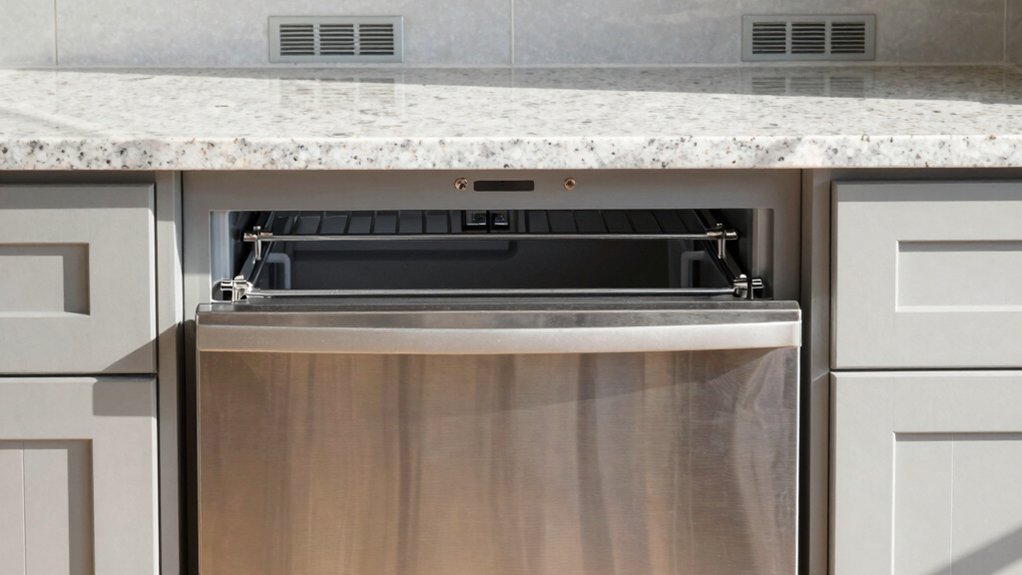
You’ve invested in a quality outdoor refrigerator with proper compressor specs—now it’s time to position it strategically within your kitchen layout. Place your fridge in a shaded, well-ventilated area near your prep zones to minimize heat exposure and maximize efficiency. Choose a built-in or integrated freestanding model that fits your cabinetry footprint, ensuring front ventilation remains unobstructed. Plan for level, stable mounting surfaces and integrate the unit with adjacent cabinet runs or islands for a seamless, cohesive appearance. Use weatherproof cabinetry like Danver with 304/316 stainless steel and powder-coated finishes to match your design while improving durability. Proper placement keeps your refrigerator functional and visually integrated into your outdoor space.
Frequently Asked Questions
Can You Put a Refrigerator in an Outdoor Kitchen?
Yes, you can put a refrigerator in your outdoor kitchen, but you’ll need an outdoor-rated model with UL certification, weather-resistant materials, superior insulation, and enhanced seals designed specifically for outdoor environments and temperature fluctuations.
Do You Still Have to Wait 24 Hours Before Plug-In a Refrigerator?
Yes, you’ll still need to wait 24 hours before plugging in your outdoor kitchen refrigerator. This allows the refrigerant and compressor oil to settle properly. However, you should consult your specific model’s manual, as some manufacturers may have different recommendations.
Do You Need a Special Fridge for Outside?
Yes, you’ll need a UL Outdoor Rated refrigerator specifically designed for outside use. Indoor models won’t withstand outdoor temperatures, humidity, and weather exposure, and you’ll void the warranty if you try using one outside.
How to Keep an Outside Refrigerator From Rusting?
You’ll keep your outdoor refrigerator rust-free by choosing stainless steel construction, sealing all seams, regularly cleaning the exterior with mild soap, and drying door gaskets. You should also place it under cover and ensure proper ventilation to minimize moisture exposure.


Leave a Reply