
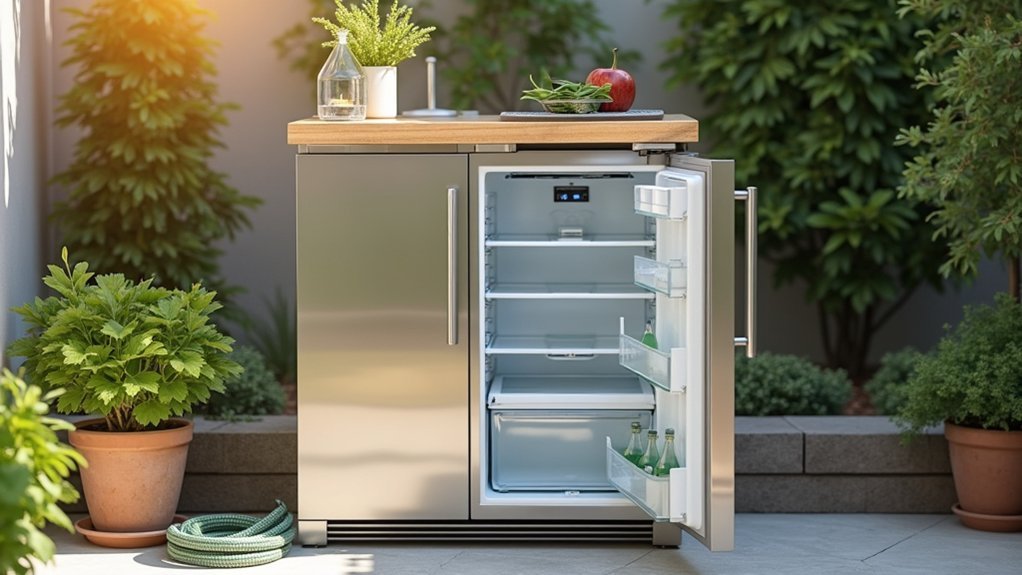
Patio fridges feature weather-sealed components and marine-grade materials that resist moisture and corrosion, making maintenance minimal. You’ll only need occasional wipe-downs with stainless steel cleaner for exteriors and warm soapy water for removable shelves. Simple seasonal checks like inspecting door gaskets and ensuring proper ventilation clearance (5-10cm sides, 15-20cm back) prevent major issues. These design elements work together to deliver worry-free performance even in challenging outdoor environments.
Weather-Resistant Design Makes Cleaning Effortless
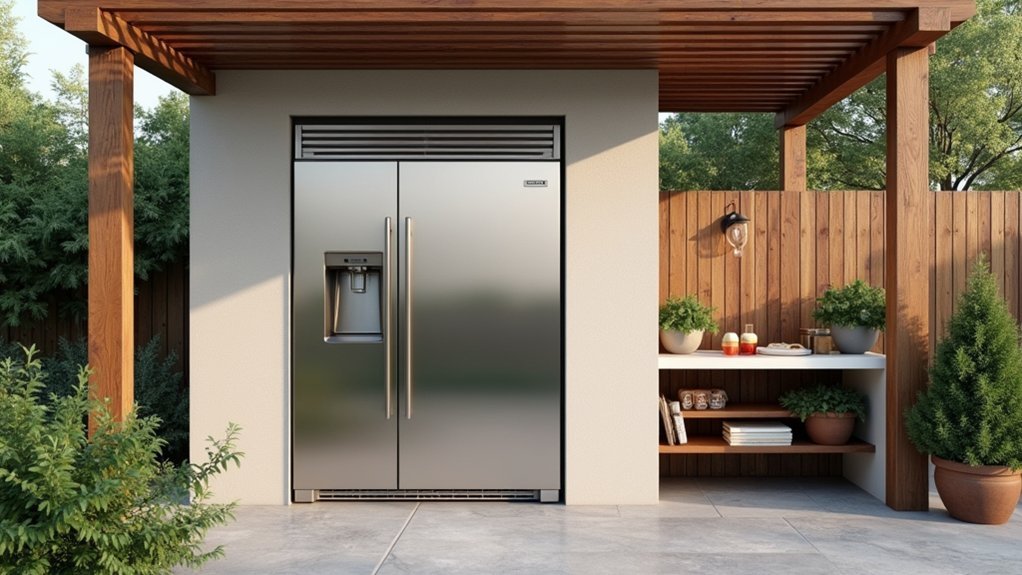
Why spend hours struggling with complex appliance maintenance when your patio fridge is designed to make cleaning practically effortless? The secret lies in its weather-resistant construction, which tackles cleaning challenges before they start.
Your outdoor refrigerator features specially sealed components and corrosion-resistant materials that stand up to moisture, UV rays, and environmental exposure. These weatherproof exteriors resist staining and rust, requiring just a quick wipe with stainless steel cleaner during routine maintenance.
Inside, superior insulation maintains stable temperatures that minimize condensation and frost buildup, while enhanced door seals block moisture intrusion that would otherwise promote mold growth. The strategic ventilation design keeps cooling coils cleaner longer by optimizing airflow, reducing dirt accumulation that would complicate your cleaning routine.
Simple Seasonal Checks Prevent Major Problems
Keeping your patio fridge running smoothly requires just a few simple seasonal checks throughout the year. Your winter prep checklist should include inspecting door gaskets, cleaning condenser coils, and ensuring proper clearance around the unit to prevent heat buildup. When spring arrives, revive your outdoor refrigerator by verifying internal temperatures with an independent thermometer, checking for seal wear, and scheduling a professional maintenance visit to catch any issues before summer entertaining begins.
Winter Prep Checklist
When temperatures drop, your patio refrigerator faces unique challenges that can considerably impact its longevity and performance. Preparing your outdoor fridge for winter isn’t complicated but requires attention to specific details that protect your investment.
- Remove and store your unit indoors when possible to prevent compressor damage and gasket deterioration from freezing temperatures
- Ensure proper ventilation if keeping the unit outdoors—allow adequate airflow to prevent moisture buildup
- Cover your refrigerator with breathable materials that protect without trapping dampness or creating heat pockets
- Schedule a pre-winter inspection focusing on seal integrity and draining water lines where applicable
These simple preventive steps will save you from costly repairs later. By incorporating this checklist into your seasonal maintenance routine, you’ll extend your patio fridge’s lifespan while ensuring it’s ready to perform optimally when warm weather returns.
Spring Revival Steps
After your outdoor refrigerator has weathered the winter months, spring revival becomes essential to ensure optimal performance throughout the warmer seasons ahead. Start by inspecting door seals for wear and cleaning gaskets with warm soapy water. Replace damaged seals immediately to prevent energy loss.
Clean condenser coils every 3-6 months, ensuring they’re free of debris and have proper airflow. Verify your fridge’s temperature accuracy by placing an independent thermometer on the middle shelf, then adjust settings accordingly for seasonal changes.
Don’t forget to provide adequate clearance—5-10 cm on sides and 15-20 cm behind—for proper ventilation. Finally, empty and thoroughly sanitize all interior components, including shelves, drawers, and the drain pan to prevent mold and odors. These quick checks prevent costly problems later.
Accessible Components for Quick DIY Maintenance
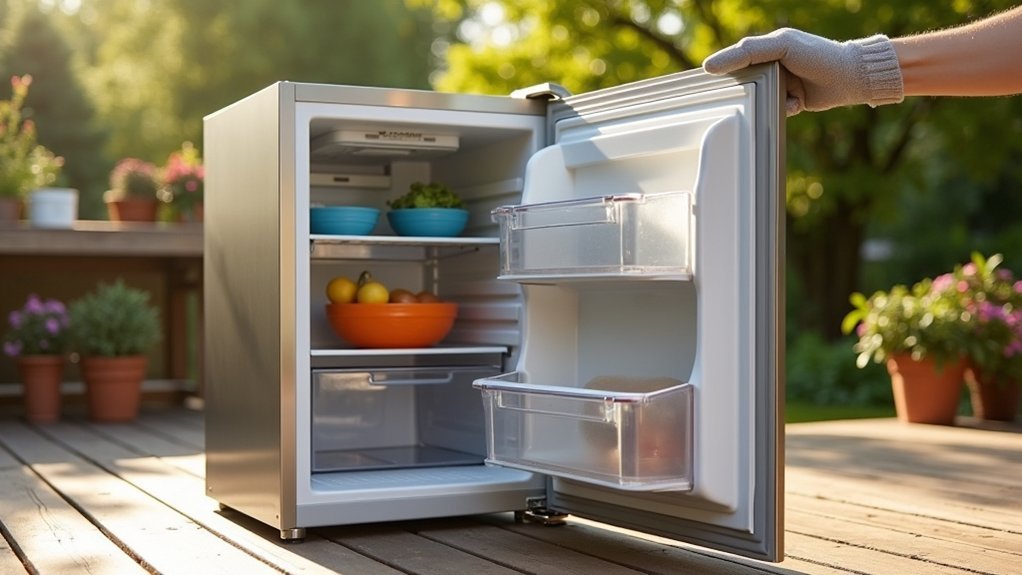
The beauty of patio refrigerators lies in their thoughtful design that prioritizes user-friendly maintenance. Adjustable shelves like HCK models allow easy removal, giving you quick access for cleaning and routine maintenance. You’ll appreciate how these components can be soaked in warm, soapy water to loosen stubborn grime before requiring just a light wipe-down.
Outdoor refrigeration designed with you in mind—easy-access shelving makes maintenance a breeze rather than a chore.
- Interior cleaning is simplified with a fine bristle brush dipped in cleaning solution, with bicarbonate of soda tackling persistent spots
- Exterior surfaces need only mild detergent and warm water (stainless steel exteriors benefit from specialized cleaners)
- Removable parts can be thoroughly cleaned separately, increasing accessibility to hard-to-reach areas
- Complete drying before reassembly prevents mold growth and ensures safe operation
Modular Construction Simplifies Part Replacement
Patio refrigerators take maintenance convenience to the next level through their intelligent modular design. When a component wears out, you won’t need to replace the entire unit or struggle with complex disassembly.
You can quickly swap adjustable HCK shelves or remove door gaskets without special tools, making routine cleaning and part replacements straightforward tasks. The modular approach allows you to target specific components for maintenance while leaving the rest of the refrigerator intact.
Access panels provide direct entry to key mechanical areas, eliminating the need for professional service calls for simple fixes. This design philosophy extends to spare parts management too—you can easily stock common replacement items like seals, light bulbs, and drain components, ensuring you’re always prepared for quick repairs when needed.
Marine-Grade Materials Resist Corrosion and Damage
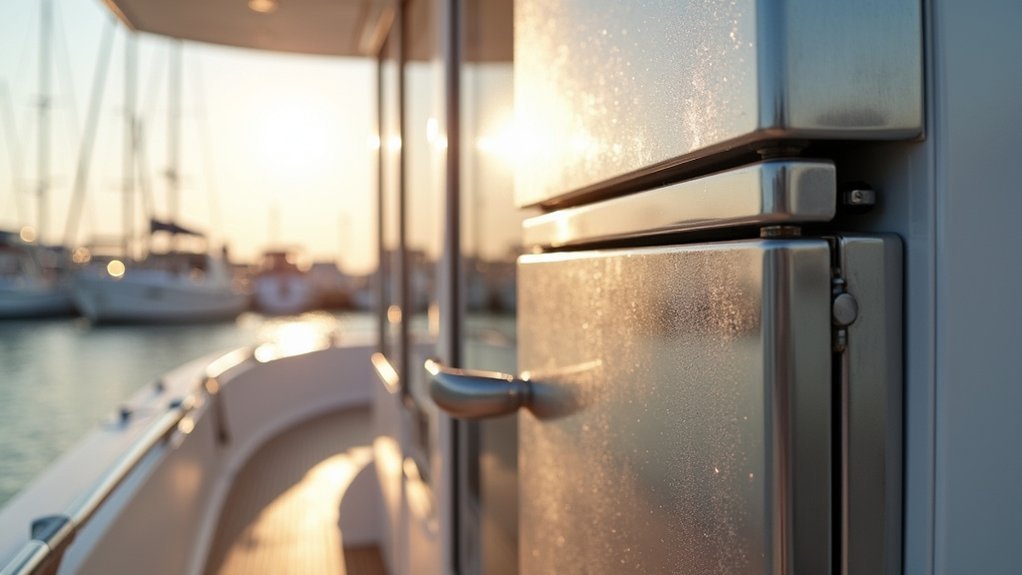
Your patio fridge’s marine-grade materials work tirelessly against the elements, with saltwater-ready components preventing rust even in coastal locations.
Anti-UV composite construction shields internal mechanics from sun damage while maintaining the exterior’s appearance for years.
Weather-sealed electrical systems keep moisture at bay, eliminating the common short circuits and corrosion issues that plague standard refrigeration units.
Saltwater-Ready Component Design
Why do many standard refrigerators fail when exposed to coastal environments? The answer lies in their components, which weren’t designed with saltwater exposure in mind. Patio fridges with saltwater-ready designs integrate protective measures from the inside out.
You’ll appreciate these design features that make maintenance nearly effortless:
- Fully sealed electrical components prevent moisture ingress that typically accelerates corrosion
- Strategically positioned drainage systems redirect water away from sensitive parts
- Protected condensers and coils with specialized corrosion-resistant coverings maintain optimal performance
- Vapor-proof seals around control panels and displays eliminate salt intrusion
These saltwater-ready designs mean you won’t need to perform constant maintenance or premature replacements. The engineering approach anticipates coastal challenges, ensuring your patio fridge continues operating efficiently with minimal intervention even in harsh seaside conditions.
Anti-UV Composite Construction
How dramatically do standard materials deteriorate when constantly exposed to sun, rain, and salt air? Ordinary refrigerators fade, yellow, and become brittle within months of outdoor use, but not your patio fridge.
The anti-UV composite construction protects against the sun’s relentless assault, preventing the yellowing and brittleness that plague standard appliances. These marine-grade materials incorporate corrosion-resistant components that stand strong against saltwater environments and high humidity.
You’ll appreciate how these composites resist moisture absorption, eliminating common problems like warping, swelling, and mold growth. Even during extreme temperature shifts, your patio fridge maintains structural integrity without cracking or degrading.
This powerful combination of UV and corrosion resistance means you’ll spend less time on maintenance, fewer resources on replacements, and more time enjoying your outdoor space.
Weather-Sealed Electrical Systems
While composite construction shields the exterior, what’s happening inside your patio fridge is equally impressive. Weather-sealed electrical systems create a maintenance-free experience that saves you time and worry. You’ll never stress about moisture damage or electrical shorts when unexpected rain showers hit your outdoor kitchen area.
These specialized systems feature:
- Marine-grade components that resist corrosion from humidity and salt exposure
- Completely sealed electrical connections that prevent moisture intrusion
- Built-in overload protection that guards circuits during temperature fluctuations
- Ventilation designed specifically for less-controlled outdoor environments
The weather-sealed design means you won’t need to perform regular inspections of electrical components or worry about condensation damaging internal parts. Even during seasonal temperature swings, your patio fridge continues running efficiently with minimal maintenance required from you.
Straightforward Ventilation Requirements Save Time
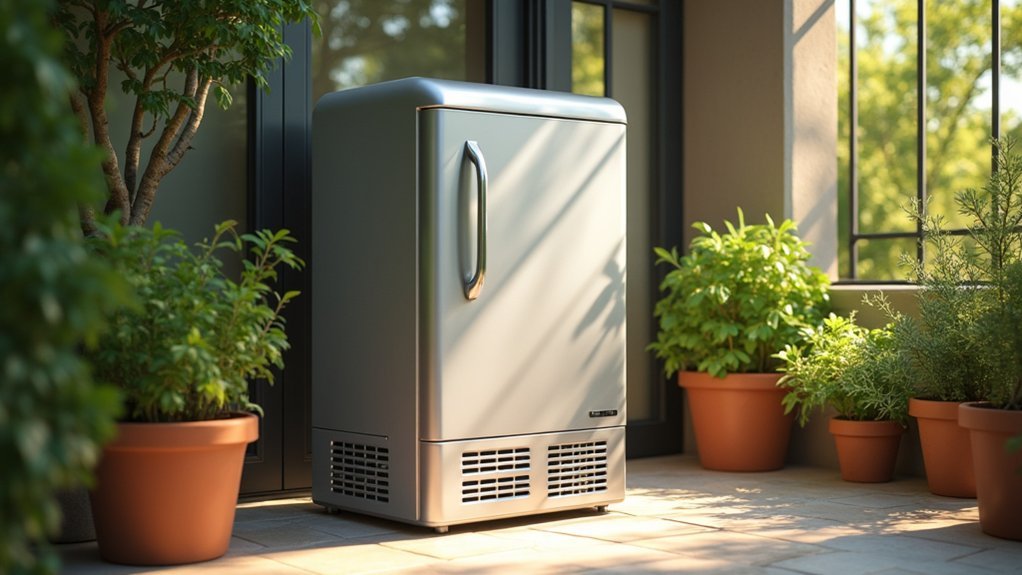
When was the last time you thought about your patio fridge’s ventilation system? Probably not recently—and that’s actually a good thing. The beauty of outdoor refrigerators lies in their simple ventilation needs.
You’ll only need to maintain minimal clearances: 5-10 cm on the sides and 15-20 cm at the back. This proper spacing ensures your fridge’s condenser operates efficiently without overworking. Unlike complex appliances, these straightforward requirements mean less maintenance and better performance.
Just remember to keep vents unobstructed by enclosures or debris. A quick seasonal check to clear any buildup around coils or vents is all that’s typically needed. This minimal attention prevents heat accumulation, reduces energy consumption, and extends your unit’s lifespan. Your fridge stays quieter too, making your outdoor entertaining space more enjoyable.
Frequently Asked Questions
What Kind of Maintenance Does a Fridge Need?
You’ll need to clean interior/exterior regularly, check door seals, clean coils every 3-6 months, monitor temperature settings, and follow manufacturer’s guidelines for part replacements and professional servicing.
What Is Different About an Outdoor Refrigerator?
Outdoor refrigerators feature weatherproof seals, rust-resistant exteriors, enhanced insulation, and specialized compressors that handle temperature extremes. You’ll need outdoor-rated GFCI outlets and proper ventilation for these weather-resistant appliances.
How Does a Fridge Work Simple?
Your fridge works by absorbing heat from inside using a refrigerant fluid. As it circulates, it compresses, cools, expands, and evaporates, transferring heat outside while keeping your food cold.
What Happens if You Don’t Clean Your Refrigerator Coils?
Your fridge will run inefficiently, use more energy, and may overheat. You’ll face higher electricity bills, reduced cooling performance, and potentially shorten your compressor’s lifespan through unnecessary strain.



Leave a Reply