
Pool fountains push water into corners, steps, and shallow areas your standard filtration can’t reach. You’ll eliminate dead zones where algae and bacteria typically thrive. The continuous circulation keeps debris suspended so your skimmer captures it before it settles. Your fountain also aerates the water, boosting oxygen levels while distributing chemicals more evenly throughout the pool. These benefits work together to create cleaner water with less effort on your part.
How Pool Fountains Improve Water Movement Throughout Your Swimming Area

When you install a pool fountain, you’re adding more than just a decorative feature—you’re creating an active circulation system that pushes water across your pool’s surface.
The fountain draws water from your pool and propels it upward, creating continuous motion that reaches areas your standard filtration system might miss. Dead zones—those stagnant corners where debris accumulates—become active circulation points as fountain-generated currents sweep through them.
You’ll notice improved water distribution almost immediately. The cascading water creates ripples that extend outward, pushing floating contaminants toward your skimmer. This constant movement prevents surface film from forming and keeps chemicals evenly distributed throughout your swimming area.
Your existing pump works more efficiently when paired with fountain circulation, reducing strain on filtration components while maintaining cleaner, fresher water.
Enhanced Oxygen Levels Through Fountain Aeration
As your pool fountain propels water into the air, it exposes thousands of tiny droplets to atmospheric oxygen before they splash back into the pool. This aeration process markedly increases dissolved oxygen levels throughout your water, creating a healthier swimming environment.
Higher oxygen concentrations benefit your pool in several ways. They support beneficial aerobic bacteria that break down organic contaminants naturally. You’ll notice your water feels fresher and more invigorating when you swim.
Oxygen-rich water also helps prevent the stagnant conditions where harmful anaerobic bacteria thrive. These organisms produce unpleasant odors and can compromise water quality.
By running your fountain regularly, you’re actively fighting against these problems.
The increased oxygenation works alongside your chemical treatments, making them more effective while reducing the load on your filtration system.
Reducing Algae Growth With Continuous Water Circulation
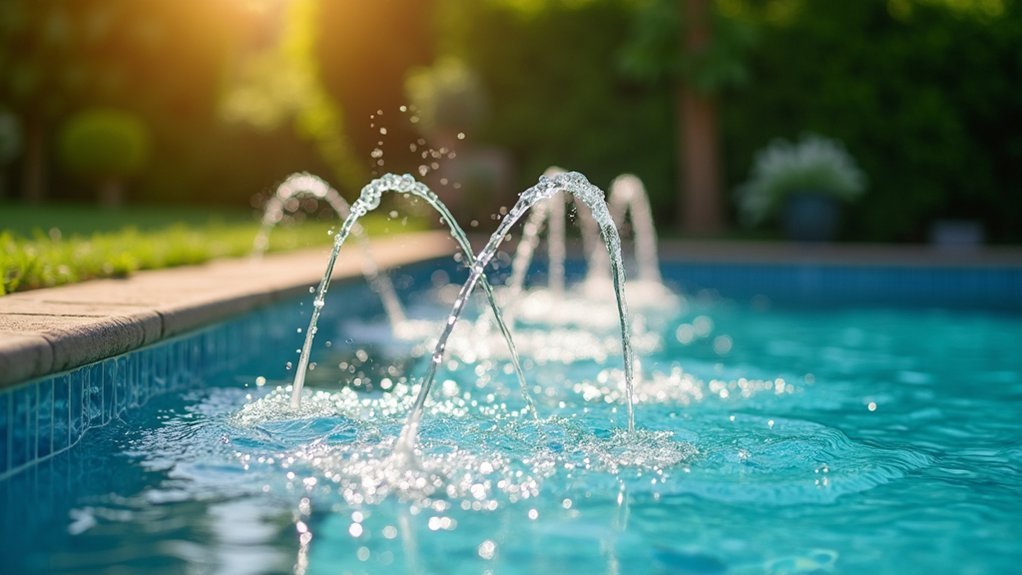
Beyond boosting oxygen levels, your pool fountain’s continuous water movement creates an environment where algae struggle to survive.
Stagnant water gives algae the perfect conditions to anchor themselves and multiply rapidly. When your fountain keeps water flowing, it disrupts this process by preventing algae spores from settling on surfaces.
Continuous circulation also distributes chlorine and other sanitizers more evenly throughout your pool.
This means chemicals reach every corner rather than concentrating in certain areas while leaving dead zones unprotected. You’ll notice fewer green patches forming on walls and floors.
The constant movement additionally prevents warm, nutrient-rich pockets from developing.
Algae thrive in these conditions, so eliminating them cuts off their food supply. You’ll spend less time scrubbing and fewer dollars on algaecides when your fountain maintains proper circulation.
Temperature Regulation Benefits of Fountain Water Movement
Your pool fountain does more than create visual appeal—it actively regulates water temperature throughout your swimming area. The continuous movement promotes even heat distribution while surface agitation creates natural cooling effects that make summer swimming more comfortable.
You’ll also prevent thermal stratification, which occurs when warm water sits on top and cold water sinks to the bottom, creating uncomfortable temperature zones.
Even Heat Distribution
When your pool fountain operates continuously, it prevents the thermal stratification that commonly occurs in still water.
Without circulation, warm water rises to the surface while cooler water sinks to the bottom, creating uncomfortable temperature zones throughout your pool.
Your fountain’s constant movement pushes surface water downward and draws deeper water upward.
This vertical mixing eliminates cold pockets near the floor and overly warm spots at the surface. You’ll notice the difference immediately when swimming—no more shocking temperature changes as you dive deeper.
The circulation also helps distribute solar heat more efficiently.
Instead of concentrating warmth in the top few inches, your fountain spreads absorbed heat throughout the entire water volume.
This creates a consistently comfortable swimming environment from shallow end to deep end.
Surface Cooling Effects
While even heat distribution keeps your pool comfortable during mild weather, surface cooling effects become essential during hot summer months. When your fountain sprays water into the air, it exposes droplets to evaporative cooling. This process can lower your pool’s temperature by 2-4 degrees Fahrenheit.
The cooling effect works best during evening hours when air temperatures drop. Your fountain maximizes heat release through increased surface area exposure.
| Condition | Cooling Potential | Best Operating Time |
|---|---|---|
| High Humidity | 1-2°F reduction | Night hours |
| Low Humidity | 3-4°F reduction | Evening to night |
| Windy Conditions | 4°F+ reduction | Anytime |
You’ll notice the most significant temperature drops when running your fountain continuously overnight, allowing accumulated daytime heat to escape efficiently.
Prevents Thermal Stratification
Thermal stratification occurs in pools when distinct temperature layers form, with warm water sitting on top and cooler water settling at the bottom.
Your pool fountain actively combats this problem by continuously moving water through the pool.
When fountain jets propel water upward and it cascades back down, you’re creating constant mixing action.
This circulation breaks up temperature barriers and distributes heat evenly throughout your pool.
Benefits of preventing thermal stratification:
- You’ll experience consistent water temperature from surface to floor
- Your pool chemicals distribute more effectively through uniform water density
- You’ll eliminate uncomfortable cold pockets when swimming deeper
- Your heater works more efficiently without fighting against layered temperatures
Chemical Distribution Improvements From Fountain Circulation
When you add a fountain to your pool, you’ll notice significant improvements in how chemicals spread throughout the water.
The continuous circulation eliminates stagnant areas where chlorine can’t reach, ensuring every corner of your pool receives proper sanitization.
You’ll also achieve faster pH balance since the moving water distributes treatment chemicals more efficiently than static conditions allow.
Even Chlorine Dispersion
Pool fountains consistently help distribute chlorine and other sanitizing chemicals throughout your water more effectively than static circulation alone.
When your fountain propels water into the air and back down, it creates currents that push treated water into corners and dead zones that standard jets miss.
This improved distribution means you’ll notice fewer areas with inconsistent chlorine levels, reducing the risk of algae growth and bacterial buildup in neglected spots.
Key benefits of even chlorine dispersion:
- Eliminates chemical hot spots near dispensers and return jets
- Reduces chlorine demand by preventing localized depletion
- Decreases the need for shock treatments caused by uneven sanitization
- Extends the effectiveness of each chemical application
You’ll spend less on chemicals while maintaining cleaner, safer swimming conditions throughout your entire pool.
Reduced Chemical Dead Zones
Because stagnant water naturally accumulates in areas farthest from your return jets, chemical dead zones develop where sanitizers can’t reach effectively. These pockets become breeding grounds for algae and bacteria, creating localized contamination that spreads throughout your pool.
Your fountain eliminates these problematic zones by generating surface movement that reaches corners and edges your filtration system misses. The cascading water creates currents that push treated water into previously neglected areas, ensuring consistent sanitizer levels across every square foot.
You’ll notice fewer algae blooms forming along walls and steps where dead zones typically occur. The continuous circulation prevents chemicals from settling or concentrating in single locations. This uniform distribution means your chlor
Faster Ph Balance
While your pool’s filtration system handles the heavy lifting of water treatment, fountain circulation accelerates how quickly pH adjustments spread throughout the entire volume. When you add chemicals to correct pH levels, stagnant water creates pockets where concentrations remain uneven. Fountain movement pushes treated water across the surface and down through deeper layers, distributing adjustments in minutes rather than hours.
Here’s how fountain circulation speeds up pH balancing:
- Surface agitation breaks up chemical concentrations at entry points
- Vertical water movement carries treatments to the pool floor
- Continuous mixing prevents pH stratification between layers
- Faster distribution reduces the need for chemical overcorrection
You’ll notice your test strips showing balanced readings sooner, saving you time and reducing chemical waste.
Preventing Stagnant Water Zones in Your Pool
Stagnant water zones can quickly turn into breeding grounds for algae, bacteria, and mosquitoes if you don’t address them properly. Pool fountains create continuous movement that pushes water into corners, steps, and shallow areas where circulation typically fails. This constant agitation prevents debris from settling and keeps sanitizers distributed evenly throughout your pool.
You’ll notice the difference within days of installing a fountain. Those green patches that once appeared near ladder rails or behind pool returns will diminish as moving water disrupts the conditions algae need to thrive. Dead zones behind steps and in curved sections receive fresh, treated water instead of sitting untouched for days.
Energy Efficiency Advantages of Fountain-Based Circulation Systems

When you’re looking to cut pool operating costs, fountain-based circulation systems offer surprising savings over traditional pump setups. These systems work with gravity and natural water movement, reducing the strain on your primary pump motor. You’ll notice lower electricity bills within the first month of operation.
Fountain circulation distributes water more evenly, meaning your pump doesn’t work overtime to maintain proper flow. This efficiency translates directly to your wallet.
Key energy advantages include:
- Reduced pump runtime by up to 30% daily
- Lower motor wear extending equipment lifespan by years
- Decreased need for chemical treatments due to consistent circulation
- Smaller carbon footprint compared to high-powered filtration systems
You’re fundamentally letting physics do the heavy lifting while your equipment runs smarter, not harder.
Extending Your Pool Equipment Lifespan Through Better Water Flow
When you improve water circulation with a pool fountain, you’re directly reducing the strain on your pump by helping move water more efficiently throughout the system.
Your filter won’t have to work as hard when water flows consistently, preventing the overwork that leads to premature burnout and costly replacements.
Better circulation also keeps sediment suspended and moving toward your filtration system rather than settling on surfaces where it can clog lines and damage components.
Reduced Pump Strain
Beyond improving water quality, pool fountains offer a significant advantage for your equipment by reducing the workload on your pump system. When water circulates more efficiently through fountain action, your pump doesn’t need to work as hard to maintain proper flow rates throughout the pool.
Here’s how fountains reduce pump strain:
- Decreased operating pressure – Water movement assists the pump’s circulation efforts, lowering internal pressure levels
- Shorter run times – Better circulation means you can run your pump fewer hours daily
- Lower motor temperatures – Reduced workload prevents overheating and motor burnout
- Fewer start-stop cycles – Consistent water flow eliminates the need for frequent pump cycling
You’ll notice your pump runs quieter and cooler, indicating less mechanical stress on critical components.
Preventing Filter Overwork
Just as your pump benefits from fountain-assisted circulation, your filter system also experiences less strain when water moves more efficiently throughout your pool. When fountains distribute water evenly, debris doesn’t concentrate in one area, preventing your filter from working overtime to process heavily contaminated water.
Your filter’s lifespan directly correlates with how hard it works. Without proper circulation, filters clog faster and require more frequent cleaning or replacement. Fountains help by keeping particles suspended and moving toward skimmers, reducing the concentrated buildup that exhausts filtration media.
You’ll notice longer intervals between filter cleanings when your fountain operates regularly. This translates to lower maintenance costs and fewer cartridge or sand replacements over time. Better water flow means your filter handles a steady, manageable workload rather than struggling through periodic surges of accumulated debris.
Minimizing Sediment Buildup
Sediment constantly settles on your pool floor and in equipment lines when water remains stagnant, but fountain circulation keeps particles suspended and moving toward your filtration system.
This continuous movement prevents debris from compacting into hard-to-remove deposits that clog pipes and damage equipment components.
When you install a fountain, you’re creating consistent water agitation that breaks up sediment before it accumulates.
Your pump works more efficiently, and your cleaning schedule becomes less demanding.
Key sediment reduction benefits:
- Prevents calcium and mineral deposits from forming on pool surfaces
- Reduces algae growth by eliminating still water zones
- Keeps sand and dirt particles moving toward skimmers and drains
- Decreases the frequency of manual vacuuming sessions
You’ll notice cleaner water and fewer maintenance headaches within weeks of adding fountain circulation.
Creating a Healthier Swimming Environment With Active Circulation
When water moves continuously through your pool, it creates an environment where harmful bacteria and algae struggle to take hold. Stagnant water provides the perfect breeding ground for pathogens, but active circulation disrupts their ability to colonize and multiply.
Moving water fights bacteria naturally—circulation disrupts colonization while stagnant pools become breeding grounds for harmful pathogens.
Your pool fountain pushes water through filtration systems more effectively, removing contaminants before they accumulate. This constant movement also guarantees chlorine and other sanitizers distribute evenly throughout the entire pool, eliminating dead zones where bacteria typically thrive.
You’ll notice improved water clarity and reduced chemical odors when circulation remains consistent. The fountain’s aeration increases oxygen levels, which naturally inhibits anaerobic bacteria growth. Your skin and eyes will thank you for maintaining this healthier balance.
Active circulation transforms your pool from a potential health hazard into a clean, inviting swimming space.
Reducing Maintenance Time With Fountain Water Movement
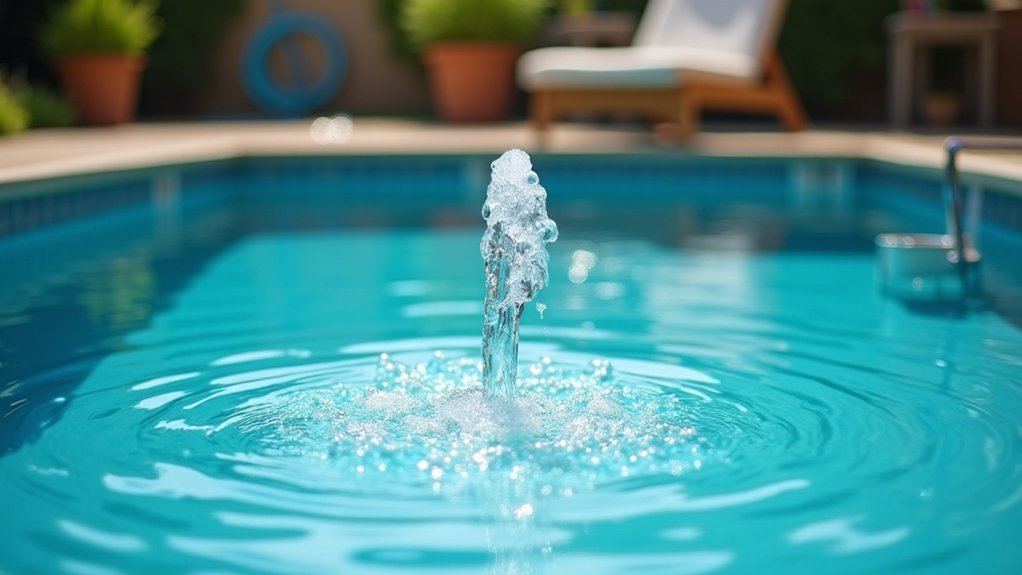
Consistent fountain circulation dramatically cuts the hours you’d otherwise spend scrubbing walls and skimming debris from your pool’s surface. The constant water movement prevents algae from gaining a foothold and pushes floating contaminants toward your skimmer basket automatically.
You’ll notice immediate changes in your maintenance routine:
- Reduced chemical adjustments – Better distribution means fewer imbalances requiring correction
- Less frequent filter cleaning – Debris reaches filtration systems faster before breaking down
- Decreased brushing requirements – Moving water prevents buildup on walls and floors
- Shorter vacuuming sessions – Particles stay suspended for easier removal
Your fountain transforms passive pool care into an active system working around the clock. Instead of fighting stagnant water problems, you’re preventing them before they start.
Minimizing Debris Accumulation Through Constant Circulation
Your pool fountain constantly pushes leaves, insects, and airborne particles toward the skimmer before they can sink and decompose on the bottom. This continuous movement prevents debris from settling into corners and along walls where stagnant water typically allows accumulation. You’ll notice fewer dead spots where organic matter collects and creates stubborn stains.
The agitation created by fountain circulation also keeps fine particles suspended in the water column. Your filtration system can then capture these contaminants more effectively instead of letting them settle beyond the skimmer’s reach. This means less vacuuming and fewer chemicals needed to break down decomposing matter.
Balancing Ph Levels More Effectively With Fountain Aeration
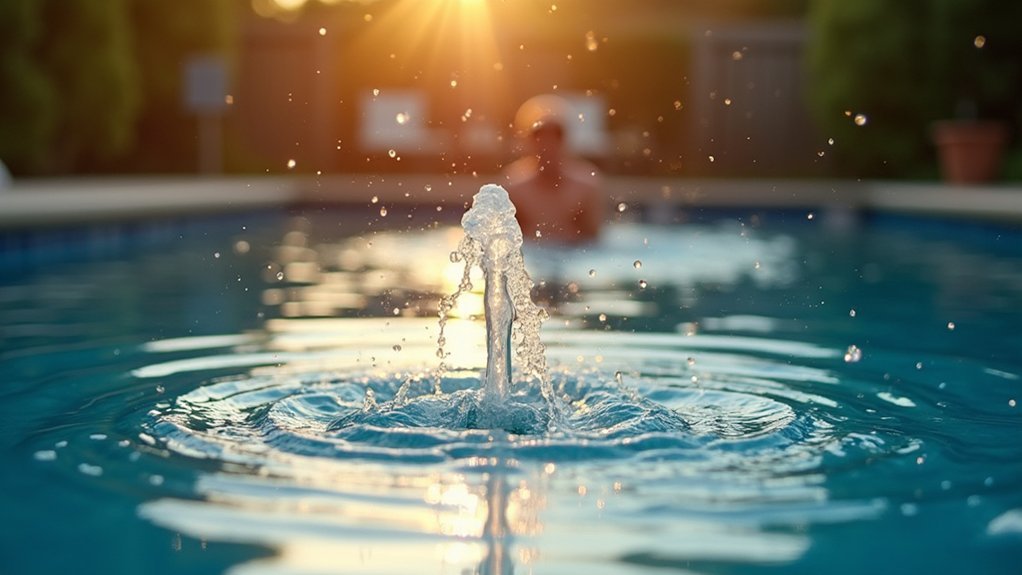
Running a pool fountain introduces oxygen into your water through surface agitation, which directly affects your pH levels. As water cascades and splashes, it releases carbon dioxide, causing your pH to rise gradually. This natural process helps you maintain balanced chemistry with less manual intervention.
Here’s how fountain aeration improves your pH management:
- Reduces chemical dependency – You’ll spend less on pH adjusters when aeration naturally stabilizes levels
- Prevents dramatic fluctuations – Continuous circulation keeps pH from swinging between extremes
- Enhances sanitizer effectiveness – Balanced pH allows chlorine to work at peak efficiency
- Simplifies testing routines – Stable water requires fewer corrections throughout the week
You’ll notice more predictable readings when you test regularly. Monitor your levels closely during the first week of fountain operation to understand your pool’s specific response.
Combining Aesthetic Appeal With Practical Water Circulation Functions
While you might initially choose a pool fountain for its visual impact, you’ll quickly discover it delivers practical benefits that justify the investment. Your fountain transforms stagnant water into a dynamic system that prevents algae growth and distributes chemicals evenly throughout your pool.
| Aesthetic Benefit | Practical Function |
|---|---|
| Sparkling water display | Continuous surface agitation |
| Soothing sound effects | Improved oxygen levels |
| Nighttime lighting options | Enhanced filtration efficiency |
| Elegant focal point | Reduced chemical hot spots |
| Customizable patterns | Better temperature distribution |
You’re fundamentally getting two solutions in one installation. The fountain’s movement creates visual interest while simultaneously pushing water through your filtration system more effectively. This dual-purpose approach means you’re maximizing your pool’s functionality without sacrificing the relaxing ambiance you want.
Frequently Asked Questions
How Loud Are Pool Fountains When Operating at Full Capacity?
You’ll find most pool fountains produce 40-60 decibels at full capacity—similar to a quiet conversation or light rain. You can adjust water flow to reduce noise if you prefer a softer, more relaxing sound.
Can Pool Fountains Work Effectively in Saltwater Pools?
Yes, you can use pool fountains effectively in saltwater pools. You’ll want to choose models made with saltwater-resistant materials like stainless steel or specialized plastics to prevent corrosion and guarantee long-lasting performance.
What Is the Average Installation Cost for a Pool Fountain System?
You’ll typically spend between $100 and $1,500 for a basic pool fountain system installation. However, you’ll pay more for elaborate designs, with custom or built-in fountains costing several thousand dollars including professional setup.
Do Pool Fountains Attract More Insects or Birds to the Area?
You’ll likely notice more birds visiting your pool area since they’re attracted to moving water. However, properly circulating fountains actually discourage mosquitoes because they can’t lay eggs in agitated water.
How Often Should Pool Fountain Nozzles Be Cleaned or Replaced?
You should clean your pool fountain nozzles every two to four weeks to prevent calcium buildup and debris clogging. Replace them every one to three years, depending on water quality and how frequently you’re using them.