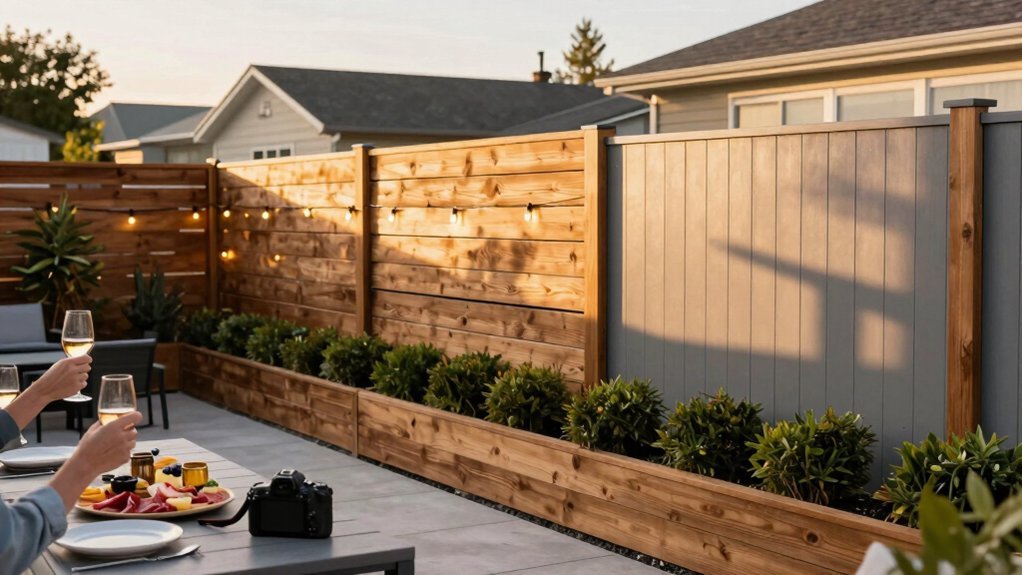
When creating a private entertainment space in New Jersey, you’ll need to follow three key fence height rules: front yard fences must typically stay under 4 feet, backyard fences can reach 6 feet without permits, and corner lots require special sight triangle considerations for safety. You can maximize privacy by combining maximum allowed heights with strategic landscaping and multi-level design elements. These guidelines help you create an inviting outdoor sanctuary while staying code-compliant.
Local Height Restrictions for Backyard Entertainment Areas

When planning your backyard entertainment oasis, you’ll need to navigate local fence height regulations first. Most New Jersey municipalities permit backyard fences up to 6 feet tall, providing substantial privacy for your gatherings. Front yard entertainment areas face stricter limitations, typically capped at 3-4 feet to maintain visibility.
If you own a corner lot, pay special attention to “sight triangle” requirements that might affect both height and placement of your entertainment fence. Remember that permits are generally required for fences at or exceeding 6 feet.
Before installation, check with your local zoning office and HOA for specific requirements in your area. If you’re hoping for extra height beyond standard limits, you’ll need to pursue a variance through your municipality’s approval process.
Strategic Fence Placement for Privacy Without Breaking Rules
Where you place your fence can make all the difference in achieving privacy without violating local regulations. In New Jersey, front yard fences must typically stay under 4 feet, while backyards allow up to 6 feet. Take advantage of this by strategically positioning taller fencing where it’s permitted.
| Location | Typical Height Limit | Privacy Strategy |
|---|---|---|
| Front Yard | 3-4 feet | Use landscaping to supplement |
| Back Yard | 6 feet | Install maximum allowed height |
| Corner Lot | Varies with sight-triangle | Set back from intersection |
Always check your local municipality or HOA requirements before installation, as regulations vary. Corner lots require special attention to sight-triangle restrictions. Combine smart placement with design elements like solid panels or lattice-tops to maximize privacy while staying compliant with height restrictions.
Creating Multi-Level Privacy Solutions for Gathering Spaces

Creating a multi-level privacy solution offers the perfect balance between open entertainment spaces and secluded retreats. You can design distinct zones while respecting local regulations—typically 3-4 ft in front yards and 6 ft in backyards throughout many New Jersey towns.
Consider installing a taller 6-8 ft section behind your entertainment area while keeping other sections lower. This creates privacy where you need it most without boxing in your entire yard. Layer solid panels with decorative lattice toppers, then add strategic landscaping to block sightlines at multiple heights.
Don’t forget practical considerations: taller sections require reinforced posts to withstand wind pressure, and every height change needs proper verification against local permits and HOA restrictions before installation begins.
Frequently Asked Questions
Is an 8 Foot Privacy Fence Too High?
An 8-foot privacy fence isn’t too high for backyards, especially if you’re near busy streets or have two-story neighbors, but you’ll likely need special permits and reinforced construction.
What Is the Maximum Height a Fence Can Be Between Neighbours?
In most New Jersey residential areas, you’re typically limited to 6 feet for backyard fences between neighbors. You’ll need special permits or variances if you’re wanting to exceed this standard height.
How High Can a Fence Be in New Jersey?
In New Jersey, you’ll typically face 3-4 foot limits for front yard fences and 6 foot limits for backyards. Always check your specific municipality or HOA rules before installation.
How High Can I Make My Privacy Fence?
You can build a 6-foot privacy fence in New Jersey backyards without special permission. If you need 7-8 feet, you’ll need to apply for a variance from local authorities.


Leave a Reply