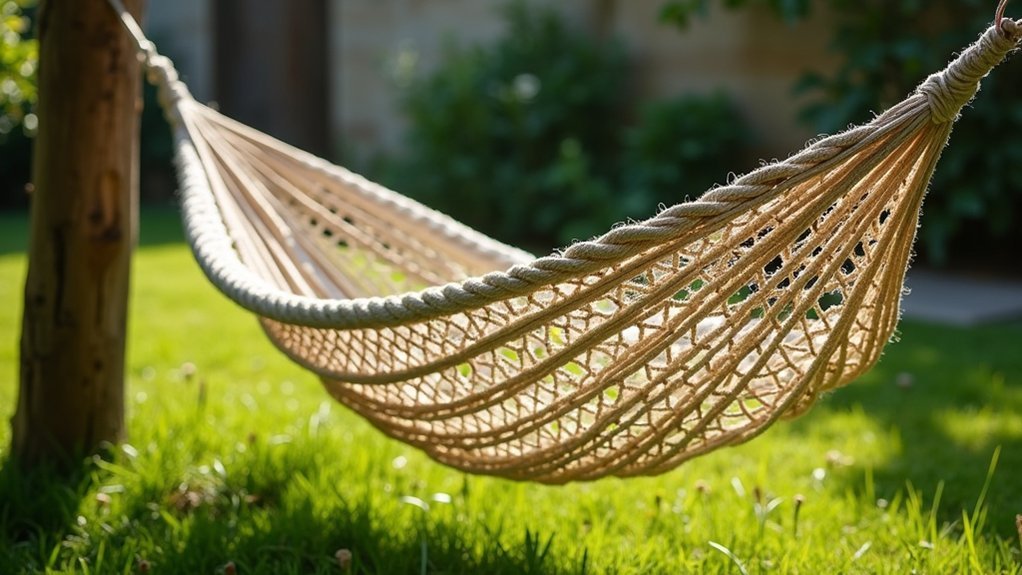
Rope hammocks offer superior benefits over fabric versions with their open-weave design that delivers continuous airflow around your body, preventing heat buildup on hot days. You’ll enjoy better weight distribution as the rope conforms to your body contours while maintaining structural integrity longer. They’re also practical—drying quickly after rain and requiring simple hose-off cleaning instead of lengthy washing cycles. Discover why traditional rope designs have remained the preferred choice for serious relaxation enthusiasts.
Superior Airflow and Cooling Effects

Why do rope hammocks feel so rejuvenating on a hot summer day? It’s all about the design. The open-weave pattern creates continuous gaps that allow air to circulate freely around your body while you’re lounging. Unlike fabric hammocks that trap heat against your skin, rope construction permits constant airflow through the bed.
You’ll notice the difference immediately in hot weather as the loose rope structure prevents surface heat buildup. Cotton rope offers natural breathability, keeping you cooler during extended relaxation sessions. Even synthetic materials like polyester enhance the cooling effect by drying quickly after rain or humidity exposure.
When humidity rises, you won’t experience that uncomfortable sticking sensation common with fabric surfaces. Your skin remains ventilated, making rope hammocks the superior choice for staying comfortable during summer heat.
Better Weight Distribution and Body Support
How does a rope hammock manage to feel both supportive and weightless at the same time? The secret lies in its unique construction. Unlike fabric hammocks that concentrate pressure on specific points, rope hammocks distribute your weight across multiple strands. The flexible cotton fibers conform to your body’s contours as you move, providing personalized support.
The gentle embrace of interwoven rope creates a floating sensation while cradling your body’s unique shape.
- Rope’s open-weave structure transfers load across numerous threads instead of concentrating weight in one area
- Tighter-woven variants like Nicaraguan styles offer body-conforming comfort while maintaining the breathable rope design
- Absence of continuous fabric allows airflow while maintaining crucial body contact points for support
- Strategic spreader bars and end knots stabilize the hammock width for balanced weight distribution across the entire surface
Enhanced Durability and Sag Resistance

You’ll find rope hammocks maintain their shape longer than fabric alternatives thanks to their weather-resistant synthetic materials that withstand outdoor elements without weakening. The open-weave design distributes your weight more evenly across the hammock bed, preventing the uncomfortable sagging spots that often develop in fabric hammocks. Rope hammocks feature a minimal stretch pattern that, when paired with sturdy spreader bars and proper hanging hardware, ensures your hammock won’t permanently deform even after years of regular use.
Weather Resistant Materials
When choosing a hammock that can withstand nature’s elements, rope varieties shine thanks to their superior weather-resistant properties. Modern rope hammocks utilize polyester and premium synthetics like DuraCord that actively resist moisture, mold, and mildew—critical advantages in humid climates where fabric hammocks often deteriorate rapidly.
- Synthetic rope materials dry significantly faster after rainfall or morning dew, preventing the prolonged moisture exposure that leads to mildew development
- Solution-dyed and UV-resistant polyester fibers maintain their vibrant colors and structural integrity even after seasons of harsh sunlight
- Tight weaves and thicker cords distribute weight evenly and resist sagging when wet, unlike fabric hammocks that can stretch and deform
- You’ll enjoy greater longevity from synthetic rope hammocks compared to cotton alternatives, especially when left outdoors year-round
Proper Weight Distribution
Why do rope hammocks resist sagging better than their fabric counterparts? It’s all about structural design. The thick, interwoven cords create a network of multiple contact points that distribute your weight more evenly across the entire surface. This prevents the concentrated sagging common in fabric hammocks.
The tighter weave density and thicker rope strands maintain a flatter resting surface even under heavier loads. When properly spread between end bars, rope hammocks create a taut, wide bed that supports consistent weight distribution from head to foot.
Your choice of material matters too—both cotton and synthetic options with durable fibers offer superior load-bearing stability when properly constructed with thicker ropes and denser braiding. Just remember that regular inspection of knots, splices, and hardware ensures this weight distribution advantage continues over time.
Minimal Stretch Pattern
Beyond proper weight distribution, the minimal stretch pattern of rope hammocks represents another significantly advantage over fabric models. When you’re relaxing in a rope hammock, you’ll notice the braided or woven strands maintain consistent tension, preventing the excessive sagging that often plagues fabric options over time.
- Tightly woven polyester and synthetic ropes resist elongation, keeping your hammock bed flatter and more supportive as you shift positions
- Unlike cotton rope, synthetic materials won’t stretch in high humidity, maintaining their structural integrity in various weather conditions
- Spreader-bar designs fix the bed width, creating a predictable sag profile that won’t collapse around you
- High-tension, dense weaving significantly enhances long-term durability, meaning you’ll enjoy your rope hammock for seasons to come
The Natural Feel of Rope Materials
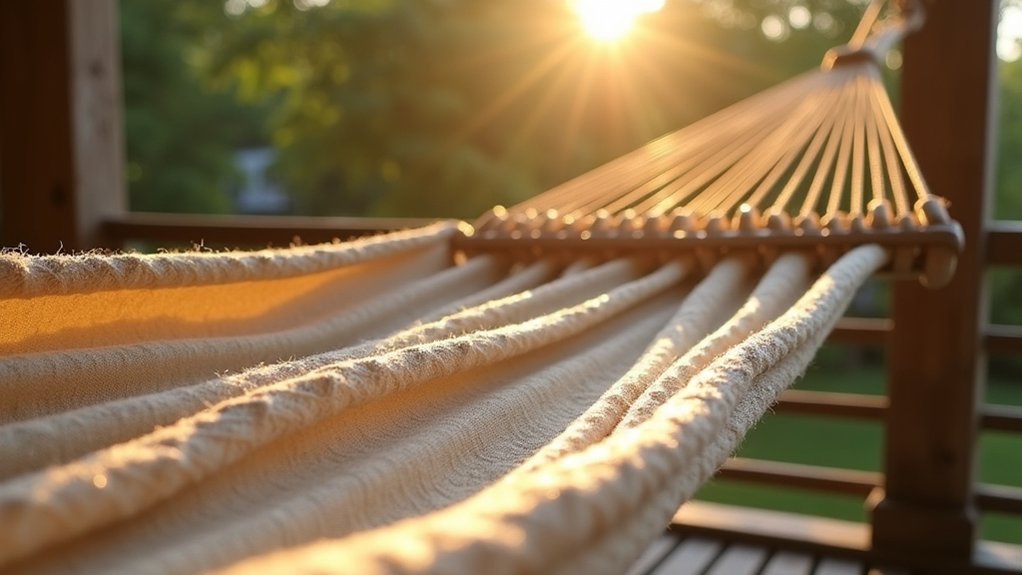
How could anyone deny the distinctive sensory experience that rope hammocks provide? When you relax in a cotton rope hammock, you’ll notice how it gently conforms to your body, creating a custom cradle for ultimate comfort. The open-weave pattern isn’t just for show—it keeps air flowing freely around you, essential for those hot summer days.
| Material | Feel | Benefits |
|---|---|---|
| Cotton Rope | Soft, Flexible | Body-conforming comfort |
| Polyester Rope | Durable, Soft | Resists mold and humidity |
| Natural Fibers | Organic, Textured | Environmentally friendly |
| Synthetic Fibers | Smooth, Consistent | Weather-resistant |
| Spreader Bar Design | Open, Supportive | Enhances airflow cooling |
You’ll appreciate how quickly rope hammocks dry after rain or morning dew—the gaps between fibers allow moisture to evaporate rapidly, unlike fabric hammocks that can remain damp for hours.
Aesthetic Appeal and Traditional Charm
While the comfort of rope hammocks makes them physically satisfying, their visual impact deserves equal attention. You’ll immediately notice how rope hammocks create that quintessential tropical aesthetic with their open-weave patterns and distinctive spreader bars. They evoke a nostalgic, resort-style charm that fabric hammocks simply can’t replicate.
- The interlaced rope design creates a visually airy appearance with gaps that enhance the hammock’s breezy, outdoor vibe
- Cotton rope variations offer a softer, more flexible texture that amplifies the timeless appeal
- The open-weave construction allows for visible airflow, reinforcing that traditional beach resort feel
- Natural hardware and fiber coloration contribute to an authentic, rustic ambiance that’s perfect for creating a vacation-like atmosphere in any outdoor space
Maintenance Advantages for Outdoor Environments
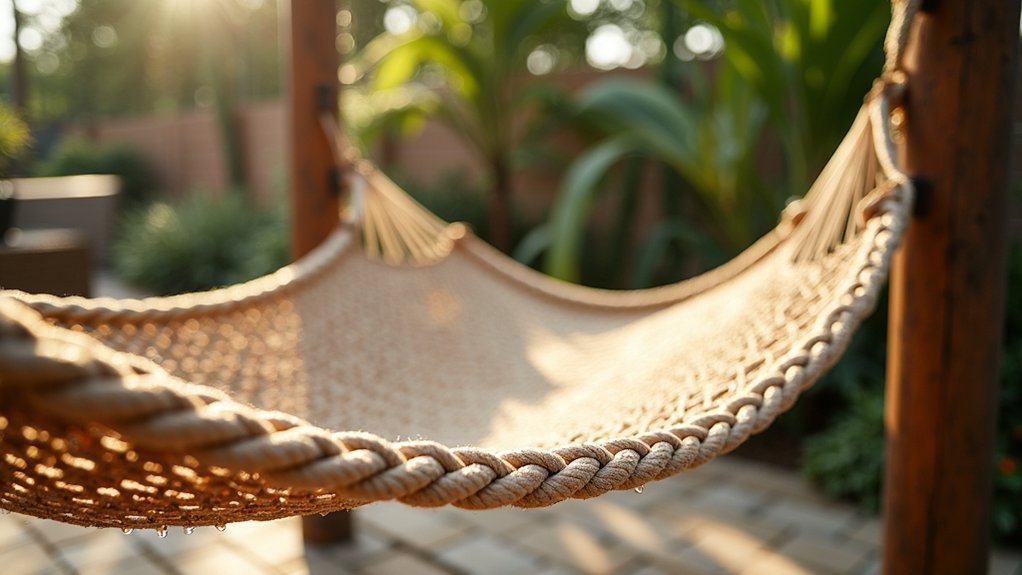
When it comes to outdoor exposure, rope hammocks clearly outshine their fabric counterparts in maintenance simplicity. You’ll appreciate how quickly they dry after rain or morning dew, minimizing moisture exposure that typically leads to mildew problems.
| Feature | Rope Hammocks | Fabric Hammocks |
|---|---|---|
| Drying Time | Fast (hours) | Slow (days) |
| Cleaning | Simple spray-down | Complex washing |
| Weather Resistance | High UV and mold resistance | Prone to fading and mildew |
The open-weave design promotes constant airflow, preventing dampness from lingering. When you choose polyester or synthetic rope varieties, you’re investing in superior mold resistance and UV protection. Unlike fabric hammocks that require careful washing and thorough drying, rope versions can be quickly hosed off and returned to service with minimal downtime.
Frequently Asked Questions
What Is the Best Material for a Hammock?
Synthetic ropes like polyester or DuraCord are your best hammock material choice. They’ll resist mildew and fading while offering excellent durability for year-round outdoor use, unlike cotton’s shorter lifespan.
Are Rope Hammocks Comfortable?
Yes, rope hammocks are comfortable. You’ll enjoy their breathability in hot weather, especially with cotton ropes that flex with your body. Mayan designs offer excellent ergonomic support despite possible skin impressions.
What Is the Most Comfortable Type of Hammock?
You’ll find cotton rope hammocks most comfortable. They contour to your body while providing superior airflow. The soft, flexible material feels gentle against your skin during relaxation.
What Are the Disadvantages of Cotton Rope?
Cotton rope absorbs moisture, developing mold and mildew. You’ll find it dries slowly, deteriorates outdoors, and may shed fibers. Lower-quality cotton becomes rough over time, shortening your hammock’s lifespan.

Leave a Reply