
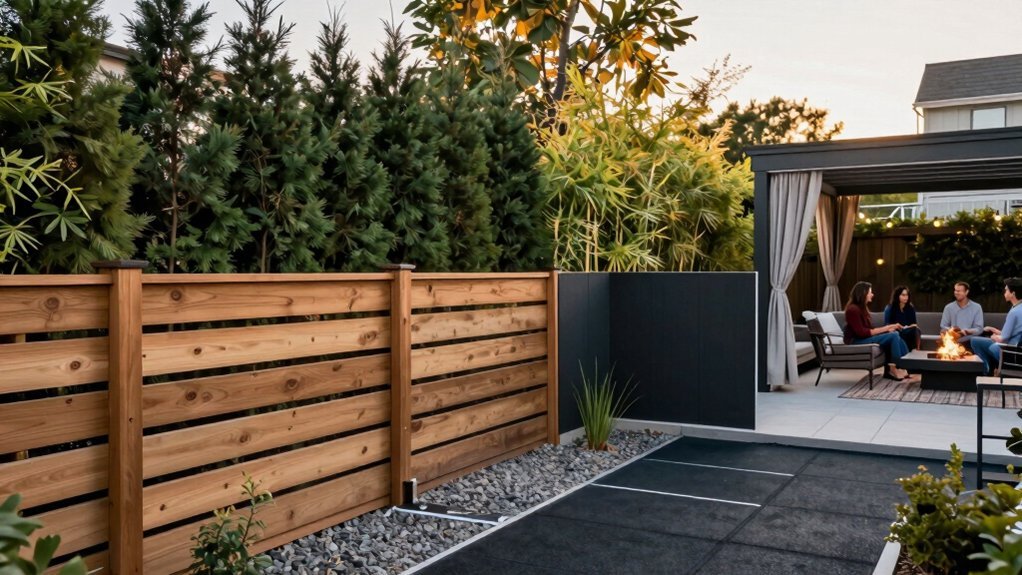
For quieter outdoor parties, choose high-mass materials like concrete or solid vinyl for your fence, and seal all gaps with acoustic caulk. Create double-layer fencing with an air gap of 4-6 inches between layers. Add acoustic panels or mass-loaded vinyl to existing fences, and incorporate dense shrubs along the perimeter. Aim for taller barriers (at least 8 feet) positioned close to noise sources. Don’t forget to weatherproof your acoustic solutions for year-round effectiveness. These proven strategies will transform your outdoor entertaining space.
Choose Solid Materials With High Mass for Maximum Sound Blocking
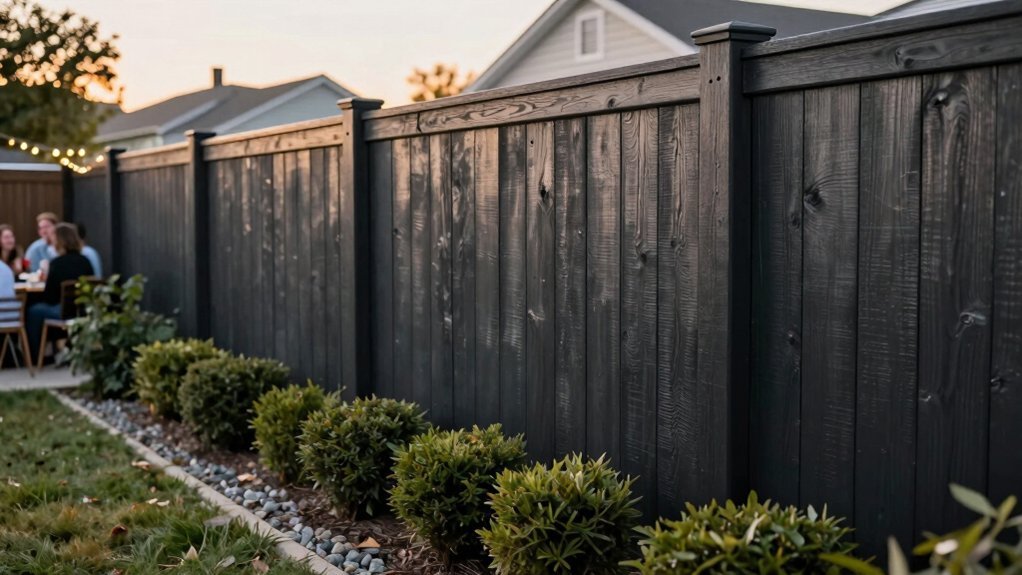
When creating a soundproof fence, material selection forms the foundation of your noise-blocking success. Dense, heavy materials like concrete and solid vinyl substantially outperform lightweight alternatives by effectively reflecting and absorbing sound waves before they reach your property.
You’ll want to avoid porous materials that allow sound to pass through easily. Instead, opt for high-mass options that resist vibration—the primary way noise transfers through barriers. Dense vinyl panels or concrete blocks provide superior sound dampening qualities compared to traditional wood or chain link.
For best results, consider materials specifically designed for acoustic blocking. Remember that mass matters—heavier barriers naturally resist sound vibration more effectively. If your budget allows, explore double-wall constructions with an air gap between layers, which dramatically enhances your fence’s sound-blocking capabilities.
Seal All Gaps Between Fence Panels and Posts
Even the most substantial soundproof fence materials can’t perform effectively if sound simply travels through gaps and openings. Sound waves are opportunistic travelers that will find the path of least resistance, making proper sealing crucial for your outdoor sound barrier.
Sound-proofing excellence begins with eliminating gaps – even the smallest openings can compromise your entire acoustic barrier.
Ensure your fence creates a truly continuous sound barrier by:
- Installing fence boards with zero gaps where they meet posts, using acoustic caulk for any unavoidable small openings
- Sealing the bottom of your fence where it meets the ground with rubber strips or concrete footings to prevent sound from traveling underneath
- Using tongue-and-groove or interlocking panels that naturally minimize sound leakage points
Regular maintenance checks will help identify developing issues like warping or loose hardware that might create new sound pathways over time.
Install Double-Layer Fencing for Enhanced Sound Reduction
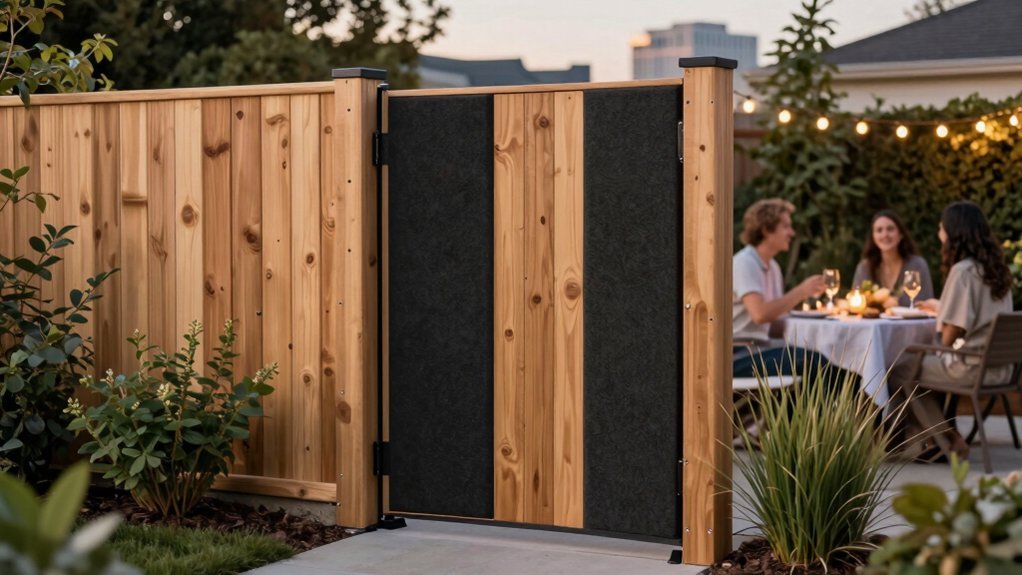
Double-layer fencing with an air gap between panels creates a substantially more effective sound barrier for your outdoor entertaining space.
You’ll achieve greater noise reduction by installing a second fence layer 4-6 inches behind your primary fence, disrupting sound waves that would otherwise travel through a single barrier.
For maximum effectiveness, ensure both layers are properly sealed at all joints and consider using different materials for each layer to block varying sound frequencies.
Double-Panel Sound Barriers
Why settle for a single fence when you can dramatically enhance sound reduction with double-panel barriers? By installing two adjacent fence panels with a continuous air cavity between them, you’ll create a larger sound shadow that disrupts direct sound paths. This double-layer approach increases mass and density, enhancing sound attenuation through both panels and the air gap.
For maximum effectiveness:
- Install taller barriers (around eight feet) to shield from elevated noise sources
- Ensure precise alignment between panels and seal all bottom gaps to prevent sound leakage
- Use solid, gap-free construction without decorative openings
Your double-panel system will transform how sound travels through your yard, making even louder noises significantly quieter and creating a more peaceful outdoor environment for your gatherings.
Creating Air Gaps
While our discussion of double-panel barriers covered the general concept, the specific air gap between these panels deserves special attention. This space between your fence layers isn’t just empty—it’s working hard to disrupt sound waves.
For optimal noise reduction, install two solid fences with a gap ranging from several inches to a few feet. This arrangement creates a sound shadow that particularly diminishes high-frequency noises from conversations and music. You’ll achieve better results by increasing the overall height of your double-fence system, as taller barriers block direct sound paths more effectively.
Don’t forget to seal the bottom edges between layers—any gaps will compromise your soundproofing efforts. Remember, properly designed double-wall fencing with strategic air gaps will outperform single barriers, especially when managing continuous noise from roads or neighbors.
Add Acoustic Panels or Mass Loaded Vinyl to Existing Fences
If you’re looking to reduce noise without replacing your entire fence, adding acoustic panels or mass loaded vinyl (MLV) offers an efficient solution. These materials substantially increase mass and absorption, delivering impressive noise reductions in the 10-30 dB range.
MLV is particularly effective as it’s exterior-grade, dense, and flexible. You can install it behind existing fencing for a hidden yet powerful sound barrier. Acoustic fence panels combine a weatherproof surface with a sound-blocking core for long-lasting performance.
For maximum effectiveness:
- Seal all gaps between panels and ground
- Reinforce fence posts to support the added weight
- Ensure seams overlap to create a continuous barrier
Many homeowners report transforming previously noisy outdoor spaces into calm environments—perfect for hosting those summer gatherings without disturbing neighbors.
Incorporate Green Barriers and Strategic Landscaping
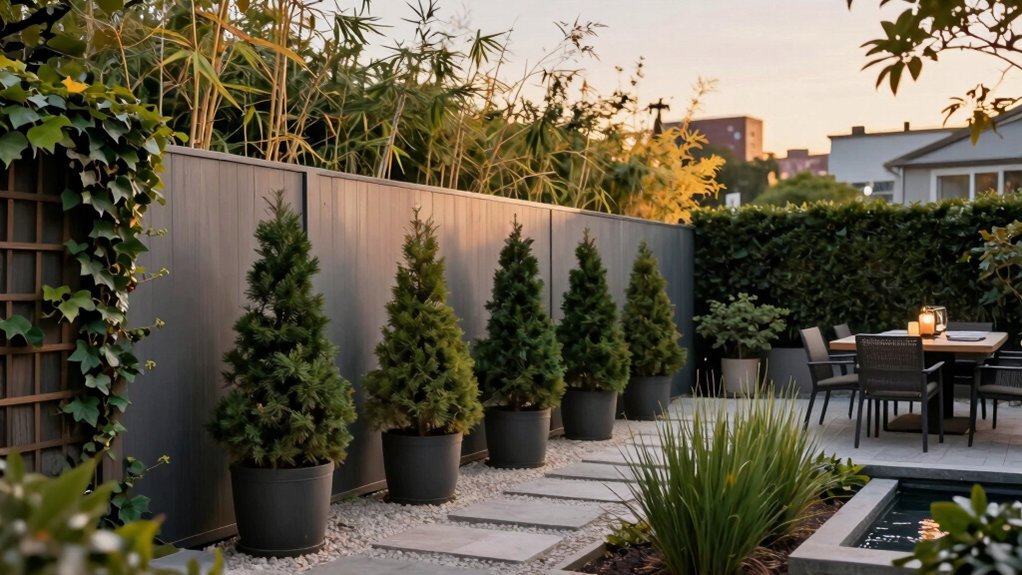
Beyond structural solutions, nature offers remarkable soundproofing capabilities that beautifully complement your fence design. Plant dense shrubs or hedges along your fence line to absorb and scatter sound waves, creating both a privacy screen and noise buffer.
For maximum effectiveness, create a layered approach by combining solid fencing with strategic greenery. Position taller trees and bushes closer to noise sources, whether they’re busy streets or chatty neighbors. Ground-level plantings help reduce sound reflections and lower perceived noise levels.
Consider adding a small fountain or water feature to introduce pleasant white noise that naturally masks unwanted sounds. When hosting parties, arrange seating areas away from primary noise sources and position guests to face your green barriers, maximizing the acoustic benefits of your landscaping investments.
Optimize Fence Height and Position for Sound Deflection
When it comes to effective sound control, the height and positioning of your fence are perhaps the most essential factors to contemplate. For maximum noise reduction, install taller fencing (six to eight feet) that creates a larger sound shadow and blocks direct noise paths between your party and neighbors.
Height matters when blocking noise – taller fences create effective sound shadows between your festivities and neighboring properties.
Position your fence strategically for optimal performance:
- Place barriers as close to the noise source as possible to maximize attenuation
- Ensure the fence completely blocks line-of-sight to the sound origin
- Maintain a solid, gap-free structure with consistent height throughout
Consider a double-wall design with an air gap between panels for superior sound absorption. This approach creates a more effective barrier than a single wall, making your outdoor gatherings more neighbor-friendly without compromising your enjoyment.
Weather-Proof Your Acoustic Solutions for Year-Round Performance
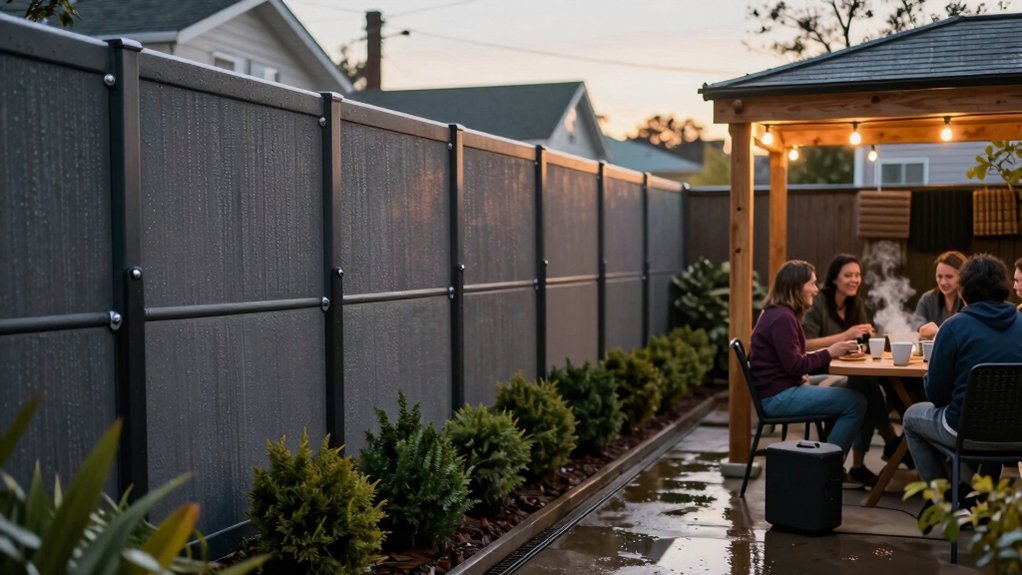
Your soundproof fence needs to withstand nature’s challenges while maintaining acoustic performance throughout the seasons.
Choose waterproof acoustic materials like exterior-grade MLV with UV-resistant cladding to protect against sun damage and rain while keeping the noise contained.
Ensure your winter-ready sound barriers include properly sealed seams and drainage considerations to prevent moisture buildup that could compromise your fence’s sound-blocking capabilities.
Waterproof Acoustic Materials
How effectively can soundproof fencing perform if it deteriorates after the first rainstorm? Not very well. When choosing materials for your outdoor acoustic barriers, waterproofing isn’t optional—it’s essential for maintaining noise reduction capabilities year-round.
For lasting soundproofing success, prioritize these waterproof options:
- UV-protected acoustic membranes – These resist sun damage while blocking sound transmission between your property and neighbors
- Mass-loaded vinyl with protective cladding – Install behind fencing for superior noise blocking that stands up to moisture
- Outdoor-rated acoustic panels – Look for products specifically engineered to resist water ingress without compromising sound absorption
Remember to regularly check for moisture buildup and seal any seams. Properly maintained waterproof materials will keep your outdoor gatherings private and prevent sound leakage for years to come.
Winter-Ready Sound Barriers
Winter presents unique challenges for soundproof fencing that go beyond mere waterproofing. Your barrier needs outdoor-grade materials like vinyl with properly sealed joints to prevent ice-related gaps that can drastically reduce effectiveness.
Invest in panels featuring UV-resistant coatings and moisture-resistant cores that maintain their sound-absorbing properties throughout freeze-thaw cycles. Don’t overlook proper grounding and drainage—water pooling around your fence can compromise structural integrity over time.
For maximum winter performance, consider double-wall designs or barriers at least 8 feet tall to counter increased wind and snow loads. Remember that regular maintenance is crucial; clear snow from surfaces and inspect seals for cracks, as even small gaps can negate up to 15 dB of sound attenuation—the difference between a peaceful gathering and neighborhood complaints.
UV-Resistant Noise Blockers
When sunlight constantly bombards your outdoor sound barriers, what happens to their effectiveness over time? Without proper UV protection, your sound barriers can degrade, creating gaps that let noise escape during your outdoor gatherings.
For lasting acoustic performance, invest in materials specifically designed to withstand the elements:
- Exterior-grade mass-loaded vinyl (MLV) maintains sound-blocking properties while resisting sun-induced fading and cracking
- Acoustic fence wraps with UV-stable coatings create a continuous barrier that won’t deteriorate from sun exposure
- Weatherproof acoustic panels with wood composite or coated aluminum surfaces stand up to rain and temperature fluctuations
Remember to clean your barriers regularly to prevent buildup that can trap moisture and accelerate degradation, preserving both sound-blocking and weather resistance.
Frequently Asked Questions
How to Soundproof an Outdoor Fence?
Install a solid vinyl fence with interlocking panels, 6-8 feet tall. Seal all gaps, especially at the bottom. Add mass-loaded vinyl wrap for extra sound blocking performance.
How to Block Low Frequency Noise Outside?
Install a dense, double-wall fence at least 6-8 feet tall. Use mass-loaded vinyl with air gaps between barriers. You’ll get best results combining high-mass materials with absorptive panels.
Does Sound Proofing Fencing Work?
Yes, soundproof fencing works. You’ll experience 9-15 dB noise reduction when you install tall, dense, gap-free barriers. That’s enough to make loud outdoor noise feel about half as loud.
How to Block Out Neighbor Noise Outside?
Install an 8-foot solid fence with no gaps, add mass-loaded barriers, and use sound-absorbing wraps. You’ll block line-of-sight to noise sources and reduce sounds by up to 70%.


Leave a Reply