

When selecting a trampoline ladder, match its height precisely to your trampoline for safe access. Install adjustable ladders by securing bolts completely without later modifications. Choose ladders with wide, flat steps featuring non-slip surfaces for stability. Opt for weather-resistant materials like galvanized or powder-coated steel for durability. Guarantee the ladder sits firmly on level ground with both feet making equal contact. These essential height considerations prevent common access-related injuries that affect jumpers of all ages.
Choosing the Right Ladder for Your Trampoline Height

Why does matching your ladder to your trampoline’s height matter so much? The wrong height can create dangerous access conditions, leading to falls or injuries. Before purchasing, verify that your ladder is specifically designed for your trampoline’s height.
Most adjustable ladders use bolts and pre-drilled holes to set a fixed height. Once you’ve installed it, avoid readjusting to maintain stability. For shorter trampolines, position your height-adjustable ladder further from the edge to create a safer climbing angle while keeping steps accessible.
Remember that taller trampolines often require a more vertical ladder placement. Always follow the manufacturer’s installation guidelines, ensuring the ladder sits at the proper angle relative to your trampoline surface. This careful selection prevents overreaching and creates a secure entry point for all jumpers.
Proper Installation and Securing of Adjustable Ladders
Installing your trampoline ladder correctly creates the foundation for safe access. When using adjustable models, insert bolts through the pre-drilled holes at your desired height setting, ensuring they’re completely tightened. Once secured, don’t attempt further adjustments.
Position the ladder at an appropriate distance from the trampoline’s edge so steps align naturally with the jumping surface. The ladder should connect firmly to the trampoline frame or stand solidly on level ground, with a base design that won’t sink into soft soil.
Check that the ladder’s height and angle allow for comfortable climbing with minimal slip risk. The steps should be wide, flat, and feature non-slip surfaces. After installation, regularly inspect all bolts, connection points, and attachment mechanisms for loosening or wear to maintain stability.
Step Design Features for Maximum Safety
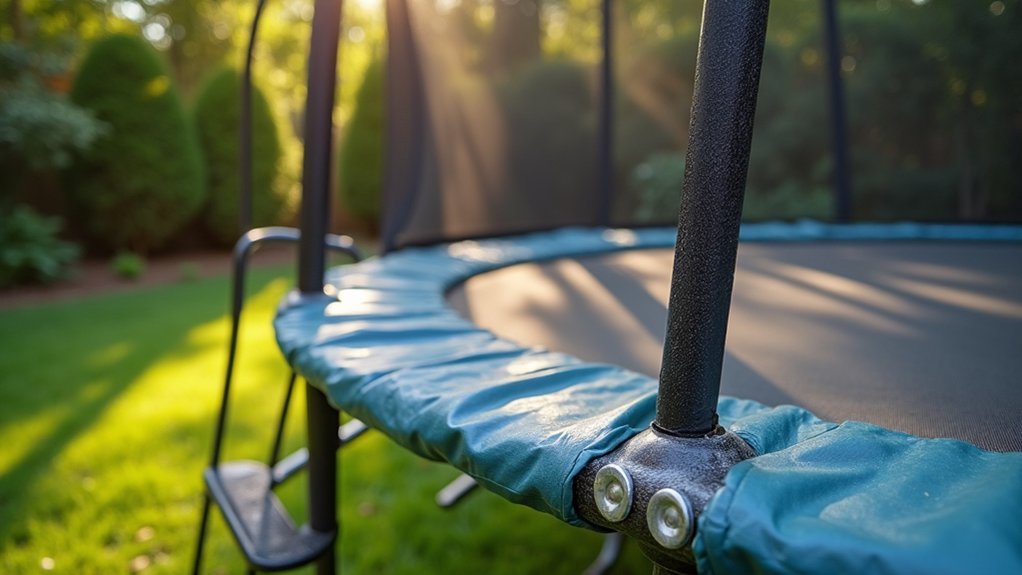
The design of your ladder’s steps plays a pivotal role in preventing accidents during trampoline access. Choose ladders with wide, flat steps made from UV-resistant plastic rather than rounded ones. When weight is applied, flat designs distribute pressure more evenly across your feet, reducing discomfort and improving stability.
Look for non-slip surfaces such as rubberized coatings on steps, which provide crucial traction when climbing up or down. This feature becomes especially important when steps are wet from rain or morning dew.
Your ladder’s base design matters too—select models that resist sinking into soft ground. This ensures the ladder remains stable regardless of your yard’s terrain. Remember that proper step design works alongside height compatibility, so always verify that your ladder matches your trampoline’s specific height requirements before purchase.
Material Quality and Durability Considerations
Durability stands as a critical factor when selecting a trampoline ladder that will withstand years of outdoor exposure. Most quality ladders are constructed from steel tubing with protective coatings to combat the elements. You’ll typically find two finish options: galvanized or powder-coated steel. While galvanized finishes offer excellent rust resistance, powder coating provides both protection and aesthetic options like black or gray.
When evaluating ladder quality, examine the base design carefully. Models with straight tube endings may sink into soft ground, compromising stability and safety. Instead, look for wider footings that distribute weight effectively across various surfaces.
For maximum longevity, choose weather-resistant materials with non-slip steps and compatibility with your trampoline’s specific height. A properly coated ladder will maintain its integrity despite rain, sun, and regular use.
Maintaining Stable Ground Contact for Ladder Stability

Proper ground contact serves as the foundation of trampoline ladder safety, regardless of how well-constructed the ladder itself might be. You’ll need to ensure your ladder’s base sits firmly on level terrain to prevent dangerous wobbling or tilting during use.
| Surface Type | Stability Consideration |
|---|---|
| Soft Soil | Use wider foot pads to prevent sinking |
| Hard Concrete | Verify non-slip rubber contacts |
| Uneven Ground | Adjust or level the area before installation |
| Wet Conditions | Ensure drainage away from ladder feet |
Always check that both ladder legs make equal contact with the ground before allowing anyone to climb. Even slight tilting can compromise the ladder’s structural integrity and accurate height positioning. Consider adding stabilizing accessories for particularly challenging terrain conditions to maintain consistent safety during all climbing situations.
Frequently Asked Questions
What Are 5 Ladder Rules That Should Be Followed for Safety?
You should secure ladder firmly, use non-slip steps, assure stable footing, avoid jumping off the trampoline, and empty your pockets before climbing. Always adjust to proper height and don’t modify after installation.
What Is the 4 to 1 Rule for Ladder Safety?
The 4 to 1 rule means you should position your ladder so that for every 4 feet of height, the base extends 1 foot away from the wall, creating a stable climbing angle.
What Is the Most Common Injury at a Trampoline Park?
The most common injury at trampoline parks happens when you’re jumping with others and collide. These multiple-jumper accidents account for about 75% of injuries, resulting in sprains, bone bruises, and fractures from awkward landings.
What Is the Golden Rule of Ladder Safety?
The golden rule of ladder safety is to ensure your ladder is properly height-adjusted for your trampoline and securely fixed, following manufacturer’s instructions without making adjustments after the bolts are set.


Leave a Reply