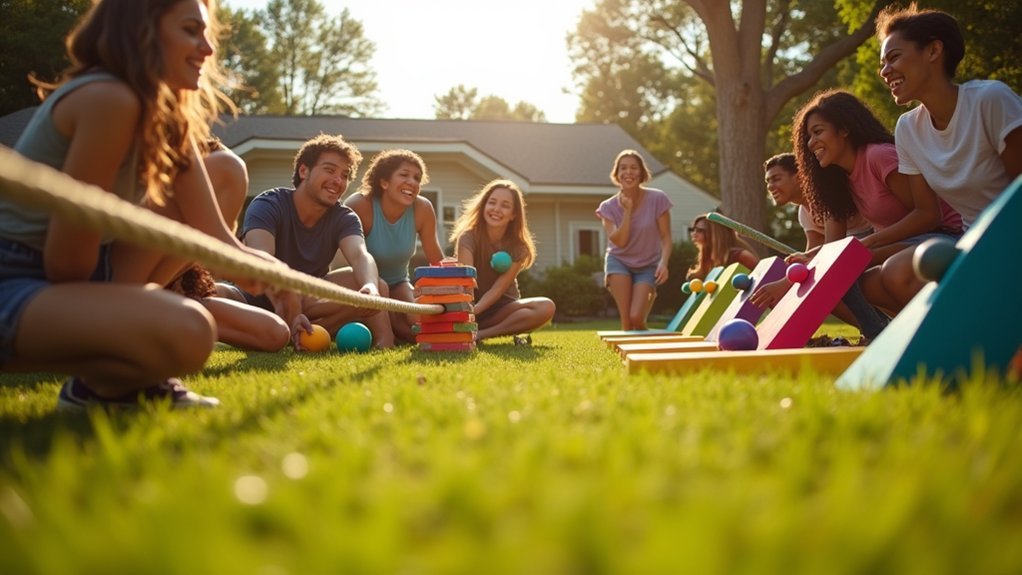
When you’re hosting a large group, team-based games like cornhole, Kan Jam, and Spikeball work best because they keep everyone rotating through matches quickly. Giant Jenga adds suspense with its 30-second time limits, while Kubb brings strategic Viking-style competition that accommodates flexible team sizes. Set up bracket systems for eight or more teams, assign referees, and post visible scoreboards to maintain organization. Below, you’ll find detailed setups and tournament strategies for each game.
Giant Jenga Tournament Setup and Rules
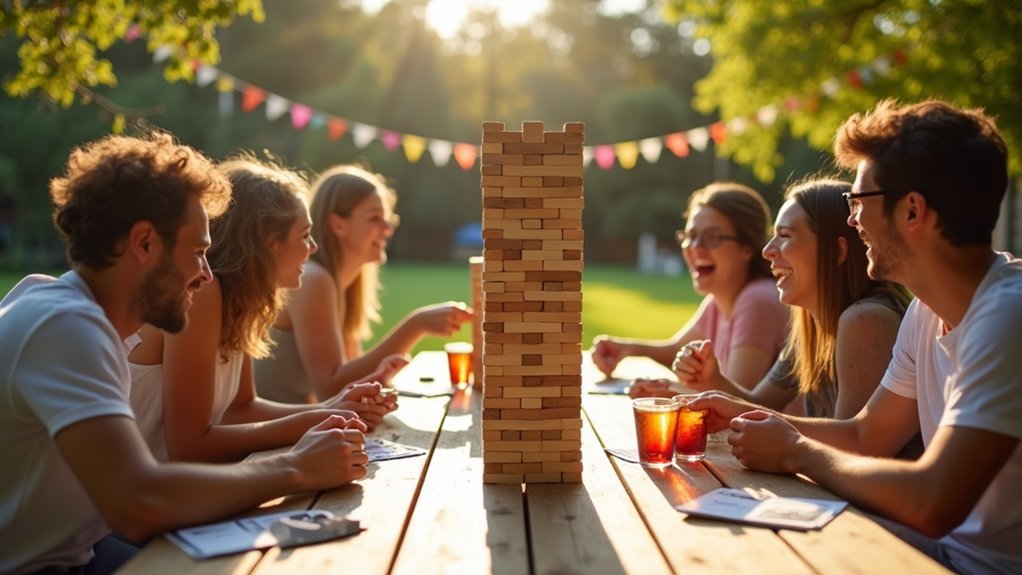
When you’re organizing a Giant Jenga tournament for a large group, proper setup makes all the difference between chaos and smooth competition. Place your tower on a flat, stable surface away from foot traffic. Use plywood or a sturdy table to guarantee consistent play across all rounds.
Divide players into teams of two or three for faster rotations. Each team gets one pull per turn, and the player who topples the tower eliminates their team from that round. Set a 30-second time limit per move to keep games moving.
Create a bracket system for eight or more teams. Winners advance while eliminated teams can join a consolation bracket. Post rules visibly and designate one referee to settle disputes and track scores throughout the tournament.
Cornhole Championship Strategies for Team Play
When you’re competing in team cornhole, mastering rotation tactics guarantees each player gets peak throwing opportunities while keeping your squad fresh throughout the tournament.
You’ll want to develop scoring partnerships where teammates complement each other’s strengths—pairing a consistent slider with an aggressive airmail thrower creates unpredictable offensive pressure.
Don’t overlook defensive blocking strategies, where intentionally landing bags on the board can obstruct your opponents’ paths to the hole.
Team Rotation Tactics
Smart team rotation strategies often make the difference between winning and losing in cornhole tournaments with large groups. You’ll want to establish a clear system that keeps everyone engaged while maximizing your team’s competitive edge.
- Alternate throwers by skill level – Pair your strongest players with beginners to balance each round’s performance.
- Track fatigue patterns – Rotate tired players out before their accuracy drops.
- Use a set rotation order – This prevents confusion and guarantees everyone gets equal playing time.
- Reserve clutch players for decisive rounds – Save your most consistent throwers for high-pressure elimination games.
You should communicate your rotation plan before the tournament starts. This keeps teammates prepared and eliminates mid-game arguments about who’s throwing next.
Scoring Partnership Techniques
Beyond rotation tactics, how you and your partner communicate and coordinate your throws directly impacts your score. Develop hand signals to indicate your intended target—whether you’re aiming to push opponent bags off, block the hole, or sink a direct shot. This silent communication prevents the other team from anticipating your strategy.
Establish complementary throwing styles within your partnership. If you excel at airmail shots that drop directly into the hole, your partner should focus on slider techniques that clear the board. This versatility keeps opponents guessing and covers each other’s weaknesses.
Track your combined scoring patterns throughout matches. Note which bag combinations yield the highest points and adjust your throwing order accordingly. Strong partnerships recognize when to play aggressively for points versus defensively to cancel opponent scores.
Defensive Blocking Strategies
Although sinking bags directly through the hole feels satisfying, mastering defensive blocking often determines championship outcomes more than offensive prowess alone. You’ll want to strategically place bags to obstruct your opponents’ clear shots while maintaining your own scoring opportunities.
When you’re playing defensively, consider these essential blocking techniques:
- Stack blockers directly in front of the hole to force opponents into difficult pushthrough attempts
- Position bags at board edges to narrow landing zones and increase slide-off risks
- Create angled barriers that redirect opponent bags away from scoring positions
- Cover existing point bags with your own to protect accumulated scores
You shouldn’t overcommit to blocking at the expense of scoring. Balance your defensive placements with offensive opportunities, and communicate constantly with your partner about strategic positioning.
Spikeball Competitions That Keep Everyone Engaged
Spikeball consistently ranks among the most exciting backyard games when you’re hosting large groups, and it’s easy to see why. The fast-paced action keeps spectators entertained while players dive and spike their way to victory. You’ll find that tournament-style brackets work perfectly for managing multiple teams throughout the day.
Set up a round-robin format so everyone plays multiple matches before elimination rounds begin. This approach guarantees participants stay active rather than sitting out after a single loss. You can also create skill-based divisions if your group includes both beginners and experienced players.
Keep games moving by enforcing strict time limits or playing to 15 points instead of 21. Rotate referees from eliminated teams to maintain fair play and keep everyone invested in the competition’s outcome.
Capture the Flag Variations for All Ages
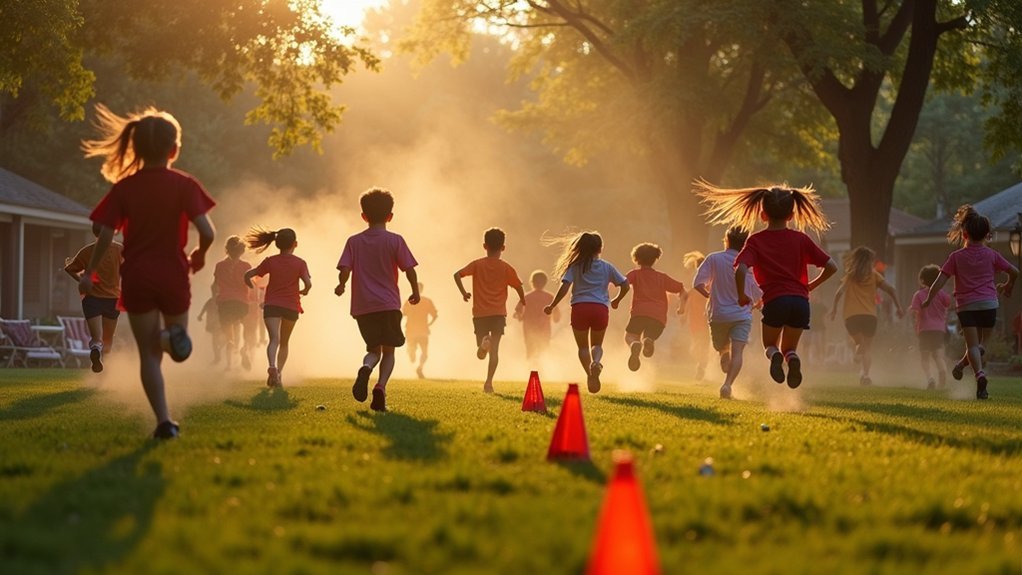
When you want a game that spans generations and skill levels, Capture the Flag delivers unmatched excitement for backyard gatherings.
This classic game adapts easily to accommodate players from age five to fifty-five, making it perfect for family reunions and neighborhood parties.
Try these variations to keep gameplay fresh:
- Glow-in-the-dark version: Use LED flags and glow sticks for thrilling nighttime matches
- Multiple flags: Place three flags per team to increase strategy and movement
- Freeze tag hybrid: Tagged players freeze until teammates unfreeze them instead of going to jail
- Timed rounds: Set 10-minute periods where teams score points for each successful capture
You’ll find that mixing these variations prevents repetitive gameplay and keeps competitive energy high throughout your event.
Ladder Toss Bracket Systems for Large Groups
Because ladder toss works best with two-player teams competing head-to-head, you’ll need a solid bracket system to manage tournaments with 16 or more participants. A single-elimination bracket keeps things moving quickly, while double-elimination gives teams a second chance after one loss.
For groups of 16 players, create eight teams and set up a three-round bracket. Post the bracket on a whiteboard where everyone can track progress. Assign each match a time slot to prevent bottlenecks at your ladder toss stations.
Consider running two games simultaneously if you have multiple sets. This cuts tournament time in half and keeps players engaged rather than waiting. Seed your teams randomly or based on preliminary rounds to make certain fair matchups throughout the competition.
Giant Yard Pong Tournament Organization
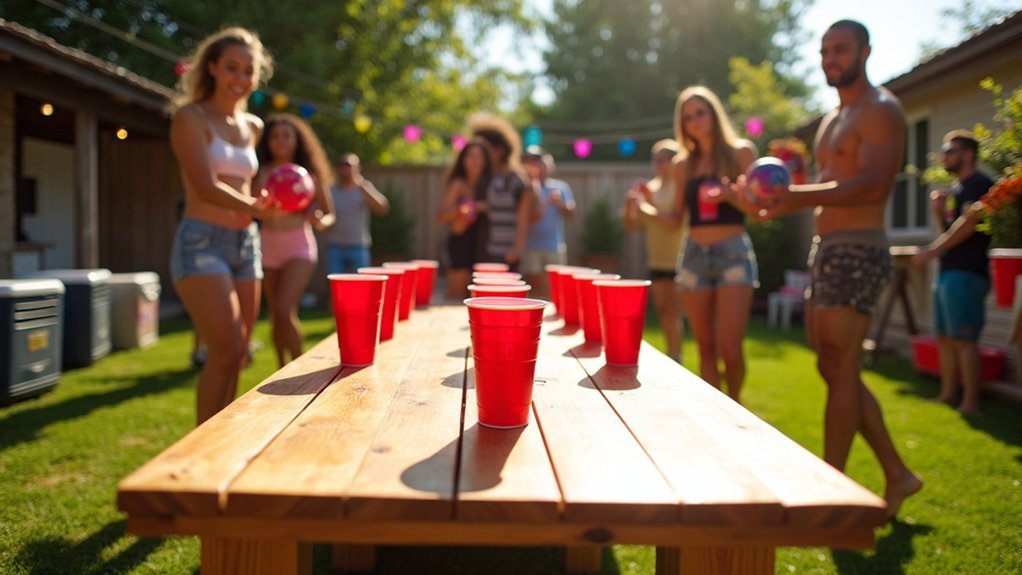
Giant yard pong transforms the classic party game into an outdoor spectacle that’s perfect for large group competitions. You’ll need buckets or large containers arranged in triangle formations, plus volleyball-sized balls for tossing. Set up multiple playing stations to keep elimination rounds moving quickly.
Giant yard pong takes backyard entertainment to the next level with oversized equipment and tournament-style competition.
Tournament Organization Tips:
- Create teams of two players each and seed them based on initial qualifying rounds
- Use double-elimination brackets so teams get a second chance after their first loss
- Establish clear house rules before play begins, including re-rack options and bounce shot values
- Assign referees to each station to settle disputes and track scores
You can run a 32-team tournament in approximately three hours using four simultaneous playing stations with proper bracket management.
Kubb: The Viking Game Perfect for Team Battles
Kubb delivers an addictive blend of strategy and skill that’s kept Scandinavians entertained for centuries—and it’s now conquering backyards across North America.
You’ll set up two rows of wooden blocks called kubbs facing each other, with a king piece standing tall in the center. Teams take turns throwing batons to knock down the opposing side’s kubbs, then ultimately topple the king to win.
What makes kubb ideal for large groups is its flexible team format. You can play six-on-six or adjust numbers as needed. The game rewards precision throwing and tactical decisions about which kubbs to target first.
Matches typically last 30 minutes, letting you run bracket-style tournaments throughout an afternoon. The wooden pieces withstand rough play, and the rules are simple enough for newcomers to grasp within minutes.
Relay Race Challenges Using Backyard Equipment
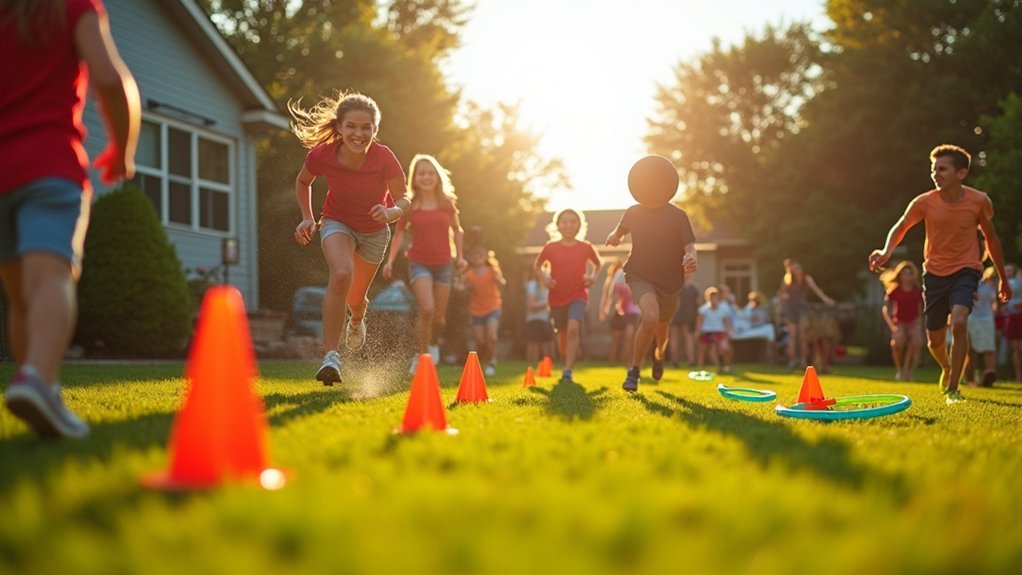
Transform everyday backyard items into exciting relay race equipment that’ll keep your large group entertained for hours.
Pool noodles offer endless possibilities—you can balance them on your head, pass them between teammates without using hands, or use them as batons in classic sprint relays.
For obstacle courses, repurpose hula hoops, lawn chairs, buckets, and storage bins to create challenging stations that test speed, agility, and teamwork.
Pool Noodle Relay Ideas
Pool noodles frequently become the unsung heroes of backyard relay races, offering lightweight versatility that’s perfect for large group competitions.
You’ll find these foam wonders transform ordinary races into hilarious challenges that keep everyone engaged.
Here are four creative pool noodle relay ideas to try:
- Balance and dash – Players race while balancing a water balloon on a pool noodle held horizontally
- Javelin pass – Teams toss noodles like javelins to teammates at checkpoint stations
- Limbo relay – Two players hold the noodle while runners limbo underneath before sprinting back
- Noodle scoop – Competitors use curved noodles to carry tennis balls without dropping them
These activities work brilliantly because you can adjust difficulty levels instantly, and the soft material guarantees safe competition for all ages.
Obstacle Course Equipment Options
Setting up an obstacle course doesn’t require expensive gear when you’ve already got a backyard full of potential equipment. Transform lawn chairs into crawl-under stations, stack tires for stepping challenges, and position hula hoops as jumping targets.
You can repurpose planks balanced on cinder blocks for balance beams and hang pool noodles from tree branches for weaving sections.
Create variety by mixing physical challenges with skill-based tasks. Set up a station where runners must toss bean bags into buckets or bounce a ball three times before advancing. Use cones to mark zigzag sprinting paths and lay out jump ropes for skipping segments.
Arrange equipment in a circuit that flows naturally through your yard, ensuring each obstacle offers a distinct challenge while keeping the course safe and accessible.
Kan Jam Doubles Tournament Format
Organize your Kan Jam doubles tournament by dividing players into teams of two and creating a bracket based on total team count. You’ll want to set up multiple Kan Jam stations if you have more than eight teams to keep games moving efficiently. Each match plays to exactly 21 points, with instant wins awarded for direct slot shots.
Winning instantly with a direct slot shot never gets old—it’s the ultimate Kan Jam flex.
Follow these tournament essentials for smooth gameplay:
- Seed teams randomly or based on skill level to balance competition
- Run double-elimination brackets so teams get a second chance after one loss
- Set 15-minute time caps per game to prevent delays
- Rotate winning teams clockwise to fresh stations between rounds
You’ll keep everyone engaged while crowning your backyard champions within two hours.
Scoring Systems and Prize Ideas for Backyard Competitions
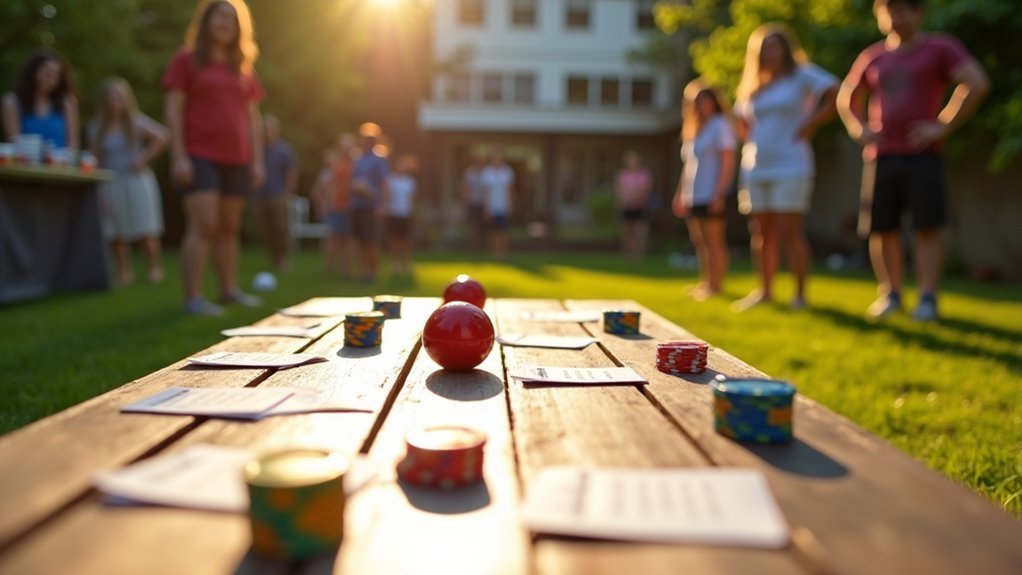
Beyond bracket formats and gameplay rules, a solid scoring system transforms casual backyard games into memorable competitions that keep everyone invested until the final round. You’ll want to establish point values before play begins—consider awarding three points for wins, one for ties, and bonus points for impressive plays.
Track standings on a visible whiteboard so participants can monitor their progress throughout the day. You can also implement cumulative scoring across multiple games to crown an ultimate backyard champion.
For prizes, you don’t need expensive items. Gift cards, homemade trophies, or the coveted “first pick” at next year’s draft work perfectly. Consider awarding categories like “Most Improved” or “Best Sportsmanship” to recognize participants beyond the winners’ circle and encourage everyone’s continued participation.
Frequently Asked Questions
How Many People Is Considered a “Large Group” for Backyard Games?
You’re looking at 10 or more players when you’ve got a large group. Once you hit double digits, you’ll want games that keep everyone engaged and don’t leave people sitting out too long.
What Is the Ideal Backyard Size Needed for Hosting Multiple Games?
You’ll want at least 2,000 to 4,000 square feet to comfortably host multiple games simultaneously. This space lets you set up stations for cornhole, ladder toss, and volleyball without players interfering with each other’s activities.
Are These Competitive Games Safe for Children Under Six Years Old?
You’ll want to supervise children under six closely during competitive backyard games. Many games aren’t designed for young kids, so you should modify rules, use softer equipment, and create age-appropriate versions to guarantee everyone plays safely.
How Long Does a Typical Backyard Game Tournament Last?
You’ll typically spend three to four hours running a backyard game tournament, depending on your group size and game selection. You can shorten it by limiting rounds or extend it with more activities.
What Weather Conditions Make Outdoor Competitive Games Unsafe to Play?
You shouldn’t play outdoor competitive games during lightning storms, extreme heat above 95°F, heavy rain, icy conditions, or high winds exceeding 30 mph. These conditions increase your risk of injury or heat-related illness.