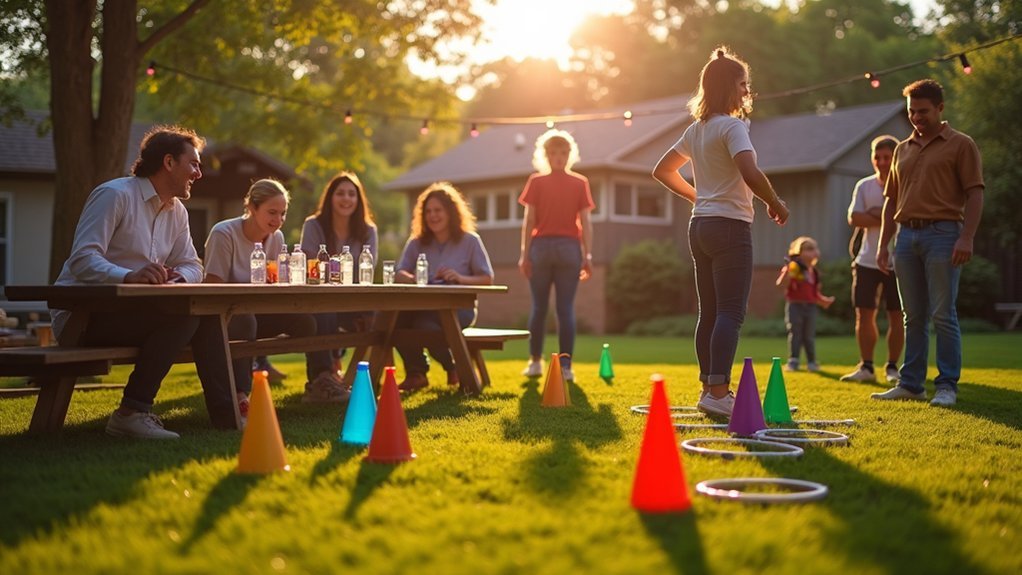
Planning backyard team building games starts with measuring your space and identifying hazards like tree roots or uneven terrain. You’ll want to set a realistic budget, prioritize reusable equipment, and select activities that match your group size—intimate challenges for small teams or station rotations for larger crowds. Don’t forget to survey participants for physical limitations and prepare shaded rest areas with refreshments. Below, you’ll find detailed strategies for creating an inclusive, engaging outdoor event.
Assess Your Backyard Space and Layout
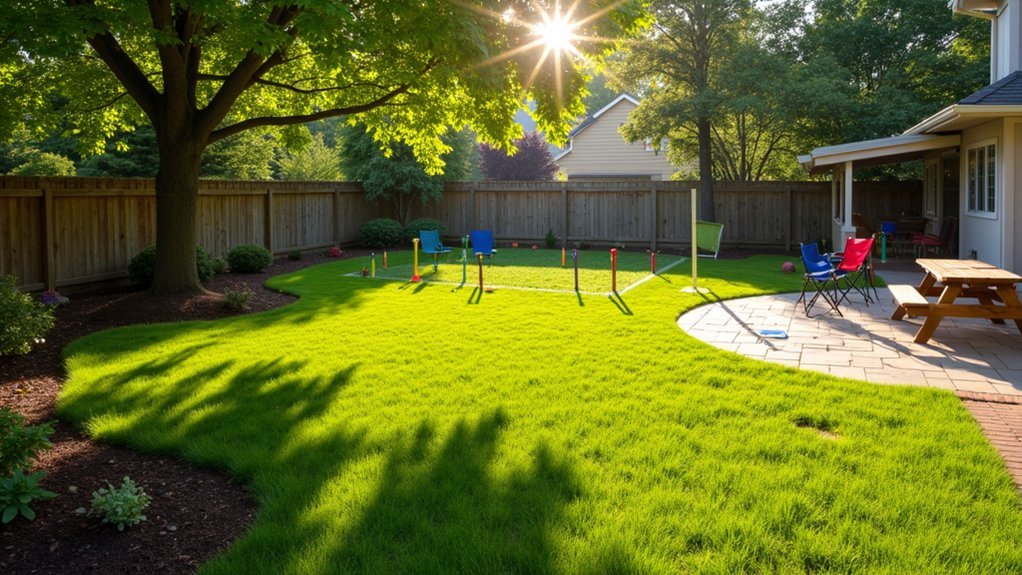
Before you start planning elaborate relay races or team challenges, take a critical look at your backyard’s actual dimensions and features. Measure the length and width of your usable space, noting any slopes, uneven terrain, or drainage issues that could affect gameplay.
Identify potential hazards like tree roots, garden beds, patio edges, or low-hanging branches. You’ll need to work around these obstacles or incorporate them into your game design. Mark sprinkler heads and outdoor lighting fixtures that players might trip over.
Consider your ground surface—grass, gravel, or concrete each suit different activities. Check for shaded areas where participants can rest between games. Don’t forget about neighboring properties; make sure your activities won’t send balls or players into adjacent yards.
Set a Budget for Equipment and Supplies
Before purchasing anything, you’ll want to estimate your total costs by listing every item you need and researching prices.
Once you’ve tallied the expenses, prioritize reusable items like cones, flags, and sturdy bins that you can use for future events.
This approach stretches your budget further and prevents you from spending money on single-use supplies that end up in the trash.
Estimate Total Costs First
When you’re organizing backyard team building games, setting a realistic budget upfront saves you from overspending and last-minute scrambles.
Start by listing every expense you’ll encounter, then research actual prices before committing to any purchases.
Consider these essential cost categories:
- Equipment and props: balls, cones, ropes, and game-specific items
- Consumables: prizes, snacks, drinks, and first aid supplies
- Rentals: tents, tables, chairs, or specialty game equipment
- Unexpected expenses: add 10-15% buffer for surprises
Track your estimates in a simple spreadsheet to see where your money goes.
Compare prices across multiple retailers and don’t forget to factor in shipping costs.
You’ll make smarter decisions when you see the complete financial picture before buying anything.
Prioritize Reusable Items
Investing in reusable equipment stretches your budget further and reduces waste over multiple events. Choose durable items like quality tug-of-war ropes, sturdy cones, and metal buckets over disposable alternatives. You’ll recover your initial investment after just two or three gatherings.
Focus your spending on versatile equipment that works across multiple games. Bean bags serve relay races, target toss, and balancing challenges equally well. Hula hoops shift from obstacle courses to ring toss to team passing games without modification.
Store your reusable items properly between events to maximize their lifespan. Keep fabric items dry, stack cones carefully, and check equipment for damage before each use. Create an inventory list so you know exactly what you own and what gaps need filling for future activities.
Choose Games That Match Your Team Size
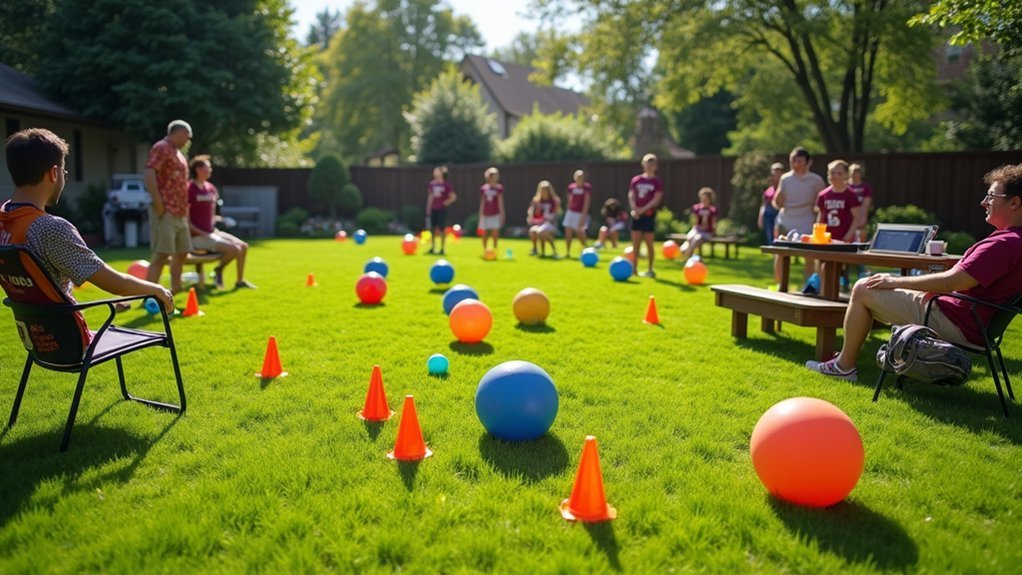
Selecting the right games for your group’s size can make or break your backyard team building event.
You’ll want to match activities to your headcount so everyone stays engaged and participates actively.
Consider these guidelines when choosing games:
- Small groups (4-8 people): Pick intimate activities like escape room challenges or collaborative puzzles where each person’s contribution matters
- Medium groups (9-20 people): Try relay races or scavenger hunts that allow team subdivision
- Large groups (21+ people): Opt for tournament-style competitions or station rotations to prevent long wait times
- Mixed sizes: Have backup games ready to scale up or down based on actual attendance
Don’t force a large-group game onto a small team—it’ll feel awkward and diminish the bonding experience you’re trying to create.
Consider Physical Abilities of All Participants
Beyond matching games to your group’s size, you’ll also need to account for the physical capabilities of everyone attending. Survey your team beforehand to identify any mobility limitations, injuries, or health conditions that might affect participation.
| Mobility Level | Suitable Activities | Activities to Avoid |
|---|---|---|
| Full mobility | Relay races, obstacle courses | None |
| Limited mobility | Trivia games, seated challenges | Running activities |
| Mixed abilities | Scavenger hunts, problem-solving tasks | Competitive sprints |
Design games with multiple roles so everyone contributes meaningfully. Create positions like scorekeeper, strategist, or puzzle master for those who can’t participate physically. You can also modify existing games by replacing running with walking or adding seated alternatives. This approach makes certain nobody feels excluded while maintaining the competitive spirit that makes team building effective.
Select Lawn Games That Encourage Collaboration
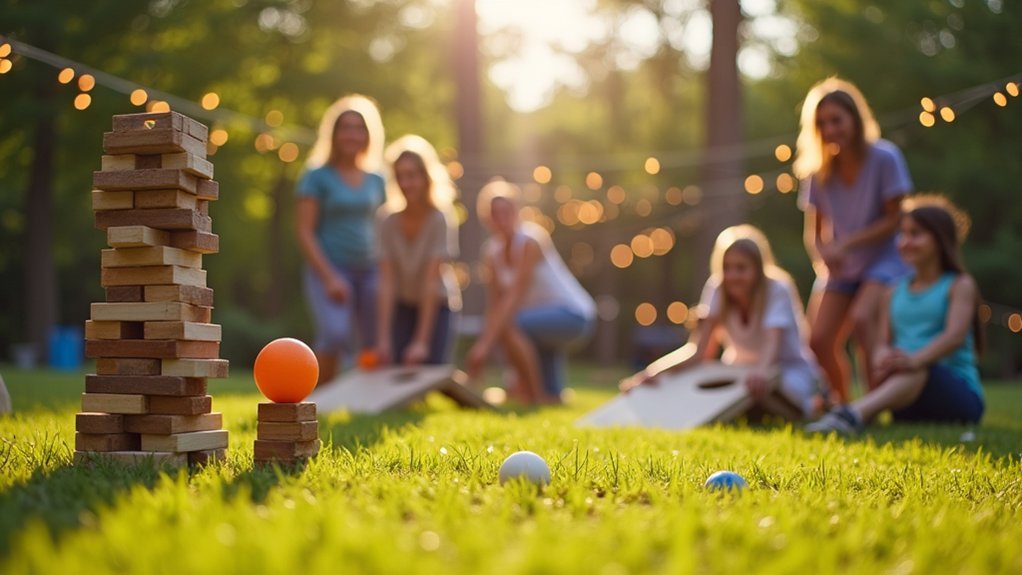
Lawn games that bring people together work best when they require teammates to communicate and strategize rather than compete as individuals. You’ll want to choose activities where success depends on group coordination rather than solo skill.
Consider these collaborative lawn games for your event:
- Giant Jenga relay – Teams take turns removing blocks while discussing strategy together
- Human ring toss – Partners work together with one person catching rings on outstretched arms
- Blind croquet – Paired players guide blindfolded teammates through the course verbally
- Group bocce ball – Teams strategize collectively on each throw’s placement
When you select games requiring shared decision-making, you’ll notice participants naturally break down social barriers. They’ll celebrate victories together and problem-solve through challenges, building genuine connections that last beyond the event.
Create a Schedule for Multiple Activities
When you’re organizing multiple lawn games for your team building event, a well-structured schedule keeps energy high and prevents awkward downtime. Block out 15-20 minutes per activity, allowing teams to fully engage without losing momentum. Build in 5-minute changeover periods between games for bathroom breaks and water refills.
Start with an energizing icebreaker game, then alternate between high-intensity activities and calmer challenges. This rhythm prevents exhaustion while maintaining enthusiasm throughout the event.
Create a visible timeline posted at your activity station so participants know what’s coming next. Assign a timekeeper to announce changeovers and keep everything moving smoothly. You’ll want buffer time near the end for any activities that run long or unexpected delays. Flexibility within structure makes sure your event flows naturally.
Gather Essential Equipment and Materials
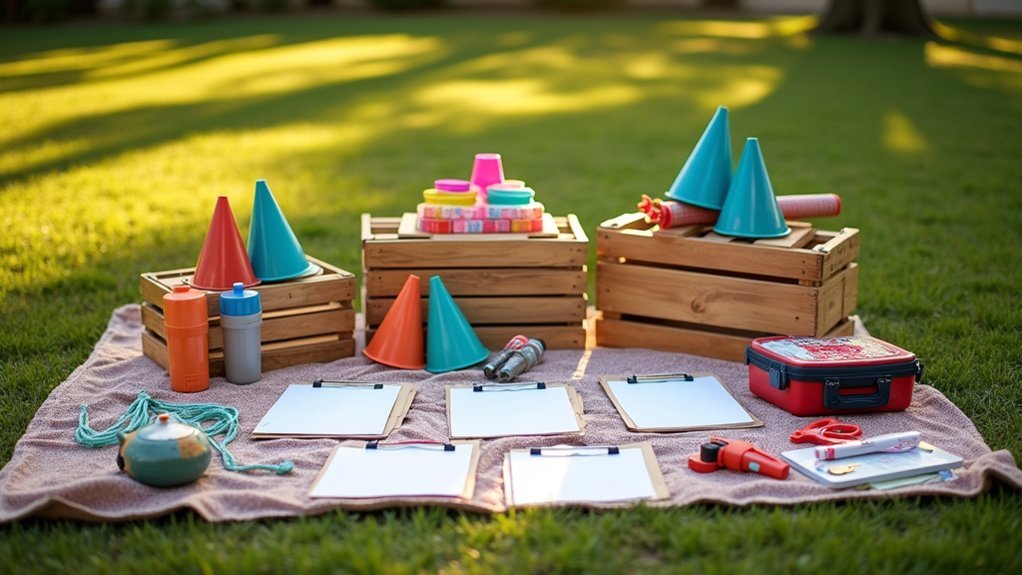
You’ll need to stock up on the right gear before your team building event kicks off.
Start by identifying basic sports equipment like balls, cones, and ropes, then compile a safety supplies checklist that includes first aid essentials and sunscreen.
If you’re working with a tight budget, consider borrowing items from friends or repurposing household materials to keep costs low.
Basic Sports Equipment Needs
Before you start organizing your backyard team building games, you’ll need to gather some basic sports equipment that works for multiple activities. Having versatile gear on hand lets you switch between games quickly and keeps participants engaged throughout the event.
Stock up on these essential items:
- Balls of various sizes – soccer balls, footballs, and playground balls adapt to dozens of team games
- Cones or markers – create boundaries, obstacle courses, and goal areas
- Jump ropes – perfect for relay races and coordination challenges
- Hula hoops – use them for target games, relay stations, or group puzzles
You don’t need expensive or specialized equipment. Check your garage first, then visit a dollar store to fill in any gaps affordably.
Safety Supplies Checklist
Backyard games rarely cause serious injuries, but having safety supplies ready guarantees you can handle minor scrapes and keep the fun going.
Stock a basic first aid kit with adhesive bandages, antiseptic wipes, gauze pads, and medical tape. Include instant cold packs for bumps and minor sprains. Keep a bottle of clean water nearby for rinsing wounds or staying hydrated.
You’ll want sunscreen and bug spray accessible, especially during summer events. Set out cones or flags to mark boundaries and prevent collisions with obstacles like trees or garden beds.
Check your playing area for hazards before guests arrive. Remove sharp objects, fill in holes, and clear away rocks or debris. Place your safety supplies in a visible, central location so anyone can grab them quickly when needed.
Budget-Friendly Material Options
Hosting team building games doesn’t require expensive store-bought equipment when household items work just as well.
You’ll find most supplies already in your garage, kitchen, or storage closets.
Repurpose old bedsheets for three-legged races, use plastic cups for stacking challenges, and grab pool noodles for relay games.
Consider these budget-friendly alternatives:
- Empty cardboard boxes – Transform them into obstacle course tunnels or target practice stations
- Mismatched socks – Perfect for bean bag tosses when filled with rice or dried beans
- Plastic grocery bags – Tie them together for tug-of-war ropes
- Kitchen sponges – Use for water relay races instead of purchasing water balloons
Check dollar stores for affordable additions like cones, bandanas, and small prizes that won’t strain your wallet.
Design Team Formations and Group Assignments

Divide your participants into balanced teams before the first whistle blows to guarantee competitive and enjoyable games for everyone. Consider mixing skill levels, ages, and physical abilities across groups to create fair competition. You’ll want to avoid letting friends cluster together, as this often leads to uneven matchups.
| Team Size | Best For | Assignment Method |
|---|---|---|
| 2-3 players | Relay races | Random draw |
| 4-6 players | Scavenger hunts | Count-off system |
| 7-10 players | Capture the flag | Captain picks |
Use colored bandanas, wristbands, or matching shirts to identify team members quickly during play. Don’t hesitate to shuffle teams between activities if you notice significant skill gaps. This keeps energy high and makes sure nobody feels discouraged by repeated losses.
Establish Clear Rules and Safety Guidelines
Before anyone starts running across your lawn, you’ll need to gather all participants and explain the rules clearly. Walk through each game’s objectives, boundaries, and scoring system so everyone understands what’s expected. Don’t assume people will figure things out as they go.
Safety should be your top priority when setting guidelines:
- Remove hazards like garden tools, rocks, or slippery surfaces from play areas
- Establish physical boundaries away from pools, fences, and sharp corners
- Set rules against pushing, tripping, or aggressive contact
- Designate a timeout signal for injuries or emergencies
You’ll also want to address any mobility limitations or health concerns among participants. Adjust activities accordingly to make certain everyone can participate safely.
Keep a first aid kit nearby and identify the nearest water station.
Plan for Weather Contingencies
You can’t control the weather, but you can prepare for it by identifying indoor backup locations that accommodate your planned activities.
Start monitoring weather forecasts at least a week before your event, and check daily as the date approaches.
Having a gymnasium, community center, or large covered area ready guarantees your team building games proceed regardless of rain or extreme temperatures.
Indoor Backup Location Options
When planning outdoor team building games, having a reliable indoor backup location can save your event from weather disruptions.
You’ll want to secure a space that accommodates your group size and allows for modified activities.
Consider these indoor backup options for your team building event:
- Community centers or recreation halls – These venues offer open floor plans perfect for active games and group activities
- Office conference rooms or lobbies – Use available workspace for smaller gatherings and table-based challenges
- Local gyms or school gymnasiums – Reserve these spaces when you need room for physical team competitions
- Covered patios or garage spaces – Transform these areas into semi-outdoor alternatives during light rain
Book your backup location in advance, and communicate the contingency plan to all participants before the event day arrives.
Monitor Forecasts Ahead
Checking weather forecasts at least one week before your event gives you time to make informed decisions about your team building games. You’ll want to track temperature predictions, precipitation chances, and wind conditions daily as your event approaches.
Set up weather alerts on your phone for your specific location. These notifications warn you about sudden changes that could affect outdoor activities. Pay attention to humidity levels too, as high humidity can exhaust participants faster during physical games.
Three days before your event, make your final call on whether to proceed outdoors or activate your backup plan. Don’t wait until the morning of your gathering to decide. Communicate any weather-related changes to your team promptly so everyone arrives prepared with appropriate clothing and expectations.
Prepare Refreshment and Rest Stations
After organizing your team building activities, setting up dedicated refreshment and rest stations guarantees participants stay energized and comfortable throughout the event.
You’ll want to position these areas in shaded spots where teammates can easily access water, snacks, and seating between games.
Consider these essentials for your stations:
- Hydration supplies: Stock coolers with water bottles, sports drinks, and ice to keep everyone properly hydrated
- Quick-energy snacks: Offer fruit, granola bars, and trail mix for sustained energy without heavy digestion
- Comfortable seating: Arrange folding chairs or blankets where participants can rest tired legs
- First aid basics: Keep bandages, sunscreen, and bug spray within reach for minor needs
Place stations at the perimeter of your activity zones so they’re accessible without interrupting ongoing games.
Incorporate Icebreaker Challenges for Warmup
With your refreshment stations ready to keep everyone fueled, you’ll want to kick off the event with icebreaker challenges that get participants moving and laughing together.
Start with quick-fire activities lasting five to ten minutes. Try “Two Truths and a Lie” where teammates guess which statement is false, or “Human Knot” where groups untangle themselves without releasing hands. These games break down social barriers and establish a playful atmosphere.
Quick icebreakers like Two Truths and a Lie break down barriers and set a playful tone for deeper team bonding.
Consider “Speed Networking” rounds where pairs share fun facts before rotating to new partners. You can also set up a “Name Game” circle where each person adds a movement to their introduction.
Keep instructions simple and energy high. Watch for wallflowers and gently encourage participation. These warmup challenges prepare your group for more complex team activities ahead.
Add Competitive Elements With Prizes and Rewards
Adding prizes and rewards to your backyard team building games creates excitement and motivates participants to give their best effort.
You’ll want to choose meaningful prize options that appeal to your group, then create tiered reward systems that recognize multiple levels of achievement.
The key is striking the right balance between competition and fun so everyone stays engaged without the stakes becoming too intense.
Choose Meaningful Prize Options
The thrill of competition reaches new heights when participants know tangible rewards await the winners. You’ll want to select prizes that genuinely excite your guests while staying within budget. Consider what motivates your specific group—some teams respond to bragging rights while others prefer physical rewards.
Choose prizes that create lasting memories and encourage future participation:
- Experience-based rewards: Gift cards for local restaurants, movie tickets, or adventure activities
- Practical items: Quality water bottles, portable speakers, or outdoor gear
- Homemade trophies: Custom medals or funny awards that teams can display proudly
- Group privileges: First pick at the food table, best seating area, or choosing the next game
Match your prize value to the effort required, ensuring everyone feels the competition was worthwhile.
Create Tiered Reward Systems
Beyond selecting individual prizes, you’ll amplify engagement by structuring rewards across multiple placement levels. This approach keeps teams motivated throughout the entire competition, even when first place seems out of reach.
Establish three to five reward tiers based on final standings. Your top tier might include premium items like gift cards or custom trophies, while second and third place receive smaller but still desirable prizes. Consider adding participation rewards for remaining teams to maintain positive energy.
You can also create category-specific awards that recognize different strengths. Designate prizes for “Most Improved Team,” “Best Sportsmanship,” or “Most Creative Strategy.” These additional categories give struggling teams alternative paths to recognition.
Display your tiered rewards visibly before games begin. When participants see what’s at stake, their competitive drive naturally intensifies.
Balance Competition and Fun
Successfully balancing competition and fun requires careful attention to how participants respond during gameplay. Watch for signs of frustration or disengagement, and adjust rules on the fly if needed. You’ll want to keep the energy positive while still maintaining enough stakes to motivate teams.
Consider these strategies to strike the right balance:
- Rotate team compositions between games so rivalries don’t intensify and everyone builds new connections
- Emphasize process rewards like “best teamwork” or “most creative solution” alongside winning prizes
- Set time limits that create urgency without causing stress
- Include comeback mechanics that give trailing teams hope until the final moments
Document the Event With Photos and Scorekeeping
Capturing moments throughout your backyard team building event creates lasting memories and provides valuable documentation you’ll appreciate later. Designate someone as the official photographer or set up a tripod to record highlights from each activity.
Create a simple scoreboard using a whiteboard or poster board that everyone can see. Track points for each team after every game, and consider adding bonus categories like “Best Sportsmanship” or “Most Creative Strategy” to recognize different types of contributions.
Use a spreadsheet app on your phone for quick score calculations and tie-breaker situations. Take candid shots during gameplay and posed team photos after each challenge. Share these images in a group chat or photo album afterward so participants can relive the fun and strengthen connections formed during the event.
Frequently Asked Questions
How Do I Handle Conflicts Between Team Members During Competitive Games?
Address conflicts quickly by pausing the game and listening to both sides. You’ll want to remind everyone it’s about fun, not winning. Redirect focus to teamwork, and if needed, shuffle teams to ease tensions.
What Time of Day Works Best for Outdoor Team Building Activities?
You’ll find mid-morning or late afternoon works best for outdoor team building activities. You avoid the intense midday heat, and everyone’s energy levels stay higher, making games more enjoyable and productive.
How Can I Include Remote Employees in Backyard Team Building Events?
You can include remote employees by livestreaming activities via video call, creating hybrid games where they participate virtually, or sending them activity kits so they’re doing the same challenges simultaneously from their location.
Should I Hire a Professional Facilitator for Company Team Building Games?
You should consider hiring a professional facilitator if you’re planning complex activities or have a large group. They’ll handle logistics, guarantee everyone participates, and keep energy high while you focus on enjoying the event.
How Do I Measure the Success of My Team Building Event Afterward?
You can measure success by gathering participant feedback through surveys, observing improved team communication in the weeks following, tracking collaboration metrics, and comparing pre-event and post-event team dynamics during regular work activities.