

Sensory garden games help your special needs child because they engage multiple senses at once, forming neural pathways that support learning and emotional regulation. When your child digs in soil, smells herbs, or listens to water features, they’re building connections between brain regions that process information. These activities provide proprioceptive feedback that grounds attention while reducing anxiety through predictable sensory input. From tactile elements to sound-based games, each garden activity offers specific therapeutic benefits worth exploring.
Understanding the Connection Between Sensory Play and Neurological Development
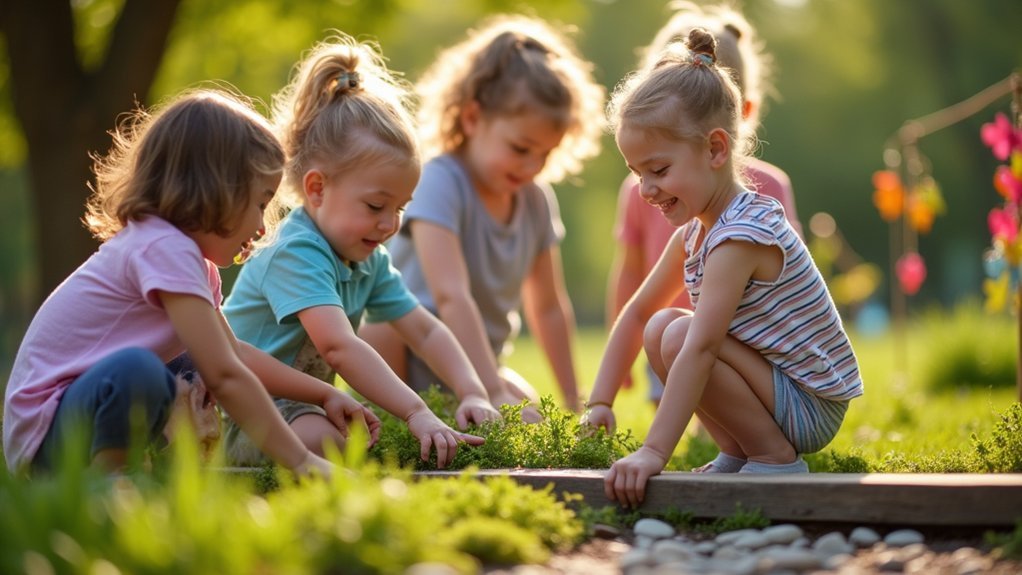
When children engage their senses through garden play, their brains form crucial neural pathways that support learning and emotional regulation. You’re fundamentally giving your child’s nervous system a workout when they touch different textures, smell flowers, or listen to rustling leaves. These experiences strengthen connections between brain regions responsible for processing information.
For children with special needs, sensory garden activities provide controlled stimulation that helps calibrate their responses to environmental input. You’ll notice improvements in focus, coordination, and self-soothing abilities as these neural connections strengthen over time.
Research shows that multisensory experiences accelerate cognitive development more effectively than single-sense activities. When your child digs in soil while smelling herbs and hearing birds, they’re building complex brain architecture that supports communication, motor planning, and adaptive behavior throughout their lives.
How Tactile Garden Elements Support Children With Autism Spectrum Disorder
Many children with autism spectrum disorder find comfort and calm through tactile garden elements that offer predictable, soothing sensations. When you incorporate textured plants like lamb’s ear, ornamental grasses, or smooth river stones into your garden, you’re creating opportunities for meaningful sensory input.
Tactile experiences help regulate your child’s nervous system. Running fingers through soft moss or cool soil can reduce anxiety and promote focus. These natural textures provide consistent feedback, which many children with ASD prefer over unpredictable sensations.
You’ll notice your child may gravitate toward specific textures repeatedly. This self-directed exploration builds body awareness and fine motor skills. Garden elements also encourage purposeful touch, helping children develop tolerance for various sensations they might otherwise avoid in daily life.
The Calming Effects of Water Features in Outdoor Sensory Spaces
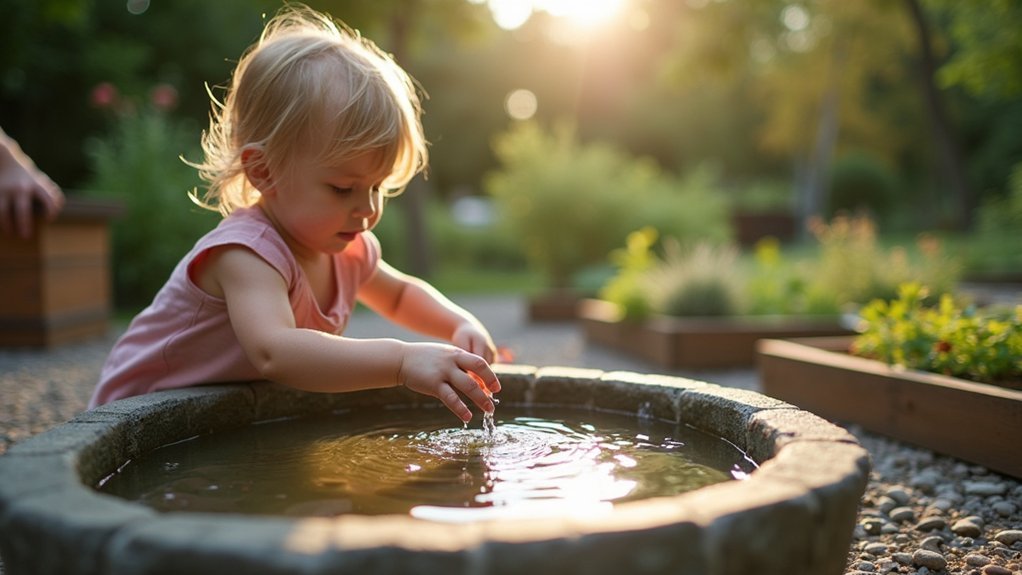
You’ll find that water features create powerful calming effects in sensory gardens through their gentle, rhythmic sounds that naturally reduce anxiety in children with special needs.
The consistent white noise from flowing water helps block out unpredictable environmental sounds that can trigger sensory overload.
When you incorporate fountains, streams, or simple water tables into your outdoor space, you’re providing children with an effective tool for self-regulation and emotional grounding.
Soothing Sounds Reduce Anxiety
The gentle sound of flowing water creates an immediate sense of calm that’s particularly beneficial for children with sensory processing differences.
When you introduce water features into a sensory garden, you’re providing consistent, predictable auditory input that helps regulate the nervous system. This white noise effect masks sudden, jarring sounds that often trigger anxiety in special needs children.
You’ll notice that bubbling fountains and trickling streams naturally draw attention without overwhelming.
The rhythmic quality of water sounds activates the parasympathetic nervous system, slowing heart rate and reducing cortisol levels. For children with autism or ADHD, this acoustic environment creates a safe space where they can decompress and self-regulate. Water features also encourage focused listening, helping children develop auditory processing skills while experiencing genuine relaxation.
Water Promotes Sensory Regulation
Beyond these auditory benefits, water engages multiple senses simultaneously, making it one of the most powerful tools for sensory regulation in outdoor spaces. When you introduce water features, you’re offering tactile, visual, and auditory input that helps calm an overwhelmed nervous system.
Running your hands through cool water activates proprioceptive feedback, grounding you in the present moment. Watching water flow creates predictable patterns that reduce anxiety and promote focus.
| Water Feature | Regulation Benefit |
|---|---|
| Gentle fountain | Masks overwhelming environmental noise |
| Shallow stream | Provides safe tactile exploration |
| Rain chain | Offers visual tracking opportunities |
| Misting station | Delivers gentle sensory input |
You’ll notice that water play encourages natural self-regulation. Children instinctively seek water when dysregulated, demonstrating its innate calming properties.
Building Motor Skills Through Interactive Planting Activities
Digging, patting, and pressing soil engages multiple muscle groups while giving children with special needs meaningful, purposeful work in the garden.
You’ll notice how these repetitive movements strengthen both fine and gross motor coordination naturally.
Interactive planting activities offer targeted skill development through:
- Pincer grasp practice – Picking up small seeds between thumb and forefinger builds the same muscles needed for writing and buttoning clothes.
- Bilateral coordination – Holding a pot steady with one hand while scooping soil with the other trains both sides of the body to work together.
- Hand-eye coordination – Watering seedlings and placing plants in designated spots sharpens visual tracking abilities.
You’re giving your child functional exercises disguised as play.
They’re building strength and dexterity without realizing they’re working hard.
Sound-Based Garden Games That Enhance Auditory Processing

You can transform your sensory garden into an auditory adventure by incorporating sound-based games that strengthen listening skills and sound discrimination. Musical plant chimes created from natural materials like bamboo or seed pods produce gentle tones that children can identify, locate, and match to specific plants throughout the garden.
Nature sound scavenger hunts challenge participants to find and identify garden sounds—from rustling leaves to buzzing pollinators—building concentration and auditory processing abilities in an engaging outdoor setting.
Musical Plant Chimes
Musical plant chimes transform your garden into an interactive soundscape where children can explore auditory experiences at their own pace. You can hang bamboo, metal, or wooden chimes at varying heights near plants, allowing kids to discover different tones as they move through the space.
These chimes offer specific benefits for auditory processing development:
- Sound discrimination – Children learn to distinguish between high and low pitches, helping them differentiate sounds in everyday environments.
- Cause and effect understanding – Kids connect their movements with the resulting sounds, strengthening cognitive pathways.
- Attention regulation – The gentle, predictable tones help children focus without overwhelming their sensory systems.
You’ll find that musical plant chimes encourage self-directed exploration while building essential listening skills in a calming outdoor setting.
Nature Sound Scavenger Hunts
How can you turn your garden into an exciting auditory adventure? Nature sound scavenger hunts challenge participants to identify and locate specific sounds throughout the outdoor space. You’ll create listening cards featuring sounds like buzzing bees, rustling leaves, chirping birds, or trickling water.
This activity strengthens auditory discrimination skills while keeping participants engaged and moving. You’re fundamentally training the brain to filter, process, and categorize different sound frequencies. For children with sensory processing challenges, this structured approach builds confidence in interpreting environmental audio cues.
Start with three to four distinct sounds, then gradually increase complexity. You can pair sounds with visual picture cards for additional support. The garden setting provides natural acoustic variety without overwhelming artificial noise. Participants develop patience, focus, and improved listening abilities through this enjoyable, therapeutic game.
Creating Safe Exploration Zones for Children With Physical Disabilities
Within a sensory garden setting, creating safe exploration zones for children with physical disabilities requires thoughtful planning that balances accessibility with genuine adventure.
Accessibility isn’t about limiting adventure—it’s about designing spaces where every child can explore freely and confidently.
You’ll want to design spaces where wheelchairs and mobility aids move freely while still offering sensory discovery.
Consider these essential elements for your exploration zones:
- Raised garden beds at wheelchair height allow children to touch plants, smell herbs, and dig in soil independently.
- Wide, smooth pathways with gentle slopes guarantee safe navigation while connecting different sensory stations.
- Sturdy handrails near texture walls provide support for children who walk with assistance.
You’re not just removing barriers—you’re creating opportunities.
When children feel secure in their environment, they engage more deeply with sensory experiences and build confidence through independent exploration.
The Role of Aromatic Plants in Emotional Regulation
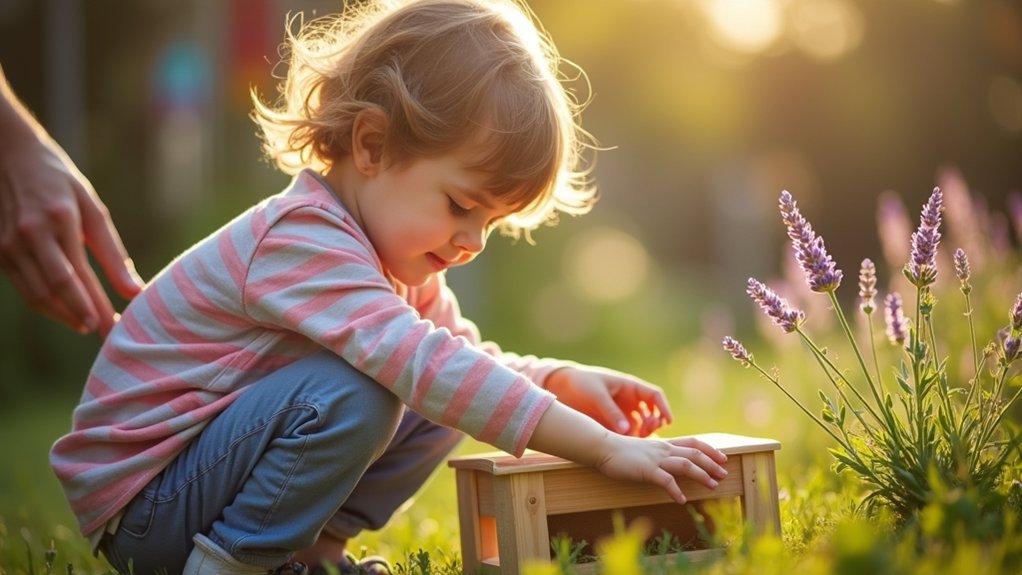
When children encounter overwhelming emotions in the garden, aromatic plants serve as powerful natural tools for calming anxiety and restoring emotional balance. You’ll find that lavender, chamomile, and mint create immediate sensory anchors that help redirect focus away from distressing stimuli.
Your child’s brain processes scent directly through the limbic system, which controls emotional responses. This direct pathway means aromatic plants can trigger calming effects faster than visual or auditory interventions.
You can guide children to crush leaves gently between their fingers, releasing essential oils during moments of dysregulation. Rosemary sharpens focus for children with attention difficulties, while lemon balm reduces hyperactivity.
Plant these aromatics at accessible heights so children can independently seek them out when they need emotional support throughout their garden play experience.
Visual Stimulation Through Colorful Garden Game Designs
Beyond the calming power of aromatic plants, your sensory garden can harness bold colors and strategic visual designs to create engaging game experiences for children with special needs.
Bright, contrasting colors capture attention and help children distinguish between game elements. You’ll find that high-contrast combinations like yellow against purple or red against green work especially well for children with visual processing challenges.
Consider incorporating these colorful game design elements:
- Color-coded pathway games — Paint stepping stones in rainbow sequences for matching and memory activities
- Spinning wind sculptures — Install metallic or painted pinwheels that create movement and color bursts
- Target boards — Mount brightly painted circles for ball-tossing games that develop motor skills
These visual elements transform your garden into an interactive therapeutic playground.
Proprioceptive Benefits of Digging and Soil-Based Activities

When you push a shovel into soil or scoop dirt with your hands, you’re giving your body the deep pressure input it craves for sensory regulation. These soil-based activities strengthen your proprioceptive system, which helps you understand where your body is in space and how much force you’re using.
Through regular digging games, you’ll notice improvements in body awareness that transfer to everyday movements and coordination.
Deep Pressure Through Digging
Digging into garden soil delivers powerful proprioceptive input that helps children with special needs develop body awareness and self-regulation skills. When you push a shovel into dirt or scoop soil with your hands, your muscles and joints receive deep pressure feedback that calms the nervous system.
This grounding activity offers three key benefits:
- Muscle engagement – You’ll activate large muscle groups in your arms, shoulders, and core while digging
- Joint compression – The resistance of soil provides natural compression that organizes sensory processing
- Emotional regulation – Deep pressure work reduces anxiety and promotes focus
You can maximize these benefits by encouraging your child to dig holes for planting, create trenches, or fill containers with soil. The repetitive nature of digging creates predictable, soothing input.
Body Awareness Development
The proprioceptive input from soil-based activities does more than calm your child—it builds a stronger sense of where their body exists in space. When your child pushes a trowel into dense soil or lifts a heavy pot, their muscles and joints send critical feedback to the brain. This information helps them understand their body’s position and movement without relying on vision.
You’ll notice improvements in everyday tasks. Your child may navigate doorways without bumping into frames or judge the force needed to hold a cup without spilling. Digging, patting soil around plants, and carrying watering cans all challenge the proprioceptive system in meaningful ways.
These garden activities create natural opportunities for body awareness practice that feel like play rather than therapy sessions.
Social Skill Development Through Cooperative Outdoor Games
Because outdoor play naturally encourages children to work together, cooperative garden games offer powerful opportunities for developing social skills in special needs children.
When you engage your child in group activities within a sensory garden, they learn essential interpersonal skills through hands-on experience.
Cooperative outdoor games help your child develop:
- Turn-taking abilities – Planting seeds or watering flowers teaches patience and waiting for their moment to participate.
- Communication skills – Working alongside peers requires verbal and nonverbal exchanges that strengthen language development.
- Emotional regulation – managing shared activities helps children manage frustration and celebrate group successes.
You’ll notice your child building confidence as they contribute to team goals.
The garden’s calming environment reduces anxiety, making social interactions feel safer and more approachable for children who typically struggle with peer engagement.
Reducing Anxiety With Nature-Based Therapeutic Play
While social skills flourish through cooperative play, many special needs children also carry heightened anxiety that can make outdoor activities challenging. Nature-based therapeutic play offers powerful calming effects you can harness in sensory gardens.
When you guide children through natural environments, their cortisol levels drop and parasympathetic nervous system activation increases. Sensory gardens provide predictable, gentle stimulation that won’t overwhelm anxious children.
| Nature Element | Anxiety-Reducing Benefit | Activity Example |
|---|---|---|
| Water features | Provides rhythmic, soothing sounds | Guided listening exercises |
| Aromatic plants | Triggers calming responses | Lavender scent walks |
| Textured pathways | Grounds through tactile input | Barefoot exploration |
You’ll notice children naturally regulate their breathing and heart rate as they engage with these elements. The garden becomes a safe haven where anxiety diminishes and genuine play emerges.
Adapting Traditional Lawn Games for Various Ability Levels
Beyond the calming benefits of nature-based play, sensory gardens also provide ideal settings for reimagining classic lawn games to meet diverse physical and cognitive needs. You can transform familiar activities into inclusive experiences that everyone enjoys.
When adapting traditional games, consider these modifications:
- Bocce ball: Use lightweight foam balls with textured surfaces for easier gripping, and create shorter throwing distances with tactile boundary markers.
- Ring toss: Lower the stakes, widen the targets, and add auditory cues like bells to help players with visual impairments.
- Croquet: Replace standard mallets with larger, padded versions and use brightly colored balls that contrast against the grass.
You’ll find that simple adjustments open participation for children and adults across all ability levels while preserving each game’s essential fun.
Seasonal Sensory Activities That Maintain Year-Round Engagement
A sensory garden doesn’t have to go dormant when temperatures shift. You can create engaging experiences throughout every season by rotating activities that match the weather and available natural materials.
In spring, you’ll find opportunities for planting seeds and feeling cool soil between fingers. Summer brings water play stations and textured flower hunts. Fall offers crunchy leaf piles, smooth acorns, and pine cone sorting games. Winter transforms your space with snow sculpting, evergreen scent exploration, and wind chime listening activities.
You can also install permanent features that change with seasons—like rain chains that create different sounds or thermochromic panels that shift colors with temperature. These adaptations keep participants returning regularly, building familiarity while introducing fresh sensory input. Consistent engagement strengthens neural pathways and maintains therapeutic benefits year-round.
Measuring Progress and Celebrating Achievements in Garden Play
Tracking growth in sensory garden activities helps you recognize meaningful improvements that might otherwise go unnoticed. You’ll want to document small wins, from increased tolerance for touching soil to longer engagement periods with plants.
Consider these three effective measurement approaches:
- Photo journals – Capture before-and-after images showing participation levels and emotional responses during garden play sessions.
- Duration tracking – Record how long your child stays engaged with specific sensory stations each week.
- Skill checklists – Note mastered abilities like seed planting, watering independently, or identifying textures.
Celebrate achievements openly within the garden space. Create a harvest party when goals are met, or add a painted stone to a “victory pile” after each milestone. These tangible rewards reinforce positive associations with sensory exploration.
Frequently Asked Questions
How Much Does It Cost to Build a Sensory Garden for Special Needs Children?
You’ll typically spend between $1,000 and $15,000 to build a sensory garden for special needs children. Your costs depend on size, materials, plants, and specialized equipment like musical instruments or tactile panels you choose.
What Insurance Considerations Apply When Creating Public Sensory Garden Play Spaces?
You’ll need general liability coverage, premises liability insurance, and potentially an umbrella policy. Don’t forget to verify your coverage includes playground equipment and accessibility features. You should also consider participant waivers for organized programs.
How Often Should Sensory Garden Equipment Be Replaced or Updated?
You should inspect sensory garden equipment monthly and replace items every 5-10 years, depending on wear. You’ll want to update elements sooner if they’re damaged, outdated, or no longer meeting your users’ evolving sensory needs.
Are There Grants Available Specifically for Special Needs Sensory Garden Projects?
You’ll find grants through organizations like the National Garden Bureau, Shane’s Inspiration, and local disability foundations. You can also apply for community development block grants and approach healthcare foundations that support therapeutic outdoor spaces.
What Professional Certifications Should Sensory Garden Designers Have for Therapeutic Spaces?
You should look for designers with certifications in horticultural therapy, landscape architecture, or therapeutic garden design. They’ll also benefit from training in accessibility standards and understanding specific sensory processing needs for effective spaces.