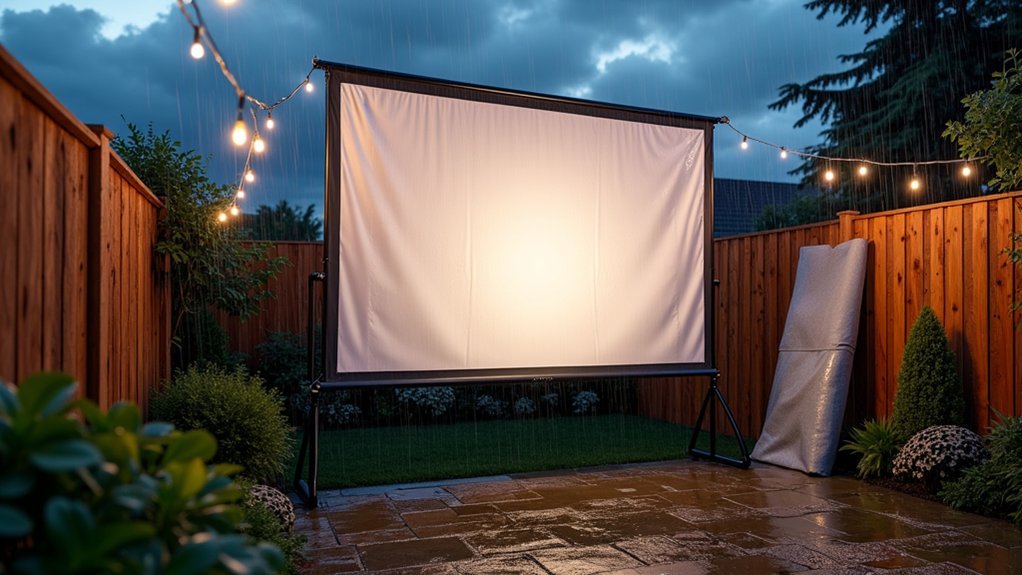
When you’re choosing a weatherproof outdoor projector screen, you’ll want to contemplate PVC, treated polyester, or fiberglass-reinforced materials based on your specific climate challenges. PVC offers natural moisture resistance and UV stability for permanent installations, while polyester with polyurethane coatings provides lightweight portability and water-repellent protection. Spandex blends deliver wrinkle-free surfaces that absorb wind gusts effectively. Each material’s lifespan varies considerably depending on your local weather conditions and maintenance routine.
Vinyl and PVC Screen Materials for All-Weather Durability
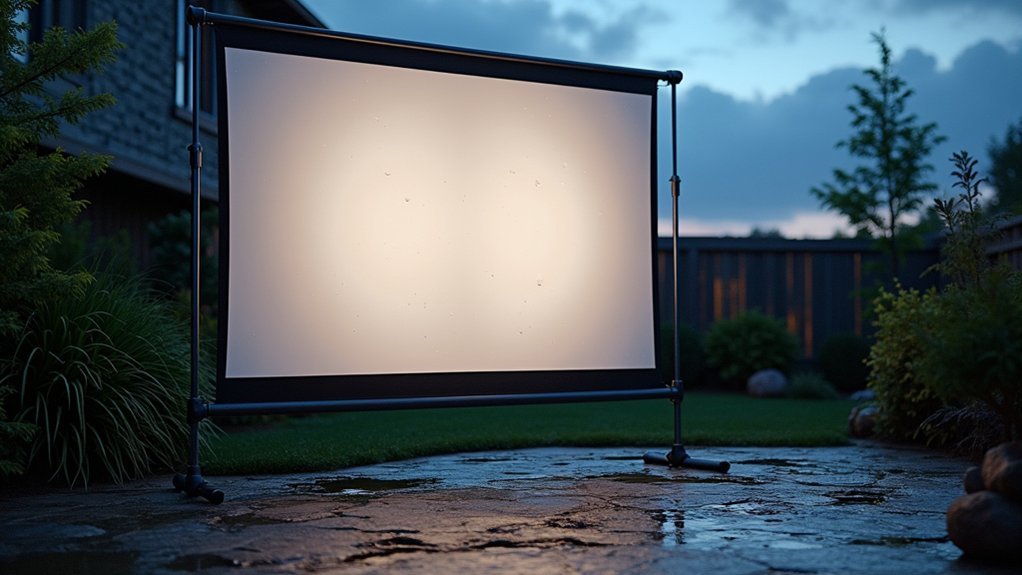
Selecting the right screen material makes all the difference when you’re building an outdoor projection setup that needs to withstand rain, sun, and temperature swings.
Vinyl and PVC stand out as top choices for permanent outdoor installations. These synthetic materials naturally resist moisture, preventing mold and mildew from taking hold during humid conditions. You’ll find that quality vinyl screens maintain their structural integrity through repeated exposure to UV rays, unlike fabric alternatives that fade and degrade quickly.
PVC-based screens offer excellent tensile strength, so they won’t stretch or sag when temperatures fluctuate. They’re also easy to clean—just wipe them down with mild soap and water.
When shopping, look for screens with reinforced edges and UV-resistant coatings. These features extend your screen’s lifespan markedly, protecting your investment for years of outdoor movie nights.
Polyester Fabric Options With Water-Resistant Coatings
Polyester fabric screens deliver a compelling balance of portability and weather resistance that vinyl simply can’t match. You’ll find these screens appreciably lighter, making setup and takedown effortless for backyard movie nights or traveling presentations.
Modern polyester screens feature advanced water-resistant coatings like polyurethane or silicone treatments that cause water to bead and roll off the surface. These coatings protect against light rain and morning dew without compromising image quality.
You should look for screens with at least 300-denier polyester for durability, combined with UV-resistant treatments that prevent fading and degradation from sun exposure. The fabric’s natural flexibility means it won’t crack in cold temperatures like some rigid materials.
For best results, choose screens with reinforced grommets and tension systems that keep the surface taut during windy conditions.
Spandex Blend Screens for Flexible Outdoor Installations
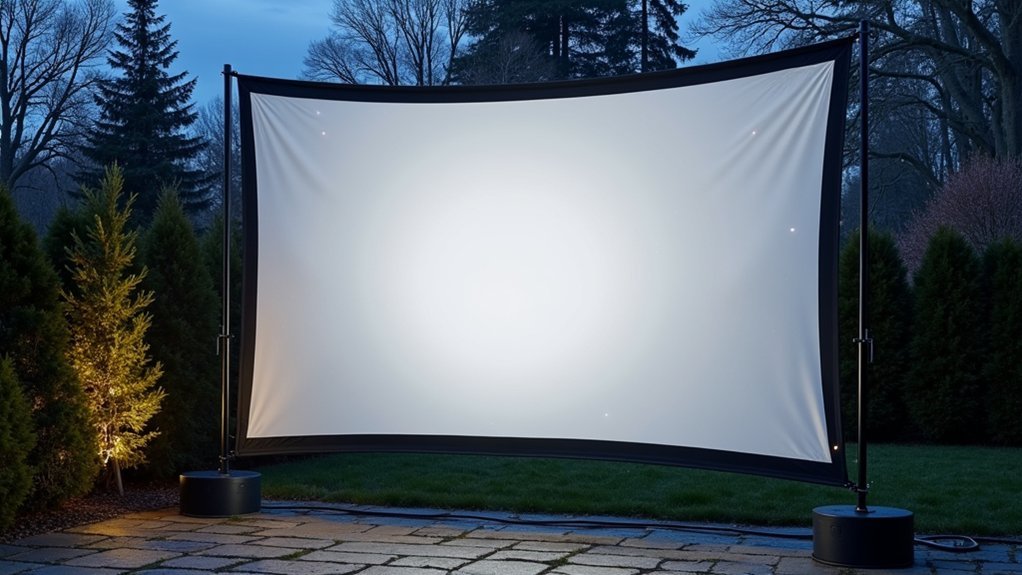
Spandex blend screens step up your outdoor projection game by combining stretch fabric technology with weather-resistant materials. These screens typically mix spandex with polyester to create a tensioned surface that eliminates wrinkles and maintains a perfectly flat viewing area.
Spandex-polyester blends deliver wrinkle-free tension and weather resistance for flawless outdoor movie nights.
You’ll appreciate how spandex blends handle wind better than rigid alternatives. The fabric’s natural elasticity absorbs gusts rather than catching them like a sail. This flexibility also makes installation easier since you can stretch the material across various frame configurations.
Most spandex blend screens feature UV-resistant treatments that prevent color degradation and maintain peak reflectivity. They’re lightweight, portable, and roll up compactly for storage.
When rain hits, the tight weave paired with water-repellent coatings causes droplets to bead and roll off quickly, minimizing water spots on your projection surface.
Fiberglass-Reinforced Materials for Wind Resistance
When you’re setting up an outdoor projector screen in a windy location, fiberglass-reinforced materials offer exceptional tensile strength that prevents tearing and stretching under pressure.
You’ll need to choose between woven and solid construction options, each providing distinct advantages for different environmental conditions.
Understanding these material differences helps you select a screen that maintains its shape and image quality even during gusty conditions.
Tensile Strength Benefits
Because outdoor projector screens face constant exposure to wind gusts and sudden storms, fiberglass-reinforced materials have become the go-to choice for installations requiring exceptional durability. You’ll find these materials resist stretching and deformation even under intense pressure, maintaining your screen’s flat viewing surface when it matters most.
The tensile strength of fiberglass composites typically ranges from 500 to 900 MPa, far exceeding standard vinyl or fabric alternatives. This means your screen won’t tear at mounting points or develop weak spots along edges where stress concentrates.
You’re also getting long-term value since high tensile strength translates to reduced maintenance costs. Your screen maintains its structural integrity through multiple seasons without sagging or warping. When wind speeds spike unexpectedly, you can trust your fiberglass-reinforced screen will hold firm.
Woven Vs Solid Construction
Although fiberglass-reinforced materials share impressive strength characteristics, the construction method you choose—woven or solid—dramatically affects how your outdoor screen handles wind resistance.
Woven fiberglass construction creates a mesh-like pattern that allows air to pass through the material. This permeability reduces wind load on your screen, preventing the sail effect that can tear mounting points or topple your entire setup during gusts. You’ll sacrifice some image brightness, but you’ll gain significant durability in exposed locations.
Solid fiberglass construction delivers superior image quality with no light penetration. However, it catches wind like a billboard. You’ll need reinforced framing and secure anchoring to compensate for increased stress.
Consider your installation site carefully. If you’re mounting in a wind-prone area, woven construction offers the practical advantage despite minor optical trade-offs.
Mildew-Resistant Treatments and UV-Protected Screen Surfaces
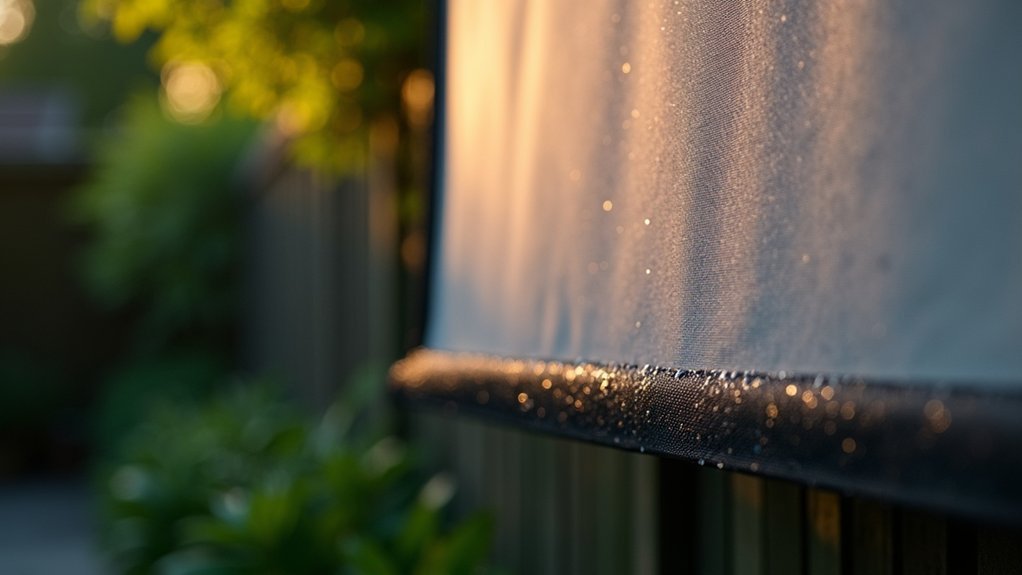
Outdoor projector screens face constant exposure to moisture and sunlight, two elements that can quickly degrade untreated materials. You’ll want screens with factory-applied mildew-resistant treatments that prevent fungal growth in humid conditions. These treatments penetrate the fabric fibers, creating a hostile environment for mold spores.
UV-protected surfaces use stabilizers that block harmful rays from breaking down the screen’s reflective properties. Without this protection, you’ll notice yellowing and reduced image quality within months.
| Treatment Type | Primary Benefit | Lifespan |
|---|---|---|
| Anti-microbial coating | Prevents mold/mildew | 3-5 years |
| UV stabilizers | Blocks sun damage | 5-7 years |
| Combined protection | Full weather resistance | 4-6 years |
You should reapply protective sprays annually to maintain peak performance and extend your screen’s outdoor durability.
Comparing Screen Material Lifespans in Various Climate Conditions
While protective treatments extend your screen’s life, the climate where you live plays an equally important role in determining how long your materials will last.
Different environments stress screen materials in unique ways, affecting durability and performance over time.
Here’s what you can expect based on your climate:
- Hot, arid regions – PVC and vinyl screens typically last 8-10 years, as intense UV exposure accelerates degradation despite protective coatings.
- Humid, tropical climates – Expect 5-7 years from most materials, since constant moisture promotes mold growth and fabric breakdown.
- Temperate zones with mild seasons – You’ll see the longest lifespans of 10-12 years, thanks to moderate temperature swings and balanced humidity levels.
You should factor your local conditions into material selection to maximize your investment.
Frequently Asked Questions
Can I Use a Regular Indoor Projector With an Outdoor Weatherproof Screen?
You can use a regular indoor projector with an outdoor weatherproof screen, but you’ll need to protect it from moisture and temperature extremes. Consider a weatherproof enclosure or bring it inside after each use.
How Do I Clean My Outdoor Projector Screen After a Storm?
You’ll want to gently rinse your outdoor projector screen with a garden hose to remove debris. Then, wipe it down using a soft microfiber cloth and mild soap solution. Let it air dry completely before storing.
What Projector Lumens Work Best for Daytime Outdoor Screenings?
You’ll want at least 3,000 lumens for daytime outdoor screenings, but 5,000+ lumens delivers the best visibility. If you’re battling direct sunlight, you should consider laser projectors with 7,000+ lumens for peak brightness.
Do Weatherproof Screens Require Special Mounting Hardware or Frames?
You’ll need corrosion-resistant mounting hardware like stainless steel or powder-coated aluminum frames for weatherproof screens. These materials prevent rust and withstand UV exposure, wind, and moisture, ensuring your outdoor setup remains secure year-round.
Can Outdoor Projector Screens Be Stored Rolled up During Winter Months?
Yes, you can store your outdoor projector screen rolled up during winter months. You’ll want to keep it in a dry, temperature-controlled space and avoid tight rolling, which can cause creases or damage the material.