Your seating arrangement directly impacts whether guests enjoy the movie or spend the night squinting, craning their necks, and missing dialogue. When you position seats within a 30-degree viewing angle from the screen center and align them at eye level, you’ll prevent neck strain and image distortion. Proper placement also guarantees sound reaches everyone evenly and keeps ambient light from washing out the picture. The sections below cover everything you need to create the perfect outdoor setup.
Creating Comfortable Viewing Angles for Every Guest
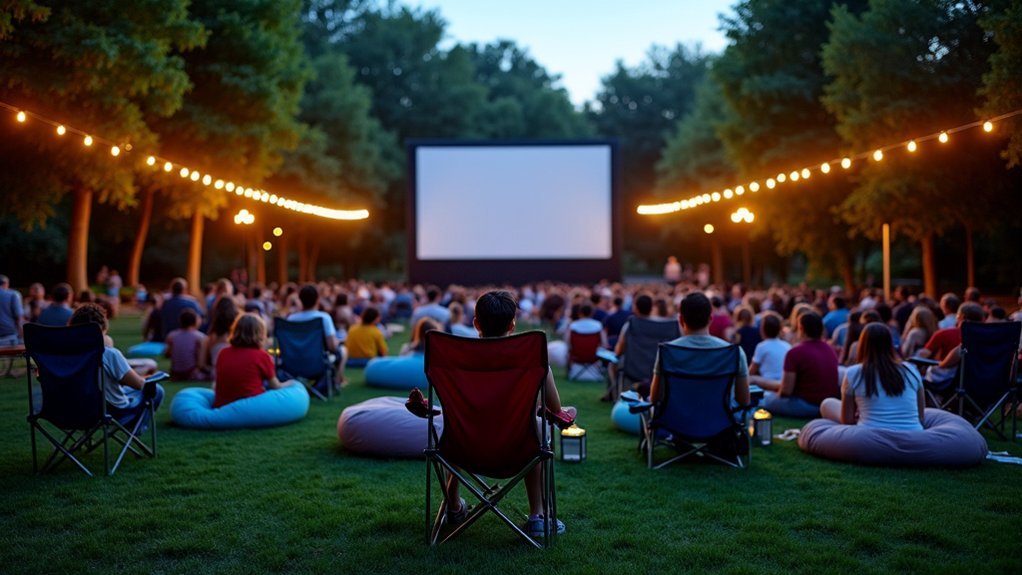
When you’re hosting a movie night, where everyone sits can make or break the experience. Poor viewing angles lead to neck strain, squinting, and distracted guests who miss half the film.
Position your screen at eye level for seated viewers. Arrange chairs and blankets in a gentle arc rather than straight rows, ensuring nobody watches from an extreme side angle. The ideal viewing cone spans about 30 degrees from the screen’s center.
You’ll want to elevate back-row seating slightly using risers, pallets, or sloped ground. This prevents tall guests from blocking shorter ones and gives everyone an unobstructed view.
Consider your youngest and oldest guests when planning. Kids benefit from front-center spots with cushions, while adults often prefer mid-range positions where they can fully appreciate the picture without craning their necks.
Maximizing Your Backyard Space for Movie Night
When you’re setting up an outdoor movie night, strategic use of your backyard space makes all the difference between a cramped gathering and a comfortable cinema experience.
You’ll want to position your screen against a dark backdrop, away from ambient light sources, while ensuring every seat has an unobstructed view.
Smart seating layout strategies help you accommodate more guests without sacrificing comfort or sightlines.
Optimal Screen Placement Tips
Placing your screen in the ideal position can make or break your backyard movie night experience. You’ll want to position your screen facing away from streetlights and neighboring windows to minimize light interference. Choose a flat, stable surface that allows all viewers clear sightlines from their seats.
Consider the sun’s trajectory when planning your setup. Position the screen so it won’t catch glare during twilight hours before full darkness sets in. You should also account for your projector’s throw distance—too close creates a small image, while too far reduces brightness and clarity.
Don’t forget about your neighbors. Angle the screen inward toward your seating area rather than toward property lines. This keeps the viewing experience intimate and prevents light pollution from disturbing those nearby.
Seating Layout Strategies
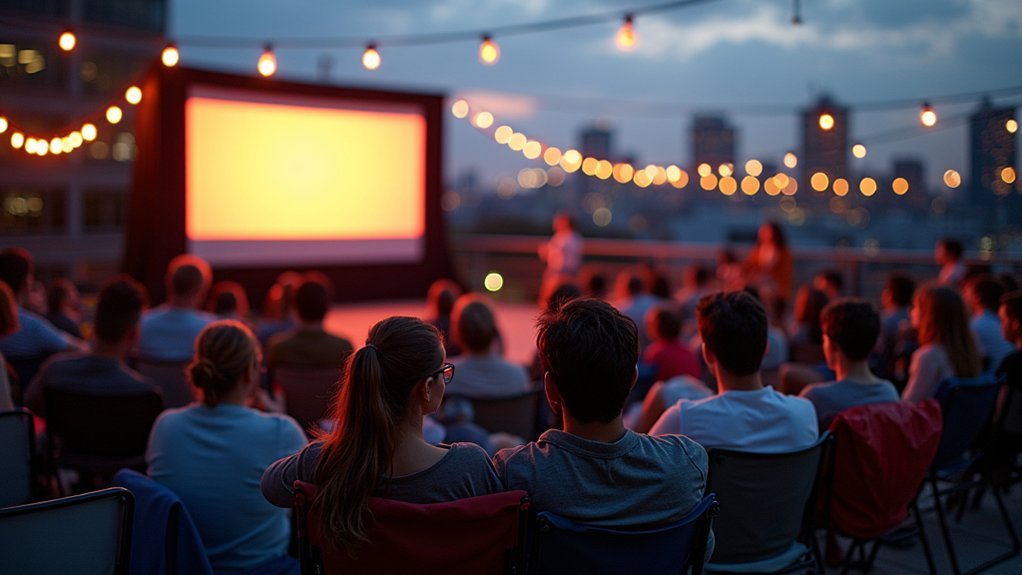
Once you’ve positioned your screen, arranging your seating becomes the next critical step in creating an enjoyable outdoor cinema. You’ll want to create tiered viewing zones so everyone sees clearly without craning their necks.
Start by placing lower seating like blankets and floor cushions in the front row. Position lawn chairs and camping seats in the middle section, slightly elevated if possible. Reserve the back for taller options like Adirondack chairs or standing-height bistro tables.
Leave adequate walking paths between rows—about three feet works well. Angle your outer seats slightly inward toward the screen’s center to prevent distorted viewing from extreme sides.
Don’t forget comfort accessories. Stock each seating area with throw blankets for cooler temperatures and small side tables for snacks and drinks within arm’s reach.
Weather Considerations That Affect Seating Placement
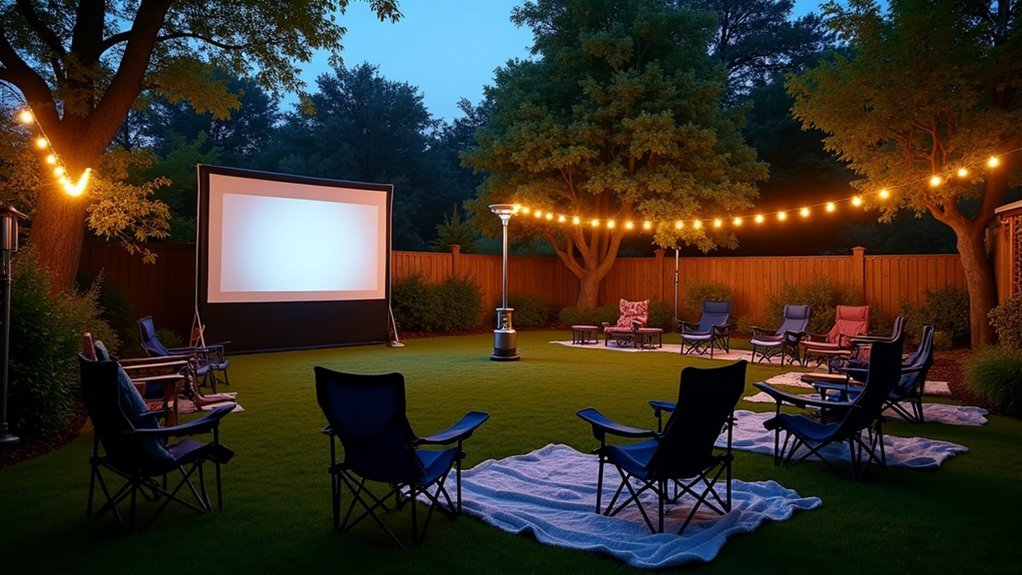
Although outdoor movie screenings have become increasingly popular, they present unique challenges that indoor theaters don’t face. You’ll need to take into account wind direction when positioning your seats, as gusts can carry sound away and make dialogue difficult to hear.
Wind can steal your movie’s dialogue—always consider positioning your seats with gusts in mind.
Sun glare poses another significant factor. You should orient your seating so the screen isn’t competing with a setting sun during evening showings. Position chairs facing away from western horizons when possible.
Temperature fluctuations also influence where you’ll want to sit. On cooler nights, you’ll find spots near buildings or walls retain more warmth. During humid conditions, you should seek areas with better air circulation to stay comfortable.
Rain probability matters too. Choose locations near cover or bring waterproof seating options for quick protection.
Blanket and Lawn Chair Layout Strategies
For ideal viewing at outdoor screenings, you’ll want to establish clear boundaries for your blanket space while respecting neighboring viewers.
Position your blanket at a slight angle toward the screen rather than perfectly straight to maximize your sightline and minimize neck strain.
When using lawn chairs, place them behind blanket areas to avoid blocking ground-level viewers.
Keep chair heights reasonable—low-profile beach chairs work best for everyone’s visibility.
Arrange your setup with taller items and people toward the back of your designated space.
Arrive early to secure prime positioning, typically center-screen and midway back from the projection area.
Leave walking paths between your setup and neighbors for bathroom breaks and concession runs.
Stack coolers and bags beside rather than behind your seating to maintain clear views for those around you.
Ensuring Clear Sightlines to the Screen
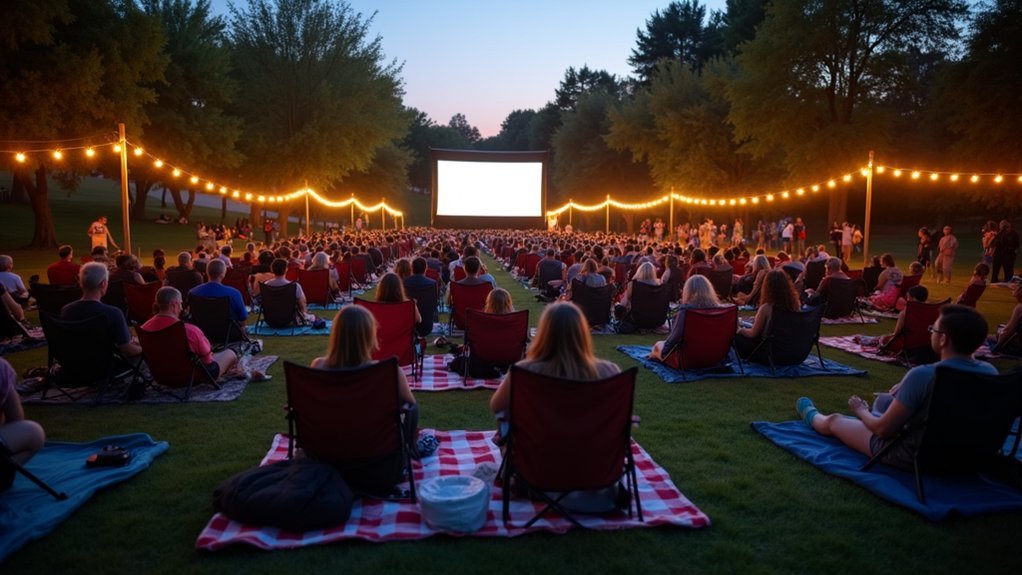
You’ll want to position yourself at an ideal viewing angle to the screen, typically centered and at a comfortable distance that doesn’t strain your neck.
Take note of the terrain’s natural slopes and dips, using higher ground to your advantage or avoiding low spots where your view might be blocked.
Before settling in, scan for potential obstructions like poles, trees, or tall furniture that could interrupt your sightline once the movie starts.
Optimal Screen Viewing Angles
Selecting the right seat in a movie theater directly impacts how comfortably you’ll watch the film and how accurately you’ll perceive the image on screen. When you’re positioned at extreme angles, colors appear washed out and images become distorted.
For outdoor screenings, aim to sit within a 30-degree horizontal viewing angle from the screen’s center. This sweet spot lets you absorb the full picture without straining your neck or eyes. If you’re too far to either side, you’ll miss subtle visual details that directors carefully crafted.
Vertically, position yourself so the screen’s center aligns roughly with your natural eye level. Sitting too close forces you to crane your neck upward, causing fatigue. Too far back reduces immersion and makes text harder to read.
Managing Terrain Height Differences
When you’re watching a movie outdoors, uneven ground can quickly block your view if taller guests sit downhill from the screen while you’re positioned behind them. You’ll want to assess the terrain before setting up your seating area.
| Terrain Challenge | Solution |
|---|---|
| Sloped ground | Place shorter guests downhill |
| Dips or holes | Avoid these spots entirely |
| Raised mounds | Use for back-row seating |
| Uneven patches | Bring leveling blankets |
You should arrive early to scout the best locations. If you’re on lower ground, consider bringing a portable chair with adjustable height. Staggering your group’s seating also helps—don’t line up directly behind each other. By managing these height differences proactively, you’ll make certain everyone enjoys an unobstructed view throughout the film.
Avoiding Obstructed View Spots
Scoping out the venue before settling in can save you from spending the entire movie craning your neck around obstacles. Trees, poles, speakers, and equipment stands can block critical portions of the screen. Walk the area first and identify potential visual barriers from different angles.
Position yourself away from tall structures and avoid spots directly behind speaker stacks or projection equipment. If you’re arriving late, don’t just grab the first available space. Take thirty seconds to stand where you’re considering sitting and verify you’ve got an unobstructed view.
Watch out for pathways where people might walk during the film. High-traffic areas near concessions or restrooms guarantee constant interruptions. Choose locations off the main routes so passersby won’t repeatedly break your concentration during key scenes.
Sound Distribution and Optimal Seating Distance
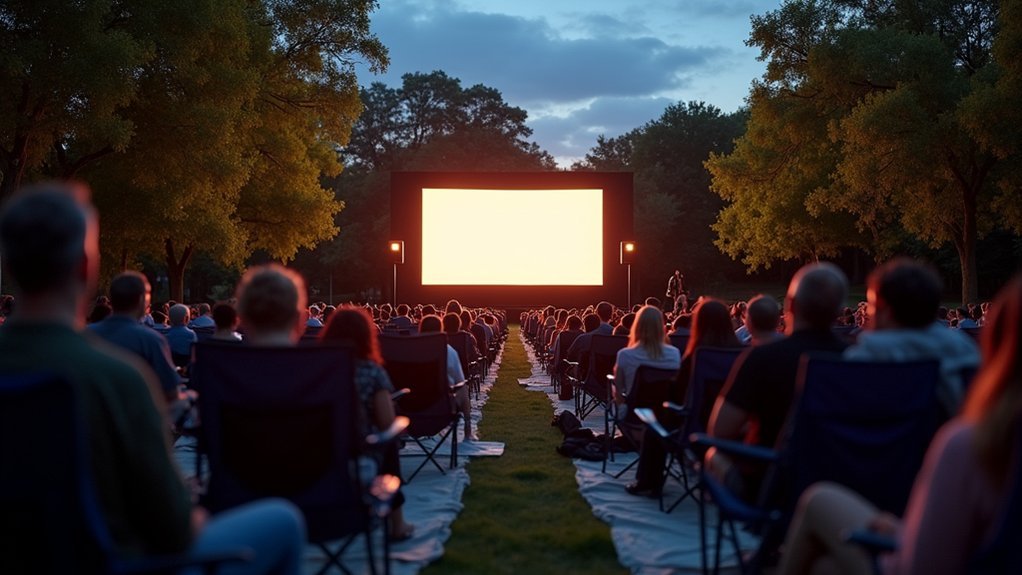
Although visual positioning often dominates seating discussions, sound quality plays an equally critical role in your overall movie experience. Outdoor venues typically use speaker arrays positioned at specific intervals, creating distinct audio zones throughout the seating area.
You’ll find the sweet spot approximately two-thirds back from the screen, where sound waves from multiple speakers converge naturally. Sitting too close puts you in range of only the nearest speakers, causing unbalanced audio. Position yourself too far back, and you’ll notice delays between visual action and corresponding sounds.
Consider sitting centrally between left and right speaker clusters to achieve proper stereo separation. Wind direction also affects sound travel outdoors, so position yourself upwind when possible. These adjustments guarantee dialogue remains clear and musical scores deliver their intended emotional impact.
Lighting Placement and How It Impacts Seat Positioning
Strategic lighting at outdoor movie venues directly affects where you’ll want to position your blanket or chair. Ambient lights from pathways, restrooms, and concession stands can create distracting glare on the screen or strain your eyes during the film.
Where you sit at an outdoor movie matters—ambient lighting can make or break your viewing experience.
Consider these lighting factors when choosing your spot:
- Avoid pathway lights – They’ll illuminate your peripheral vision and reduce screen contrast
- Face away from concession areas – Bright service lights compete with projected images
- Check for overhead string lights – These create charming ambiance but wash out darker scenes
- Position behind light sources – Keep illumination at your back, not in your sightline
- Scout emergency exit signs – Their constant glow can distract from edge seats
You’ll maximize visual comfort by minimizing competing light sources around your viewing position.
Accommodating Different Group Sizes and Age Groups
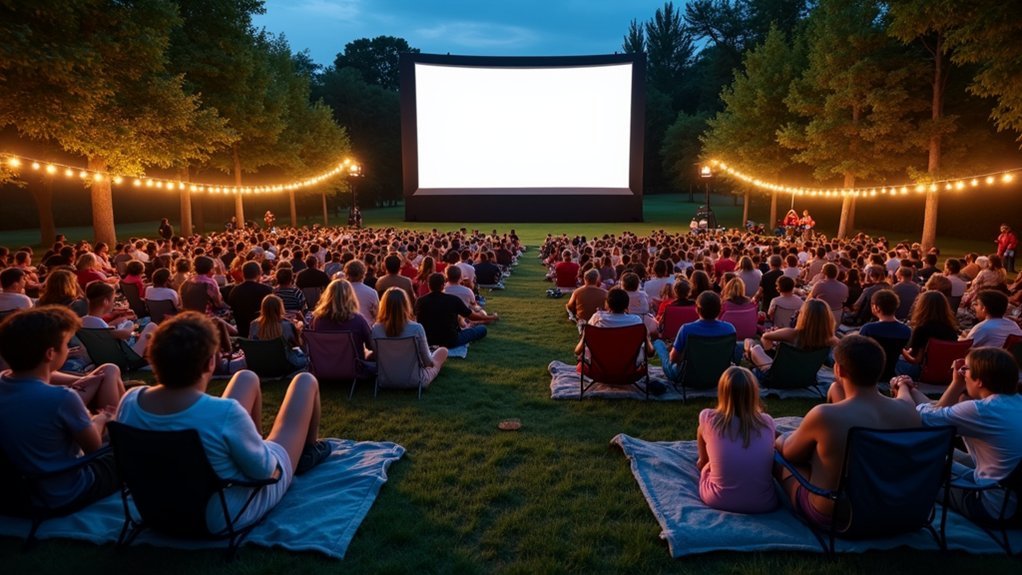
When you’re attending an outdoor movie with a mixed group, your seating strategy needs to account for everyone’s unique needs. Children require front-row positions where their sightlines remain unobstructed by adults.
Elderly guests benefit from aisle access and seats closer to restrooms and exits.
For large groups, arrive early to claim connected spaces that keep everyone together. Bring various seating options—low chairs for kids, supportive chairs with backs for older adults, and blankets for teens who prefer lounging.
Consider noise factors too. Position young children away from speakers to protect their hearing, while placing them where they won’t disturb other viewers if they get restless. You’ll create a comfortable experience for everyone by thinking through these arrangements before the film starts.
Creating Cozy Zones for an Enhanced Viewing Experience
You can transform your outdoor movie setup into an irresistible retreat by creating dedicated cozy zones throughout your viewing area.
Start by setting up blanket and pillow stations where guests can grab soft essentials, then arrange intimate seating clusters that give small groups their own comfortable spaces.
Don’t forget to incorporate weather-protected viewing areas with canopies or covered sections so everyone stays comfortable regardless of unexpected breezes or light drizzle.
Blanket and Pillow Stations
Setting up dedicated blanket and pillow stations throughout your viewing area transforms an ordinary movie night into a genuinely immersive experience.
You’ll want to position these stations strategically so guests can grab what they need without blocking anyone’s view.
Consider these essentials for your stations:
- Waterproof blankets for ground seating to protect against damp grass
- Lightweight throws for temperature drops as evening progresses
- Outdoor pillows with removable, washable covers
- Floor cushions for additional lumbar support
- Storage baskets to keep everything organized and accessible
Place your stations near entry points and along the perimeter of your seating arrangement.
You’re creating convenience while maintaining clear sightlines.
When guests feel comfortable, they’ll stay engaged with the film rather than fidgeting or leaving to find warmth.
Intimate Seating Clusters
Breaking up your outdoor viewing space into intimate seating clusters lets you cater to different group dynamics while maintaining that cozy, personal atmosphere everyone craves. You’ll want to position each cluster with clear sightlines to the screen while creating distinct zones that feel private.
| Cluster Type | Best For |
|---|---|
| Loveseat pairs | Couples |
| Bean bag circles | Kids’ groups |
| Lounge chairs | Solo viewers |
| Sectional sofas | Families |
| Floor cushions | Teens |
Arrange your clusters at varying distances from the screen, giving guests options based on their viewing preferences. Use outdoor rugs to define each zone’s boundaries and add side tables for snacks and drinks. You’re fundamentally creating mini living rooms under the stars, where every group feels they’ve got the best seat in the house.
Weather-Protected Viewing Areas
While intimate seating clusters create the perfect social atmosphere, unpredictable weather can quickly derail your outdoor movie night if you haven’t planned for protection.
You’ll want to establish designated zones that shield your guests from unexpected elements. Consider these essential weather-protection strategies:
- Install retractable canopies above primary seating areas for instant rain coverage
- Position large patio umbrellas strategically throughout your viewing space
- Set up pop-up tents along the perimeter for quick shelter access
- Add windbreaks using decorative screens or tall planters
- Keep waterproof blankets readily available for sudden temperature drops
These protected zones don’t just guard against weather—they create inviting pockets where viewers feel secure and comfortable. When you’ve addressed potential disruptions beforehand, your audience stays focused on the screen rather than scanning the sky.
Safety and Accessibility in Your Outdoor Seating Plan
When you’re planning your outdoor movie seating arrangement, prioritizing safety and accessibility guarantees all your guests can enjoy the experience comfortably. You’ll want to create clear pathways and make certain everyone can navigate the space safely.
| Safety Element | Purpose | Implementation |
|---|---|---|
| Clear pathways | Prevent tripping | Mark with solar lights |
| Level ground | Wheelchair access | Choose flat terrain |
| Emergency exits | Quick evacuation | Keep two routes open |
| Cord management | Eliminate hazards | Use cord covers |
| Adequate spacing | Easy movement | Allow 3-foot gaps |
You should position accessible seating near entrances and restrooms. Don’t block sightlines with tall chairs in front rows. Consider guests with mobility aids by providing stable, sturdy seating options rather than low ground cushions.
Frequently Asked Questions
What Snacks and Drinks Work Best for Outdoor Movie Seating Arrangements?
You’ll want portable snacks like popcorn, chips, and candy that won’t spill easily. Bring drinks with secure lids to prevent accidents. Pack everything in a small cooler you can place beside your blanket or chair.
How Do I Keep Insects Away From My Outdoor Movie Seating Area?
You can keep insects away by using citronella candles, placing bug zappers nearby, applying insect repellent, or setting up fans around your seating area. You’ll also want to avoid leaving food uncovered.
What Time Should I Start My Outdoor Movie for Optimal Viewing?
You should start your outdoor movie about 30 minutes after sunset when it’s dark enough for peak screen visibility. Check your local sunset time and plan accordingly so you won’t struggle with lingering daylight.
How Do I Prevent Dew From Making Outdoor Seating Uncomfortable?
You’ll want to cover seats with waterproof tarps or plastic sheets before the event. Bring absorbent towels to wipe surfaces, and consider using stadium seats or cushions with water-resistant bottoms for comfortable viewing.
Can I Use Inflatable Furniture for Outdoor Movie Night Seating?
You can absolutely use inflatable furniture for your outdoor movie night. It’s lightweight, easy to store, and comfortable. Just make sure you’ve got a pump handy and place furniture on smooth surfaces to prevent punctures.