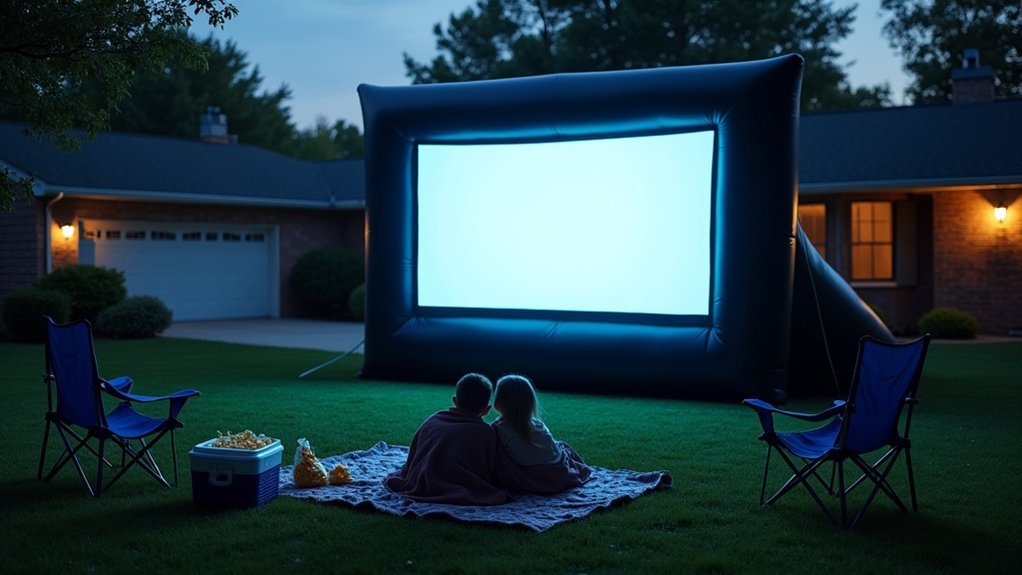
Your neighborhood movie night fails when you overlook critical technical and logistical details that matter more than the film itself. Poor sound quality from underpowered speakers loses your audience within minutes. Screens that are too small force squinting, while uncontrolled ambient light washes out the picture after sunset. Uncomfortable seating on damp ground drives guests home early. Add in equipment failures, polarizing movie choices, and weak promotion, and you’ve got empty lawn chairs—but each of these pitfalls has a straightforward fix.
Poor Sound Quality That Frustrates Attendees
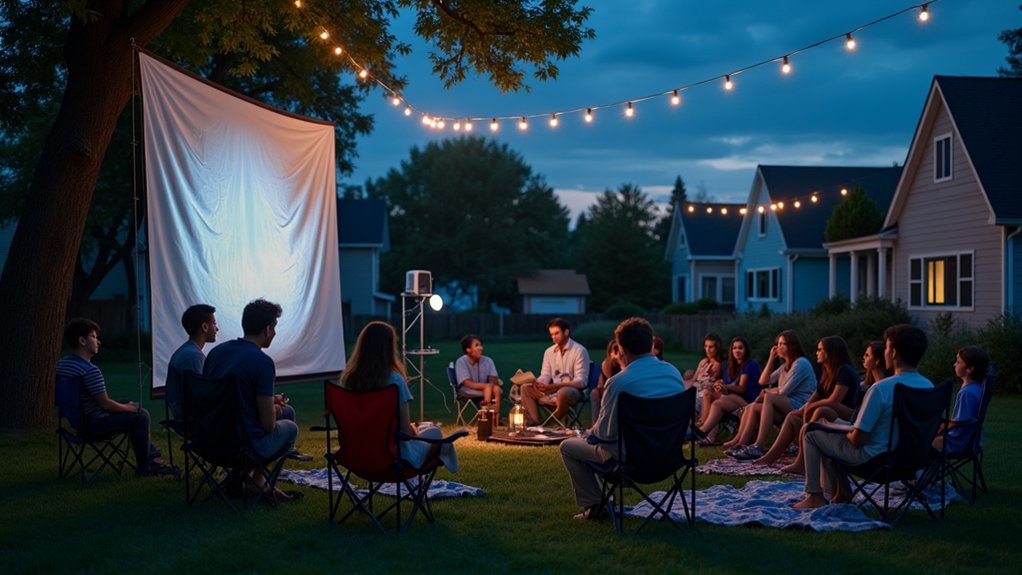
When you’re trying to pull off a neighborhood movie night, few things kill the vibe faster than audio that sounds like it’s coming through a tin can. You’ve invested in a projector and screen, but you’ve underestimated how much outdoor spaces swallow sound. Portable Bluetooth speakers can’t project dialogue across a lawn filled with people, blankets, and lawn chairs.
Your neighbors start whispering “What did they say?” within the first ten minutes. Kids lose interest because they can’t follow the story. Adults check their phones instead of watching. The frustration spreads quickly, and suddenly your community event feels like a chore.
You need speakers designed for outdoor use with enough wattage to reach your entire viewing area clearly, even when the wind picks up.
Inadequate Screen Size and Visibility Issues
You’ve gathered your neighbors for an outdoor movie, but half the crowd can’t actually see what’s happening on screen. A screen that’s too small forces viewers to squint and strain, turning an enjoyable evening into a frustrating experience.
When you add poor sightlines caused by trees, fences, or uneven ground, many attendees end up watching the backs of their neighbors’ heads instead of the film.
Small Screens Frustrate Viewers
Squinting at a tiny screen from across a neighbor’s backyard defeats the entire purpose of an outdoor movie experience. You’ve gathered everyone for a communal viewing, but half your guests can’t see the action. Small screens force viewers to crowd uncomfortably close or simply give up and scroll their phones instead.
| Screen Size | Comfortable Viewing Distance |
|---|---|
| 100 inches | Up to 25 feet |
| 150 inches | Up to 40 feet |
| 200 inches | Up to 50 feet |
| 300 inches | Up to 75 feet |
You need to match your screen to your space. A 100-inch screen works for intimate gatherings, but larger crowds demand bigger displays. Don’t underestimate this—visibility directly impacts engagement and enjoyment.
Poor Sightlines Block Views
Even a perfectly sized screen won’t save your movie night if guests can’t actually see it. You’ve set up chairs in neat rows, but you haven’t accounted for the slope of your yard. Guests in back rows find themselves staring at the heads of people in front rather than the film itself.
You’re also battling obstacles you didn’t anticipate. That beautiful oak tree partially blocks the view from the left side. Your neighbor’s fence creates a dead zone where three families end up craning their necks uncomfortably.
The solution requires careful planning before guests arrive. You need to walk your yard from every potential seating position. Test sightlines at actual seated heights. Consider tiered seating on slopes or eliminate problematic zones entirely from your layout.
Lack of Proper Lighting Control After Sunset
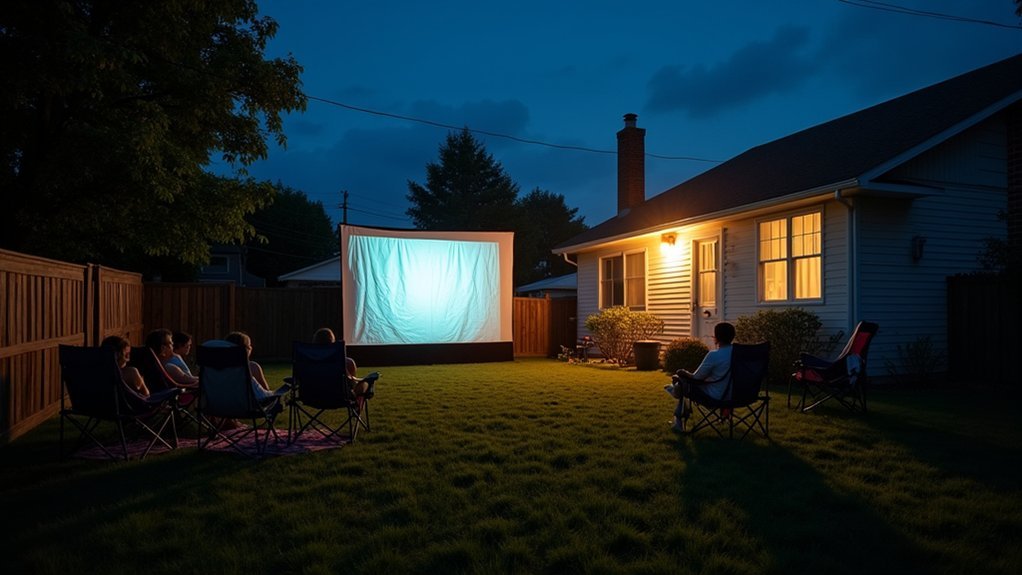
You’ve invested in a decent projector, but nearby streetlights wash out your screen the moment the sun goes down. This glare problem makes it nearly impossible for your neighbors to follow the action, no matter how they shift their lawn chairs.
Addressing ambient light requires strategic screen placement, portable barriers, or even temporary covers for the most offensive light sources.
Streetlight Glare Problems
Streetlights frequently become the uninvited guests at neighborhood movie nights, casting harsh beams directly onto screens and washing out projected images. You’ve likely noticed how even a single poorly positioned streetlight can reduce your carefully chosen film to a washed-out mess of indistinguishable shapes and muted colors.
The problem intensifies because municipal lighting systems operate on fixed schedules that don’t account for your event. You can’t simply turn them off, and repositioning your screen often means sacrificing prime viewing angles for attendees.
Your best options include strategic screen placement using buildings or trees as natural barriers, investing in high-gain screens that resist ambient light, or coordinating with local authorities for temporary dimming. Some communities install shield attachments on nearby poles, directing light downward and away from gathering spaces.
Screen Visibility Challenges
While streetlight interference presents significant challenges, you’ll encounter equally frustrating visibility issues from uncontrolled light sources that emerge after sunset. Porch lights flick on automatically. Car headlights sweep across your screen as neighbors return home. Security lights trigger with every passing pedestrian, washing out your carefully projected image.
| Light Source | Disruption Level | Audience Frustration |
|---|---|---|
| Porch lights | Constant glare | High irritation |
| Car headlights | Sudden flashes | Immediate distraction |
| Security sensors | Repeated bursts | Growing annoyance |
You can’t control your neighbors’ lighting schedules or predict traffic patterns. These unpredictable interruptions destroy immersion during critical movie moments. Your audience shifts uncomfortably, squinting at a washed-out screen while missing dialogue and plot points. Without coordination with surrounding households, you’re fighting a losing battle against suburban illumination.
Ambient Light Solutions
Despite your best efforts to coordinate with immediate neighbors, you’ll find that ambient light control remains one of the most overlooked aspects of outdoor movie planning. Street lamps, porch lights, and security systems create persistent glare that washes out your projected image, leaving viewers squinting at a faded screen.
You can’t control every light source in your neighborhood. Motion-activated floods trigger unexpectedly when pets or pedestrians pass by.
Homes several doors down contribute ambient glow you hadn’t anticipated. Even passing car headlights create momentary disruptions that break immersion.
To combat these issues, position your screen facing away from the strongest light sources. Install temporary blackout barriers on nearby fences. Request neighbors dim exterior lighting during showtime. Consider a higher-lumen projector specifically designed for outdoor use with ambient light rejection technology.
Uncomfortable Seating Arrangements for Guests
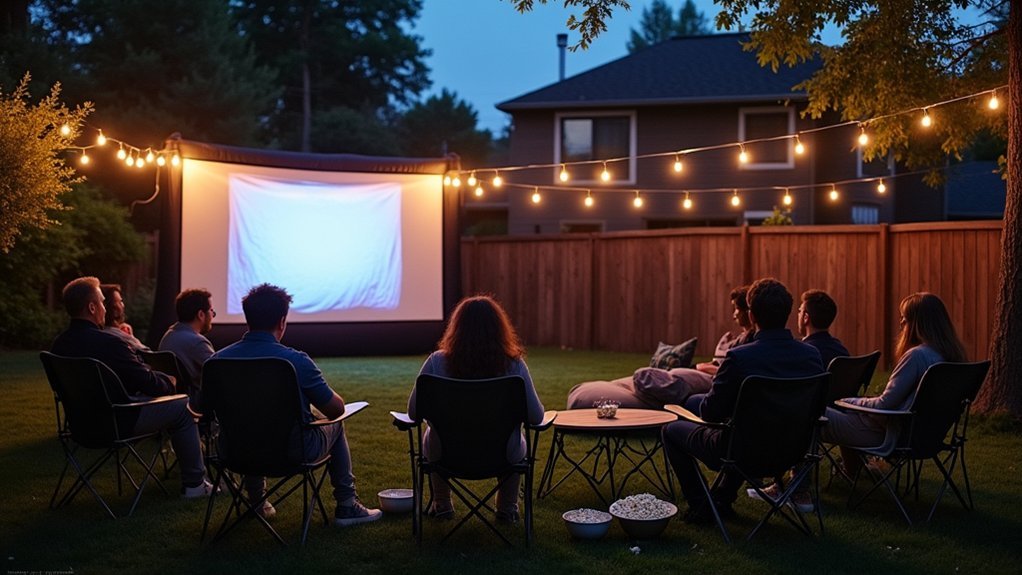
Lawn chairs and blankets spread across uneven ground create a recipe for discomfort that drives guests away before the credits roll. When you expect guests to sit for two hours on hard surfaces or damp grass, you’re setting your event up for failure. People shift constantly, complain quietly, and leave early.
You need to plan seating with intention. Bring cushions, outdoor pillows, or padded stadium seats. Consider renting folding chairs with back support for older guests. Arrange seating in staggered rows so everyone has clear sightlines without craning their necks.
Don’t forget spacing between groups. Cramped arrangements make guests feel trapped and unable to stretch. Give families room to spread out while keeping the atmosphere cozy. Comfortable guests stay longer and return for future screenings.
Technical Equipment Failures and Setup Problems
Even with perfect seating, your movie night will crash and burn if the projector won’t turn on or the sound cuts out mid-scene. You’re battling extension cord limitations, Wi-Fi dead zones, and unfamiliar equipment all at once.
| Problem | Cause | Quick Fix |
|---|---|---|
| No picture | Loose HDMI connection | Check all cable ends |
| Audio dropout | Bluetooth interference | Use wired speakers |
| Dim projection | Ambient light pollution | Start after full dark |
You should test everything hours before guests arrive. Run your entire setup as a dress rehearsal. Check that your streaming service works outdoors and your speakers reach the back row. Bring backup cables and a portable battery. These precautions prevent technical disasters from ruining the evening.
Choosing Movies That Alienate Parts of the Audience
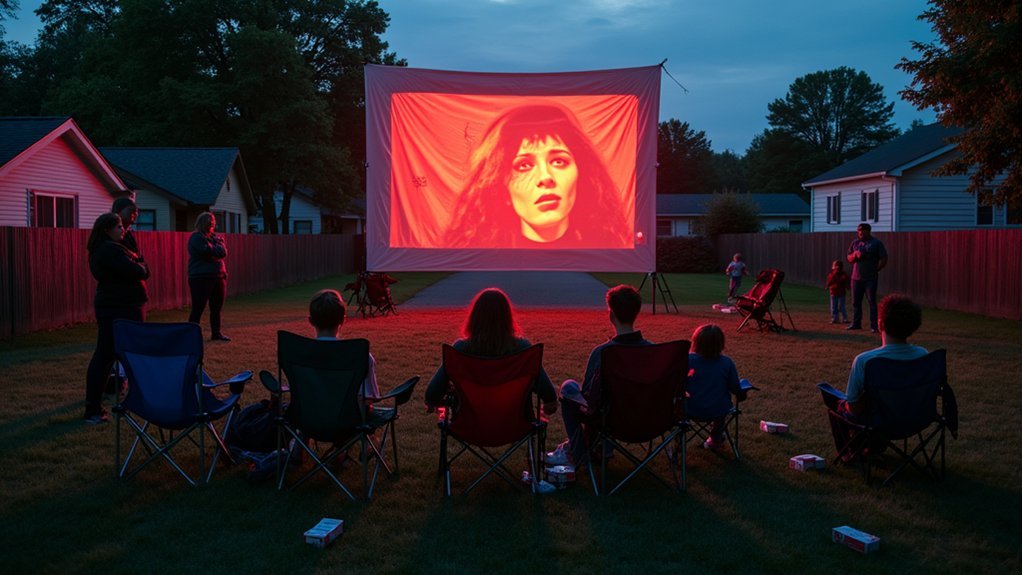
How often have you seen a neighborhood movie night derailed not by technical glitches, but by a film choice that sends half the audience packing early?
You’re facing a diverse crowd with wildly different tastes, ages, and sensitivities. Pick an R-rated thriller, and parents with young children leave. Choose a kids’ animated film, and adults without children lose interest. Select something politically charged, and you’ve sparked uncomfortable tension among neighbors who’ve to live next to each other.
The safest approach involves surveying your community beforehand and rotating selection responsibilities. You’ll want to establish clear content guidelines that respect your audience’s boundaries. Consider family-friendly options that offer genuine entertainment value for adults too. When you ignore audience composition, you’re not just picking a bad movie—you’re fracturing community bonds.
Weather Contingency Plans That Fall Short
You’ve picked the perfect film and everyone’s excited, but Mother Nature doesn’t care about your carefully planned event.
When rain threatens, many organizers scramble without a solid backup plan, leaving neighbors stranded or disappointed.
Rain doesn’t wait for your backup plan—have one ready before the first drop falls.
The most common mistake is assuming you can simply reschedule.
Coordinating dozens of families twice proves nearly impossible, and momentum dies quickly.
Others designate indoor spaces too small to accommodate the expected crowd, creating uncomfortable conditions that drive people home early.
Your contingency plan needs specifics: a covered location secured in advance, a clear communication chain to notify attendees, and a decision deadline so families aren’t left guessing.
Don’t wait until dark clouds gather to figure this out.
Weather apps give you days of warning—use them to activate your backup before chaos ensues.
Weak Communication and Promotion Before the Event
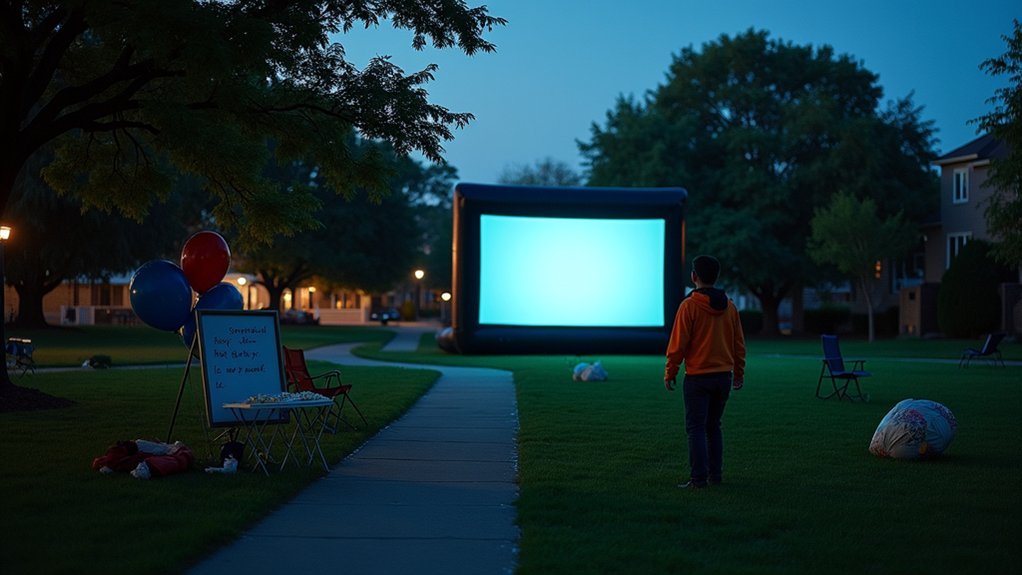
Many organizers set up a movie night and assume word will spread on its own, but this passive approach almost guarantees empty lawn chairs. You can’t rely on a single flyer posted at the mailbox cluster two days before the event. Without consistent messaging across multiple channels, your neighbors won’t know the date, time, or location.
You need to start promoting at least three weeks in advance. Use a combination of social media groups, door hangers, email lists, and personal invitations. Remind residents multiple times as the date approaches. Include essential details like what movie you’re showing, what to bring, and rain date information.
When you skip this groundwork, even interested families forget or make other plans. Strong promotion builds anticipation and commitment.
Frequently Asked Questions
How Much Does It Typically Cost to Organize a Neighborhood Movie Night?
You’ll typically spend $50-$300 organizing a neighborhood movie night. Your costs include projector rental ($50-$100), screen rental ($30-$75), licensing fees ($100+), snacks, and seating. You can reduce expenses by borrowing equipment from neighbors.
What Permits or Permissions Are Needed to Host Outdoor Movie Events?
You’ll typically need a public performance license from studios or services like Swank Motion Pictures. You should also contact your city’s parks department for venue permits and check HOA rules if you’re using private community spaces.
How Do You Handle Bathroom Access for Guests During the Screening?
You’ll want to arrange portable restrooms or coordinate with nearby homeowners willing to share their bathrooms. You can also partner with a local business that’s open during your screening to provide guest access.
What Snacks and Refreshments Work Best for Outdoor Movie Nights?
You’ll want portable, quiet snacks like popcorn, candy, and cookies that won’t create noise during the film. Offer bottled water and juice boxes to minimize spills. Pre-portioned bags keep things tidy and reduce guests wandering around.
How Do You Manage Noise Complaints From Neighbors Not Attending the Event?
You should notify nearby neighbors beforehand, keep volume at reasonable levels, and set a firm end time. You’ll also want to provide a contact number so they can reach you directly with concerns.