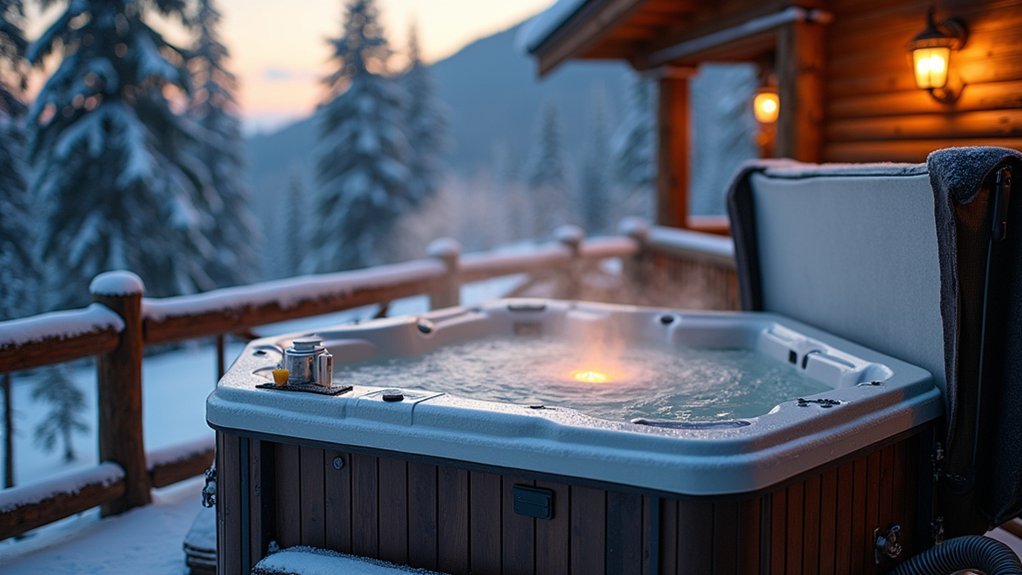
Winter hot tub care requires you to maintain water temperature between 98–104°F and never shut off your spa completely to prevent freezing. You’ll need to test pH, alkalinity, and sanitizer levels at least twice weekly since cold weather depletes chemicals faster. Keep your cover secure and snow-free, rinse filters weekly, and clear a two-foot perimeter around your spa after storms. Each of these essential tasks plays a critical role in protecting your investment.
Protecting Your Hot Tub From Freezing Temperatures
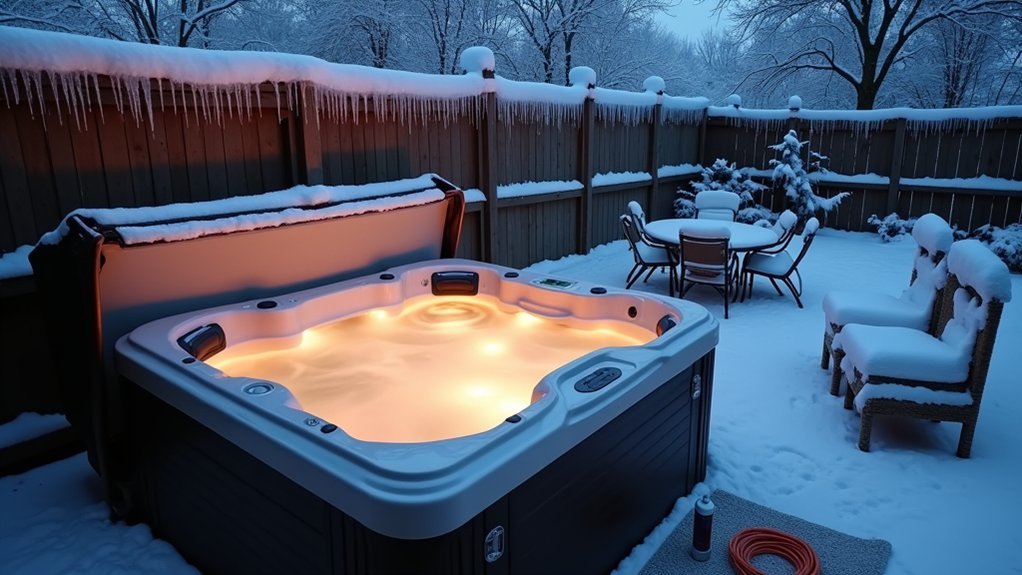
When temperatures plummet below freezing, your hot tub faces serious risks that can lead to costly damage. Frozen water expands inside pipes, pumps, and heaters, causing cracks and ruptures that require expensive repairs.
Freezing temperatures can crack pipes, damage pumps, and rupture heaters—turning a relaxing retreat into an expensive repair nightmare.
You’ll want to maintain consistent water temperature, ideally between 98-104°F, even when you’re not using your tub. Never turn off your hot tub completely during winter months. If you’re away, keep the temperature at a minimum of 80°F to prevent freezing.
Check your hot tub cover daily for proper fit and secure fastening. A quality, well-insulated cover traps heat and blocks cold air. Inspect the cover’s underside for ice buildup or damage to the vapor barrier.
Run your circulation pump regularly to keep water moving, as flowing water resists freezing better than stagnant water.
Maintaining Proper Water Chemistry During Cold Weather
Cold weather affects your hot tub’s water chemistry differently than summer conditions, so you’ll need to adjust your testing routine accordingly.
You should check pH and alkalinity levels more frequently during winter months since temperature fluctuations can throw these readings off balance quickly.
Keeping your chemicals properly stored in a temperature-controlled space prevents them from freezing and losing their effectiveness when you need them most.
Testing Frequency in Winter
Testing your hot tub water becomes even more critical during winter months, as cold weather creates unique challenges for maintaining balanced chemistry.
Temperature fluctuations cause chemical levels to shift more rapidly, and increased usage during cozy winter soaks depletes sanitizer faster than you might expect.
You’ll want to test your water at least twice per week during winter, compared to the once-weekly testing that summer months might allow.
Check your pH, alkalinity, and sanitizer levels each time.
If you’re using your hot tub more frequently or hosting guests, increase testing to every other day.
Don’t skip tests just because opening the cover in freezing temperatures feels unpleasant.
Keeping test strips accessible near your tub makes the process quick and guarantees you’ll stay consistent with your monitoring routine.
Balancing Ph and Alkalinity
Because cold air temperatures cause your hot tub’s water chemistry to fluctuate more dramatically, you’ll need to pay close attention to both pH and alkalinity levels throughout the winter season.
Keep your pH between 7.4 and 7.6, and maintain total alkalinity at 80-120 ppm. When alkalinity drops too low, your pH becomes unstable and swings erratically. Test both levels before adding any chemicals, and always adjust alkalinity first since it acts as a buffer for pH.
Add chemicals in small increments during winter. Cold water absorbs treatments differently than warm water, so wait at least two hours between adjustments before retesting. Run your jets for 15 minutes after adding chemicals to guarantee proper circulation and distribution throughout the tub.
Preventing Chemical Freeze Issues
While your hot tub’s heater keeps the water warm, the chemicals you store nearby face serious freeze risks that can ruin their effectiveness and create safety hazards. Liquid chlorine, pH adjusters, and testing solutions can crystallize or separate when frozen, making them unreliable or unusable.
Store all chemicals indoors where temperatures stay above 50°F. A garage attached to your home or a basement works well. Never leave chemical containers outside, even briefly, during freezing weather.
Check your chemical cabinet’s location if it’s near the hot tub. Insulated storage boxes with small heaters provide protection for outdoor setups. You should also inspect containers regularly for cracks caused by freeze-thaw cycles, as damaged packaging can leak and create dangerous situations.
Inspecting and Replacing Your Hot Tub Cover
Your hot tub cover works hard throughout winter, shielding your spa from snow, ice, and freezing temperatures while locking in heat and preventing energy waste.
Inspect your cover monthly for signs of damage. Check for cracks, tears, or waterlogging in the foam core. A heavy, saturated cover has lost its insulating properties and needs replacement. Examine the vinyl exterior for brittleness caused by UV exposure and cold weather. Test the seal by running your hand along the edges while the tub runs—escaping steam indicates gaps that waste energy.
Replace worn straps and locks immediately, as winter winds can lift unsecured covers. Consider adding a thermal blanket beneath your cover for extra insulation. Don’t let snow accumulate; brush it off regularly to prevent structural strain and premature wear.
Keeping Your Hot Tub Filters Clean Throughout Winter
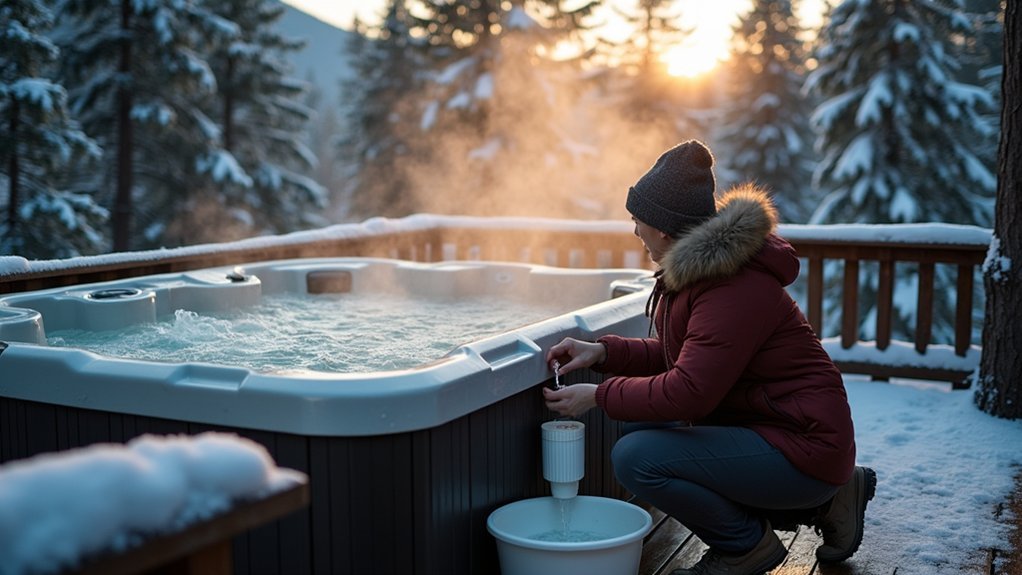
Your hot tub filters work harder during winter months, trapping debris and contaminants that can quickly build up in cold weather conditions.
You’ll need to establish a weekly rinse routine, schedule regular deep cleanings, and know when it’s time to replace your filters entirely.
Proper filter maintenance guarantees your hot tub runs efficiently and keeps your water crystal clear all season long.
Weekly Filter Rinse Routine
Regularly rinsing your hot tub filters during winter months prevents debris buildup and maintains proper water circulation when you need your spa most. Remove your filters weekly and spray them thoroughly with a garden hose, working from top to bottom to flush out trapped particles.
During winter, you’ll likely use your hot tub more frequently, which means filters work harder to capture body oils, lotions, and environmental contaminants. Don’t skip rinses just because it’s cold outside—dirty filters force your pump to work overtime and can reduce heating efficiency.
Set a consistent day each week for this task. Keep a dedicated filter rinse nozzle in your garage so you’re not searching for supplies in freezing temperatures. This simple routine extends filter life and keeps your water crystal clear all season.
Deep Cleaning Schedule
While weekly rinses remove surface debris, they can’t dissolve the oils, minerals, and organic compounds that embed deep within filter fibers over time.
You’ll need to perform a deep chemical soak every 4-6 weeks during winter to maintain peak filtration.
For effective deep cleaning, follow these steps:
- Remove the filter and rinse off loose debris
- Submerge it in a filter cleaning solution for 12-24 hours
- Rinse thoroughly with clean water until no residue remains
- Allow the filter to dry completely before reinstalling
During winter months, you should rotate between two filters.
This guarantees you always have a clean, dry filter ready while the other soaks.
Replace your filters entirely every 12-18 months, regardless of how well you maintain them.
Filter Replacement Timing
Even the most diligently maintained filters won’t last forever, and recognizing when to replace them can save you from frustrating water quality issues during the coldest months. You’ll want to inspect your filters weekly during winter since increased usage and debris accumulation accelerate wear.
| Filter Condition | Action Required | Timeline |
|---|---|---|
| Minor discoloration | Deep clean | Weekly |
| Frayed or torn pleats | Replace immediately | As needed |
| Won’t come clean | Replace | Every 12-18 months |
Watch for telltale signs like reduced water flow, persistent cloudiness despite chemical balance, or visible damage to the filter material. Don’t wait until spring—replacing a worn filter in winter prevents strain on your pump and keeps your water crystal clear.
Monitoring Energy Efficiency and Heating Costs
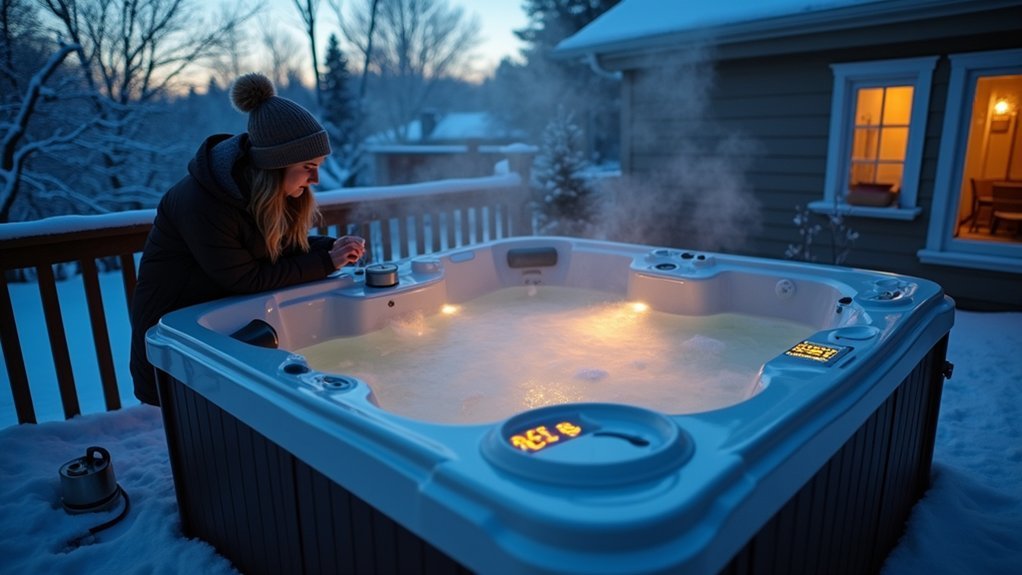
Keeping a close eye on your hot tub’s energy consumption during winter months can save you significant money while ensuring your system operates at peak performance.
Cold temperatures force your heater to work harder, which directly impacts your utility bills.
To maximize energy efficiency during winter, focus on these key areas:
- Upgrade your cover – A well-insulated, tight-fitting cover prevents heat loss and reduces heating cycles
- Lower the thermostat – Drop the temperature 5 degrees when you’re away for extended periods
- Check for leaks – Even small leaks waste heated water and strain your system
- Monitor heating cycles – Excessive cycling indicates insulation problems or equipment issues
You’ll notice efficiency improvements immediately when you address these factors, keeping your winter operating costs manageable.
Preventing Snow and Ice Buildup Around Your Spa
During heavy snowfall, accumulation around your hot tub creates more than just an inconvenience—it poses real risks to your equipment and safety. Snow piled against your spa’s cabinet can seep into electrical components and damage the exterior finish. Ice formation on walkways leading to your tub increases slip-and-fall hazards markedly.
Clear snow from around your spa after each storm, maintaining at least a two-foot perimeter. Use a soft broom or plastic shovel to avoid scratching surfaces. Apply pet-safe ice melt on surrounding pathways—standard rock salt can corrode equipment and irritate skin.
Don’t let snow accumulate on your cover either. Brush it off regularly to prevent excessive weight that warps the cover’s foam core. You’ll also want to keep cabinet vents clear for proper airflow.
Winterizing Your Hot Tub If Not in Use
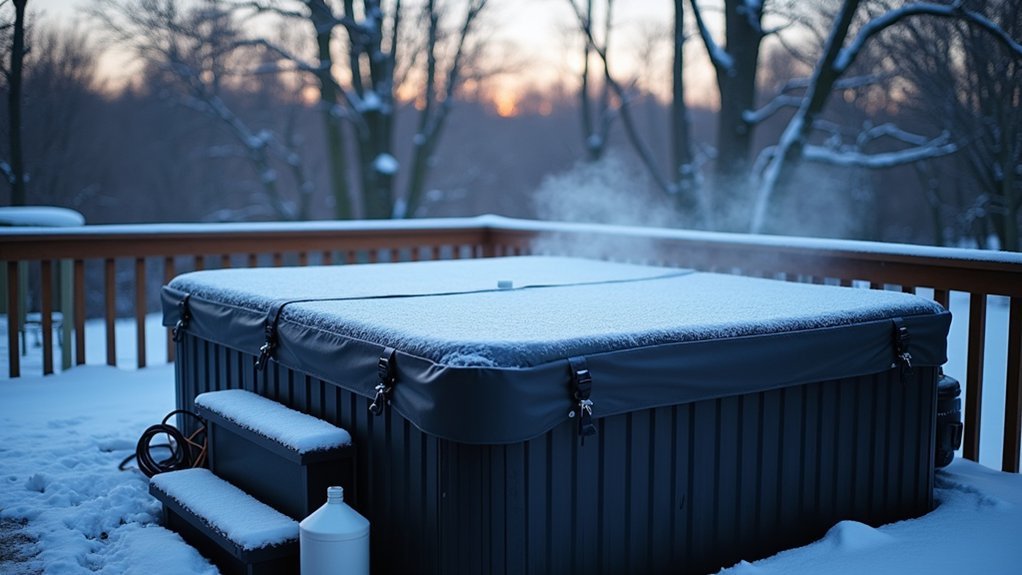
Should you decide not to use your hot tub through the winter months, proper winterization protects your investment from freeze damage that can crack pipes, destroy pumps, and ruin your spa’s shell.
Start by draining all water completely from the tub, plumbing lines, and equipment. You’ll need to remove every drop to prevent ice expansion damage.
Follow these essential winterization steps:
- Blow out all plumbing lines using a shop vacuum or air compressor
- Remove and store filters indoors in a dry location
- Add antifreeze specifically designed for hot tubs to remaining low points
- Cover your spa with a secure, weatherproof cover
Don’t forget to disconnect power at the breaker and remove the spa pack’s drain plugs. Inspect your cover periodically throughout winter for snow accumulation and damage.
Frequently Asked Questions
How Often Should I Drain and Refill My Hot Tub During Winter Months?
You should drain and refill your hot tub every 3-4 months during winter, though you’ll want to do it more frequently if you’re using it heavily. Don’t forget to clean the filters regularly too.
Is It Safe to Use My Hot Tub During a Snowstorm?
Yes, you can safely use your hot tub during a snowstorm. Just make sure you’ve cleared snow from the cover and surrounding area. Don’t stay in too long, and keep towels nearby to avoid slipping.
What Is the Ideal Water Temperature for Winter Hot Tub Use?
You’ll want to keep your hot tub between 100°F and 104°F during winter months. This range provides ideal warmth against cold air while remaining safe for your body during longer soaking sessions.
Can I Add Aromatherapy Products to My Hot Tub in Cold Weather?
Yes, you can add aromatherapy products to your hot tub during cold weather. Just make sure you’re using spa-safe aromatherapy designed specifically for hot tubs to prevent damage to your equipment and maintain water quality.
How Long Should I Wait Between Hot Tub Sessions in Winter?
You should wait at least 10-15 minutes between hot tub sessions in winter to let your body temperature regulate. Don’t rush back in—give yourself time to cool down and rehydrate properly.