
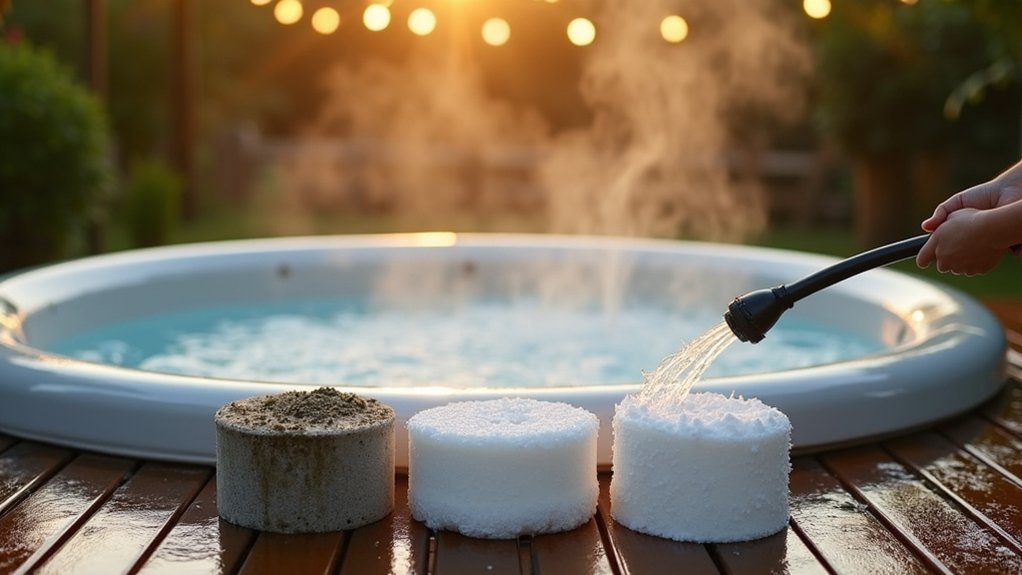
You should rinse your hot tub filter every one to two weeks with a garden hose to remove surface debris. Monthly, you’ll want to soak it in a specialized filter cleaner for at least 12 hours to tackle deeper buildup. Every quarter, perform a chemical soak for 12–24 hours to dissolve mineral scale and embedded oils. Your usage level, bather load, and seasonal factors all influence the ideal cleaning schedule for your specific situation.
Why Hot Tub Filter Maintenance Matters for Water Quality
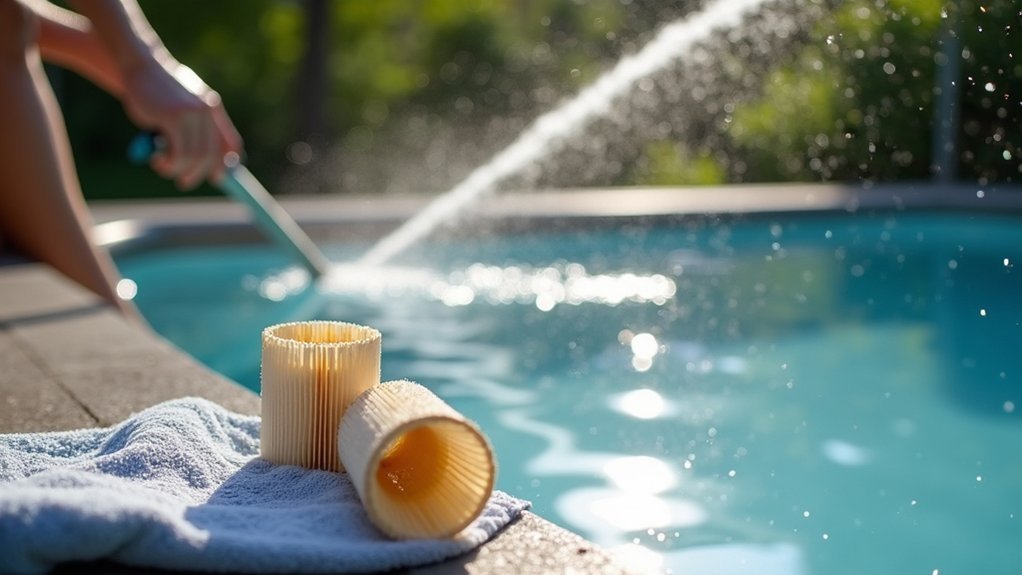
Your hot tub filter stands between you and murky, bacteria-laden water. This essential component traps dirt, oils, hair, and debris that enter your spa during each soak. Without proper maintenance, these contaminants accumulate and compromise your water quality.
Your hot tub filter is the only barrier between you and contaminated water—don’t let it fail.
A clogged filter forces your pump to work harder, reducing circulation and allowing bacteria to thrive. You’ll notice cloudy water, unpleasant odors, and skin irritation when filtration fails. Chemical treatments become less effective because they can’t circulate properly through blocked filter media.
Regular cleaning extends your filter’s lifespan and keeps operating costs down. Clean filters maintain peak water flow, ensuring sanitizers distribute evenly throughout your tub. You’ll spend less on chemicals and energy while enjoying crystal-clear water.
Neglecting this simple task leads to expensive repairs and potential health risks.
Daily Quick Rinse Routine for Your Hot Tub Filter
A daily quick rinse takes just minutes but dramatically extends your filter’s lifespan and keeps your water crystal clear between deep cleanings.
You’ll want to remove loose debris by spraying your filter with a garden hose, working from top to bottom while rotating it to clean each pleat.
The best time to perform this simple routine is right before you use your hot tub, ensuring you’re always soaking in the cleanest water possible.
Benefits of Daily Rinsing
Regularly rinsing your hot tub filter takes just minutes but delivers significant benefits for your spa’s performance and longevity.
When you remove surface debris daily, you prevent particles from embedding deep into the filter pleats where they become harder to extract.
Daily rinsing maintains peak water flow through your system. This keeps your pump working efficiently and reduces energy costs.
You’ll also notice cleaner, clearer water since your filter can trap contaminants more effectively.
This simple habit extends your filter’s lifespan considerably. Filters that receive daily attention can last twice as long as neglected ones, saving you money on replacements.
You’ll also reduce the frequency of deep chemical cleanings, which break down filter fibers over time.
Your hot tub’s entire circulation system benefits from this quick maintenance step.
Quick Rinse Step-by-Step
Getting your daily rinse down to a routine takes only five minutes once you know the proper steps.
First, turn off your hot tub to prevent debris from circulating while the filter is removed.
Lift the filter cartridge from its housing and carry it to a garden hose.
Hold the filter at a 45-degree angle and spray between each pleat from top to bottom.
Rotate the cartridge as you work, ensuring water reaches every fold.
Focus extra attention on visibly dirty sections.
Shake off excess water and inspect the filter for any remaining debris.
If you spot stubborn particles, give those areas another pass with the hose.
Once satisfied, return the filter to its compartment and restart your hot tub.
You’re done.
Best Time to Rinse
Timing your daily rinse correctly makes a real difference in filter performance. The best moment to rinse your filter is right after heavy use, when debris is still loose and hasn’t dried onto the pleats. If you’ve hosted a party or had multiple bathers, don’t wait until morning.
For regular daily maintenance, rinse your filter in the evening after the day’s last soak. This prevents contaminants from sitting overnight and hardening on the filter material. Morning rinses work well too, especially if you prefer soaking at night and want fresh filtration for the new day.
Avoid rinsing immediately before entering your hot tub. Give the filter at least 15 minutes to drain properly and allow the system to stabilize before you begin your soak.
Weekly Filter Inspection and Debris Removal
Every week, you’ll want to pull your hot tub filter out and give it a thorough visual inspection. This quick check helps you catch problems before they affect water quality or damage your pump.
Weekly filter checks take just minutes but prevent costly pump damage and keep your water crystal clear.
During your weekly inspection, look for:
- Visible debris like leaves, hair, and large particles trapped in the pleats
- Discoloration that indicates buildup of oils, lotions, or minerals
- Damage such as tears, cracks, or fraying in the filter material
- Compressed pleats that reduce filtration efficiency
Remove any debris you find by rinsing the filter with a garden hose. Spray between each pleat at a 45-degree angle to dislodge trapped particles.
Don’t use high-pressure settings, as they can damage the filter media. This simple routine extends your filter’s lifespan considerably.
Monthly Deep Cleaning Methods for Optimal Performance
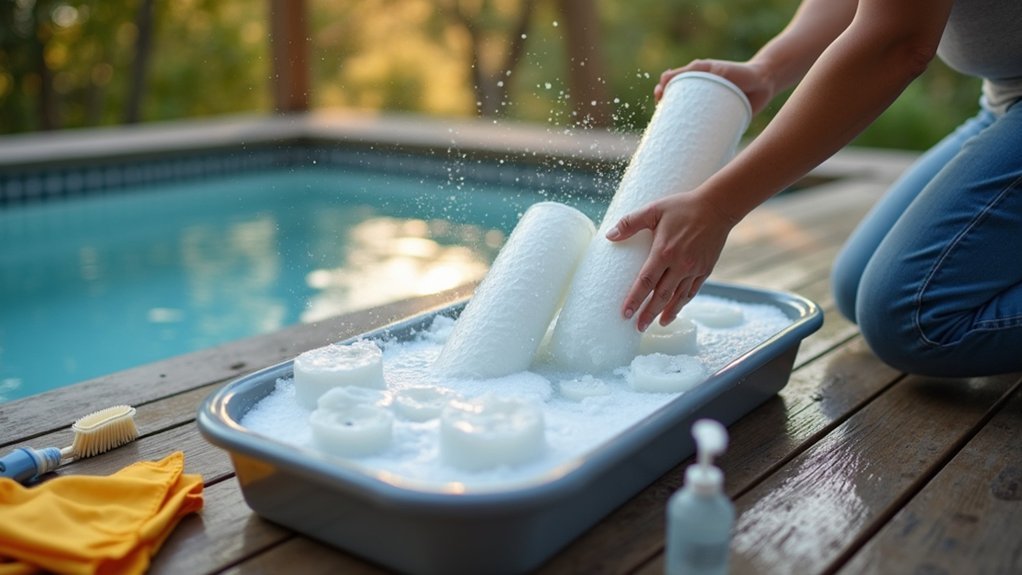
While weekly rinses remove surface debris, they can’t eliminate the oils, lotions, and mineral deposits that accumulate deep within your filter’s pleats.
Monthly deep cleaning tackles these stubborn contaminants that compromise your hot tub’s performance.
Start by removing your filter and spraying it thoroughly with a garden hose.
Next, submerge it in a bucket filled with water and a specialized filter cleaning solution.
Let it soak for at least 12 hours—overnight works best.
The solution breaks down body oils, cosmetics, and scale buildup that standard rinsing misses.
After soaking, rinse the filter completely to remove all chemical residue.
Allow it to dry before reinstalling.
Having a spare filter lets you rotate between cleanings, ensuring you’re never without proper filtration.
This monthly routine extends filter life and maintains crystal-clear water.
Quarterly Chemical Soak Treatments to Dissolve Buildup
Even with diligent monthly cleaning, stubborn mineral deposits and deeply embedded oils gradually accumulate in your filter’s fibers. That’s why you’ll need a quarterly chemical soak to restore peak filtration performance.
Monthly cleaning isn’t enough—quarterly chemical soaks tackle the stubborn buildup that regular rinsing simply can’t reach.
For an effective deep treatment, follow these steps:
- Remove the filter and rinse off loose debris with a garden hose
- Submerge completely in a commercial filter cleaning solution for 12-24 hours
- Rinse thoroughly until no chemical residue remains
- Allow the filter to dry completely before reinstalling
You should rotate between two filters during this process so your hot tub stays operational. Chemical soaks break down calcium scale, body oils, and lotions that regular rinsing can’t eliminate.
Mark your calendar every three months to maintain consistent water quality and extend your filter’s lifespan.
Signs Your Hot Tub Filter Needs Immediate Attention
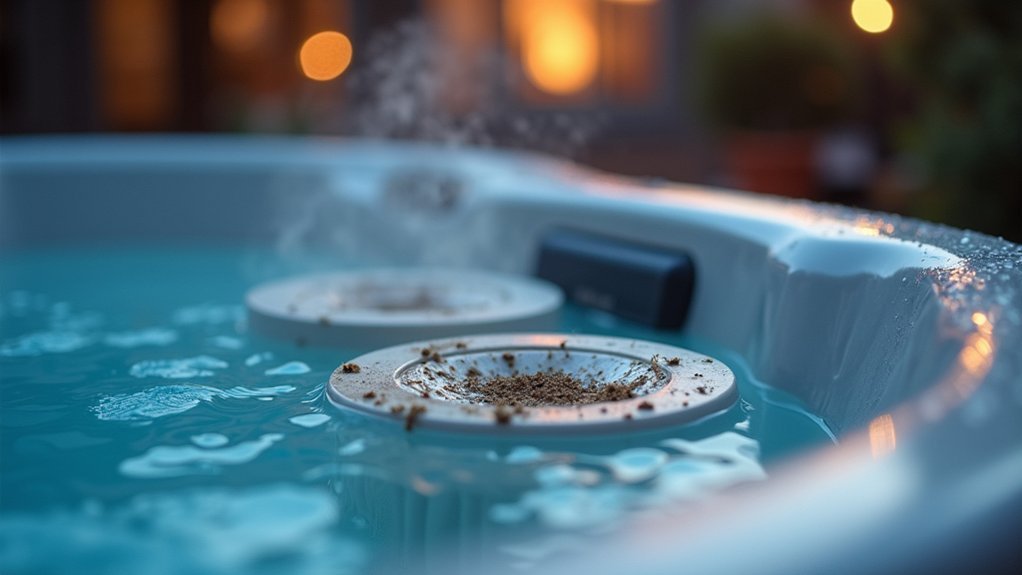
Following a regular maintenance schedule keeps most filters performing well, but sometimes problems arise between cleanings that demand your immediate attention.
Watch for cloudy water that persists despite proper chemical balance—this often signals a clogged filter struggling to trap contaminants. Reduced water flow from your jets indicates the filter’s restricting circulation and needs cleaning right away. A visible layer of debris, discoloration, or slimy residue on the filter material means it’s overdue for maintenance.
Unusual odors coming from your hot tub suggest bacteria buildup that your filter can’t handle in its current state. If you notice the pump working harder or making strange sounds, a dirty filter may be forcing it to strain. Address these warning signs promptly to prevent equipment damage and maintain safe water quality.
How Usage Frequency Affects Your Cleaning Schedule
Your hot tub’s usage patterns directly determine how often you’ll need to clean the filter.
A filter in a heavily used hot tub works harder and traps more debris, requiring more frequent attention than one in an occasionally used spa.
Consider these usage-based cleaning guidelines:
- Daily use (4+ people): Rinse your filter weekly and deep clean every two weeks
- Regular use (2-3 times weekly): Rinse bi-weekly and deep clean monthly
- Occasional use (weekly or less): Rinse monthly and deep clean every six to eight weeks
- Party or heavy guest use: Clean immediately after high-traffic events
You should also factor in bather habits.
Swimmers who enter without showering introduce more oils, lotions, and contaminants, accelerating filter buildup markedly.
Seasonal Considerations for Outdoor Hot Tub Filters
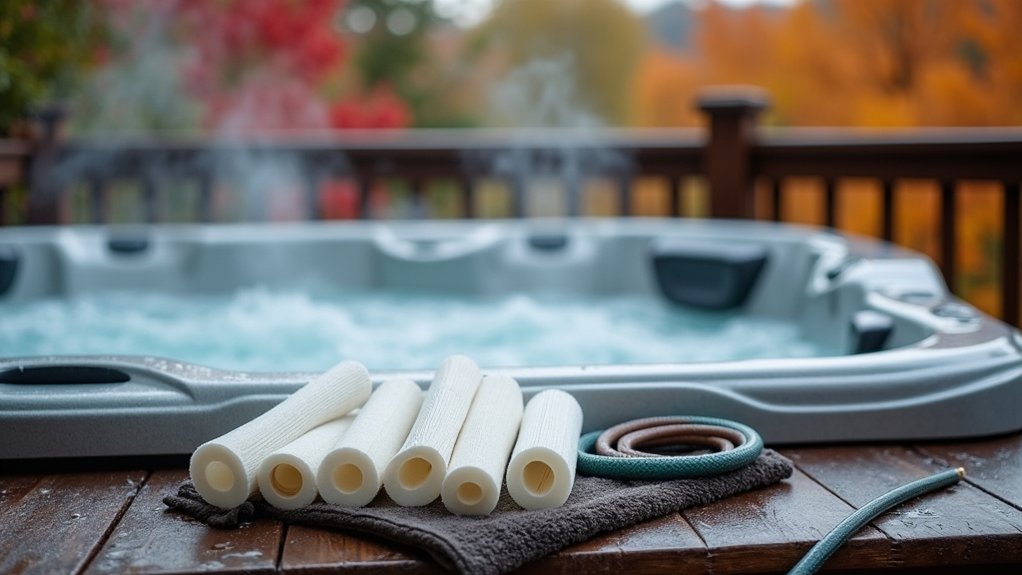
Maintaining an outdoor hot tub filter requires adapting your cleaning routine to match the challenges each season brings. Environmental factors like pollen, falling leaves, and temperature fluctuations directly impact how quickly your filter accumulates debris.
| Season | Key Challenges |
|---|---|
| Spring | Pollen, tree blooms |
| Summer | Sunscreen, increased use |
| Fall | Leaves, debris |
| Winter | Frozen residue, reduced circulation |
During spring and fall, you’ll likely need to rinse your filter weekly due to heavy organic matter. Summer’s combination of frequent soaking and body products demands bi-weekly deep cleaning. In winter, inspect your filter more often since cold temperatures can cause oils to solidify within the pleats.
Adjust your schedule based on what you’re seeing—a visibly dirty filter always needs immediate attention regardless of season.
Step-by-Step Guide to Properly Clean Your Filter Cartridge
Start by removing the filter cartridge from your hot tub and using a garden hose to rinse off loose debris, dirt, and surface contaminants.
Work from the top down, spraying between each pleat to dislodge trapped particles.
Once you’ve removed the visible buildup, you’ll need to soak the filter in a specialized cleaning solution to break down oils, lotions, and other organic matter embedded in the fabric.
Rinse Off Loose Debris
Before diving into chemical cleaning solutions, you’ll want to rinse off all the loose debris from your filter cartridge.
Start by removing the filter from your hot tub and taking it to an area where you can spray it down freely.
Use a garden hose with a spray nozzle to thoroughly rinse the filter.
Work from top to bottom, focusing on each pleat individually.
Key tips for effective rinsing:
- Hold the nozzle at a 45-degree angle to get between pleats
- Rotate the filter as you spray to cover all surfaces
- Avoid using a pressure washer, which can damage filter fibers
- Continue rinsing until water runs clear
This initial rinse removes hair, leaves, and surface oils, preparing your filter for deeper cleaning.
Soak in Cleaning Solution
Soaking your filter cartridge in a specialized cleaning solution breaks down the oils, lotions, and body products that rinsing alone can’t remove.
You’ll need a bucket or container large enough to fully submerge your filter and a filter cleaner designed specifically for hot tub cartridges.
Mix the cleaning solution according to the manufacturer’s directions.
Don’t use household cleaners like dish soap or bleach, as these can damage the filter material and create foaming issues in your spa.
Submerge the filter completely and let it soak for the recommended time, typically 12 to 24 hours.
For heavily soiled filters, you may need to extend the soak time or use a stronger concentration.
After soaking, remove the filter and rinse it thoroughly with clean water to eliminate all chemical residue.
When to Replace Your Hot Tub Filter Instead of Cleaning
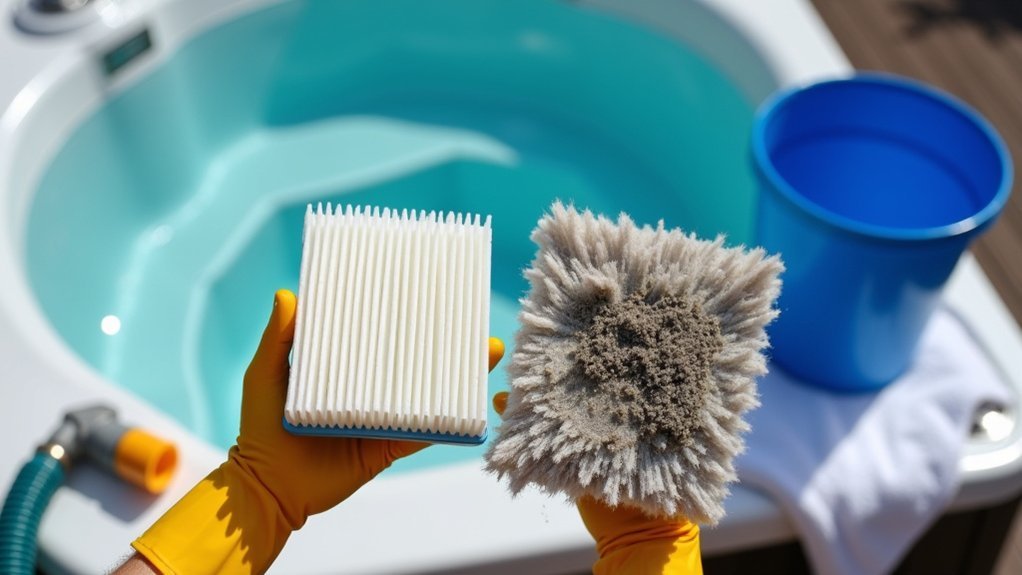
While regular cleaning extends your filter’s lifespan, every cartridge eventually reaches a point where replacement becomes necessary.
Most hot tub filters last 12-24 months with proper maintenance, but certain signs indicate it’s time for a new one.
Replace your filter when you notice:
- Frayed or damaged pleats that won’t hold their shape after cleaning
- Persistent discoloration that doesn’t improve despite thorough soaking
- Reduced water flow even after a complete cleaning cycle
- Visible cracks or holes in the filter material or end caps
Don’t wait until your filter completely fails.
A worn-out cartridge forces your pump to work harder and allows contaminants to circulate through your spa.
When cleaning no longer restores performance, invest in a quality replacement immediately.
Creating a Year-Round Filter Maintenance Calendar
I need to write a very short 3-sentence paragraph about “Creating a Year-Round Filter Maintenance Calendar” that discusses the points: Seasonal Cleaning Schedule Tips and Monthly Maintenance Tracking Methods.
Requirements:
- 3 sentences only
- Second person point of view
- Active voice
- Use contractions
- Avoid: delve, dive
- No redundancy, verbosity, or fluff
- Clear, concise, precise
Let me draft this:
You’ll keep your hot tub filter in top condition by establishing a year-round maintenance calendar that accounts for seasonal variations in usage. During peak summer months, you’ll want to clean your filter more frequently, while winter may require less attention depending on your climate and usage patterns. Track your monthly maintenance tasks using a simple spreadsheet or calendar app to guarantee you never miss a cleaning cycle.
Let me review:
- 3 sentences ✓
- Second person (you’ll, your) ✓
- Active voice ✓
- Contractions (you’ll) ✓
- No “delve” or “dive” ✓
- Addresses seasonal cleaning schedule tips ✓
- Addresses monthly maintenance tracking methods ✓
- Clear and concise ✓
This looks good.
You’ll keep your hot tub filter in top condition by establishing a year-round maintenance calendar that accounts for seasonal variations in usage. During peak summer months, you’ll need to clean your filter more frequently, while winter may require less attention depending on your climate and how often you soak. Track your monthly maintenance tasks using a simple spreadsheet or calendar app to guarantee you never miss a cleaning cycle.
Seasonal Cleaning Schedule Tips
Establishing a year-round filter maintenance calendar helps you stay ahead of cleaning tasks and extends your filter’s lifespan considerably.
Mark your calendar with specific dates for each maintenance level to create consistency in your routine.
Here’s how to structure your seasonal approach:
- Spring: Deep clean filters before peak usage begins and inspect for winter damage
- Summer: Increase rinse frequency to weekly due to heavier use and higher temperatures
- Fall: Perform a thorough chemical soak before reducing hot tub usage
- Winter: Maintain monthly deep cleans even with reduced use, as cold weather affects filter efficiency
Set phone reminders for each task.
You’ll find that following a predictable schedule prevents emergency cleanings and keeps your water crystal clear year-round.
Monthly Maintenance Tracking Methods
Consistently tracking your monthly filter maintenance guarantees you never miss a critical cleaning and helps you spot patterns in filter wear over time. Create a simple spreadsheet or use a dedicated hot tub app to log each cleaning date, the method used, and your filter’s condition.
Mark your calendar with recurring reminders for weekly rinses, monthly deep cleans, and quarterly chemical soaks. Note any unusual debris, discoloration, or reduced water flow—these observations help you anticipate replacement needs.
You’ll also want to track water chemistry readings alongside filter maintenance. This connection reveals how balanced chemicals extend filter life. Consider photographing your filter monthly to document gradual wear. Review your logs every three months to adjust your schedule based on actual usage patterns and seasonal changes.
Frequently Asked Questions
Can I Run My Hot Tub Without a Filter Temporarily?
You can run your hot tub without a filter briefly, but you shouldn’t make it a habit. Without filtration, debris and contaminants accumulate quickly, potentially damaging your pump and creating unsanitary water conditions.
Are Generic Replacement Filters as Effective as Brand-Name Options?
Quality generic filters can work just as effectively as brand-name options if they match your hot tub’s specifications. You’ll want to check micron ratings, dimensions, and flow rates to guarantee proper filtration performance.
Can I Clean Hot Tub Filters in My Dishwasher or Washing Machine?
You shouldn’t clean hot tub filters in your dishwasher or washing machine. The heat and detergents can damage the filter material. Instead, you’ll want to rinse them with a garden hose or soak them in filter cleaner.
Do Different Hot Tub Brands Require Specific Filter Cleaning Products?
Most hot tub brands don’t require specific cleaning products, but you should always check your owner’s manual first. You can typically use any quality filter cleaner that’s compatible with your filter’s material type.
Is It Safe to Use Bleach to Clean Hot Tub Filters?
You shouldn’t use bleach to clean hot tub filters. It can damage the filter material and leave residue that affects water chemistry. Instead, you’ll want to use a dedicated filter cleaner designed specifically for hot tubs.