
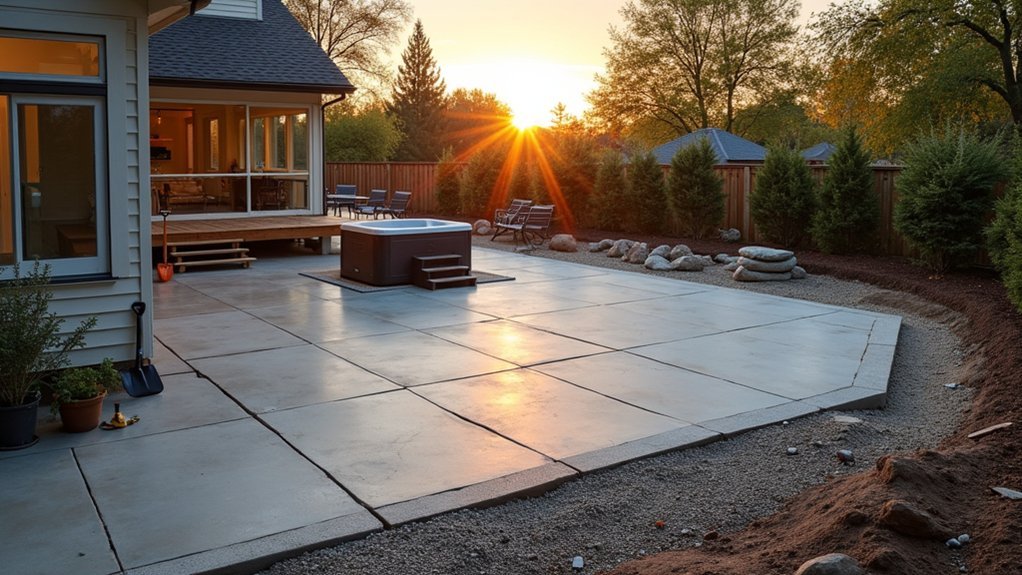
Your hot tub’s foundation matters because a filled six-person spa with occupants can exceed 5,000 pounds of dynamic, shifting weight. Without proper prep, you’ll face shell cracking, structural warping, and leaks that often can’t be reversed. An inadequate base also voids most manufacturer warranties, leaving you responsible for expensive repairs. You need a level, stable surface that handles both static and dynamic loads to protect your investment for years to come.
Understanding Weight Distribution Requirements for Hot Tubs
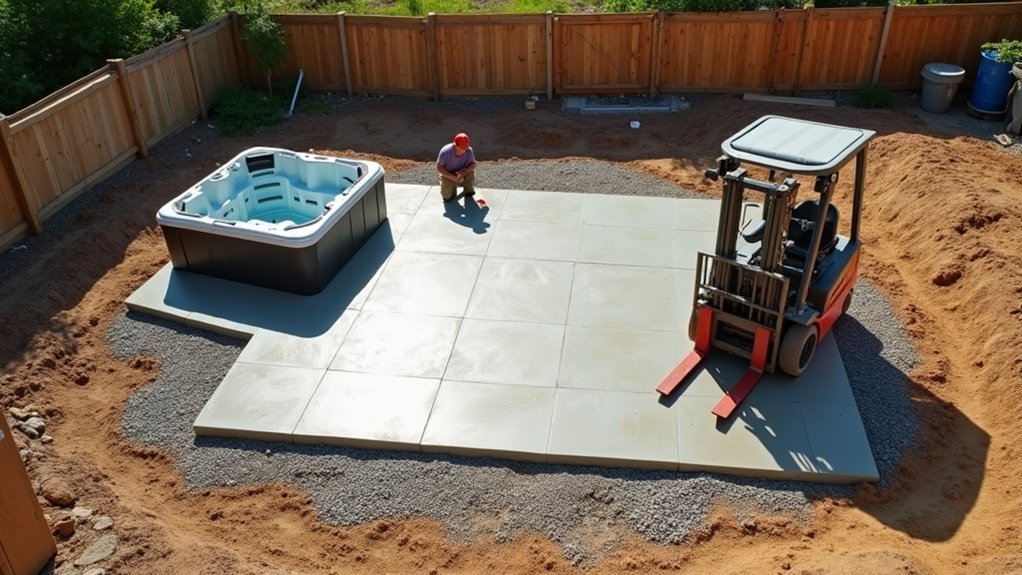
Calculating the total weight of your hot tub requires more than just checking the manufacturer’s specifications. You’ll need to factor in water capacity, which adds approximately 8.3 pounds per gallon, plus the combined weight of everyone using it simultaneously.
Your hot tub’s true weight includes water, people, and constant movement—not just what’s on the spec sheet.
A standard 6-person hot tub can weigh over 5,000 pounds when filled and occupied. This massive load doesn’t distribute evenly across the base. Water movement creates dynamic pressure points that shift constantly during use.
Your foundation must handle both static and dynamic loads without cracking or settling. Uneven weight distribution causes structural stress that leads to cracks, leaks, and costly repairs. You’re also risking voided warranties if manufacturers determine improper foundation prep caused the damage.
Understanding these weight requirements helps you choose appropriate foundation materials and thickness for long-term stability.
Choosing the Right Foundation Material for Your Spa
Once you understand your hot tub’s weight requirements, you’ll need to select a foundation material that can handle the load.
Concrete pads offer the most durability and stability, while gravel bases provide excellent drainage at a lower cost.
If you’re planning to install your spa on an existing deck, you’ll need to evaluate whether reinforcement is necessary to support the added weight.
Concrete Pad Benefits
A concrete pad stands out as the gold standard for hot tub foundations, and it’s easy to see why.
You’ll get unmatched stability that won’t shift or settle over time, even under thousands of pounds of water weight.
Here’s what makes concrete your best choice:
- Durability – A properly poured pad lasts decades without cracking or deteriorating
- Load distribution – It spreads weight evenly across the entire surface area
- Low maintenance – You won’t need to level, replace, or adjust it yearly
- Moisture resistance – Sealed concrete prevents water damage and mold growth underneath your spa
You’re making a long-term investment with your hot tub.
Choosing concrete guarantees your foundation matches that commitment and protects your spa for years to come.
Gravel Base Options
Gravel bases often serve as an excellent alternative when you can’t pour concrete or need a more budget-friendly option. You’ll want to select the right gravel type to guarantee proper drainage and stability for your hot tub’s weight.
| Gravel Type | Best For | Drainage Level |
|---|---|---|
| Pea Gravel | Light spas | Excellent |
| Crushed Stone | Heavy hot tubs | Good |
| River Rock | Decorative setups | Moderate |
When preparing your gravel base, you’ll need to excavate the area, add landscape fabric, and compact the gravel in layers. Aim for a depth of 4-6 inches to provide adequate support. Don’t skip the compaction step—loose gravel shifts under weight and creates an unstable foundation that could damage your spa.
Reinforced Deck Considerations
Building a reinforced deck offers homeowners the flexibility to integrate their hot tub into existing outdoor living spaces while creating a seamless aesthetic. However, you can’t simply place a filled hot tub on a standard deck without risking structural failure.
Before you commit to this foundation type, you’ll need to address these critical factors:
- Calculate the total weight load, including water, occupants, and the tub itself
- Install additional support beams and joists directly beneath the hot tub location
- Use pressure-treated lumber rated for ground contact and moisture exposure
- Verify your local building codes and obtain necessary permits
You should hire a structural engineer to assess your existing deck’s capacity. They’ll determine whether reinforcement is feasible or if complete reconstruction becomes necessary for safe installation.
How Poor Foundation Prep Leads to Costly Damage
If you skip proper foundation prep, you’re setting yourself up for expensive problems down the road.
An unstable base causes your hot tub’s shell to flex unevenly, leading to structural cracks and warping that compromise the entire unit. Even worse, most manufacturers won’t honor your warranty if they determine the damage resulted from improper installation on an inadequate foundation.
Structural Cracks and Warping
When your hot tub sits on an improperly prepared foundation, the uneven weight distribution creates stress points that lead to structural cracks and warping over time.
These issues don’t appear overnight—they develop gradually as the foundation shifts and settles unevenly beneath thousands of pounds of water and equipment.
You’ll notice warning signs before catastrophic failure occurs:
- Hairline cracks appearing along the hot tub’s shell or cabinet
- Doors and access panels that no longer close properly
- Visible gaps between the tub and its frame
- Water pooling unevenly inside the spa
Once warping begins, you can’t reverse the damage.
The shell’s integrity becomes compromised, leading to leaks and potential complete failure.
Replacing a cracked shell costs markedly more than investing in proper foundation preparation from the start.
Voided Warranty Coverage
Beyond the physical damage that poor foundation prep causes, you’re also putting your warranty at serious risk. Most manufacturers require proper installation conditions, including adequate foundation support. When you skip this critical step, you’re giving them grounds to deny your claim.
| Foundation Issue | Warranty Impact |
|---|---|
| Uneven settling | Coverage denied |
| Inadequate drainage | Claim rejected |
| Insufficient weight support | Void entire warranty |
| Improper slope | Partial denial |
You’ll discover this the hard way when a pump fails or the shell cracks. The manufacturer’s inspector will examine your setup and document the foundation deficiencies. Suddenly, that $2,000 repair becomes your responsibility. Protect your investment by following manufacturer specifications exactly—your warranty depends on it.
Drainage and Water Management Considerations
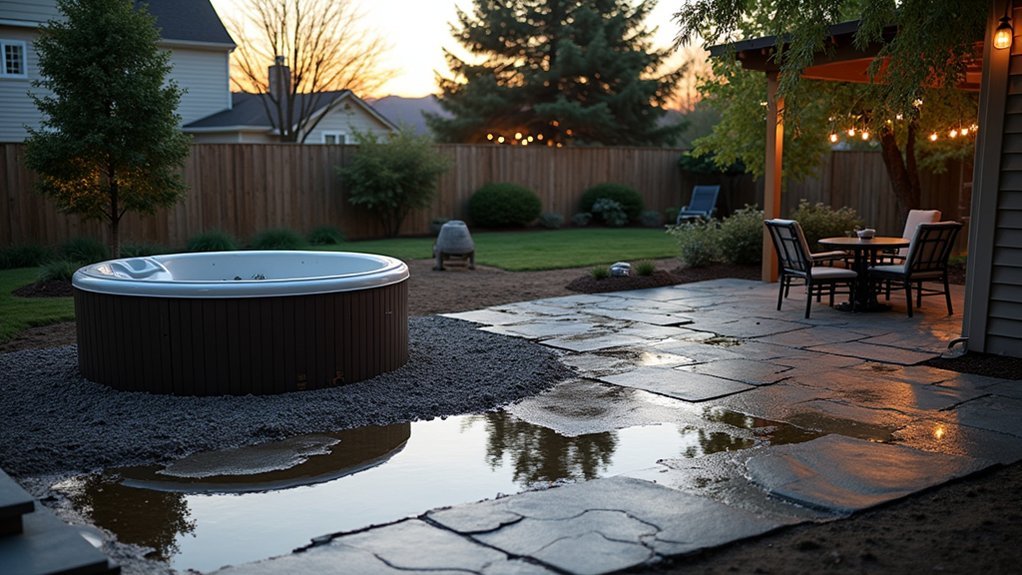
Proper drainage around your hot tub foundation prevents water damage, structural erosion, and costly repairs down the road. When water pools beneath or around your spa, it compromises the foundation’s integrity and creates ideal conditions for mold growth.
Water that pools around your spa foundation doesn’t just sit there—it actively undermines your entire investment.
You’ll want to implement these essential drainage strategies:
- Grade the surrounding area so water flows away from the foundation at a minimum 2% slope
- Install French drains or channel drains if your site has poor natural drainage
- Use permeable materials like gravel beds beneath concrete pads to facilitate water dispersal
- Position splash zones strategically to direct overflow away from the foundation
Don’t forget to account for routine water changes and potential leaks. A well-designed drainage system protects your investment and extends your foundation’s lifespan markedly.
Leveling Your Surface for Optimal Hot Tub Performance
While drainage keeps water moving away from your foundation, achieving a perfectly level surface guarantees your hot tub operates as designed. Even a slight slope creates uneven water distribution, forcing jets and filtration systems to work harder than intended.
You’ll want to check your surface using a four-foot carpenter’s level placed in multiple directions. The tolerance should stay within one inch across the entire footprint. Any deviation beyond this causes stress on your hot tub’s shell and frame, potentially voiding manufacturer warranties.
If you discover unevenness, you have options. Concrete pads can be ground down or built up with self-leveling compound. Gravel bases allow for easy adjustment before compaction.
Don’t skip this step—correcting a tilted hot tub after installation costs markedly more than doing it right initially.
Building a Long-Lasting Foundation That Protects Your Investment
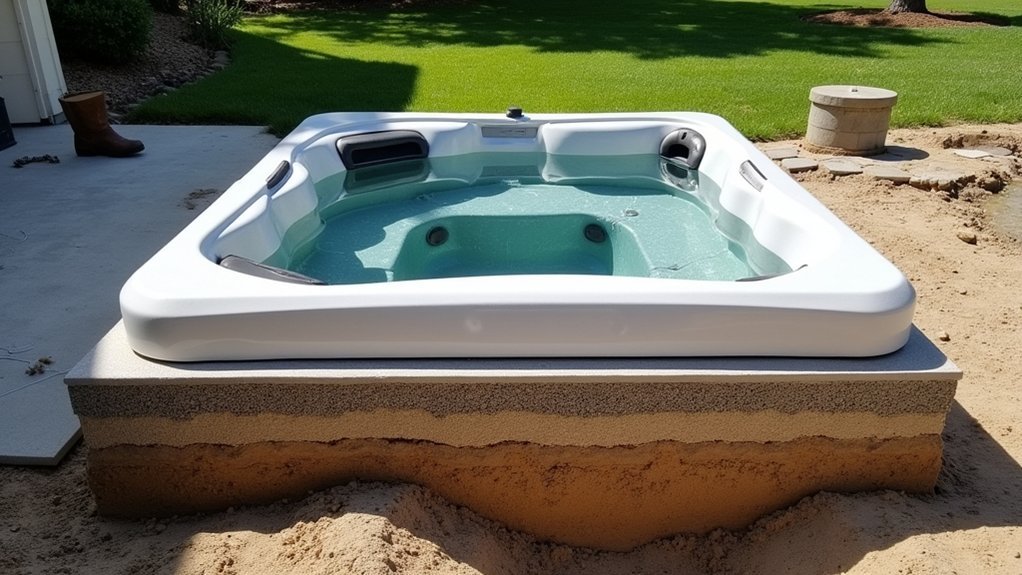
Once you’ve established proper drainage and a level surface, you’re ready to focus on the foundation materials that’ll support thousands of pounds for years to come.
A solid foundation isn’t just about today—it’s about protecting your investment for decades of relaxation.
Your foundation choice directly impacts your hot tub’s lifespan and warranty validity. A weak base leads to structural stress, cracked shells, and voided manufacturer coverage.
Consider these proven foundation options:
- Reinforced concrete pad – Pour a 4-inch thick slab with wire mesh for maximum durability
- Paver stones – Install over compacted gravel for excellent drainage and aesthetic appeal
- Prefabricated spa pads – Choose interlocking plastic systems designed specifically for hot tub weight distribution
- Crushed gravel base – Layer 4-6 inches of compacted stone for budget-friendly stability
Each option requires proper ground preparation to prevent settling and shifting over time.
Frequently Asked Questions
Can I Place a Hot Tub Directly on Grass or Soil?
You shouldn’t place a hot tub directly on grass or soil. The ground will shift and settle unevenly under the tub’s weight, causing structural damage. You’ll need a solid, level foundation like concrete or pavers.
How Long Should Concrete Cure Before Installing a Hot Tub?
You should let concrete cure for at least 28 days before placing your hot tub on it. This waiting period guarantees the slab reaches full strength and won’t crack under the tub’s weight.
Do I Need a Building Permit for Hot Tub Foundation Installation?
You’ll likely need a building permit for hot tub foundation installation, but requirements vary by location. Check with your local building department before starting work. They’ll confirm specific codes and inspection requirements for your area.
What Is the Minimum Foundation Size for a Standard Hot Tub?
You’ll need a foundation that extends at least 6 inches beyond your hot tub’s dimensions on all sides. For a standard 7×7-foot hot tub, you’re looking at a minimum 8×8-foot foundation pad.
Can I Move My Hot Tub to a Different Foundation Later?
Yes, you can move your hot tub to a different foundation later. You’ll need to drain it completely, disconnect electrical connections, and hire professionals with proper equipment to safely relocate it to your new prepared base.