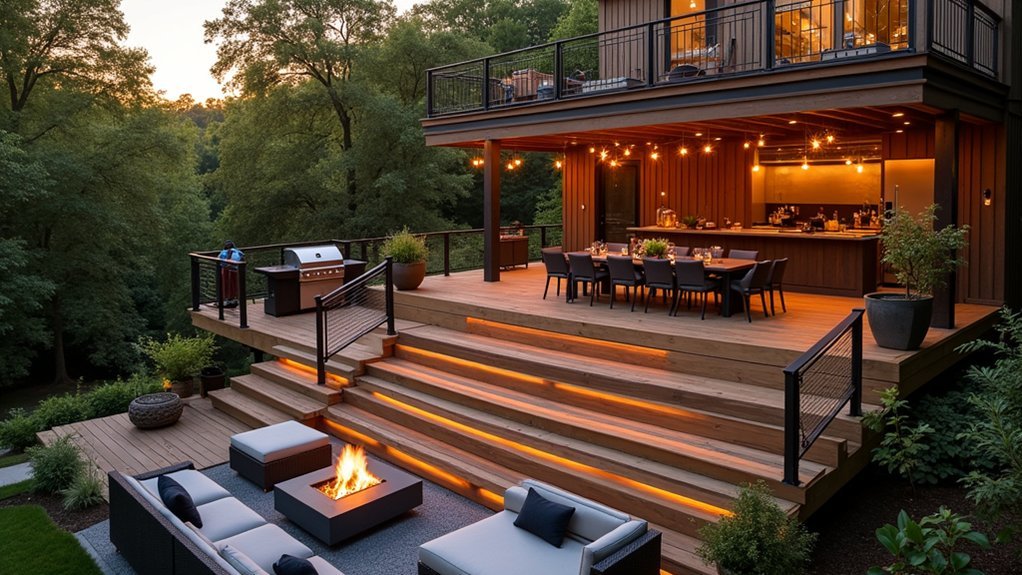
Multi-level decks solve the biggest entertaining challenges you’ll face with a flat design. You’ll create distinct zones for cooking, dining, and lounging that let different groups enjoy activities without interrupting each other. Tiered platforms naturally guide traffic flow, prevent bottlenecks around the grill, and keep smoke drifting away from seated guests. The vertical separation also doubles your usable space without eating up more yard. Each benefit below shows exactly how to make it work.
Creating Distinct Zones for Different Activities

When you’re designing a multi-level deck, you’ll want to carve out separate spaces that serve specific purposes. A lower level works perfectly for dining, keeping food and drinks close to your kitchen.
Elevate your lounging area on a second tier where guests can relax with panoramic views.
Consider dedicating one zone exclusively to grilling and food prep. This keeps smoke and cooking activity away from seated guests.
Another level can function as a conversation pit with built-in seating arranged in a circular pattern.
You’ll find that vertical separation naturally guides traffic flow and prevents crowding. Guests intuitively understand where to gather based on each zone’s setup.
Add distinct lighting and furniture styles to reinforce each area’s purpose, making shifts between activities feel seamless throughout your event.
Maximizing Space on Sloped or Uneven Terrain
If your yard slopes or features uneven ground, a multi-level deck transforms challenging terrain into a valuable asset.
Tiered platforms can step down naturally with the grade, eliminating the need for extensive excavation or retaining walls.
This approach gives you multiple usable flat surfaces for entertaining while working with your landscape rather than against it.
Tiered Platforms Follow Slopes
Because sloped yards often seem like obstacles to outdoor living, many homeowners overlook their true potential—but tiered platforms can transform challenging terrain into your greatest asset. When you work with the natural grade rather than against it, you’ll create distinct zones that flow organically down the hillside.
Tiered platforms offer practical advantages that flat decks simply can’t match:
- Reduced excavation costs – You’ll minimize grading expenses by building platforms that step down naturally with the slope.
- Improved drainage – Water flows beneath and around each level instead of pooling on your deck surface.
- Enhanced visual interest – Multiple elevations create architectural depth that draws the eye across your entire outdoor space.
You’ll maximize usable square footage while preserving your landscape’s character.
Usable Flat Surface Areas
Flat surface areas represent the true currency of sloped-yard living—every level square foot you create becomes prime real estate for furniture, grills, and gathering spaces. Without a multi-level deck, you’d lose this ground to erosion, unusable angles, and wasted potential.
You’ll gain functional zones where none existed before. That 15-degree slope behind your house transforms into a stable dining platform, a conversation area, or a dedicated cooking station. Each tier captures space that gravity would otherwise steal.
Consider how you’ll use each flat zone. Position your largest level near the house for dining tables and seating arrangements. Reserve smaller platforms for intimate corners or specialized purposes like hot tubs or fire pits. You’re fundamentally building rooms without walls—each one purpose-driven and immediately usable.
Improving Traffic Flow During Large Gatherings
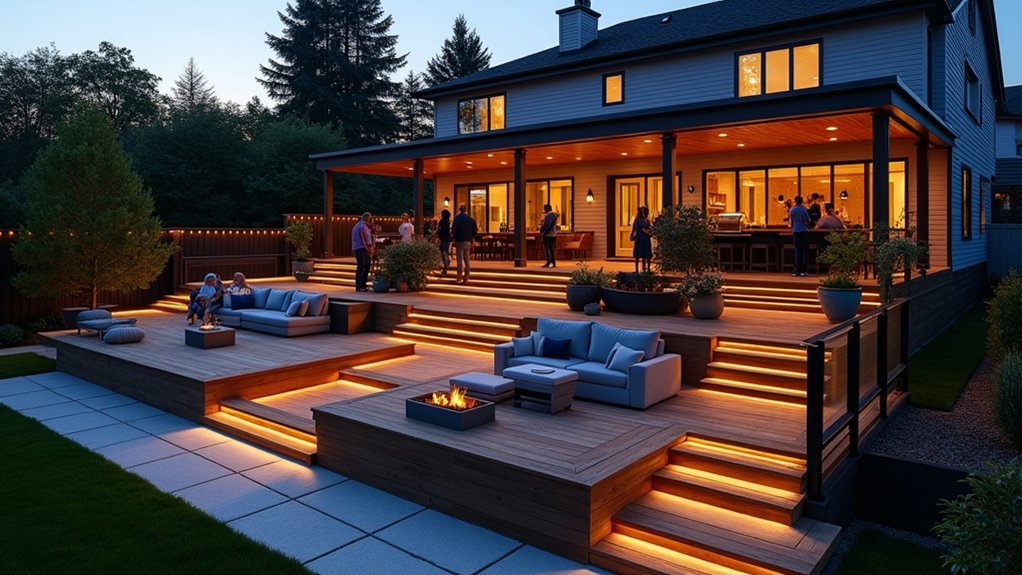
When you’re hosting a crowd, a multi-level deck prevents the bottlenecks that plague single-level designs.
You’ll find that separate zones naturally reduce congestion by distributing guests across different areas for dining, mingling, and lounging.
Adding multiple stairway access points encourages natural movement between levels, so your guests won’t cluster around a single entry point.
Separate Zones Reduce Congestion
Hosting a large gathering on a single-level deck often creates frustrating bottlenecks where guests cluster around the grill or block pathways to the door. When you add separate levels, you’ll naturally distribute your crowd across distinct activity zones, keeping movement smooth and stress-free.
Multi-level designs work because they channel guests intuitively:
- Dedicate your upper level to cooking and food prep so hungry guests don’t crowd main traffic areas.
- Position seating zones on mid-levels where conversations happen without blocking walkways.
- Reserve ground-level spaces for high-traffic activities like games or dancing that need room to breathe.
You’ll notice guests spread out organically when given options. Each level serves a purpose, preventing the awkward shuffle that plagues flat decks during peak party hours.
Multiple Stairway Access Points
Strategic stairway placement can make or break your deck’s flow during large gatherings. When you install multiple access points, you eliminate bottlenecks that frustrate guests trying to move between levels. Consider positioning stairs at opposite ends of your deck to create natural circulation patterns.
You’ll want at least two stairways connecting your main entertaining levels. This setup allows guests descending to the yard to avoid colliding with those heading up to the grilling station. During peak party moments, single-stairway decks force everyone into awkward waiting situations.
Wider stairs accommodate two-way traffic better than narrow designs. You can also add a third access point near your outdoor kitchen, giving the host direct routes for food service. Smart stairway distribution transforms your multi-level deck into an effortlessly navigable entertaining space.
Natural Movement Between Levels
Beyond stairway placement, the physical layout of each deck level determines how smoothly guests move through your space. Wide passage zones between levels prevent bottlenecks when multiple guests navigate simultaneously. You’ll want pathways that feel intuitive rather than forced.
Consider these design strategies for peak flow:
- Create 4-foot minimum clearances around level changes so guests can pass each other comfortably without interrupting conversations
- Position furniture to guide movement naturally toward stairs and connecting areas rather than blocking logical pathways
- Use visual cues like lighting, planters, or railing changes to signal shifts between zones
When you design with movement patterns in mind, your guests circulate effortlessly between dining areas, conversation zones, and entertainment spaces. This prevents crowding and keeps energy flowing throughout your entire deck during events.
Adding Visual Interest and Architectural Appeal
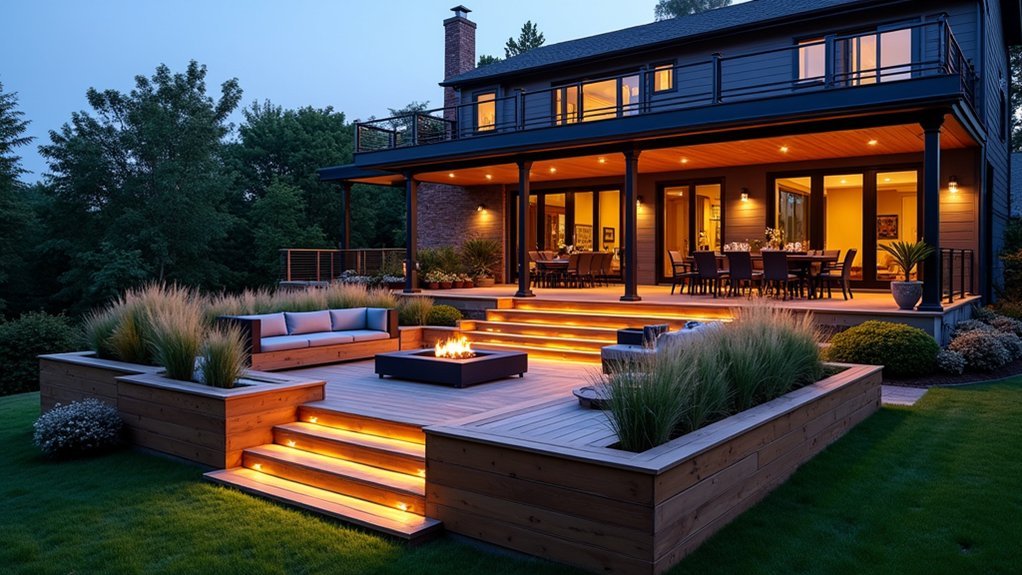
When you incorporate multiple levels into your deck design, you’re creating far more than additional square footage—you’re introducing depth, dimension, and striking visual contrast to your outdoor space.
A multi-level deck doesn’t just add space—it adds depth, dimension, and visual drama to your outdoor living.
Tiered platforms break up monotonous horizontal lines and draw the eye across different elevations. You’ll notice how varying heights create shadow play throughout the day, adding dynamic interest that flat decks simply can’t achieve.
Multi-level designs also enhance your home’s architectural presence from the street and backyard views. The layered effect suggests intentional design rather than basic construction. You can emphasize each level’s purpose through distinct railing styles, material choices, or built-in planters.
This dimensional approach transforms your deck from a simple platform into a sculptural element that complements your home’s existing architecture while establishing its own visual identity.
Separating Cooking Areas From Dining and Lounging Spaces
When you dedicate a specific level of your multi-level deck to grilling, you’ll keep smoke and cooking odors away from guests relaxing in your dining and lounging areas.
This separation creates distinct zones that allow your guests to enjoy their meals and conversations without competing with sizzling sounds or lingering barbecue smoke.
You’ll also notice improved traffic flow as cooks work undisturbed while guests move freely between entertainment spaces.
Dedicated Grilling Zone Benefits
Separating your grilling station onto its own deck level transforms outdoor cooking from a smoke-filled inconvenience into a seamless entertaining experience.
You’ll keep smoke and cooking odors away from guests while maintaining conversation distance.
Your chef gains dedicated workspace without competing for table space or dodging foot traffic.
A dedicated grilling zone delivers these key advantages:
- Safety improvements – Hot surfaces and open flames stay isolated from children’s play areas and high-traffic dining zones
- Enhanced ventilation – Elevated or offset positioning allows smoke to dissipate before reaching seating areas
- Organized workflow – You’ll store utensils, seasonings, and prep materials within arm’s reach without cluttering entertainment spaces
This separation lets you grill without abandoning your hosting duties, checking on food while staying connected to the party.
Smoke-Free Dining Experience
Beyond the practical cooking benefits, strategic level separation creates a dining atmosphere your guests will actually enjoy. When you position your grill on a lower or adjacent level, smoke drifts away from your dining area rather than engulfing your guests. Nobody wants to eat while dodging billowing clouds or returning home with clothes that smell like charcoal.
You’ll notice conversations flow more naturally when guests aren’t competing with sizzling sounds or coughing through smoke. Your upper dining level remains a comfortable retreat where food arrives fresh from the grill without the cooking chaos. This separation also keeps grease splatters and heat contained to the cooking zone.
Your guests can relax with drinks and appetizers while you handle grilling duties nearby—close enough to engage but far enough to protect their comfort.
Efficient Traffic Flow Design
Through thoughtful level placement, you’ll create natural pathways that keep your deck functioning smoothly during gatherings.
When you separate cooking areas from dining and lounging spaces across different levels, guests move intuitively without crossing through active grilling zones.
Elevated cooking stations keep smoke, heat, and splatters away from seated guests while maintaining sightlines for conversation.
Your designated chef stays connected without disrupting those relaxing nearby.
Consider these traffic flow principles:
- Position stairs and shifts along deck perimeters rather than through central gathering spots
- Allow minimum 36-inch walkways between furniture groupings for comfortable movement
- Place beverage stations at neutral points accessible from multiple levels
This separation eliminates bottlenecks during peak serving times and prevents the awkward shuffle of guests maneuvering around hot grills or occupied seating areas.
Accommodating Multiple Groups of Guests Simultaneously
When you’re hosting a gathering that brings together different social circles, a multi-level deck gives each group its own dedicated space without forcing anyone to compete for territory.
Your college friends can catch up on the upper level while your work colleagues mingle below. Parents can supervise kids on one tier while maintaining adult conversation on another. This natural separation eliminates the awkwardness of forcing incompatible groups into a single cramped area.
You’ll also find that conversations flow more naturally when guests aren’t packed together. The vertical separation creates acoustic buffers, so your aunt’s book club discussion won’t drown out your spouse’s fantasy football draft. Each level functions as a distinct room, yet the open design keeps everyone connected to the larger celebration happening around them.
Enhancing Privacy Between Entertainment Sections
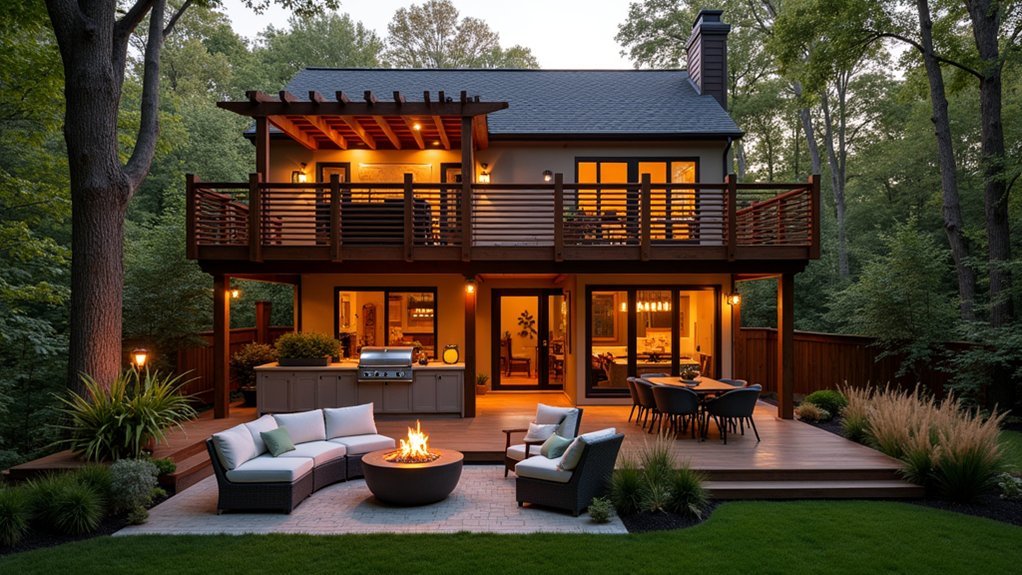
Although open sightlines create a sense of connection across your deck’s levels, you’ll want strategic privacy elements that let each entertainment zone feel distinct.
Thoughtful barriers allow conversations to flow naturally without competing noise from adjacent areas.
Consider these effective privacy solutions:
- Vertical planters – Tall ornamental grasses or climbing vines on trellises create living walls that absorb sound while adding visual appeal.
- Partial walls or screens – Decorative lattice panels or slatted wood dividers block direct views without eliminating airflow or natural light.
- Level height variations – Designing significant elevation changes between sections naturally separates spaces and reduces sound travel.
You can combine these elements to customize privacy levels for different occasions.
Your guests will appreciate having intimate conversation areas while still feeling part of the larger gathering.
Increasing Property Value With Sophisticated Design
Beyond creating an ideal space for entertaining, a well-designed multi-level deck delivers substantial returns on your investment. Real estate experts consistently rank outdoor living spaces among the top features buyers seek, and sophisticated multi-level designs command premium prices in competitive markets.
You’ll typically recoup 65-75% of your deck investment at resale, but thoughtfully designed multi-level structures often exceed these averages. Quality materials, integrated lighting, and architectural details signal value to potential buyers before they step inside your home.
Your deck becomes a visual selling point that differentiates your property from neighboring homes. Buyers recognize the complexity and craftsmanship involved in multi-level construction, translating that appreciation into higher offers. You’re not just building outdoor space—you’re investing in your home’s long-term marketability and financial future.
Integrating Natural Landscape Features Into Your Layout
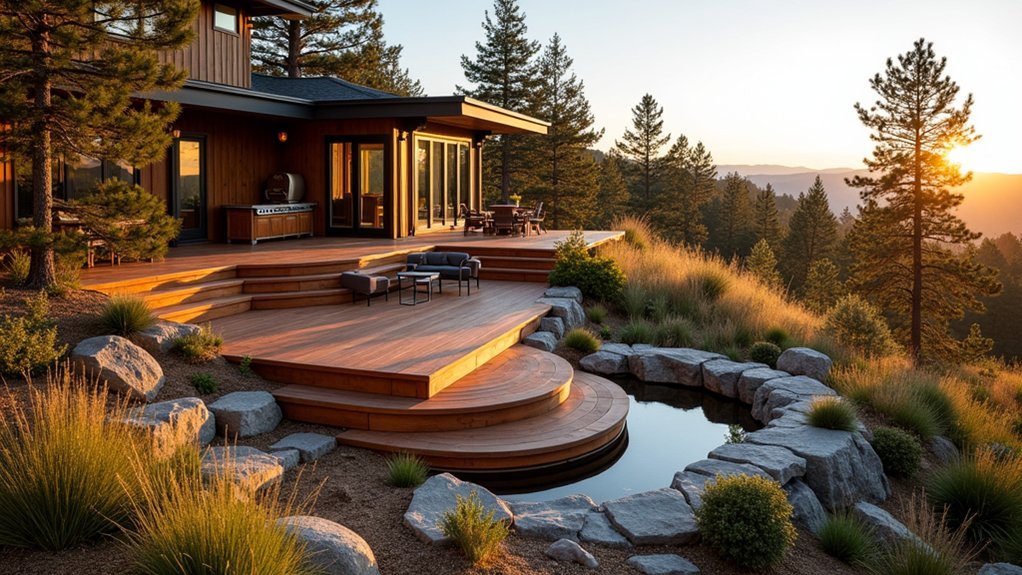
Rather than fighting your property’s natural terrain, you’ll create a more stunning deck by embracing its unique characteristics. Multi-level decks allow you to work with slopes, mature trees, and rock formations instead of removing them. You’ll preserve the natural beauty while gaining functional outdoor space.
Work with your land’s natural slopes and features—multi-level decks transform challenging terrain into breathtaking outdoor living spaces.
Consider these integration strategies:
- Build around existing trees by incorporating cutouts in your deck surface, creating natural shade and visual interest.
- Use boulder formations as natural seating or decorative anchors between deck levels.
- Follow the slope’s contour with cascading platforms that minimize excavation and reduce construction costs.
This approach connects your entertaining space to the surrounding environment. Your guests will enjoy seamless shifts between built structures and nature, making gatherings feel more organic and inviting.
Building Dedicated Spaces for Hot Tubs and Fire Pits
When you’re designing dedicated zones for hot tubs and fire pits, structural requirements demand careful planning from the start. Hot tubs require reinforced framing to support thousands of pounds when filled with water and occupants. You’ll need beams, joists, and footings rated for this concentrated load.
Fire pits demand proper clearances and heat-resistant materials beneath and around the installation. Position them away from railings, overhead structures, and combustible surfaces. You should also consider wind patterns and smoke direction relative to seating areas.
Lowering these features onto separate deck levels creates visual separation while improving safety. A sunken hot tub area feels more intimate, while an elevated fire pit zone draws guests naturally. Both spaces benefit from dedicated electrical and gas line access planned during initial construction.
Expanding Usable Outdoor Living Square Footage
Maximizing your property’s outdoor living space often comes down to thinking vertically rather than horizontally. Multi-level decks let you capitalize on sloped terrain, awkward lot shapes, and limited ground space that would otherwise go unused. You’re basically stacking functional areas without sacrificing yard space below.
By building upward, you can double or triple your entertaining capacity while maintaining garden beds, play areas, or natural landscaping at ground level.
Consider these space-expanding advantages:
- Tiered platforms create distinct zones for cooking, lounging, and dining without requiring a massive footprint
- Elevated sections capture views that single-level structures simply can’t access
- Under-deck areas become usable storage or shaded retreats during hot summer months
You’ll transform previously wasted vertical space into prime entertaining real estate.
Frequently Asked Questions
What Is the Average Cost to Build a Multi Level Deck?
You’ll typically spend between $40 and $75 per square foot for a multi-level deck. Your total cost ranges from $15,000 to $50,000, depending on materials you choose, design complexity, and your local labor rates.
How Long Does It Typically Take to Construct a Multi Level Deck?
You’ll typically wait 2-4 weeks for a multi level deck construction, though complex designs can take 6-8 weeks. Factors like weather, permit approvals, material availability, and your deck’s size directly affect your project’s timeline.
Do I Need a Permit to Build a Multi Level Deck?
You’ll likely need a permit to build a multi level deck. Most local building codes require permits for structures over a certain height or square footage. Check with your local building department before starting construction.
What Materials Work Best for Multi Level Deck Construction?
You’ll find pressure-treated lumber offers durability at lower costs, while composite decking provides low maintenance. Cedar and redwood resist rot naturally. For structural framing, you should use steel connectors and pressure-treated posts.
How Much Maintenance Do Multi Level Decks Require Annually?
You’ll need to inspect your multi level deck twice yearly, clean surfaces, reseal wood annually, and check connections between levels. Composite materials reduce your workload, while wood decks demand more attention to prevent weathering damage.