
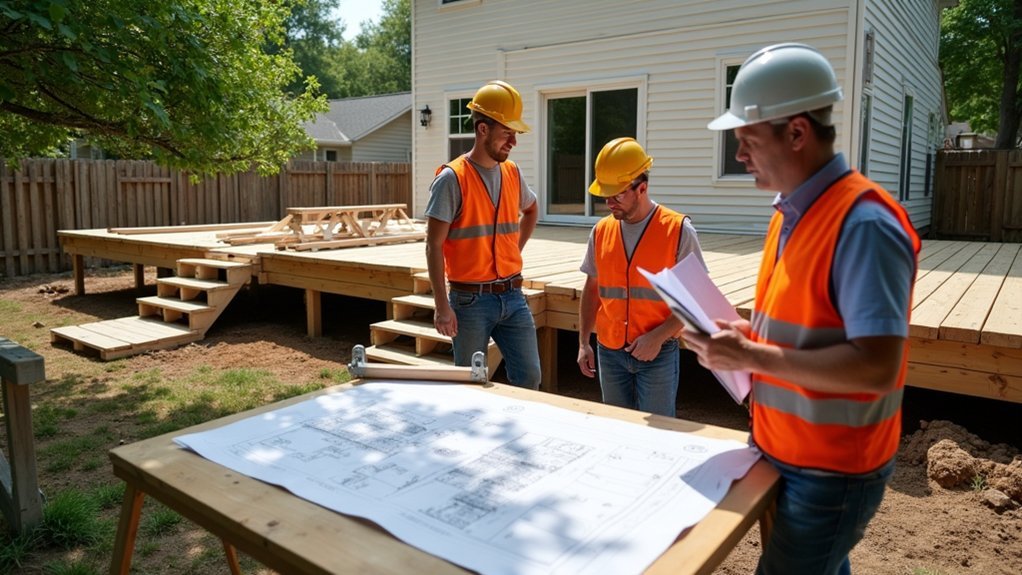
Most deck projects require a building permit, especially if your deck exceeds 30 inches in height, covers more than 200 square feet, or attaches to your home. You’ll also need an electrical permit for lighting or outlets and a plumbing permit for hot tubs or outdoor kitchens. Don’t forget zoning permits to verify setbacks and any HOA approvals that apply to your property. Understanding each permit type helps you avoid costly delays and failed inspections.
Understanding Local Building Codes for Deck Projects

When you’re planning to build a deck, your local building codes serve as the rulebook you’ll need to follow from start to finish. These regulations dictate everything from structural requirements to safety standards, ensuring your deck can safely support occupants and withstand environmental conditions.
Building codes typically address footing depths, joist spacing, railing heights, and stair configurations. They also specify approved materials and fastener types for your region’s climate. You’ll find that codes vary considerably between municipalities, so what’s acceptable in one area may not pass inspection in another.
Before purchasing materials, visit your local building department or check their website for specific requirements. Many jurisdictions have adopted the International Residential Code, but local amendments often apply. Understanding these regulations early prevents costly mistakes and keeps your project on track.
When a Permit Is Required for Your Deck
Although many homeowners assume small outdoor projects don’t require official approval, most jurisdictions mandate a permit for deck construction that meets certain thresholds. You’ll typically need a permit when your deck exceeds specific height or size limits.
| Factor | Permit Usually Required |
|---|---|
| Height | Over 30 inches above grade |
| Size | Exceeds 200 square feet |
| Attachment | Connected to your home |
| Roof/Cover | Includes overhead structure |
You should check with your local building department before starting work. Requirements vary markedly between municipalities. Even if your project falls below standard thresholds, attached decks almost always require permits because they affect your home’s structural integrity. Skipping the permit process can result in fines, forced removal, or complications when selling your property.
Types of Permits Needed for Deck Construction
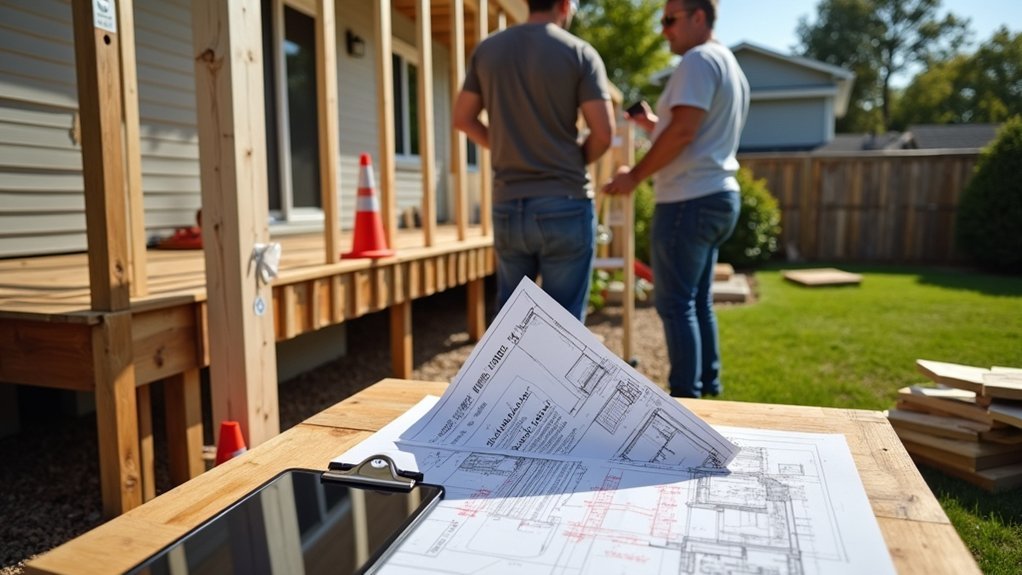
Once you’ve determined that your deck project requires a permit, you’ll need to identify which specific permits apply to your situation.
Most jurisdictions require a building permit as the primary authorization for deck construction. This permit covers structural elements like footings, framing, and ledger board attachments.
A building permit is your foundation for deck construction—covering everything from footings to ledger board connections.
Depending on your project’s scope, you may also need an electrical permit if you’re installing outdoor lighting, outlets, or ceiling fans.
Planning to add a gas line for a built-in grill? You’ll need a plumbing or mechanical permit.
Some localities require a zoning permit to verify your deck meets setback requirements and property line regulations.
If you live in a historic district or HOA community, you might need additional architectural approval before construction begins. Check with your local building department for complete requirements.
The Permit Application Process Explained
Before you submit your deck permit application, you’ll need to gather specific documents that your local building department requires.
Once you’ve assembled everything on the required documentation checklist, you can expect a defined submission and review timeline that varies by municipality.
After approval, you’ll follow inspection scheduling steps to make certain your deck meets code at each construction phase.
Required Documentation Checklist
When you’re ready to submit your deck permit application, you’ll need to gather several key documents to avoid delays and rejections.
Most building departments require a site plan showing your property boundaries and the deck’s proposed location, including setback distances from property lines.
You’ll also need detailed construction drawings that specify dimensions, height, and structural components.
These plans should include footing depths, joist spacing, beam sizes, and railing specifications.
Prepare a materials list identifying lumber types, fasteners, and hardware you’ll use.
If your deck exceeds certain size thresholds, you may need engineered drawings stamped by a licensed professional.
Don’t forget proof of property ownership and your contractor’s license information if you’re hiring one.
Some jurisdictions also require HOA approval documentation.
Submission and Review Timeline
After you’ve assembled all required documentation, you’ll submit your application either online through your municipality’s permitting portal or in person at the building department. Processing times vary materially based on your location and project complexity.
| Review Stage | Typical Duration | What Happens |
|---|---|---|
| Initial Intake | 1-3 days | Staff verifies completeness |
| Plan Review | 1-4 weeks | Examiner checks code compliance |
| Revisions | 1-2 weeks | You address any corrections |
| Approval | 1-3 days | Permit issued for pickup |
| Inspections | Ongoing | Scheduled during construction |
You should expect the entire pre-construction process to take two to six weeks. Many jurisdictions offer expedited review for additional fees. Don’t begin construction until you’ve received your approved permit—starting early can result in fines or mandatory demolition.
Inspection Scheduling Steps
Inspections typically occur at several critical milestones during your deck construction, and you’ll need to schedule each one before proceeding to the next phase.
Most jurisdictions require inspections after footing excavation, post installation, framing completion, and final construction.
To schedule an inspection, contact your local building department at least 24 to 48 hours in advance.
Many municipalities now offer online scheduling portals where you can select available time slots and receive confirmation emails.
Keep your approved permit and plans accessible on-site for the inspector’s review.
If your work fails inspection, you’ll receive a correction notice detailing required fixes before rescheduling.
Don’t cover or conceal any work until it passes inspection, as inspectors may require you to remove materials for proper evaluation.
Document each passed inspection for your records.
Required Documents and Plans for Deck Permits
Before you can break ground on your deck project, you’ll need to gather several essential documents for your permit application. Most building departments require a completed application form, proof of property ownership, and a site plan showing your deck’s location relative to property lines and existing structures.
You’ll also need detailed construction drawings that include dimensions, elevation views, and structural specifications. These plans should clearly show footing depths, beam sizes, joist spacing, and railing heights. Many jurisdictions require an engineer’s stamp for elevated decks or complex designs.
Don’t forget to include a materials list specifying lumber types, fasteners, and hardware. If your property falls within a homeowners association, you may need HOA approval documentation. Check with your local building department for any additional requirements specific to your area.
Inspection Requirements During Deck Construction
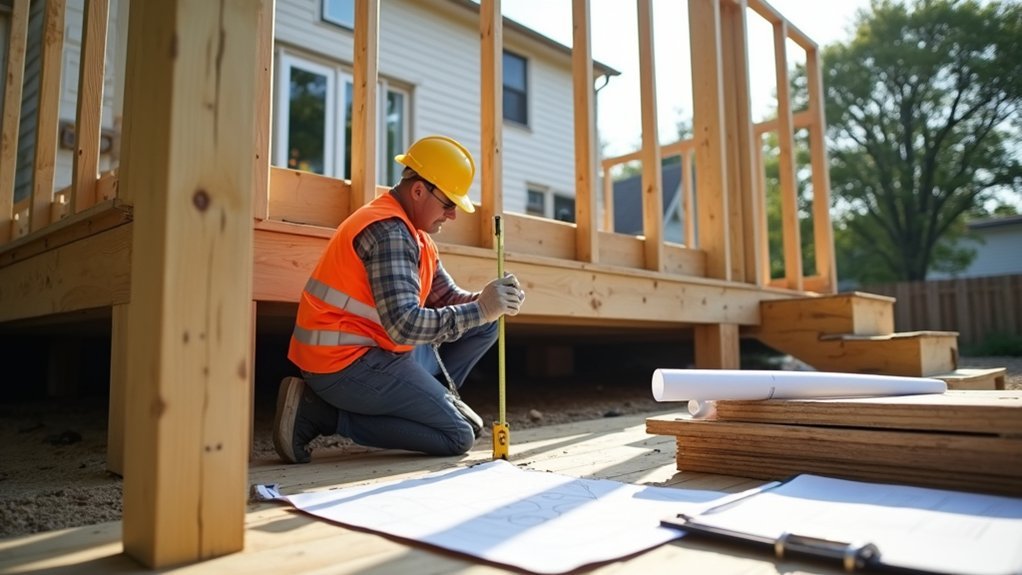
You’ll need to schedule multiple inspections throughout your deck construction project to guarantee code compliance and structural safety.
Inspectors will examine your work at critical stages, including pre-pour footing inspections, framing and ledger attachment checks, and a final safety approval before you can use your new deck.
Understanding what inspectors look for at each stage helps you avoid costly corrections and keeps your project on track.
Pre-Pour Footing Inspections
Once your footing holes are excavated and any required rebar or post anchors are positioned, you’ll need to schedule a pre-pour footing inspection before adding concrete. The inspector will verify that your footings meet code requirements for your specific deck project.
| Inspection Element | What Inspectors Check | Common Failures |
|---|---|---|
| Hole Depth | Below frost line | Too shallow |
| Hole Diameter | Matches approved plans | Undersized holes |
| Reinforcement | Proper rebar placement | Missing or incorrect rebar |
Don’t pour concrete until you’ve received approval. If you proceed without passing this inspection, you may face costly removal and re-excavation. Keep your permit card posted visibly on-site, and have your approved plans available for the inspector to reference during their visit.
Framing and Ledger Checks
After your footings pass inspection and the concrete has cured, the framing and ledger check becomes your next required milestone. This inspection verifies that your deck’s structural framework meets local building codes and safety standards.
The inspector will examine your ledger board attachment to make sure proper fastening to your home’s rim joist. They’ll check for correct bolt spacing, flashing installation, and adequate bearing. Improper ledger connections cause most deck collapses, making this inspection critical.
Your framing must also demonstrate proper joist spacing, beam connections, and post-to-beam hardware. The inspector confirms you’ve used approved hangers, fasteners, and lumber grades specified in your permit drawings.
Don’t cover any framing with decking boards before this inspection. You’ll need to schedule it while all structural connections remain visible and accessible.
Final Safety Approval
Before scheduling your final safety approval, you’ll need to complete all deck construction, including railings, stairs, and any electrical work specified in your permit. The inspector will verify that every component meets local building codes and matches your approved plans.
During this inspection, expect the inspector to check railing height, spindle spacing, stair dimensions, and structural connections. They’ll also confirm proper flashing installation at the ledger board and verify that all fasteners are correctly placed.
If your deck passes, you’ll receive a certificate of completion. However, if the inspector identifies code violations, you’ll need to make corrections and schedule a reinspection.
Don’t skip this step—an approved final inspection protects your investment and guarantees your deck is safe for your family and guests.
Costs Associated With Deck Building Permits
When you’re budgeting for your new deck, don’t overlook the cost of building permits—they’re a necessary expense that varies considerably based on your location and project scope.
Most deck permits range from $100 to $500, though complex projects in metropolitan areas can exceed $1,000. Your local building department calculates fees based on factors like square footage, project valuation, and structural complexity. Some jurisdictions charge flat rates, while others use sliding scales tied to construction costs.
You’ll also encounter additional fees for plan reviews, inspections, and electrical or plumbing work if your deck includes outdoor kitchens or hot tubs. Request a complete fee schedule from your permit office before starting. Factor these costs into your overall budget to avoid surprises that could delay your project.
Consequences of Building a Deck Without Permits
Skipping the permit process might seem like a way to save money, but the financial and legal consequences far outweigh those initial fees. When you build without permits, you’re exposing yourself to serious risks that can affect your property and finances for years.
Here’s what you could face:
- Fines and penalties ranging from hundreds to thousands of dollars
- Forced demolition of your completed deck at your expense
- Complications when selling your home due to unpermitted structures
- Voided homeowner’s insurance coverage for deck-related incidents
- Legal liability if someone gets injured on an unsafe structure
Additionally, unpermitted work won’t pass inspection during a home sale, potentially derailing your transaction. You’ll likely need to retroactively obtain permits, which often costs more than the original permit fees.
How to Work With Your Local Building Department
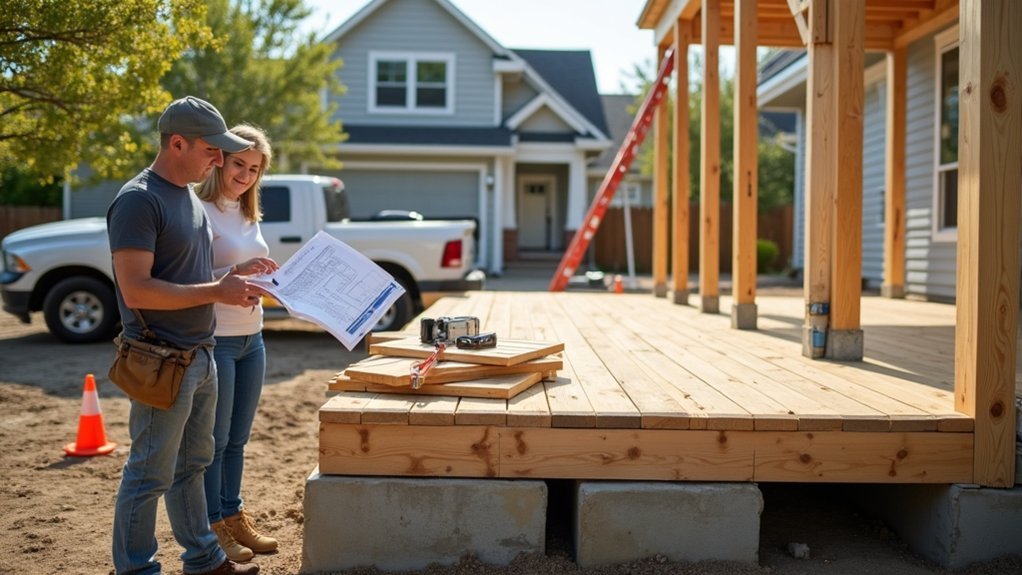
Reaching out to your local building department doesn’t have to be intimidating. Start by visiting their website or calling to ask about deck permit requirements. Many departments offer pre-application meetings where you can discuss your project before submitting formal plans.
Prepare your documentation before visiting. Bring a site plan showing your property lines, the proposed deck location, and dimensions. Include structural details like post spacing, joist sizes, and ledger board attachment methods. Having complete information speeds up the review process.
Ask questions when you’re uncertain about requirements. Building officials want your project to succeed safely. They can clarify code requirements, suggest design modifications, and explain inspection schedules. Building a positive relationship with your local department makes the entire permit process smoother and helps guarantee your deck meets all safety standards.
Frequently Asked Questions
Can I Transfer My Deck Permit to a New Homeowner if I Sell?
You typically can’t transfer a deck permit to a new owner. You’ll need to complete the project and pass final inspection before selling, or the new homeowner must apply for their own permit to continue work.
How Long Does a Deck Building Permit Remain Valid Before Expiring?
Your deck building permit typically remains valid for 6 to 12 months, depending on your local jurisdiction. If you don’t complete construction within this timeframe, you’ll need to apply for an extension or obtain a new permit.
Do I Need a Separate Permit for Adding Electrical Outlets to My Deck?
Yes, you’ll need a separate electrical permit for adding outlets to your deck. You can’t include electrical work under your deck building permit. Contact your local building department to apply for the electrical permit.
Will My Homeowner’s Insurance Cover a Deck Built Without Proper Permits?
Your homeowner’s insurance likely won’t cover damages from a deck built without proper permits. You’ll face claim denials, policy cancellations, or coverage gaps. You should always obtain required permits before starting any deck construction project.
Can I Appeal a Denied Deck Permit Application in My Municipality?
Yes, you can appeal a denied deck permit. You’ll need to contact your local building department, request their formal appeals process, submit additional documentation addressing the denial reasons, and potentially present your case before a zoning board.