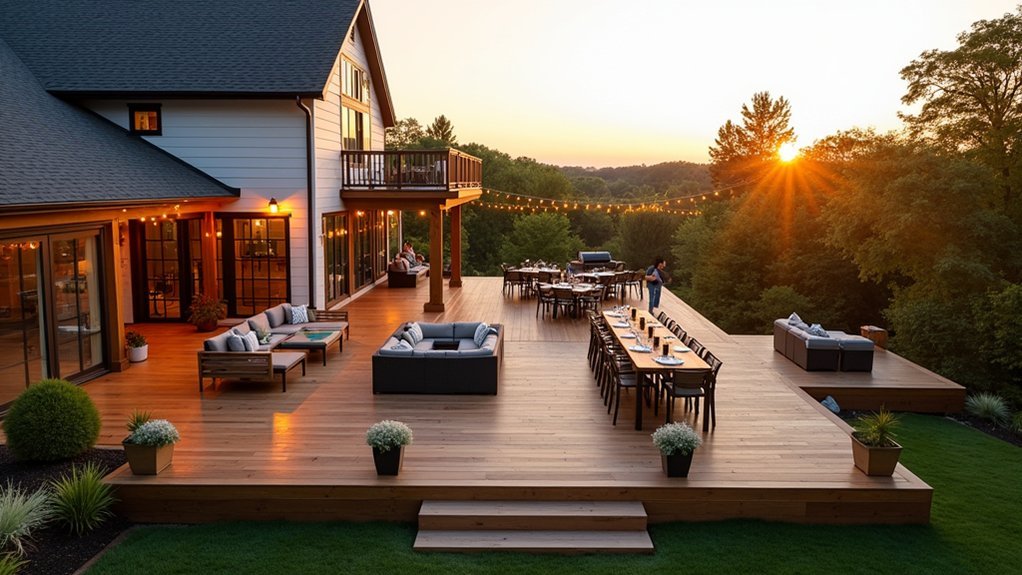
When planning a deck for large gatherings, you’ll want to allocate 10–15 square feet per guest for comfortable movement—that’s 500–750 square feet for 50 people. Don’t forget to account for furniture footprints, grill clearances of at least 10 feet from your house, and 4-foot-wide walkways between zones. You’ll also need serving stations, safety setbacks near railings, and structural support rated for 50–60 pounds per square foot. Below, you’ll find everything you need to size your deck correctly.
Calculate Square Footage Per Guest for Comfortable Movement

When you’re planning a deck for large gatherings, you’ll typically need between 10 and 15 square feet per guest to guarantee comfortable movement. This calculation accounts for walking paths, furniture placement, and natural conversation clusters that form during events.
Plan 10 to 15 square feet per guest for comfortable deck gatherings that allow easy movement and natural mingling.
For a party of 50 guests, you’re looking at 500 to 750 square feet of usable deck space. Don’t forget to subtract areas occupied by grills, planters, railings, and permanent fixtures from your total.
Consider traffic flow patterns carefully. You’ll want clear pathways between entry points, food stations, and seating areas. Bottlenecks create frustration and reduce your deck’s effective capacity.
If you’re hosting buffet-style gatherings, lean toward the higher end of the range. Seated dinners can work with slightly less space per person.
Account for Furniture and Grill Station Placement
Beyond basic square footage calculations, you’ll need to map out exactly where your furniture and grill stations will sit before finalizing your deck dimensions.
Start by measuring your existing outdoor furniture or the pieces you plan to purchase.
A standard dining table with six chairs requires approximately 10×10 feet, while a sectional sofa needs 12×12 feet minimum. Add 3 feet around each furniture grouping for comfortable traffic flow.
Position your grill station at least 10 feet from your house and any railings. You’ll want 6 feet of clearance behind the grill for the cook to work safely. Consider adding a dedicated prep counter nearby.
Don’t forget side tables, planters, and cooler space. These smaller items consume more square footage than you’d expect when guests gather around them.
Consider Traffic Flow Patterns Between Activity Zones
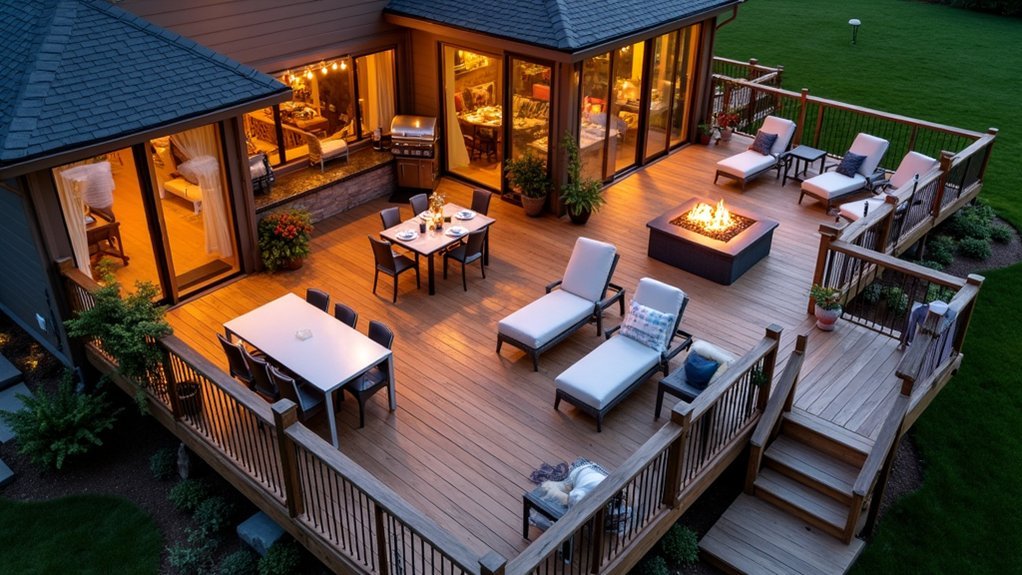
You’ll want to map natural movement routes across your deck to prevent bottlenecks when guests mingle and move between spaces.
Create wide walkways of at least 4 feet to allow people to pass comfortably without disrupting conversations or activities.
Separating your cooking zone from primary seating areas keeps the chef safe and gives guests clear paths to food, drinks, and socializing spots.
Map Natural Movement Routes
For decks designed to host large gatherings, understanding how guests naturally move between spaces determines whether your layout feels intuitive or creates frustrating bottlenecks.
People instinctively take the shortest path between two points, so your deck design should accommodate these tendencies rather than fight them.
Start by identifying your primary destinations: the grill station, beverage area, seating zones, and entry points from your home.
Draw straight lines connecting these spots on your plan.
These lines represent your main traffic corridors and need minimum widths of four feet for two-way flow.
Avoid placing furniture or planters directly in these natural pathways.
Instead, use them to define the edges of walking routes while protecting conversation areas from constant through-traffic.
This separation keeps seated guests comfortable while allowing others to circulate freely.
Create Wide Walkways
How wide should your walkways actually be to handle party traffic without creating gridlock? You’ll need minimum 4-foot pathways for single-file movement, but 6 feet allows comfortable two-way traffic during peak gathering times.
| Walkway Width | Best Use Case |
|---|---|
| 4 feet | Secondary paths, low traffic |
| 6 feet | Main routes between zones |
| 8+ feet | High-traffic areas near food/drinks |
Position your widest walkways between the grill station and seating areas since guests constantly travel this route. Don’t place furniture or planters where they’ll create bottlenecks. You should also consider widening paths near entry points and stairs where people naturally pause or congregate. Strategic width placement keeps your deck flowing smoothly even when you’re hosting maximum capacity.
Separate Cooking and Seating
Wide walkways only solve half the traffic puzzle—you also need smart zone placement to prevent collisions between stationary cooks and roaming guests.
Position your grill station along the deck’s perimeter, away from main seating clusters. This creates a natural buffer that keeps people moving freely without dodging hot surfaces or spattering grease.
Consider the path between your kitchen door and cooking zone. You’ll carry platters, utensils, and ingredients back and forth constantly.
Don’t force this route through your primary seating area. Instead, establish a clear service corridor that skirts the social spaces.
Allow at least eight feet between your grill and nearest dining furniture. This distance gives the cook room to work while letting guests approach for conversation without crowding the flame.
Factor in Structural Support Requirements for Heavy Loads

When you’re designing a deck for large gatherings, you’ll need to account for substantially greater weight loads than a standard backyard deck experiences. Crowds, furniture, and equipment add significant stress to your structure.
Consider these load requirements when planning:
| Load Type | Minimum Requirement |
|---|---|
| Residential deck live load | 40 lbs per square foot |
| Entertainment deck live load | 50-60 lbs per square foot |
| Joist spacing for heavy use | 12 inches on center |
| Beam sizing | Upgrade one dimension |
| Footing depth | Below frost line + 6 inches |
You’ll want to consult a structural engineer for gatherings exceeding 20 people. They’ll calculate precise requirements based on your soil conditions, climate, and anticipated usage patterns.
Plan for Multiple Seating Areas and Standing Spaces
When planning your large gathering deck, you’ll want to designate distinct conversation zones where guests can sit and chat comfortably without blocking traffic flow.
Allow adequate standing room near entry points, railings, and between seating areas so people can mingle freely during events.
Balance your furniture placement by distributing seating groups across the deck to prevent overcrowding in one section while leaving other areas empty.
Designate Conversation Zones
Creating distinct conversation zones transforms a large deck from an open expanse into an inviting space where guests naturally gather and mingle. You’ll want to arrange furniture groupings that encourage face-to-face interaction, typically positioning seating in circular or U-shaped configurations.
Consider using area rugs, planters, or built-in benches to define each zone’s boundaries visually. Place conversation areas at varying distances from high-traffic paths so guests can choose between lively spots near the action or quieter corners for intimate discussions.
You should size each zone for four to eight people, allowing approximately 25 square feet per person within the grouping. Don’t forget to include small side tables where guests can set drinks. Strategic lighting, such as string lights or lanterns, further distinguishes each zone while adding evening ambiance.
Allow Standing Room
While comfortable seating anchors your deck’s social spaces, you’ll also need dedicated standing areas where guests can circulate freely and mingle between conversation zones. Plan for approximately 4-6 square feet per standing guest to prevent overcrowding while maintaining a lively atmosphere.
Position standing areas strategically near high-traffic features like bars, grills, or scenic railings. These spots naturally draw people and encourage movement throughout your deck.
- Place cocktail tables at standing height to give guests a surface for drinks without blocking pathways
- Create buffer zones between seating clusters where standees won’t interrupt seated conversations
- Install sturdy railings rated for crowd pressure along deck perimeters
- Add outdoor lighting at standing areas to maintain visibility and ambiance after sunset
Balance Furniture Placement
Because your deck must accommodate both seated groups and standing minglers, you’ll need to arrange furniture in distinct zones that flow naturally into one another. Position larger pieces like sofas and dining sets along the perimeter, leaving central areas open for circulation. This creates natural gathering pockets without blocking traffic flow.
| Zone Type | Furniture | Space Needed |
|---|---|---|
| Dining | Table and chairs | 12×12 feet |
| Lounge | Sectional, coffee table | 10×10 feet |
| Standing | High-top tables | 4×4 feet each |
Don’t push everything against the railings. Instead, create intimate conversation areas by angling furniture pieces toward each other. Leave 3-4 feet between zones so guests move freely. You’ll maximize your deck’s capacity while maintaining comfort for everyone attending your gathering.
Leave Room for Safety Clearances Near Stairs and Railings
When you’re calculating the total square footage for your deck, don’t forget to account for the space that safety clearances will consume. Stairs and railings require dedicated buffer zones that reduce your usable gathering area. Building codes mandate specific clearances, and ignoring them creates hazards during crowded events.
Plan these essential safety clearances into your design:
- Stair landings: Reserve at least 36 inches of clear space at the top and bottom of each stairway for safe traffic flow
- Railing setbacks: Keep furniture and gathering spots 24-30 inches away from railings to prevent tipping hazards
- Emergency egress: Maintain unobstructed 36-inch pathways leading to all exit points
- Gate swing radius: Account for the full arc of any gates when positioning nearby elements
These clearances protect your guests while maintaining smooth circulation throughout your event.
Build in Extra Space for Serving Tables and Beverage Stations
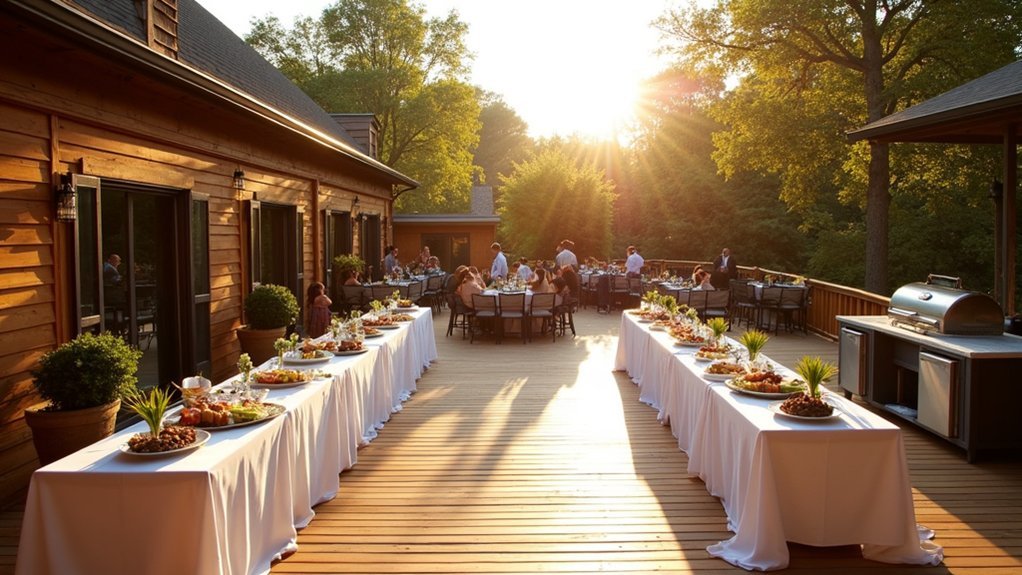
Setting aside dedicated zones for food and drinks can make or break your gathering’s flow. You’ll want to allocate at least 30 to 40 square feet for each serving station to prevent bottlenecks and allow guests to move freely.
| Station Type | Minimum Space | Recommended Space |
|---|---|---|
| Beverage Bar | 6 ft × 3 ft | 8 ft × 4 ft |
| Food Buffet | 8 ft × 4 ft | 10 ft × 5 ft |
| Dessert Table | 4 ft × 3 ft | 6 ft × 4 ft |
Position these stations away from high-traffic pathways and entry points. You should also consider electrical outlet placement if you’re using warming trays, coolers, or blenders. Don’t forget to account for the space guests need while standing and serving themselves.
Frequently Asked Questions
What Is the Minimum Deck Size Recommended for Hosting 50 Guests?
You’ll want a deck that’s at least 500 to 600 square feet for 50 guests. This gives everyone roughly 10-12 square feet of space, allowing comfortable movement without feeling cramped during your gathering.
How Does Weather Protection Like Pergolas Affect Overall Deck Size Planning?
You’ll need to add 10-15% more square footage when incorporating pergolas or covered structures. These features require support posts that reduce usable space, so you should account for this in your initial planning measurements.
What Permits Are Typically Required for Building Large Entertainment Decks?
You’ll typically need a building permit, and possibly zoning approval, especially for decks over 30 inches high or attached to your home. You should also check HOA requirements and obtain electrical permits if adding outlets.
How Much Does a Large Gathering Deck Typically Cost per Square Foot?
You’ll typically pay $30 to $60 per square foot for a large gathering deck using pressure-treated wood. If you’re choosing composite materials or hardwoods, expect costs ranging from $50 to $150 per square foot.
What Deck Materials Work Best for Frequent Large Party Hosting?
You’ll want composite decking or pressure-treated wood for frequent entertaining. Composite resists stains, scratches, and heavy foot traffic without warping. If you’re budget-conscious, pressure-treated lumber offers durability when you seal it regularly.