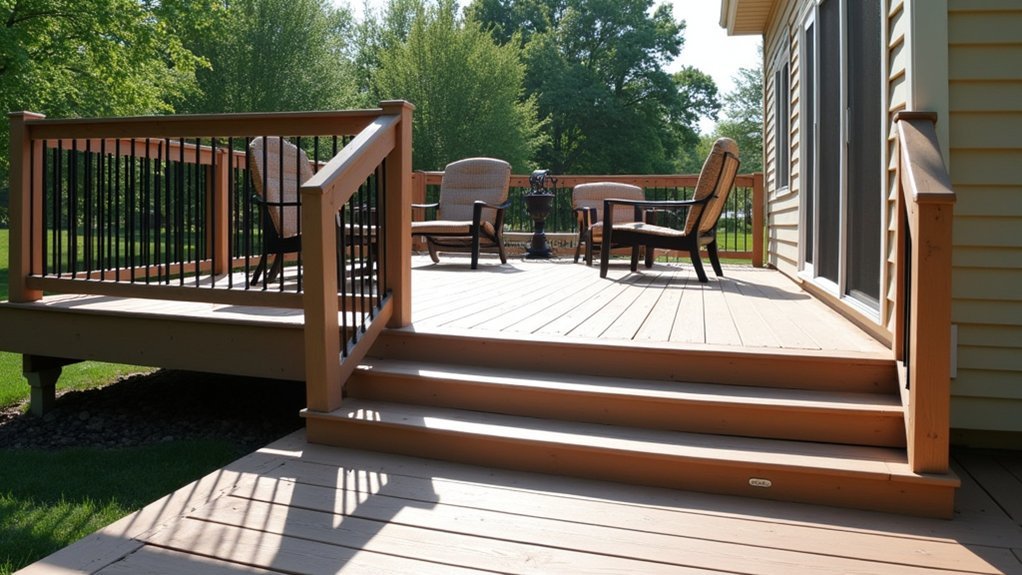
Your deck keeps your family safe when you’ve got railings at least 36 inches high, balusters spaced no more than four inches apart, and non-slip surfaces that maintain traction in wet conditions. You’ll want sturdy stairs with proper handrails, adequate lighting for nighttime visibility, and child-safe gates at access points. Don’t forget to verify your deck’s load capacity can handle gatherings and heavy furniture. Each of these features works together to create all-encompassing protection.
Sturdy Railing Systems That Prevent Falls

When you’re enjoying time on your deck, a sturdy railing system stands between you and a dangerous fall. Quality railings must meet building codes requiring a minimum height of 36 inches for residential decks and 42 inches for elevated structures.
You’ll want to inspect your railings regularly for loose posts, rotting wood, or corroded metal fasteners. Balusters should be spaced no more than four inches apart to prevent children from slipping through. Test your railing’s strength by applying firm pressure—it shouldn’t wobble or flex.
Choose materials that withstand your local climate. Composite and aluminum railings resist weathering better than untreated wood. Secure posts directly to the deck frame, not just the decking boards. Proper installation guarantees your railing system protects everyone who gathers on your outdoor space.
Non-Slip Decking Materials for Wet Conditions
When your deck gets wet from rain or morning dew, you need surfaces that keep you steady on your feet. Textured surface options like grooved patterns and embossed finishes give your shoes something to grip, reducing the risk of dangerous slips.
Composite materials offer particular advantages because they’re engineered specifically to maintain traction even in the wettest conditions while resisting the warping and splintering that make traditional wood slippery over time.
Textured Surface Options
Slippery deck surfaces pose a serious hazard, especially around pools, hot tubs, and in regions with frequent rain. You’ll find several textured surface options that dramatically reduce slip-and-fall accidents for your family.
Composite decking with embossed wood grain patterns provides excellent traction while maintaining an attractive appearance. You can also choose materials with factory-applied grit surfaces that create a sandpaper-like texture underfoot.
For existing decks, you’ve got retrofit solutions available. Anti-slip strips adhere directly to your current boards, while textured coating systems roll on like paint. Rubber deck tiles offer another practical option, providing cushioning alongside grip.
When selecting textured surfaces, consider foot traffic patterns and maintenance requirements. Deeper textures trap more debris but offer superior traction. You’ll want to balance safety performance with your cleaning preferences.
Composite Material Benefits
Beyond textured surface options, composite decking materials offer built-in advantages that make them ideal for wet environments. You’ll find that composite boards resist moisture absorption, preventing the warping and splintering that plague traditional wood decks.
Composite materials won’t rot or decay when exposed to rain, snow, or pool splashes. This durability means you’re not dealing with deteriorating boards that create tripping hazards for your family. The consistent surface texture remains stable over time, maintaining its slip-resistant properties year after year.
You’ll also appreciate that composite decking doesn’t require annual sealing or staining to preserve its safety features. The material’s density prevents mold and mildew growth, which commonly causes slick spots on wooden surfaces. Your family can walk confidently across the deck, even after a summer rainstorm.
Proper Baluster Spacing to Protect Young Children

Balusters spaced too far apart create a serious hazard for young children who can slip through gaps and fall from elevated decks.
Building codes require balusters to be no more than four inches apart, which prevents a child’s body from passing through.
You should test your existing deck by attempting to pass a four-inch sphere between each baluster.
When you’re installing new balusters, measure carefully and maintain consistent spacing throughout your railing system.
Don’t forget to check the gap between the bottom rail and the deck surface, as children can also squeeze through this opening.
You’ll want to inspect your balusters regularly for loose connections or damage that might widen gaps over time.
Tighten any loose fasteners immediately to maintain safe spacing.
Secure Stair Construction With Handrails
Sturdy deck stairs demand the same attention to safety as the deck surface itself, and properly installed handrails serve as your first line of defense against dangerous falls. You’ll want to make sure your stairs meet current building codes, which typically require handrails when you have four or more risers.
| Component | Requirement | Purpose |
|---|---|---|
| Handrail Height | 34-38 inches | Comfortable grip zone |
| Graspability | 1.25-2 inch diameter | Secure hand hold |
| Riser Height | Max 7.75 inches | Consistent stepping |
| Tread Depth | Min 10 inches | Stable foot placement |
| Stringer Spacing | 16 inches max | Structural support |
You should inspect your stairs regularly for loose treads, wobbly handrails, and deteriorating wood. Tighten all connections and replace damaged components immediately to maintain safe passage.
Load-Bearing Capacity for Gatherings and Furniture
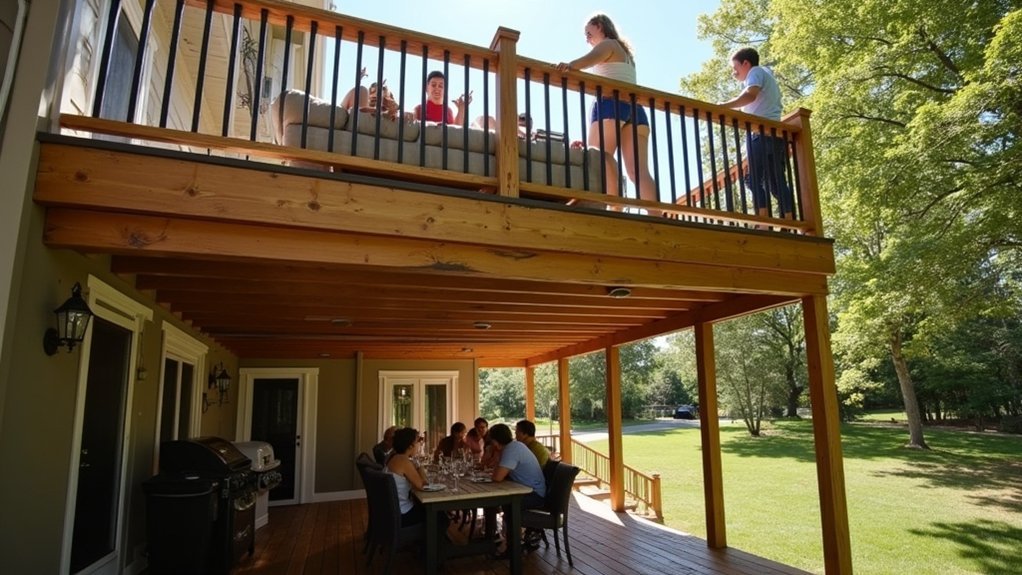
Your deck’s load-bearing capacity determines whether it can safely support crowded parties, heavy furniture, and outdoor kitchens without structural failure.
Understanding your deck’s load-bearing capacity is essential for safely hosting gatherings and installing heavy outdoor features.
Most residential decks must handle at least 40 pounds per square foot for live loads, which includes people and movable items, plus 10 pounds per square foot for dead loads like the deck’s own weight.
You’ll want to assess your deck’s capacity before hosting large gatherings. A 200-square-foot deck should safely hold approximately 8,000 pounds of live weight. However, concentrated loads from hot tubs, planters, or grills require additional support.
Check your joists, beams, and posts for proper sizing and spacing. Undersized lumber or excessive joist spans compromise structural integrity. If you’re adding heavy features, consult a structural engineer to verify your deck can handle the increased demands.
Rounded Edges and Splinter-Free Surfaces
Sharp corners and rough surfaces transform otherwise safe decks into hazard zones, particularly for barefoot children and elderly family members. You’ll want to sand all exposed edges and apply protective finishes that prevent wood fibers from splintering over time.
| Surface Treatment | Protection Level |
|---|---|
| Sanded edges | Prevents cuts and scrapes |
| Sealed wood | Blocks moisture damage |
| Composite materials | Eliminates splinter risk |
| Rounded post caps | Reduces impact injuries |
You should inspect your deck annually for raised grain and deteriorating boards. When you find rough patches, sand them immediately and reseal the affected areas. Consider installing composite decking if you’re building new—it won’t splinter and requires minimal maintenance while keeping your family’s feet protected year-round.
Adequate Lighting for Nighttime Safety
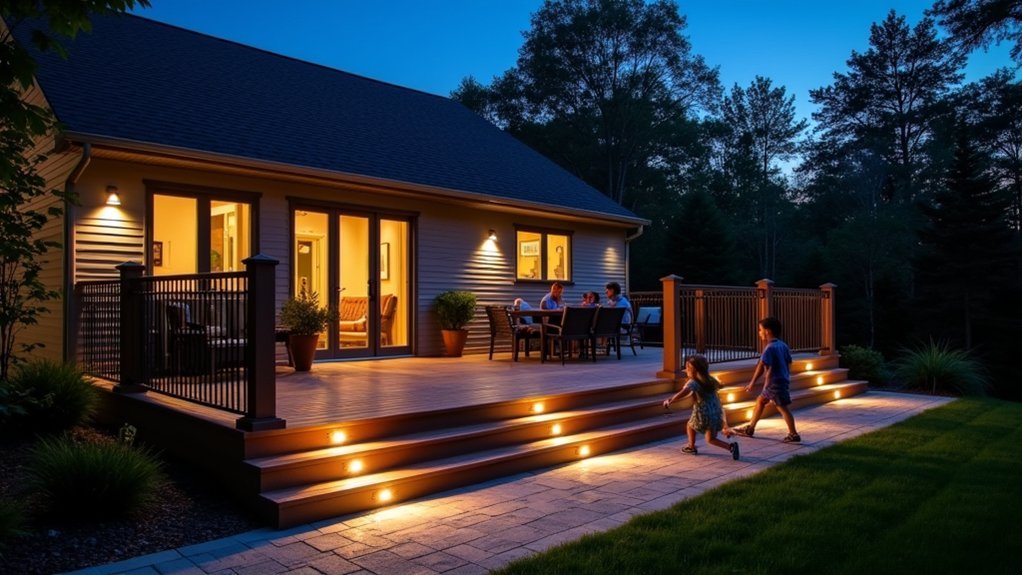
When darkness falls, your deck can become a hazard zone without proper lighting to guide your steps. You’ll want to take into account three key illumination strategies: stair step lighting to prevent falls, motion-activated security lights to deter intruders while lighting your path, and railing illumination solutions that define boundaries and add ambiance.
These lighting options work together to transform your deck into a safe nighttime gathering space.
Stair Step Lighting Options
Lighting up your deck stairs transforms a potential hazard into a safe pathway after dark. You’ll find several effective options to illuminate each step and prevent dangerous falls.
LED strip lights installed under stair nosings create a sleek, modern look while clearly defining each step’s edge. Recessed riser lights mount directly into the vertical face of stairs, casting gentle downward illumination without creating glare.
Post cap lights on stair railings provide ambient lighting that guides family members safely up and down. Solar-powered options eliminate wiring concerns and reduce energy costs.
For maximum visibility, you should combine multiple lighting types. Consider motion-activated fixtures that turn on automatically when someone approaches the stairs. Whatever options you choose, make certain lights are weather-resistant and rated for outdoor use.
Motion-Activated Security Lights
Beyond stair illumination, motion-activated security lights protect your entire deck area by flooding spaces with bright light whenever movement triggers their sensors. These lights deter intruders while helping you spot potential hazards like toys, wet surfaces, or wildlife before accidents occur.
You’ll want to position sensors at entry points and high-traffic zones for maximum coverage. LED options provide instant brightness without warm-up time, and they consume less energy than traditional bulbs. Adjust sensitivity settings to prevent false triggers from pets or blowing leaves.
Consider lights with adjustable timers that control how long illumination lasts after activation. Some models offer smartphone connectivity, letting you monitor activity remotely. Dual-head fixtures expand coverage across wider areas, ensuring no dark corners remain where someone could trip or fall unexpectedly.
Railing Illumination Solutions
Railing illumination lights up your deck’s perimeter while clearly defining edges and boundaries after dark. You’ll prevent dangerous missteps when family members can see exactly where the deck ends. These lighting solutions integrate seamlessly into your existing railing system without compromising aesthetics.
Consider these popular railing illumination options:
- LED post cap lights – Mount directly on top of railing posts for downward-facing glow
- Under-rail strip lighting – Tuck beneath handrails for subtle, continuous illumination
- Recessed baluster lights – Install within individual balusters for evenly distributed brightness
- Solar-powered rail lights – Charge during daylight and activate automatically at dusk
You’ll want to choose fixtures rated for outdoor use with weather-resistant housing. Low-voltage LED options provide energy efficiency while delivering sufficient brightness to keep your family safe during evening gatherings.
Child-Safe Gate Options for Deck Access Points
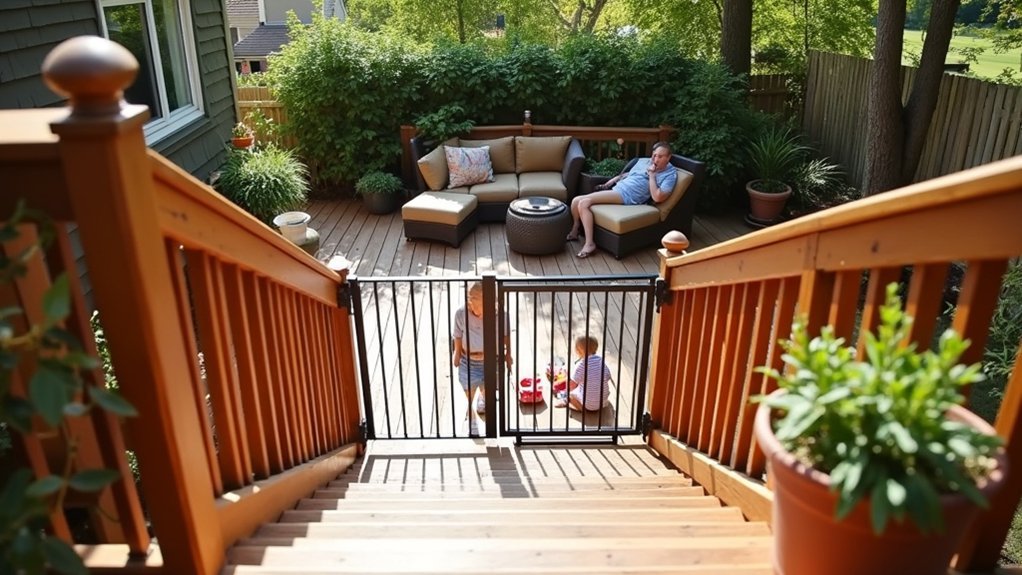
When you’re setting up a safe outdoor space, installing child-safe gates at deck access points becomes vital for preventing falls and keeping young children contained.
You’ll find several reliable options for deck stairways and entry points. Hardware-mounted gates offer the strongest protection since they screw directly into posts or railings, making them nearly impossible for toddlers to dislodge. Look for models with dual-locking mechanisms that require adult dexterity to operate.
Self-closing hinges add another layer of security by automatically latching the gate behind you. Choose gates at least 36 inches tall to prevent climbing, and make sure the slat spacing doesn’t exceed four inches to avoid entrapment hazards. Weather-resistant materials like powder-coated aluminum or marine-grade stainless steel withstand outdoor conditions while maintaining smooth operation year-round.
Frequently Asked Questions
How Often Should I Inspect My Deck for Structural Damage?
You should inspect your deck at least twice yearly—once in spring and once in fall. You’ll also want to check it after severe storms or if you notice any wobbling, creaking, or visible deterioration.
What Type of Wood Preservative Is Safest for Families With Pets?
You should choose water-based wood preservatives with low VOCs, as they’re safer for pets who walk on and lick deck surfaces. Look for products labeled pet-friendly and avoid those containing arsenic or pentachlorophenol.
Do I Need a Building Permit to Add Safety Features to My Deck?
You’ll typically need a building permit for structural changes like adding railings or stairs, but not for minor upgrades like non-slip strips. Check your local building codes before starting any deck safety project.
How Can I Childproof My Deck Furniture to Prevent Tipping Hazards?
Anchor heavy furniture to deck railings or walls using anti-tip straps. You’ll want to choose weighted bases for umbrellas and secure lightweight chairs when not in use. Don’t forget to remove glass tabletops during unsupervised playtime.
What Fire-Resistant Materials Should I Consider for Decks Near Grills?
You should consider composite decking, treated lumber with fire-retardant chemicals, or tropical hardwoods like ipe for areas near grills. You’ll also want to install non-combustible deck tiles directly beneath your grill.