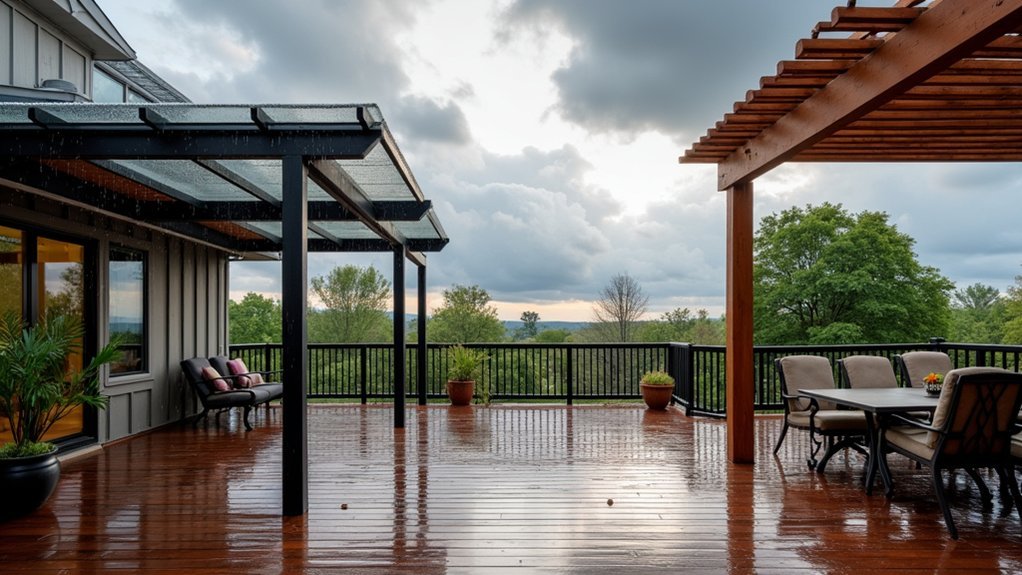
To choose deck roofing for weather protection, you’ll need to evaluate your local climate first—consider rainfall amounts, snow loads, wind speeds, and temperature extremes. Match your roofing material to these conditions: metal roofs handle heavy snow and high winds, while polycarbonate panels work well for lighter weather with UV concerns. Don’t forget drainage requirements and local building codes. The sections below cover each roofing option’s performance characteristics and maintenance demands.
Understanding Your Local Climate and Weather Patterns
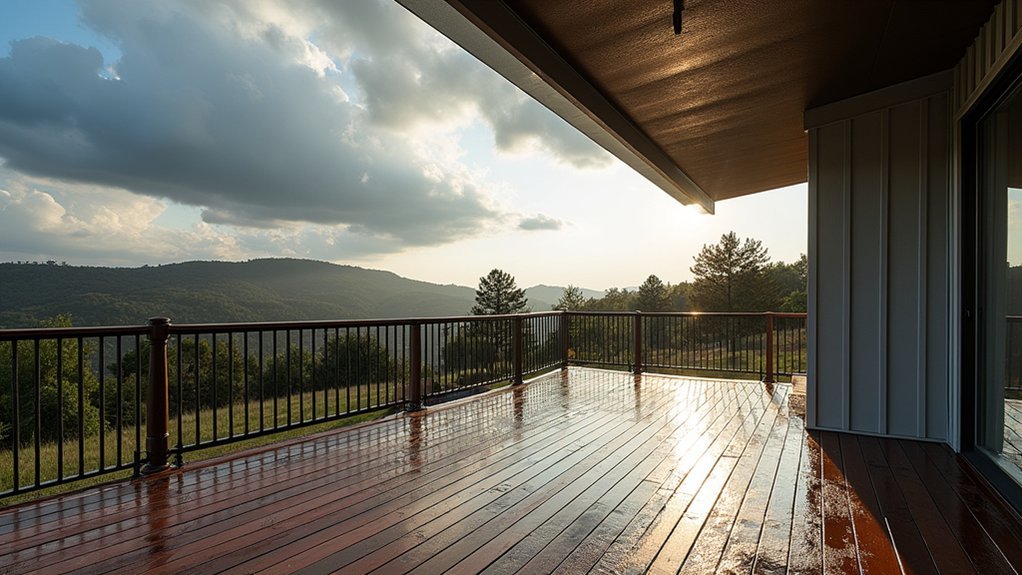
When you’re selecting roofing materials for your deck, your local climate should drive every decision you make. Consider your region’s annual rainfall, snow load expectations, wind speeds, and temperature extremes. Coastal areas demand corrosion-resistant materials that withstand salt air, while desert climates require UV-resistant options that won’t crack under intense sun exposure.
Track your area’s seasonal patterns carefully. Do you experience heavy spring rains? Frequent summer storms? Harsh winter freezes? Each factor influences which materials will perform best and last longest on your deck.
Don’t overlook humidity levels and temperature fluctuations, which cause materials to expand and contract. Research your local building codes too—they often specify minimum requirements based on regional weather data. Your county’s historical weather records provide valuable insights for making informed roofing choices.
Solid Roof Structures for Maximum Rain and Snow Protection
When you want complete protection from rain and snow, a solid roof structure offers the best defense for your deck.
A gable roof design provides excellent water runoff and prevents snow accumulation while adding visual appeal to your outdoor space.
You’ll need to select durable materials like metal, asphalt shingles, or polycarbonate panels, and install proper drainage systems to channel water away from your deck’s foundation.
Gable Roof Benefits
A gable roof stands out as one of the most practical choices for deck coverage, especially if you’re dealing with heavy rainfall or significant snow accumulation.
Its triangular shape creates steep slopes on both sides, allowing water and snow to slide off quickly rather than pooling on the surface.
You’ll appreciate how this design prevents structural stress from heavy snow loads during winter months.
The pitch also promotes better drainage, reducing your risk of leaks and water damage over time.
Gable roofs offer excellent ventilation through ridge vents at the peak, which helps regulate temperature underneath your covered deck.
They’re also versatile in appearance, complementing most home styles seamlessly.
You can customize the pitch angle based on your local climate conditions and aesthetic preferences.
Materials for Durability
Selecting the right materials proves just as important as choosing your roof style, since even the best-designed structure won’t protect your deck if the components can’t withstand your local weather conditions.
You’ll want to evaluate materials based on your climate’s specific demands. Consider these top options for lasting protection:
- Metal roofing panels – Shed snow efficiently and resist rust when properly coated
- Asphalt shingles – Offer affordable durability with 20-30 year lifespans
- Cedar shakes – Provide natural insulation and handle moisture well when sealed
- Polycarbonate sheets – Deliver impact resistance while allowing filtered light through
Your support structure matters equally. Pressure-treated lumber resists rot and insect damage, while aluminum framing eliminates corrosion concerns entirely.
Match your materials to your maintenance preferences and budget for peak long-term performance.
Proper Drainage Systems
Even the sturdiest solid roof won’t protect your deck if water pools on its surface or cascades down in uncontrolled sheets. You’ll need a properly designed drainage system to channel water away effectively.
Start by ensuring your roof has adequate slope—at least a quarter inch per foot works well for most installations. Install gutters along the roof’s lower edges to capture runoff, and connect them to downspouts that direct water away from your deck’s foundation.
Consider adding a drip edge along roof perimeters to prevent water from seeping under roofing materials. For areas with heavy snowfall, you should incorporate heating cables to prevent ice dams that block drainage paths.
Don’t forget to schedule regular maintenance. Clear debris from gutters seasonally to maintain optimal water flow.
Retractable Awning Systems for Flexible Coverage
When you want coverage that adapts to changing conditions, retractable awning systems offer the flexibility that permanent structures can’t match.
You’ll need to decide between motorized options that extend with the push of a button and manual systems that require hand-cranking but cost less upfront.
Your fabric selection matters too—look for weather-resistant materials like solution-dyed acrylic or vinyl-coated polyester that can withstand UV exposure and moisture without fading or mildewing.
Motorized Vs Manual Options
The choice between motorized and manual retractable awnings impacts both your daily convenience and long-term budget. Motorized systems offer push-button operation, making them ideal if you’ll adjust your awning frequently or have mobility limitations. Manual options cost less upfront and have fewer components that can fail.
Consider these factors when deciding:
- Frequency of use – Daily adjustments favor motorized systems for effortless operation
- Awning size – Larger awnings become difficult to crank manually
- Budget constraints – Manual systems save $500-$1,500 on initial installation
- Maintenance needs – Motors require periodic servicing and eventual replacement
You can also add smart home integration to motorized awnings, allowing automatic retraction during high winds or rain through weather sensors.
Weather-Resistant Fabric Choices
Selecting the right fabric for your retractable awning determines how well it stands up to sun exposure, rain, and temperature swings. You’ll find three primary options: acrylic, polyester, and vinyl-coated fabrics. Each offers distinct advantages depending on your climate and usage patterns.
Acrylic fabrics resist fading and mildew while allowing air circulation, making them ideal for sunny regions. Polyester provides excellent water resistance and durability at a lower price point. Vinyl-coated options deliver superior waterproofing but trap more heat underneath.
When evaluating fabrics, check the UV protection rating and warranty coverage. Solution-dyed materials hold color longer than surface-coated alternatives.
You should also consider the fabric’s weight—heavier materials withstand wind better but require stronger motor systems. Test samples before committing to make sure the texture and appearance match your deck’s aesthetic.
Pergolas With Waterproof Canopy Additions
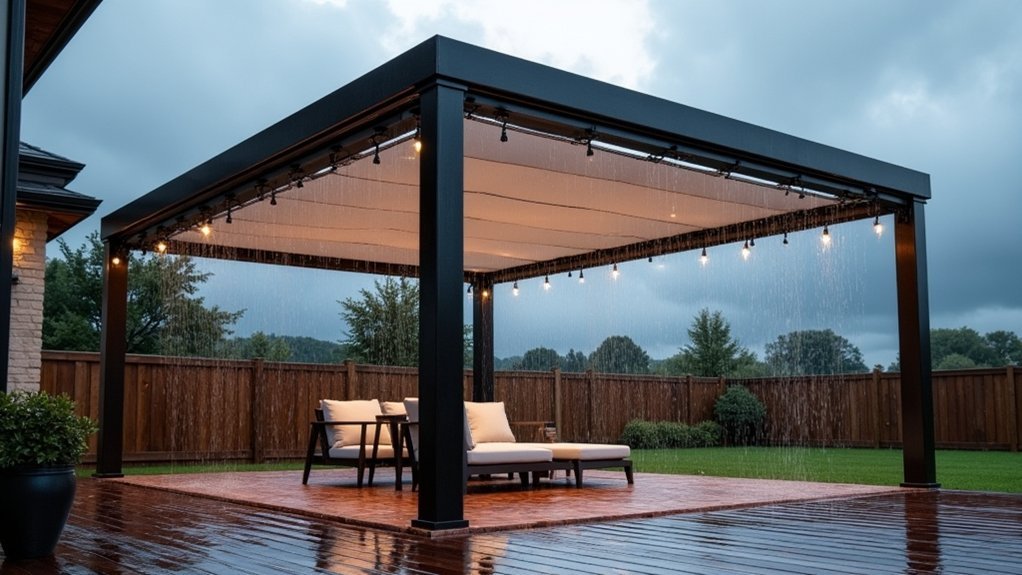
Pairing up a traditional pergola with a waterproof canopy gives you the best of both worlds—open-air ambiance when you want it and solid protection when storms roll in. You’ll maintain your deck’s aesthetic appeal while gaining functional weather coverage.
Modern waterproof canopy systems attach directly to existing pergola frames, making installation straightforward. You can choose retractable options that slide along tracks or fixed panels that provide permanent coverage.
Consider these factors when selecting your canopy addition:
- Material durability—look for UV-resistant, tear-proof fabrics rated for your climate
- Drainage pitch—ensure a minimum 3-degree slope to prevent water pooling
- Mounting hardware—select marine-grade stainless steel to prevent rust
- Retraction mechanism—decide between manual crank systems or motorized controls
You’ll extend your outdoor living season markedly with this versatile combination.
Metal Roofing Materials and Their Durability Benefits
When you’re considering metal roofing for your deck, you’ll benefit from exceptional corrosion resistance that keeps rust and deterioration at bay for decades.
Metal roofs typically last 40-70 years with minimal maintenance, saving you time and money compared to other materials.
They also excel in weather performance, standing up to heavy rain, snow loads, and high winds without cracking or warping.
Corrosion Resistance Properties
Metal roofing materials consistently outperform other options when it comes to resisting corrosion, making them ideal for deck applications exposed to the elements. You’ll find that modern metal roofing incorporates protective coatings and alloys specifically engineered to withstand moisture, salt air, and chemical pollutants.
When evaluating corrosion resistance, consider these key factors:
- Galvanized steel uses zinc coating to create a sacrificial barrier against rust
- Aluminum naturally forms an oxide layer that prevents further degradation
- Copper develops a protective patina over time, extending its lifespan decades
- Stainless steel contains chromium that actively resists oxidation
You should match your metal choice to your environment. Coastal areas demand aluminum or copper, while inland locations work well with galvanized options.
Proper material selection guarantees your deck roof maintains structural integrity for years.
Lifespan and Maintenance
Understanding the lifespan expectations of different metal roofing materials helps you plan for long-term deck protection and budget accordingly. Aluminum roofing typically lasts 40-70 years with minimal upkeep, while steel options offer 30-50 years when properly coated. Copper and zinc deliver exceptional longevity, often exceeding 100 years.
Your maintenance requirements vary by material choice. Steel roofing needs periodic inspections for coating damage and rust spots. You’ll want to address scratches quickly to prevent corrosion from spreading. Aluminum requires less attention since it naturally resists oxidation.
For all metal roofing, you should clear debris regularly, check fasteners annually, and make sure drainage systems remain unobstructed. Touch-up paint addresses minor damage before it becomes problematic. These simple practices extend your roof’s functional life markedly while protecting your deck investment.
Weather Impact Performance
Because your deck roofing faces constant exposure to the elements, metal materials offer distinct advantages in weather resistance that other roofing types can’t match. Steel, aluminum, and copper panels withstand harsh conditions while maintaining structural integrity for decades.
Metal roofing excels in extreme weather scenarios:
- Wind resistance – Properly installed panels withstand gusts exceeding 140 mph without lifting or tearing
- Snow performance – Smooth surfaces allow snow to slide off, preventing dangerous accumulation
- Rain protection – Interlocking seams create watertight barriers that prevent leaks
- Hail durability – Impact-resistant ratings protect against dents and punctures from falling debris
You’ll find metal roofing performs consistently across temperature extremes, expanding and contracting without cracking. This thermal stability guarantees your deck remains protected year-round, regardless of your climate zone.
Polycarbonate Panels for Light and Weather Resistance
When you want to cover your deck while still enjoying natural daylight, polycarbonate panels offer an ideal solution.
These lightweight yet durable sheets transmit up to 90% of available light while blocking harmful UV rays.
Let the sunshine in while keeping the damage out—polycarbonate delivers brilliant light without the UV penalty.
You’ll find them in clear, tinted, and opaque varieties to match your aesthetic preferences.
Polycarbonate stands up remarkably well against harsh weather conditions.
It resists impact from hail and falling debris far better than glass or acrylic alternatives.
The material won’t yellow, crack, or become brittle under intense sun exposure for many years.
Installation proves straightforward since the panels cut easily with standard tools.
You can attach them to existing wood or metal frames using specialized fasteners that allow for thermal expansion.
This flexibility prevents warping and maintains a tight seal against rain infiltration.
Fabric Shade Sails as Budget-Friendly Weather Barriers
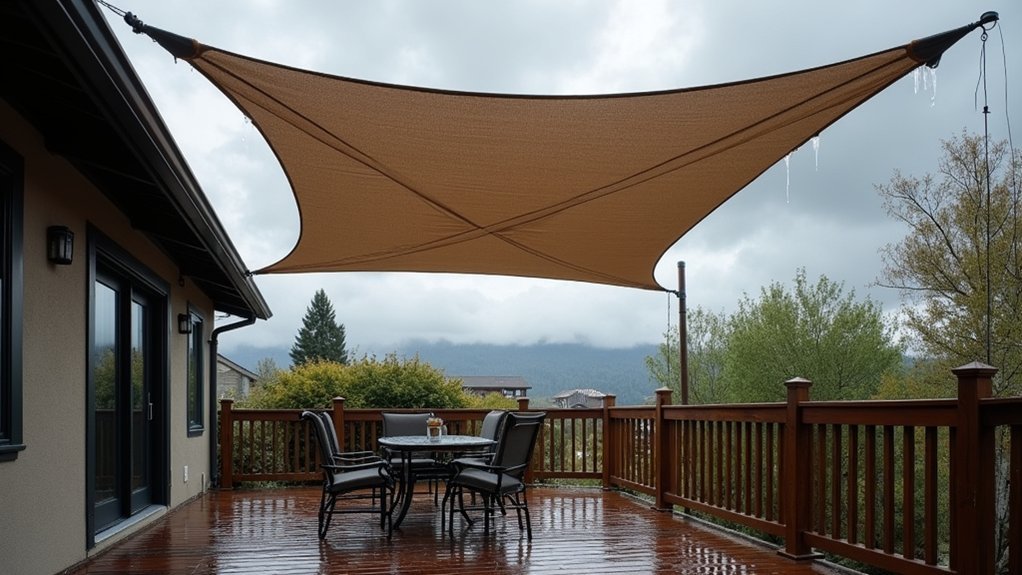
Fabric shade sails provide a more affordable alternative to rigid panel systems while still offering solid protection from sun and light rain.
You’ll find these tensioned fabric canopies block up to 95% of UV rays while creating dramatic visual appeal for your outdoor space.
When selecting shade sails for your deck, consider these key factors:
- Choose marine-grade HDPE fabric for maximum durability and breathability
- Install sails at a 20-30 degree angle to promote water runoff
- Select stainless steel hardware to prevent rust and guarantee secure mounting
- Position multiple overlapping sails for enhanced coverage during angled rainfall
You can easily remove shade sails during harsh winter months, extending their lifespan greatly.
They’re also replaceable at a fraction of permanent roofing costs.
Louvered Roof Systems for Adjustable Protection
How much control do you actually want over your deck’s exposure to the elements? Louvered roof systems offer unmatched flexibility by letting you adjust aluminum or wood slats to your preferred angle.
Louvered roof systems give you complete control—adjust the slats to welcome sunshine or block rain instantly.
Open them fully for sunshine, partially close them for filtered light, or seal them completely during rain.
These systems typically operate through motorized controls, often with rain sensors that automatically close the louvers when precipitation starts. You’ll pay more upfront—expect $80 to $150 per square foot installed—but you’re getting a permanent structure that adapts to changing conditions throughout the day.
Louvered roofs work best for homeowners who use their decks frequently and value precision climate control. They’re durable, low-maintenance, and add significant resale value to your property.
Comparing Material Costs and Long-Term Maintenance Requirements
Beyond the specific features of louvered systems, your roofing choice ultimately comes down to balancing initial investment against ongoing upkeep costs. You’ll find significant price variations across materials, and the cheapest option upfront often becomes expensive over time.
Consider these key factors when comparing your options:
- Aluminum roofing costs more initially but requires minimal maintenance and resists rust for decades.
- Wood structures offer affordable pricing but demand regular sealing, staining, and potential replacement of rotted sections.
- Polycarbonate panels provide budget-friendly installation yet may yellow or crack within 10-15 years.
- Steel frames deliver durability at mid-range prices but need periodic rust treatment in humid climates.
Calculate your five-year and ten-year total costs before deciding. You’ll make a smarter investment when you factor in labor, materials, and your available time for maintenance tasks.
Matching Your Deck Roof Style to Your Home Architecture
When you’re selecting a deck roof, your home’s architectural style should guide every design decision you make. A craftsman bungalow pairs naturally with exposed wooden beams and gabled structures, while colonial homes benefit from traditional hip roofs with clean lines. Modern architecture calls for flat or minimally sloped designs using metal or glass panels.
Consider your existing roofline’s pitch and material. You’ll create visual harmony by matching or complementing these elements rather than introducing conflicting angles. If your home features copper gutters or slate shingles, echo these materials in your deck roof design.
Pay attention to trim details, fascia styles, and color palettes already present on your home. Your deck roof should feel like an intentional extension of your property, not an afterthought bolted onto the structure.
Frequently Asked Questions
Do I Need a Building Permit to Install a Deck Roof?
You’ll likely need a building permit to install a deck roof. Check with your local building department before starting work, as permit requirements vary by location. Skipping this step could result in fines or removal orders.
How Long Does Professional Deck Roof Installation Typically Take?
You’ll typically wait 2-5 days for professional deck roof installation, depending on your project’s size and complexity. Larger structures or custom designs take longer, while simple attached patio covers can be completed more quickly.
Can I Install Deck Roofing Myself or Hire a Contractor?
You can install deck roofing yourself if you’ve got DIY experience and proper tools. However, you’ll get better results hiring a contractor who’ll make certain proper waterproofing, structural support, and code compliance for lasting weather protection.
What Is the Average Lifespan of Different Deck Roofing Options?
You’ll find polycarbonate panels last 10-15 years, while aluminum roofing lasts 20-30 years. Fabric awnings typically need replacement every 5-10 years, and wood pergolas with proper maintenance can last 15-20 years.
Will Adding a Deck Roof Increase My Home’s Resale Value?
Yes, adding a deck roof can boost your home’s resale value. You’ll attract buyers who appreciate outdoor living spaces with weather protection, and you’re effectively expanding usable square footage that potential buyers find appealing.