
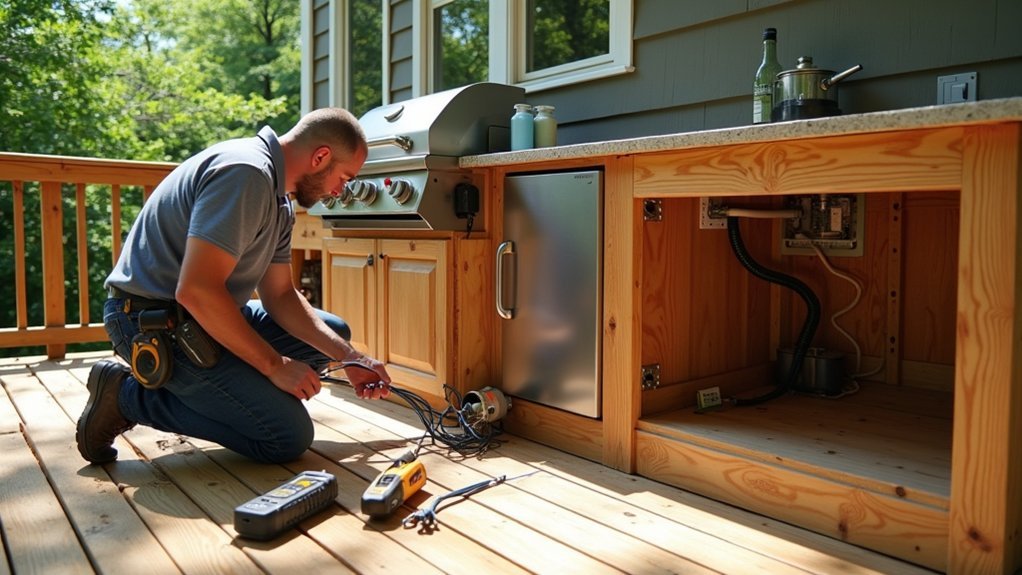
When wiring your deck for outdoor appliances, you’ll need to use wet-location rated materials like UF-B cable or THWN-2 conductors in PVC conduit. Match your wire gauge to circuit amperage—12-gauge for 20-amp circuits powering electric grills, 14-gauge for 15-amp circuits serving refrigerators or smokers. Install GFCI protection on all outdoor outlets and use weatherproof “in-use” covers that seal while cords are plugged in. The sections below cover everything from conduit routing to hiring a licensed electrician.
Our Recommended Product on Amazon

As an Amazon Associate we earn from qualifying purchases.
Understanding Electrical Code Requirements for Outdoor Deck Wiring

When you’re planning to add electrical wiring to your deck, you’ll need to follow specific code requirements that govern outdoor installations.
Outdoor deck wiring requires careful attention to electrical codes designed specifically for exterior installations.
The National Electrical Code (NEC) mandates that all outdoor outlets must be GFCI-protected to prevent electrical shock in wet conditions. You’ll also need weatherproof covers rated for “wet locations” on any exposed receptacles.
Your deck wiring must use outdoor-rated cables or conduit approved for exterior use. UF (underground feeder) cable works well for buried runs, while PVC conduit protects exposed wiring from moisture and UV damage.
Don’t forget about circuit capacity. Most deck circuits require a dedicated 20-amp breaker, especially if you’re powering appliances like grills or heaters. Always check your local codes, as requirements often exceed NEC minimums.
Choosing the Right Wire Gauge and Materials for Deck Installations
When you’re wiring your deck, selecting the correct wire gauge guarantees your circuits can handle the electrical load without overheating or causing fire hazards.
You’ll need to match wire size to amperage requirements—14-gauge wire works for 15-amp circuits, while 12-gauge handles 20-amp circuits.
For outdoor deck installations, you should choose weather-resistant materials like UF-B (underground feeder) cable or conduit with THWN wire to protect against moisture, UV exposure, and temperature extremes.
Wire Gauge Selection
Selecting the proper wire gauge for your deck’s electrical system directly impacts both safety and performance. Wire that’s too thin for your circuit’s amperage will overheat, creating fire hazards and damaging your appliances.
For most deck lighting circuits running 15 amps, you’ll need 14-gauge wire. If you’re powering outlets or larger appliances on 20-amp circuits, step up to 12-gauge wire. Outdoor kitchens with heavy-duty equipment may require 10-gauge or larger.
Distance matters materially in gauge selection. Longer wire runs experience voltage drop, reducing power delivery to your appliances. For runs exceeding 50 feet, consider upgrading one gauge size to compensate.
Always use wire rated for outdoor and wet locations. Look for designations like UF-B (underground feeder) or THWN-2 for conduit installations.
Weather-Resistant Material Options
Beyond gauge selection, the materials you choose must withstand constant exposure to rain, snow, UV rays, and temperature swings.
Standard indoor wiring will deteriorate quickly when installed on your deck, leading to dangerous conditions and costly replacements.
For outdoor deck installations, you’ll want to use UF-B (underground feeder) cable, which features a solid thermoplastic jacket that resists moisture penetration.
When running conduit, opt for PVC or rigid metal varieties rated for wet locations.
Your junction boxes and receptacle covers need NEMA 3R ratings or higher for weather resistance.
Choose covers with spring-loaded or bubble designs that maintain protection while cords are plugged in.
Additionally, select stainless steel or brass hardware for all connections—these metals resist corrosion far better than standard zinc-plated alternatives in outdoor environments.
Planning Your Outdoor Outlet Placement for Maximum Convenience
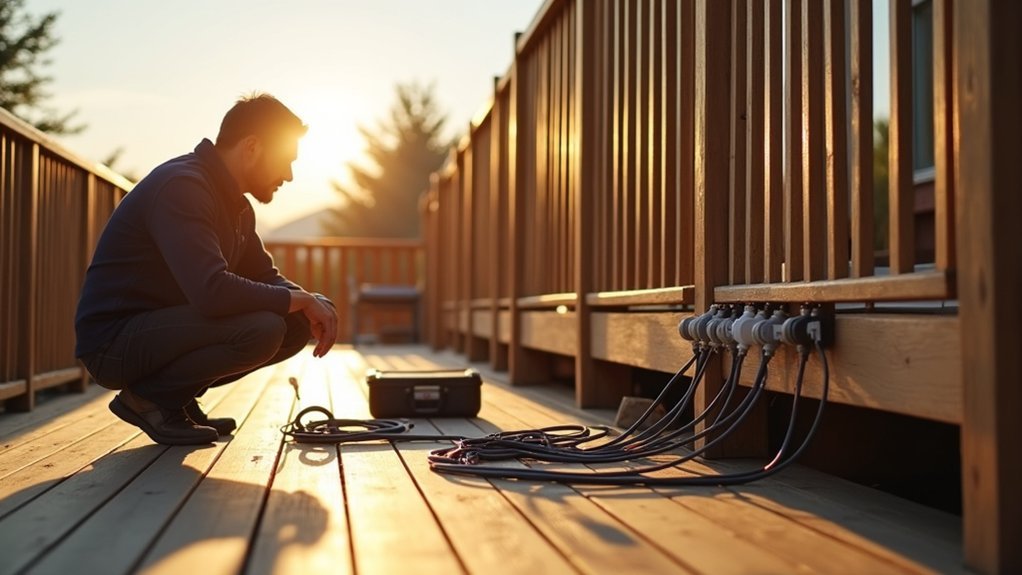
Before you install a single outlet on your deck, you’ll want to map out exactly where each one should go for ideal functionality. Start by evaluating which appliances you’ll use most frequently—grills, string lights, speakers, or power tools—and position outlets within easy reach of those zones.
You should also factor in weather-protected locations under eaves or covered areas and calculate the total number of outlets needed to prevent overloading circuits with multiple extension cords.
Assess Your Appliance Needs
How many appliances do you actually plan to use on your deck? Before installing outlets, you’ll need to identify exactly what you’re powering. Make a list of everything you’ll plug in, from string lights to electric grills.
Consider these common deck appliances:
- Electric grills and smokers
- Outdoor refrigerators or beverage coolers
- Sound systems and speakers
- Decorative lighting and fans
Each appliance has specific wattage requirements that affect your circuit planning. Check the nameplate on each device to find its power draw. You’ll want to calculate total wattage to determine whether you need dedicated circuits or can share outlets among lower-demand items.
Don’t forget seasonal equipment. Holiday lights, portable heaters, and bug zappers all need power. Planning for future additions now saves costly rewiring later.
Consider Weather Protection Locations
When planning where to place your deck outlets, weather protection should drive every decision you make. Position outlets under eaves, pergolas, or covered sections of your deck to shield them from direct rain and snow exposure.
You’ll want to install weatherproof outlet covers rated for wet locations, even in protected areas. Look for “in-use” covers that keep outlets sealed while cords are plugged in. Mount outlets at least 12 inches above the deck surface to prevent water pooling issues.
Consider how prevailing winds affect your deck during storms. An outlet tucked against your home’s exterior wall typically stays drier than one on an exposed railing post. Don’t forget about winter conditions—snow accumulation and ice can compromise electrical safety if you haven’t chosen protected mounting spots.
Calculate Required Outlet Quantity
Once you’ve identified protected mounting locations, your next step involves figuring out exactly how many outlets your deck actually needs. Count every appliance you’ll use simultaneously during peak entertaining times.
Start by listing your essential outdoor electrical needs:
- Grill accessories and electric smokers
- Refrigerators or beverage coolers
- String lights and ambient lighting
- Entertainment systems and speakers
Don’t forget seasonal additions like space heaters or fans. You’ll want to add 20-30% more outlets than your current count suggests, since outdoor living needs typically expand over time.
Position outlets in zones based on activity areas—cooking, dining, and lounging spaces each require dedicated circuits. This prevents overloading and eliminates the frustration of running extension cords across your deck’s surface where they create tripping hazards.
Installing GFCI Protection for Wet Location Safety
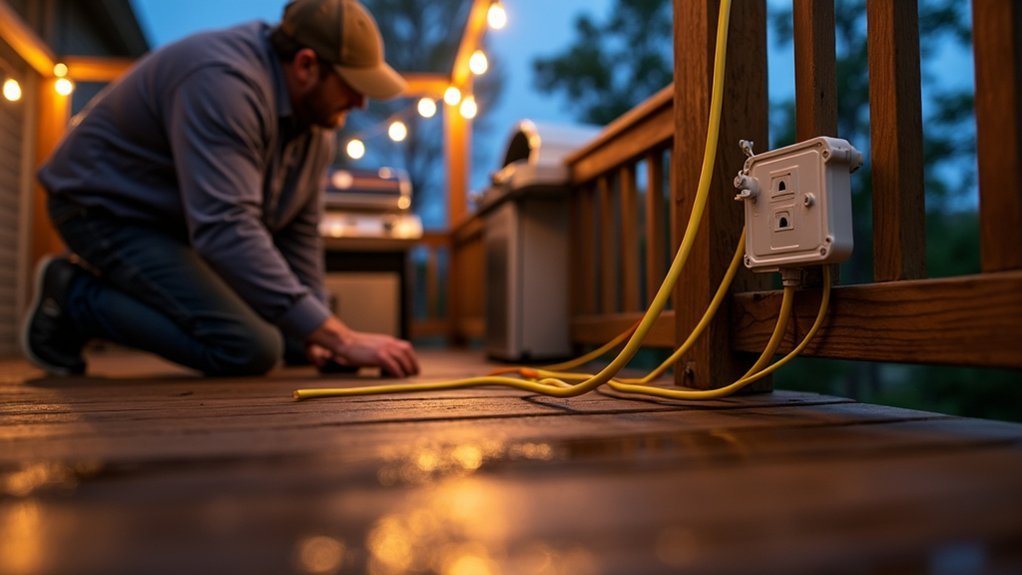
Because outdoor decks expose electrical components to rain, snow, and humidity, GFCI (Ground Fault Circuit Interrupter) protection isn’t just recommended—it’s required by the National Electrical Code for all receptacles in wet and damp locations. These devices detect ground faults and cut power within milliseconds, preventing potentially fatal shocks.
| GFCI Option | Best Application |
|---|---|
| GFCI Outlet | Single location protection |
| GFCI Breaker | Entire circuit protection |
| Portable GFCI | Temporary setups |
| Weather-resistant GFCI | Direct outdoor exposure |
You’ll want to install weather-resistant covers rated “in-use” that protect outlets even when cords are plugged in. Test your GFCI devices monthly by pressing the test button—the power should cut immediately. If it doesn’t trip, replace the unit promptly to maintain proper protection.
Running Electrical Conduit Through Deck Framing
Proper conduit installation protects your wiring from physical damage, moisture, and the wear that comes with outdoor exposure. You’ll want to use schedule 40 PVC or rigid metal conduit rated for outdoor applications.
When routing conduit through deck framing, follow these essential practices:
- Drill holes through the center of joists to maintain structural integrity
- Support conduit every 3 feet with appropriate straps or hangers
- Use weatherproof fittings at all junction points and changes
- Maintain a minimum 1¼-inch clearance from joist edges
You should plan your conduit runs before drilling to avoid obstacles like fasteners and blocking. Seal all penetrations with exterior-rated caulk to prevent water infiltration.
Keep conduit runs as straight as possible, limiting bends to no more than 360 degrees total between pull points.
Weatherproof Outlet Boxes and Cover Selection
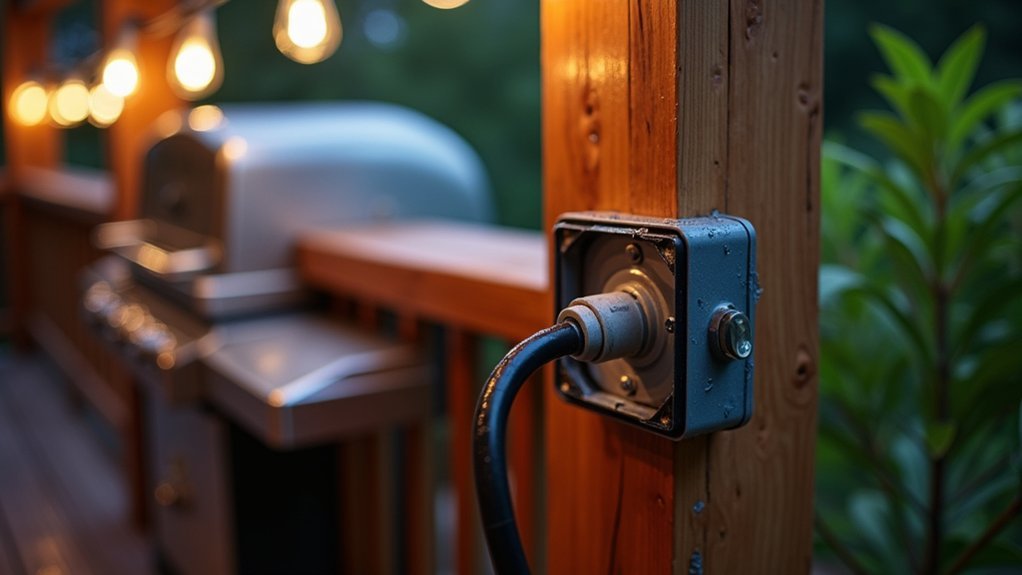
Selecting the right weatherproof outlet boxes and covers comes down to understanding exposure levels and intended use. You’ll need to choose between “wet location” and “damp location” ratings based on your deck’s design.
Covered areas typically qualify as damp locations, while exposed outlets require wet-rated components.
For outlets that stay in use during rain, you’ll want in-use covers with bubble or flip-lid designs. These maintain protection even with cords plugged in.
Standard weatherproof covers only protect when outlets aren’t being used.
Choose boxes made from PVC, die-cast aluminum, or weather-resistant plastic. Metal boxes need proper grounding and corrosion-resistant coatings.
Match your box depth to accommodate GFCI receptacles, which require more space than standard outlets. Always verify your selections carry UL listing for outdoor installation.
Powering Common Outdoor Appliances Like Grills and Refrigerators
With your weatherproof boxes and covers properly installed, you’re ready to tackle the power demands of outdoor appliances.
Electric grills typically draw 1,400 to 1,800 watts, requiring a dedicated 20-amp circuit. Outdoor refrigerators need their own circuit too, usually 15 amps, to prevent tripping when the compressor kicks on.
Consider these power requirements for common deck appliances:
- Electric grills: 15-20 amp dedicated circuit
- Outdoor refrigerators: 15 amp dedicated circuit
- Beverage coolers: 15 amp circuit (can share with low-draw items)
- Electric smokers: 15 amp dedicated circuit
You’ll want to install GFCI protection on all outdoor circuits. Don’t daisy-chain high-draw appliances on the same circuit—this causes nuisance tripping and potential fire hazards. Check each appliance’s nameplate for exact amperage requirements before installation.
Hiring a Licensed Electrician Versus DIY Deck Wiring Projects

Before you grab your wire strippers and start running cable, you need to honestly assess whether this project matches your skill level and meets local code requirements. Most jurisdictions require permits for outdoor electrical work, and many mandate that a licensed electrician perform installations involving new circuits or subpanels.
DIY wiring makes sense for simple tasks like replacing an existing outdoor outlet or installing low-voltage landscape lighting. However, running dedicated 240-volt circuits for electric grills or adding GFCI-protected outlets to your deck typically requires professional expertise.
Consider hiring an electrician when your project involves breaker panel modifications, underground conduit runs, or connections to high-amperage appliances. The cost of professional installation protects you from fire hazards, code violations, and voided homeowner’s insurance. Your safety isn’t worth the savings.
Frequently Asked Questions
Can I Connect Deck Lighting to My Existing Indoor Circuit?
You shouldn’t connect deck lighting to an indoor circuit. You’ll need a dedicated outdoor-rated circuit with GFCI protection for safety. Outdoor wiring requires weatherproof components and must meet local electrical codes for exterior installations.
How Deep Should Outdoor Electrical Wires Be Buried Underground?
You should bury outdoor electrical wires at least 18 inches deep when using PVC conduit, or 24 inches deep for direct-burial cable without conduit. Always check your local codes for specific requirements.
Do I Need a Permit for Adding Outlets to My Deck?
You’ll likely need a permit for adding outlets to your deck. Most jurisdictions require electrical permits for new circuit installations. Check with your local building department before starting work to make sure you’re meeting all code requirements.
How Much Does Professional Deck Electrical Installation Typically Cost?
You’ll typically pay $200 to $500 per outlet for professional deck electrical installation. Complex jobs requiring new circuits or panel upgrades can run $1,000 to $2,500. Always get multiple quotes before hiring an electrician.
Can Solar-Powered Alternatives Eliminate the Need for Deck Wiring Entirely?
You can eliminate deck wiring for lighting, fans, and small devices using solar alternatives. However, you’ll still need electrical wiring for high-power appliances like outdoor kitchens, hot tubs, or electric heaters.