You’ll need to follow strict plumbing, gas, and drainage codes when installing a backyard kitchen, or you’ll face fines, forced demolition, and insurance denial. Gas lines require at least 2 inches of unthreaded pipe exposed for secure fittings and leak detection. Water supply lines must be properly sized based on flow requirements and distance from your main supply. Drainage lines need minimum ¼-inch-per-foot slope with proper venting. All materials must be outdoor-rated and code-listed. You’ll also need permits and professional installation to ensure compliance. Keep scrolling to discover the specific standards that’ll protect your investment and family.
Gas Pipe Installation and Placement Standards
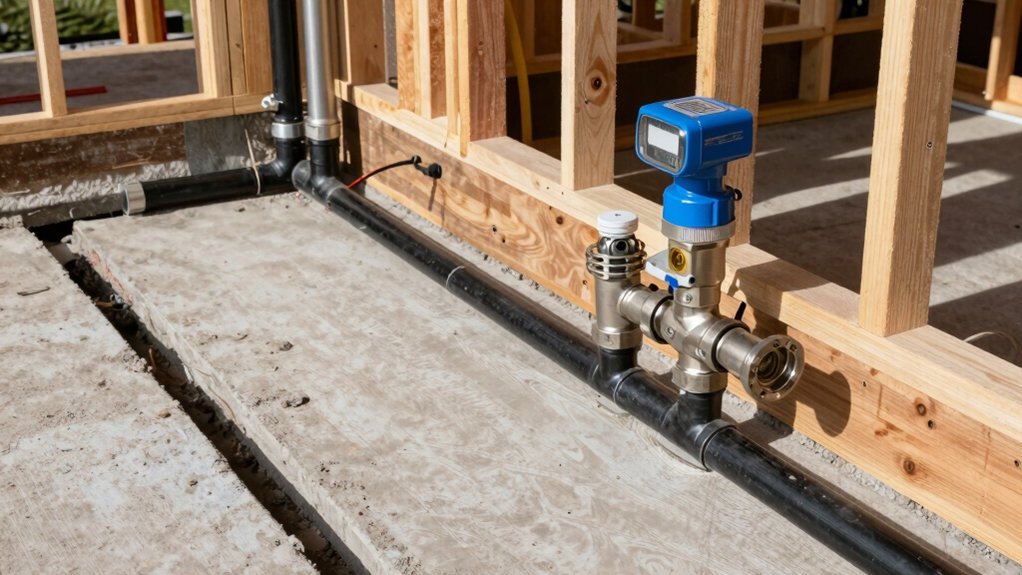
When you’re planning your backyard kitchen’s gas line, understanding proper pipe installation is essential for both safety and compliance. You’ll need to extend the gas pipe stub at least 2 inches above the finished decking with unthreaded pipe exposed. This extension allows you to tighten threaded fittings securely with a pipe wrench and verify proper alignment before connections. The exposed unthreaded section also helps you spot potential leaks that hidden pipes would conceal.
According to IRC requirements, this minimum extension is mandatory for outdoor installations. When positioning your stub, avoid placing it where doors might damage it or near eaves and roofs to minimize fire risk. Hire trained professionals to install your gas lines, ensuring they meet all building codes from your home to the outdoor appliances.
Water Supply and Drainage Requirements
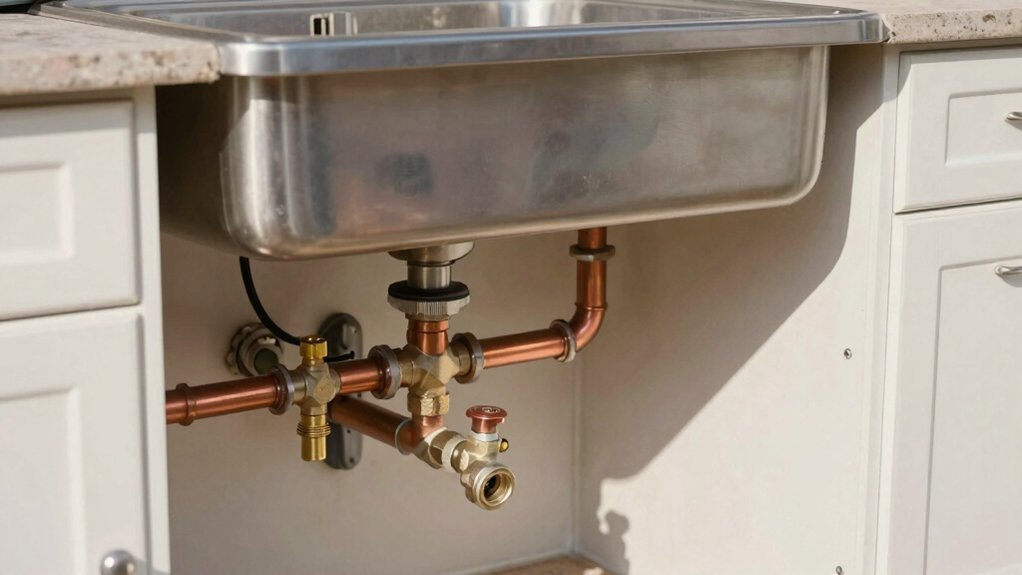
You’ll need to size your water supply line based on your outdoor sink’s flow requirements and distance from the main supply. Your drain line must slope toward the exit point at a minimum of 1/4 inch per foot, and you’ll require proper venting—either through an existing vent stack or a new vent line—to prevent trap seal loss and siphoning. Both sizing and drainage design depend on local codes, which often mandate professional installation for these critical components.
Water Supply Line Sizing
How do you determine the correct diameter for your outdoor kitchen’s water supply line? You’ll need to calculate the flow rate requirements for your fixtures and the distance the water must travel from your house to the sink.
Larger diameter pipes reduce friction loss and maintain adequate water pressure over longer distances. For most residential outdoor sinks, you’ll typically use ½-inch copper or PEX tubing, though some installations may require ¾-inch for extended runs or multiple fixtures.
Consider your home’s existing water pressure and the elevation changes between your house and outdoor sink. Check local building codes, as sizing requirements vary by jurisdiction. Your plumber can perform pressure loss calculations to ensure your chosen line diameter delivers sufficient flow and pressure to your outdoor fixtures.
Drainage Slope and Venting
Proper drainage slope is critical for your outdoor kitchen’s functionality and longevity. You’ll need to maintain at least a 1/4 inch downward slope per foot to prevent standing water and ensure water flows away from your space.
- Establish proper slope: Run your drainage trench from the sink trap to an approved drainage option—main DWV line, dry well, or yard drainage—while maintaining consistent downward pitch.
- Install venting: Connect your outdoor sink to either your home’s vent system or an approved alternative to prevent odors and clogs.
- Check local codes: Consult your municipality’s requirements, as some areas mandate connection to the main wastewater system rather than alternative drainage methods.
Electrical System Compliance for Outdoor Kitchens
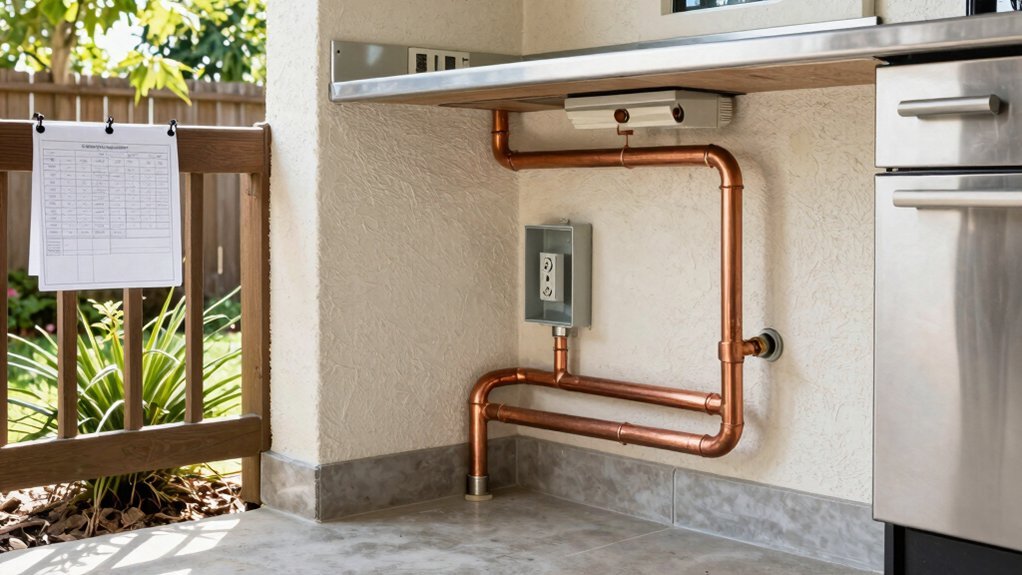
When’s the last time you checked whether your outdoor kitchen setup meets electrical code? You’ll need dedicated receptacle outlets on two separate 20-amp circuits as required by the IRC, though many installations skip this critical step. Minimize extension cords and power strips by planning circuits around your appliances—refrigeration, ice makers, and warming drawers all demand proper sizing and protection. Your electrical needs vary based on seasonal versus year-round usage; seasonal setups may require fewer powered options.
Hire a licensed professional to install underground or overhead lines, ensuring compliance with local codes and permits. Plan circuits strategically before selecting appliances, not after. This approach prevents costly retrofits and keeps your outdoor kitchen safe and functional.
Material Specifications and Code-Approved Products
You’ll need to select materials that meet local code requirements and are specifically rated for outdoor use, including PEX or CPVC for supply lines, PVC for drain components, and code-compliant gas piping with appropriate shut-off valves. Your supply pipes must slope toward drains and include frost protection in freezing climates, while all drainage lines need proper venting and dry well options where permitted. Every component you choose—from fittings to fixtures—must carry outdoor-use listings and comply with manufacturer specifications and local DWV standards.
Approved Materials for Supply
The foundation of any backyard kitchen plumbing system rests on selecting materials that won’t fail under outdoor conditions. You’ll need to choose products rated specifically for exterior applications and compatible with your fuel source.
Your approved options include:
- PEX or CPVC – These flexible and rigid plastics handle both hot and cold water effectively in outdoor environments without corroding.
- Copper Type L or K – Offering exceptional durability for outdoor runs, copper provides excellent freeze protection when properly insulated against temperature fluctuations.
- PVC for drainage – You can use PVC for sink traps and venting connections, provided it’s rated for outdoor or underground use where required.
Always verify that your materials carry code-listing approval and meet your local building department’s specifications.
Drainage System Components
How do you ensure your backyard kitchen’s drainage won’t back up or create code violations? You’ll need to understand the essential drainage components your local building department requires.
Most jurisdictions mandate PVC or CPVC piping for outdoor sink drainage systems. You must install a trap to prevent odors and clogs while maintaining proper venting. The drain line requires a minimum slope of 1/4 inch per foot to ensure adequate flow toward your disposal point.
You can connect to your main wastewater system or install a dry well at least 10 feet from your patio. Either way, proper grading and venting are integral to code compliance. Before selecting materials or routing your drainage, consult your local ordinances and schedule required inspections to verify your system meets all specifications.
Gas Line Pipe Standards
Since gas distribution to outdoor grills requires strict adherence to safety protocols, you’ll need to install compliant piping materials that your local building codes approve. When selecting pipe materials, you’ve got several options to ensure:
- Aluminum composite and green-coated steel – Designed specifically for outdoor environments, these materials resist corrosion and weather exposure effectively.
- Galvanized steel and schedule 80 PVC – Where permitted by local codes, these materials offer durability and proper gas containment for exterior installations.
- Certain copper options – Select copper pipes rated for outdoor gas applications to ensure longevity and safety.
You’ll also need manual shut-off valves at both the source and appliance locations. After installation, you must perform pressure testing to detect leaks. Ensure exposed piping extends at least 2 inches of unthreaded pipe through flooring for secure fittings.
Permit Requirements and Building Department Review
Why do so many homeowners skip the permit process for backyard kitchens? The answer often comes down to cost and convenience, but you’ll face serious consequences if you ignore it.
Building departments review your designs to ensure venting, setbacks, and safety measures comply with local codes. They’ll inspect sewer, water, electric, and gas work before you can use your kitchen.
Before starting, you’ll need to research local requirements, check HOA CC&Rs and zoning restrictions, and prepare detailed layouts showing utility proximity. Submit your application with these plans, then schedule inspections after installation.
Skipping permits invites fines, forced demolition, or insurance denial. Getting approval upfront protects your investment and keeps your family safe.
Safety Clearances and Fire Protection Standards
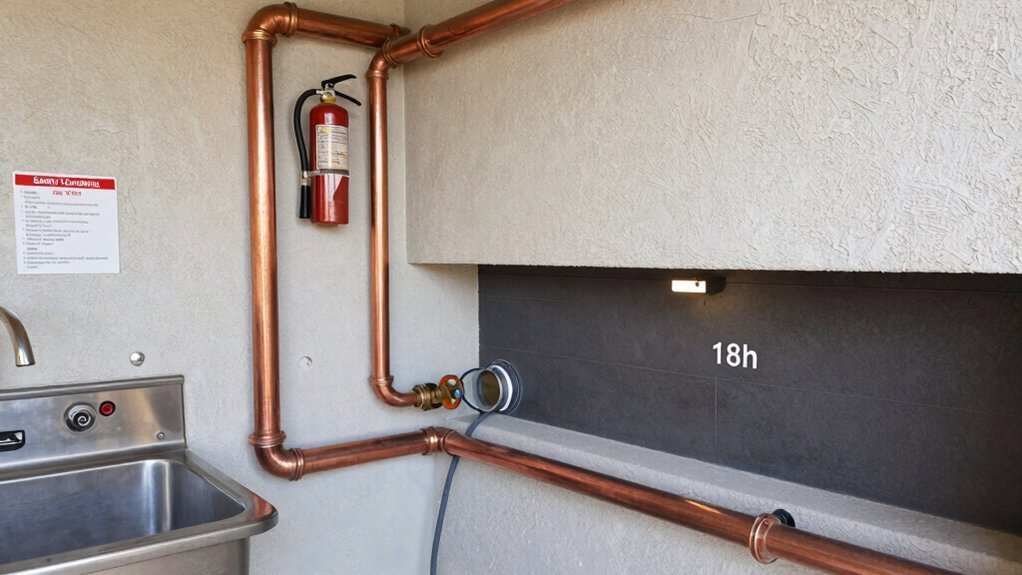
Your backyard kitchen’s safety depends on proper gas line installation and clearance distances that protect against fire hazards and physical damage. You’ll need to follow IRC requirements strictly to minimize fire risk.
- Maintain minimum clearances around your grill area, accounting for eaves and porch roofs overhead that could trap heat or smoke near combustible materials.
- Route gas lines away from high-traffic zones and doors where foot traffic or opening mechanisms could cause damage to exposed piping.
- Plan ventilation carefully for exhaust hoods and smoke management systems, positioning them to prevent smoke from drifting toward windows or triggering interior fire alarms.
You must hire trained professionals for all gas line installation to ensure compliance with local building codes and safety standards.
Frequently Asked Questions
How to Run a Water Line to an Outdoor Kitchen?
You’ll tap into your home’s existing water lines, extend hot and cold pipes through the wall to your outdoor kitchen, install shut-off valves with drain plugs for winterization, and route drainage either to your yard or into your home’s DWV system.
Do I Need a Permit to Install an Outdoor Kitchen?
Yes, you’ll need a permit for your outdoor kitchen. You’re required to obtain approvals for any gas, electrical, plumbing, or structural work. You should check your local building codes and HOA restrictions before starting your project.
What Is the Code for a Kitchen Sink Drain?
You’ll need to install a P-trap on your kitchen sink drain to prevent sewer gas entry. You must connect it to your home’s wastewater system or an approved alternative like a dry well, following local drainage ordinances and building codes.
Does an Outdoor Kitchen Have to Have a Sink?
No, you don’t have to have a sink in your outdoor kitchen. However, if you’re installing one, you’ll need to follow local plumbing codes regarding water supply, drainage systems, and permits that your jurisdiction requires for outdoor plumbing installations.