You’ll need multiple permits to legally install a backyard kitchen, including building, electrical, plumbing, and gas permits depending on your setup. Each permit ensures code compliance, safety validation, and proper utility connections. Skipping permits risks fines, forced demolition, insurance voids, and sale complications. You’ll schedule inspections at rough-in and final stages to verify everything meets local codes. Licensed contractors handle this process and navigate HOA rules and zoning requirements. Understanding your specific local requirements is where compliance truly begins.
Why Permits Matter for Outdoor Kitchens
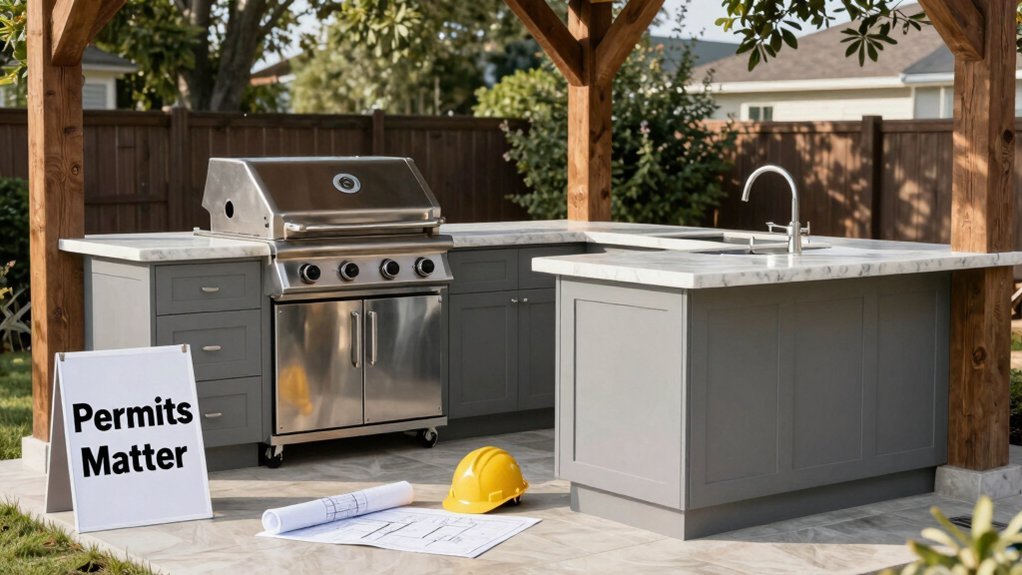
Why do building permits matter for your backyard kitchen? They’re essential because outdoor kitchens involve electrical, plumbing, gas, and structural work that require code compliance and safety validation. Without permits, you’re risking significant consequences including hefty fines, forced demolition, and complications with insurance claims or property sales.
Permits ensure that your design, materials, and utility connections meet local building codes. They validate structural elements like roofs, counters, and walls, plus any patio extensions or surface material integrations. Electrical, plumbing, and gas permits cover outlets, lighting, sinks, and built-in appliances with mandatory inspections at rough-in and final stages.
Skipping permits or hiring unlicensed professionals exposes you to code violations and serious legal or safety issues down the road. Investing in proper permitting protects your investment and your family.
Common Permits Required for Outdoor Kitchen Installation
What permits do you actually need for your backyard kitchen project? You’ll typically need multiple permits depending on your setup’s complexity.
Building permits cover structural elements like roofs, counters, and patio extensions. Beyond that, you’ll encounter specialized permits:
Building permits address structural work—roofs, counters, patio extensions—while specialized permits handle electrical, plumbing, and gas systems separately.
- Electrical permits for outdoor outlets, lighting, and appliance power connections
- Plumbing permits for sinks, dishwashers, or ice makers with water and drainage lines
- Gas permits for built-in grills, side burners, or pizza ovens—requiring licensed professional installation
Don’t overlook zoning approval or HOA review either. You’ll need to verify lot-line setbacks, design guidelines, noise restrictions, and outdoor-use regulations comply with local requirements.
Permit applications require submitting detailed drawings or plans. Expect inspections at rough-in and final stages to verify code compliance throughout your project.
Building Permits for Structural Elements
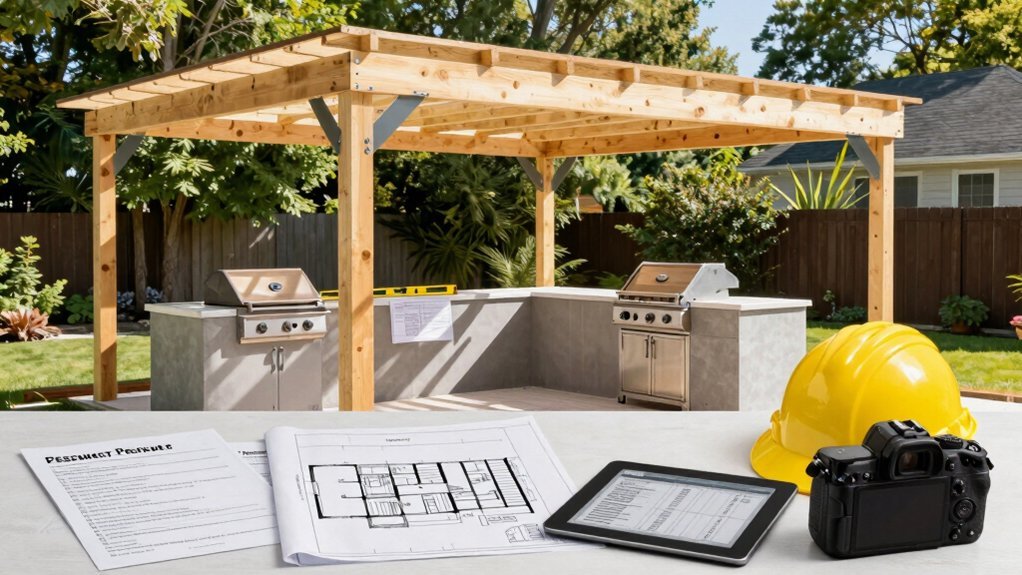
Of the various permits you’ll need, building permits form the foundation of your approval process because they govern the physical structures that’ll support your outdoor kitchen. You’ll typically need permits for roofs, built-in counters, retaining walls, and storage cabinets—essentially any permanent structural element.
Patio extensions also require permits, particularly when you’re integrating different surfaces like concrete footings or paver transitions. Before construction begins, you’ll submit detailed drawings and plans to your local building department for review and approval.
These permits ensure your project complies with local building codes and safety standards. You’ll schedule inspections at key milestones—rough-in and final stages—so inspectors can verify that all structural work meets code requirements and functions safely.
Electrical Permits for Power and Lighting
You”ll need to prioritize outdoor electrical safety requirements and proper power setup to keep your backyard kitchen functional and compliant with code.
Your outdoor outlets, lighting fixtures, and appliances require GFCI protection, weatherproof enclosures, and dedicated circuits that must meet National Electrical Code standards and local regulations.
A licensed electrician can ensure your installation passes both rough-in and final inspections while protecting your investment from electrical hazards.
Outdoor Electrical Safety Requirements
How do you safely power an outdoor kitchen? You’ll need to prioritize several critical safety measures to protect your space and comply with local codes.
Install GFCI-protected outlets to prevent electrical shock in wet environments. These devices detect ground faults and automatically shut off power when needed. You’ll also need:
- Weatherproof enclosures for all outlets and connections to shield them from moisture and debris
- Dedicated circuits for outdoor appliances to prevent overloads and reduce fire risks
- Proper wire ratings and burial depths if running underground lines to outdoor structures
Licensed electricians understand these requirements and local regulations thoroughly. They’ll ensure your wiring meets code, your connections are secure, and your outdoor kitchen operates safely. Professional installation protects your investment and your family from electrical hazards.
Power Setup and Installation
When planning your backyard kitchen’s electrical infrastructure, you’ll need to secure an electrical permit for outlets, lighting, and wiring that powers appliances like grills and refrigerators.
| Component | Requirement | Consideration |
|---|---|---|
| GFCI Protection | Required for all outlets | Prevents electrical shocks |
| Dedicated Circuits | Separate lines per appliance | Handles power loads safely |
| Conduit Routing | Buried or protected pathways | Protects wiring from damage |
| Weather-Resistant Fixtures | Outdoor-rated components | Withstands moisture and UV |
| Setback Distances | Code-specific spacing | Ensures drainage compliance |
You’ll hire a licensed electrician to design your layout, accounting for outlet proximity to work areas and proper enclosures. The permit process includes rough-in inspection (before burying wires) and final inspection (after installation). Failing to follow code requirements—inadequate conduit protection, non-rated fixtures, or improper drainage—risks permit denial and mandatory redesigns.
Plumbing Permits for Water and Drainage
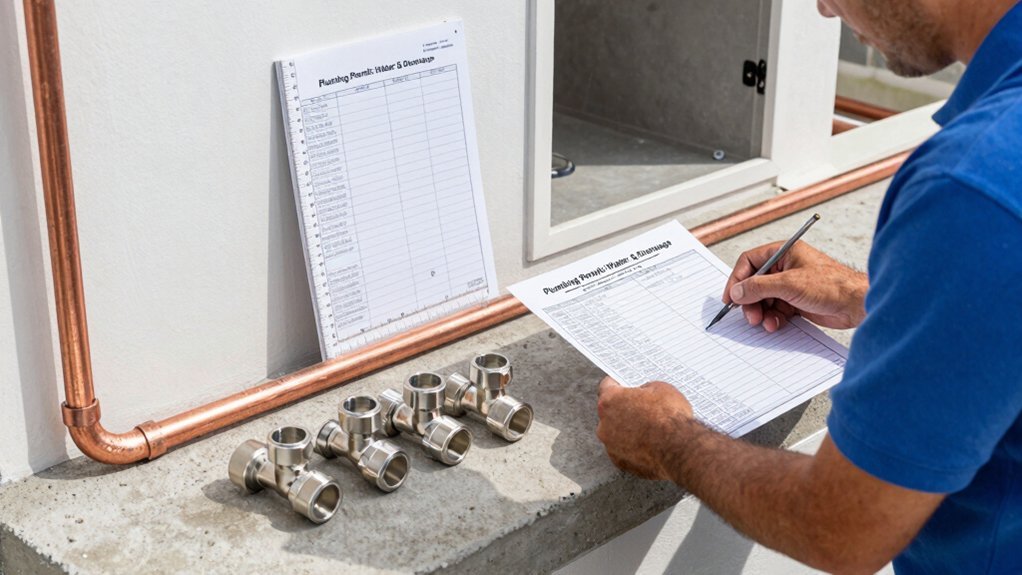
You’ll need plumbing permits for any water supply lines and drainage systems you install in your outdoor kitchen, whether you’re connecting to your home’s main supply or running a separate line. Proper water supply routing and wastewater management are critical for both code compliance and long-term functionality, so you can’t skip these requirements even if other permits feel straightforward. Understanding your local drainage and backflow prevention standards upfront will streamline your permit approval and inspection process.
Water Supply Line Requirements
Whether you’re tying into your home’s existing water supply or installing a dedicated line, you’ll need a plumbing permit that covers both water delivery and drainage. Your choice depends on distance, existing infrastructure, and local codes.
Consider these options when planning your water supply:
- Tie into main supply: Connect directly to your home’s existing water line, offering cost savings and simpler installation for kitchens located near the house
- Install a separate line: Run an independent water line dedicated solely to your outdoor kitchen, providing flexibility in placement and isolating outdoor usage
- Verify local requirements: Contact your building department to confirm which option complies with your area’s plumbing codes and inspection standards
Most municipalities require sink placement adjacent to existing water pipes to minimize installation complexity and costs.
Drainage and Wastewater Management
Once you’ve determined your water supply strategy, proper drainage becomes equally important to keep your outdoor kitchen clean and functional. You’ll need to install drainage lines that safely remove wastewater from sinks, dishwashers, and ice makers away from your home and landscaping.
Most building codes require you to connect drainage systems to your home’s main sewer line or install a separate drainage solution if that’s not feasible. Your drain placement should slope properly to prevent water pooling and ensure efficient wastewater removal.
Inspections at the rough-in and final stages verify your drainage system meets local sanitary codes and includes proper backflow prevention devices. These inspections confirm your system won’t contaminate your water supply or violate drainage regulations. Always check your local requirements before installation.
Gas Permits for Grills and Burners
Why does gas line work demand professional installation? You can’t safely DIY gas connections—they require licensed, certified professionals to prevent leaks and hazards.
Gas line work requires licensed, certified professionals to safely prevent leaks and hazards—DIY connections aren’t safe.
You’ll need a gas permit for built-in grills, side burners, or pizza ovens running on natural gas or propane. The permit review process ensures your installation meets safety standards:
- Pressure testing validates system integrity
- Approved flexible connectors prevent damage and disconnection
- Accessible shut-off valves enable emergency response
Local regulations vary significantly, so check your jurisdiction’s specific requirements. Some areas mandate additional inspections beyond standard gas compliance. Larger outdoor kitchen features often trigger combined gas and electrical/plumbing permits, requiring coordinated approvals across multiple departments.
Don’t skip the permitting process—inspectors verify your system’s safety and protect your investment.
Zoning Approval and HOA Considerations
Have you checked your local zoning regulations before installing your outdoor kitchen? Local zoning departments enforce setback, height, and lot coverage rules that directly impact your installation’s placement and size. You’ll need to verify these requirements early to avoid costly modifications later.
If you live in a planned community, your HOA likely imposes design restrictions governing materials, colors, and setbacks. These guidelines shape your outdoor kitchen’s overall appearance and must align with neighborhood standards.
You should also review noise restrictions and outdoor use regulations in your zoning codes. These rules influence equipment choices, layout, and operating hours for your kitchen.
Compliance with all design guidelines streamlines your approval process and eliminates future code conflicts, saving you time and expense.
Factors That Determine If You Need a Permit
Whether you’ll need a permit for your backyard kitchen depends primarily on your project’s scope and the systems you’re installing. Simple setups without utilities might escape permitting, but most kitchens trigger requirements.
Backyard kitchen permits depend on your project’s scope—simple setups might avoid them, but most require approval.
You’ll definitely need permits if your project involves:
- Electrical work: Outdoor outlets, lighting, or appliance wiring require an electrical permit and professional installation
- Plumbing and water connections: These demand permits and inspections to ensure sanitary and safety compliance
- Gas lines: Any gas work necessitates permits and licensed professionals
Additionally, structural elements like islands, countertops, or roofing commonly require permits. Special circumstances—historic properties, flood zones, or multi-family buildings—may impose extra approvals and coordinated inspections. Consult your local building department to confirm what applies to your specific kitchen design.
Steps to Obtain a Permit for Your Outdoor Kitchen
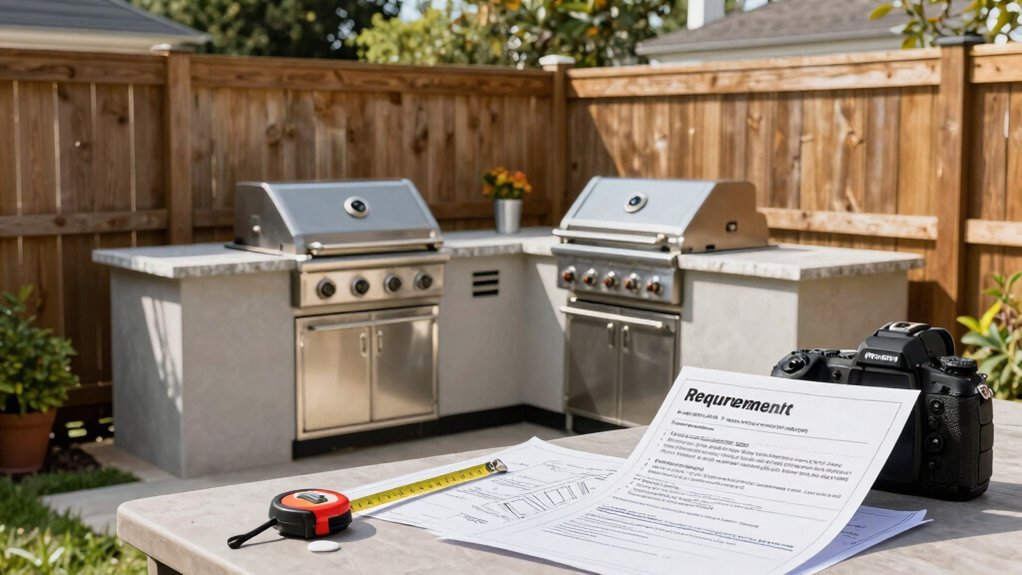
You’ll need to research your local building department’s specific requirements, prepare detailed plans showing your layout and utilities, and then schedule inspections at critical construction phases to ensure code compliance. Start by visiting your municipality’s website or contacting the building department directly to understand which permits apply to your project scope. Once you’ve gathered this information and compiled your documentation, you’re ready to move forward with the application process and inspector approvals.
Research Local Building Requirements
Before submitting your permit application, visit your municipality or building department website to identify which permits you’ll need for plumbing, electrical, gas, and structural components.
Understanding local requirements upfront prevents costly delays and rework. Different jurisdictions have varying codes, so don’t assume what applies elsewhere works for your area. You’ll likely encounter:
- Plumbing permits for water lines, drainage, and sink installations
- Electrical permits for outlets, lighting, and appliance connections
- Gas permits for grills, heaters, or other fuel-powered equipment
Contact your building department directly if you can’t find specific information online. Staff members can clarify which permits your project requires and explain setback distances from property lines, neighbor easements, and utility proximity rules. This research foundation ensures your project meets all applicable codes before construction begins.
Prepare and Submit Plans
Once you’ve identified your local requirements, it’s time to compile the detailed plans and documentation that’ll move your project forward. You’ll need to gather comprehensive materials including a site layout showing appliance placement, detailed appliance specifications, complete material lists, and utility proximity diagrams.
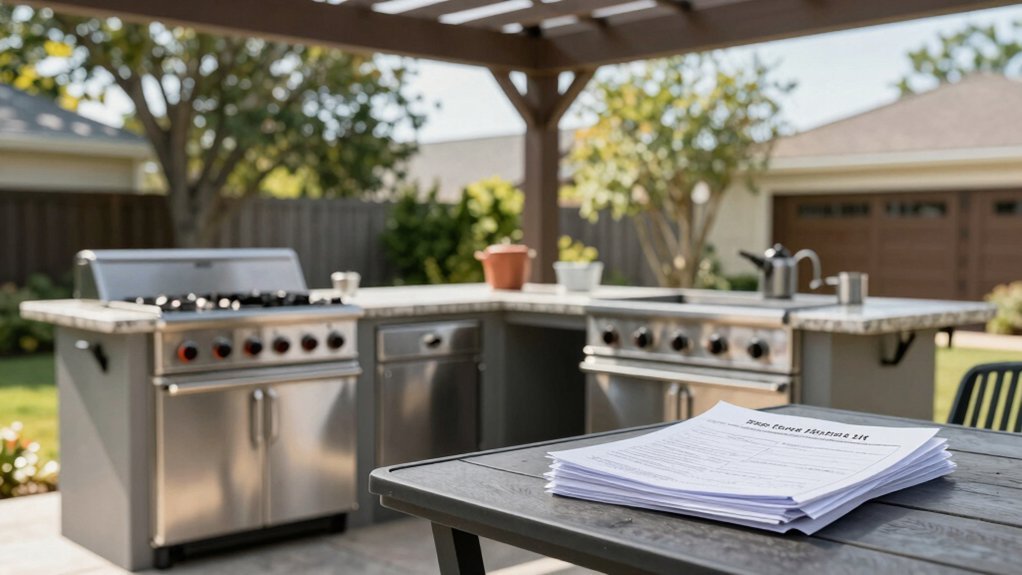
| Document Type | Purpose |
|---|---|
| Layout Plans | Shows appliance placement and spatial design |
| Utility Diagrams | Identifies gas, electrical, and water line locations |
| Code Compliance Details | Demonstrates adherence to electrical, plumbing, and gas standards |
Submit these plans to your building department as part of your permit application. Your documentation must address backflow prevention and proper drainage requirements. Be prepared for potential code official requests during review—these revisions can extend your timeline. Thorough, accurate submissions upfront minimize delays and inspection complications.
Schedule Inspections and Approvals
What happens after your permit gets approved? You’ll need to post the permit placard visibly on your property and schedule inspections at critical construction milestones. These inspections ensure your installation meets local building codes and safety standards.
You’ll arrange inspections for:
- Rough-in phase – inspectors verify plumbing, gas, and electrical lines are correctly installed before concealment
- Final inspection – comprehensive review of the completed outdoor kitchen and all systems
- Utility connections – verification that gas, electrical, and water hookups meet code requirements
Complete each inspection promptly to maintain permit validity. Don’t cover any rough-in work until inspectors approve it. Keep all inspection reports and documentation organized. Licensed professionals handling gas, electrical, and plumbing work ensures compliance and protects your investment throughout the process.
How Permits Impact Your Project Timeline
Because permit review processes vary considerably by jurisdiction and project scope, you’ll want to prepare for approval timelines that typically span anywhere from a few weeks to about a month. Your detailed submissions—including layout drawings, appliance specifications, material lists, and utility proximity documentation—directly influence how quickly officials process your application.
Plan for potential delays when permit feedback requires design revisions. You’ll need to resubmit modified plans before receiving final approval, which extends your overall timeline. Additionally, coordinating with utility providers for gas, water, and electrical work can introduce unexpected scheduling conflicts.
If your property falls under HOA restrictions or zoning regulations, expect additional review layers that further delay approvals. Factor these variables into your project schedule to avoid frustration and maintain realistic completion expectations.
What Happens When Building Without a Permit
Skipping the permit process might seem like a shortcut, but you’ll likely face serious consequences that far outweigh any initial time or cost savings.
Building without permits exposes you to significant risks:
- Legal and financial penalties: You’ll face fines, forced demolition, and costly legal battles that complicate future property sales or refinancing.
- Insurance complications: Unauthorized work may void your coverage, leaving you unprotected against accidents or damage claims.
- Code violations: Without inspections at rough-in and final stages, you’ll miss critical checks for electrical, plumbing, gas, and structural safety—potentially requiring expensive retrofits later.
Local zoning laws and HOA restrictions may also prohibit unpermitted kitchens, triggering enforcement actions. The short-term convenience isn’t worth the long-term liability and financial burden you’ll create.
Working With Licensed Contractors for Permit Compliance
Now that you understand the risks of unpermitted work, partnering with licensed contractors is your best strategy for traversing permit requirements and protecting your investment. Licensed professionals understand local codes and inspection procedures, handling rough-in and final-stage inspections that verify safe installation before you use your outdoor kitchen.
Your contractors will coordinate gas, electrical, and plumbing work to meet code standards. They’ll manage separate permits for connections to your home, ensuring dedicated circuits and backflow protection where needed. They’ll also navigate local regulations, HOA rules, and zoning requirements affecting setbacks and drainage.
Having documentation from licensed professionals—including detailed plans and inspection reports—streamlines permit approvals and creates essential records for future property sales, giving you confidence and peace of mind.
Frequently Asked Questions
Do You Need a Permit for an Outdoor Kitchen?
You’ll likely need a permit for an outdoor kitchen, especially if it involves plumbing, electrical work, gas connections, or built-in features. However, permit requirements vary by location and project scope, so you should contact your local building department to confirm what’s needed for your specific project.
Can I Build an Outdoor Kitchen Without Planning Permission?
You shouldn’t build an outdoor kitchen without planning permission. Most jurisdictions require permits for electrical, plumbing, gas, or permanent structural work. Skipping permits risks fines, forced demolition, and insurance complications. Always check your local codes first.
What Requires a Building Permit in Arkansas?
You’ll need a building permit in Arkansas for permanent outdoor kitchen structures, built-in grills, plumbing connections, electrical work, and gas line installations. You should also check local zoning rules and HOA restrictions, as they may require additional approvals or plan reviews.
What Can a Homeowner Do Without a Permit in Kansas?
You can typically install minor outdoor kitchen components without a permit in Kansas—think portable grills, non-permanent countertops, or simple landscaping. However, you’ll need permits for anything involving plumbing, electrical work, gas connections, or structural changes.