You’ll need to measure your outdoor space carefully, accounting for walls and obstructions, then select 304 or 316 stainless steel cabinets with UV-resistant finishes for durability. Choose storage components like drawers and doors in 3-inch increments to fit your items efficiently. Install wall-mounted shelves to structural framing using weatherproof fasteners and marine-grade sealant at all joints. Don’t forget drainage holes and weatherproof gaskets to prevent moisture buildup. The details that’ll keep your system thriving through seasons await you.
Measuring Your Space and Planning the Layout
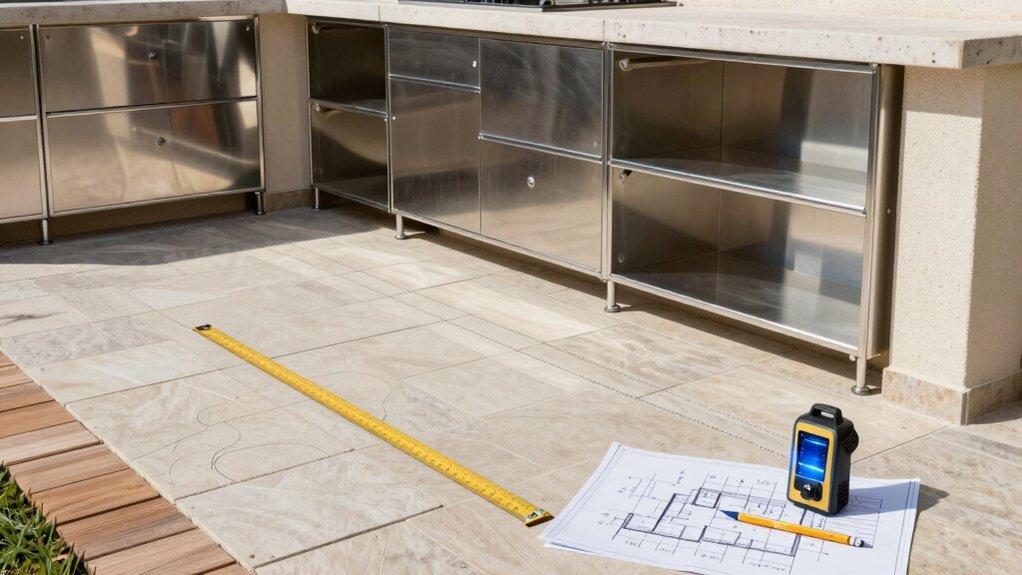
How you’ll arrange your outdoor kitchen depends entirely on what you’re working with. Start by measuring your outdoor area carefully, accounting for walls, trees, and obstructions that’ll impact your layout and access. You’ll need to identify distinct zones—prep, cook, serve, and storage—to determine where cabinets, drawers, and shelves work best functionally.
Plan around the work triangle concept, positioning your sink, grill, and refrigeration close together to streamline your workflow. Select cabinet widths in 3-inch increments, ranging from 9″ to 48″ wide, so you’ll fit specific items without cluttering your island space.
Don’t overlook vertical storage opportunities either. Incorporating tall cabinets or wall-mounted shelves maximizes your storage capacity without expanding your footprint, giving you efficient organization from the ground up.
Selecting Weather-Resistant Materials for Durability
Once you’ve mapped out your layout, material selection becomes your next priority—and it’ll make or break your outdoor kitchen’s longevity. You’ll want to invest in 304 or 316 stainless steel for cabinetry, as both resist rust and corrosion exceptionally well in humid climates. Consider powder-coated finishes to enhance weather resistance and maintain color vibrancy over time. Look for UV-resistant coatings that prevent fading from prolonged sun exposure. Opt for weatherproof, sealed cabinets that deter moisture, pests, and water intrusion effectively. Marine-grade polymer or HDPE materials offer durability with minimal maintenance demands, ensuring your storage withstands seasonal elements without deteriorating. These strategic choices protect your investment while keeping upkeep manageable.
Choosing the Right Storage Components for Your Needs
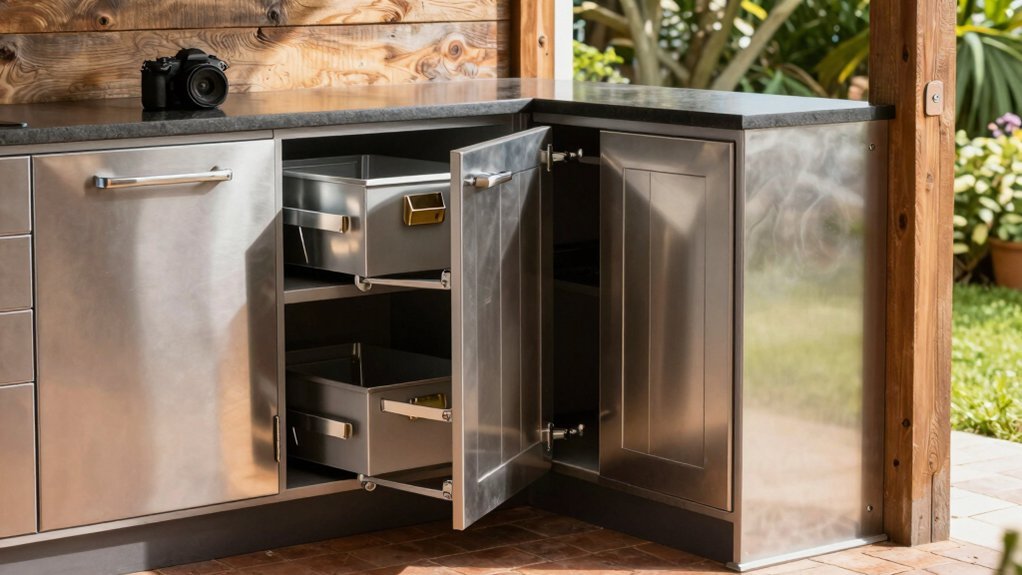
What’ll work best for your outdoor kitchen depends entirely on what you’re storing. You’ll choose between drawers, doors, or combo units based on your specific needs and available space.
| Component Type | Best For | Width Range |
|---|---|---|
| Drawers | Utensils and grill accessories | 9″–48″ |
| Doors | Larger items and utility access | 9″–48″ |
| Combo Units | Maximizing diverse storage | 9″–48″ |
Match drawer counts and door sizes to your item dimensions precisely. Tall cabinets (84″–96″) maximize vertical storage, while dry storage pantries with fully enclosed interiors protect fuel and pantry items. Select 304 stainless steel with powder-coated finishes for durability and aesthetics. Include back and side panels to shield contents from weather. This strategic approach ensures your outdoor kitchen storage accommodates everything you need while resisting the elements.
Installing Wall-Mounted Shelves and Pull-Out Drawers
You’ll need to measure your wall space carefully and plan your layout before you begin the installation process.
When you’re ready to mount your shelves, you’ll select appropriate hardware that anchors securely into solid framing to handle the weight of outdoor items.
Finally, you’ll adjust shelf heights and ensure drawer alignment so everything operates smoothly and functions as intended.
Measuring and Planning Installation
How do you ensure your outdoor shelves and drawers won’t interfere with doors, grills, or essential utilities? Start by measuring your wall space precisely, noting height, width, and any obstructions. Document clearances needed for ventilation, gas lines, and hoses to prevent operational conflicts.
Next, locate wall studs to support the combined weight of loaded shelves and cookware. If studs aren’t positioned ideally, use reinforced anchors rated for heavy loads. Plan your pull-out drawer placement to maintain easy access while keeping a slim profile that won’t block cabinet doors.
Sketch your layout on paper, marking exact dimensions and spacing. This planning stage prevents costly mistakes and ensures your storage solution integrates seamlessly with your outdoor kitchen’s functionality and maintenance requirements.
Mounting Hardware and Anchoring
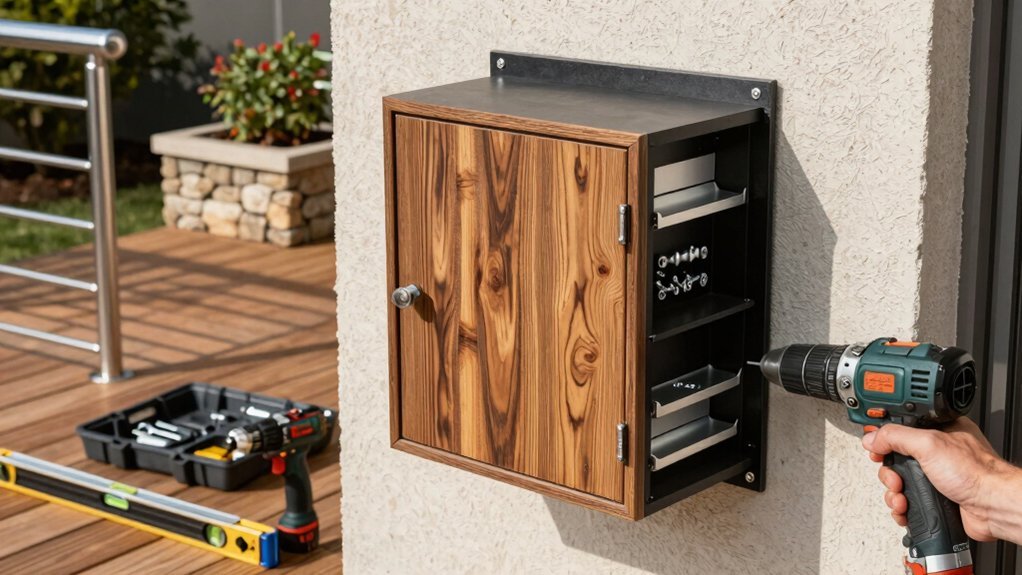
Once you’ve finalized your layout, the success of your outdoor storage hinges on selecting the right mounting hardware and anchoring system. You’ll want to use 304 or 316 stainless steel fasteners that resist rust and corrosion from outdoor exposure. Secure wall-mounted shelves directly to structural studs using anchors rated for outdoor loads, accounting for wind and seismic requirements in your area. Pre-drill all holes and apply loctite or anti-vibration fasteners to prevent loosening from temperature fluctuations and vibrations. For pull-out drawers, install heavy-duty slides specifically rated for outdoor use that handle full drawer weight while performing smoothly through humidity and temperature changes. Select cabinets with weatherproof seals and gaskets to block moisture intrusion and mold growth.
Adjusting Shelves and Drawer Alignment
With your mounting hardware secured and anchors properly set, the next step involves fine-tuning the shelves and drawers to ensure they’re level, aligned, and functioning smoothly. Start by spacing shelves consistently at 12 inches apart, allowing flexibility for various item heights while accommodating outdoor temperature expansion. Use shims during installation to achieve perfectly level surfaces, then secure everything with multi-point fasteners to prevent sagging from wind or vibration.
For pull-out drawers, verify that full-extension, ball-bearing slides are rated for at least 100–150 pounds per pair. Align drawer fronts and shelf lips flush across your cabinet face, compensating for tolerances to maintain weatherproof seals. This careful alignment creates a unified appearance and ensures all components operate smoothly despite outdoor conditions.
Positioning Appliances and Work Zones for Workflow Efficiency
Why does your outdoor kitchen layout matter more than you’d think? Your appliance placement directly impacts how efficiently you’ll cook and prep meals.
Start by positioning your sink, grill, and fridge in a triangle formation to minimize walking distances between prepping, cooking, and cleanup. This work triangle is the foundation of functional kitchen design.
Next, create distinct zones for prep, cooking, and serving. Install drawers and pull-out shelves adjacent to your grill and prep space for easy access to utensils and spices. Place storage cabinets on your island’s back panel or doors to keep countertops clear.
Finally, maintain at least three feet of clearance around your island for comfortable movement. Position a dedicated prep zone with lightweight shelving beside your sink for cutting boards and frequently used items. These intentional placements transform your outdoor kitchen into an efficient cooking space.
Adding Ventilation, Drainage, and Pest Prevention Features
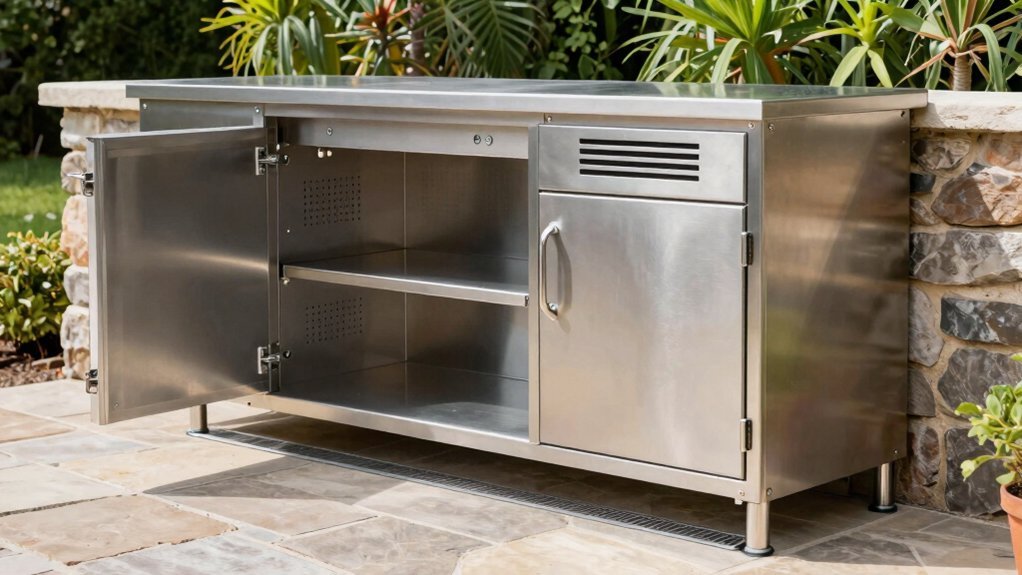
Your outdoor kitchen’s longevity depends on three critical systems working together: ventilation, drainage, and pest prevention.
You’ll want to install vented access panels and perforated backings behind cabinets to circulate air and prevent moisture accumulation. Simultaneously, incorporate drainage channels and built-in holes in cabinet bases and under-sink areas to eliminate standing water that breeds mold.
For pest control, you should:
- Install tight-sealing gaskets and magnetic hardware on cabinet doors
- Add door bottoms with rolled or rubber seals to block insect entry
- Position vented drawers near grills to direct heat and fumes away from stored items
Finally, select moisture-resistant materials like 304/316 stainless steel or HDPE with UV-resistant finishes. These choices minimize warping, rust, and deterioration, ensuring your outdoor kitchen withstands harsh weather conditions effectively.
Maintaining Your Outdoor Kitchen Storage Over Time
You’ll protect your outdoor kitchen storage investment by addressing weather protection, sealing, and seasonal maintenance schedules that keep moisture and pests at bay. Regular material inspections catch rust, corrosion, and wear before they compromise your cabinets’ integrity and functionality.
Weather Protection and Sealing
Since Florida’s humidity and intense sun can quickly deteriorate outdoor kitchen storage, proper weather protection and sealing are essential to maintaining your investment.
You’ll want to prioritize several key protective measures:
- Material selection: Choose 304 or 316 stainless steel cabinets that naturally resist rust and corrosion in humid climates
- Surface protection: Apply UV-resistant finishes and powder coatings to prevent sun fading and door/drawer wear
- Moisture control: Seal all joints with weatherproof gaskets, install drainage or vent holes to minimize condensation and mold, and weatherproof back and side panels on exterior-facing installations
These steps work together to shield your cabinets from Florida’s demanding environment. You’ll extend your storage’s lifespan considerably and avoid costly replacements. Regular inspections help you catch deterioration early and maintain peak performance.
Seasonal Maintenance Schedules
While weather protection and sealing create the foundation for your outdoor kitchen storage’s durability, maintaining that protection over time requires consistent attention. You’ll develop a rhythm across four seasons, addressing climate-specific challenges systematically.
| Season | Task | Focus Area |
|---|---|---|
| Spring | Inspect door seals and gaskets | Rust spots on stainless steel |
| Summer | Lubricate hinges and slides | Marine-grade products |
| Fall | Pest-proof and ventilate | Clean dust and debris |
| Winter | Monitor moisture intrusion | Weatherstripping integrity |
In coastal or humid regions, you’ll tighten weatherstripping quarterly to prevent mold growth. Sunny climates demand frequent UV protection reapplication, while ocean-proximity areas need aggressive corrosion checks. Align your maintenance calendar with your local environment’s demands rather than treating all seasons identically. This targeted approach preserves functionality and extends your storage system’s lifespan significantly.
Material Inspection and Repairs
Vigilance becomes your best defense against the gradual deterioration that weather and time inflict on outdoor storage cabinets. You’ll need to establish a regular inspection routine that catches problems before they escalate into costly repairs.
Focus your attention on these critical areas:
- Hardware and hinges: Check for rust, corrosion, and loosened fasteners, especially after storms or salt air exposure
- Seals and gaskets: Inspect weather barriers on storage areas and replace damaged ones to maintain moisture resistance
- Interior components: Monitor shelving, pull-out rails, and neoprene-lined shelves for corrosion; lubricate rollers for smooth operation
Additionally, examine seams and edges for water intrusion, resealing with marine-grade sealant as needed. Monitor cabinet feet and anchoring hardware to ensure your structure remains level and secure after temperature fluctuations or high winds. Prompt repairs prevent mold, rot, and structural failure.
Frequently Asked Questions
How to Store an Outdoor Kitchen?
You’ll store your outdoor kitchen by installing weather-resistant 304 or 316 stainless steel cabinets with sealed dry storage for pantry items. Position tall cabinets near prep zones, use pull-out shelves for accessibility, and choose configurations matching your equipment dimensions to maximize efficiency.
Do I Need a Permit to Install an Outdoor Kitchen?
Yes, you’ll likely need permits for your outdoor kitchen. Most areas require them for permanent installations involving plumbing, gas lines, or electrical work. You should check your local municipality’s building codes before starting your project.
Can Kitchen Cabinets Be Used Outdoors?
Yes, you can use kitchen cabinets outdoors, but you’ll need weather-resistant materials like stainless steel or marine-grade polymer. You’ll want UV-resistant finishes, sealed doors, and corrosion-resistant hardware to protect against humidity and sun damage in outdoor environments.
How to Add Storage Space to a Kitchen?
You can add storage space to your kitchen by installing tall cabinets up to 96″ high, incorporating multi-drawer configurations, and using pull-out shelves. You’ll maximize vertical space while keeping frequently used items easily accessible and organized efficiently.