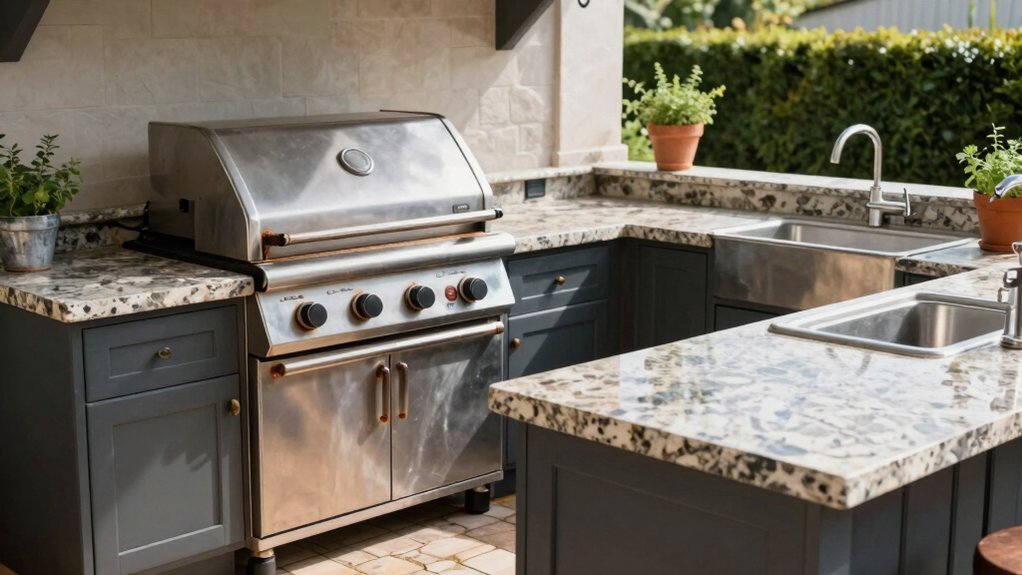
Your outdoor kitchen needs consistent care to stay functional and safe. Weekly wiping of countertops, grates, and sinks removes grime before it hardens. Monthly inspections should cover propane lines, hinges, and hardware for wear or leaks. Seasonally, you’ll deep clean, winterize pipes, and invest in protective covers. Annually, schedule professional tune-ups and reseal natural stone as needed. We’ve outlined exactly what your kitchen requires to thrive year-round.
Weekly or Biweekly Maintenance: Keep It Fresh
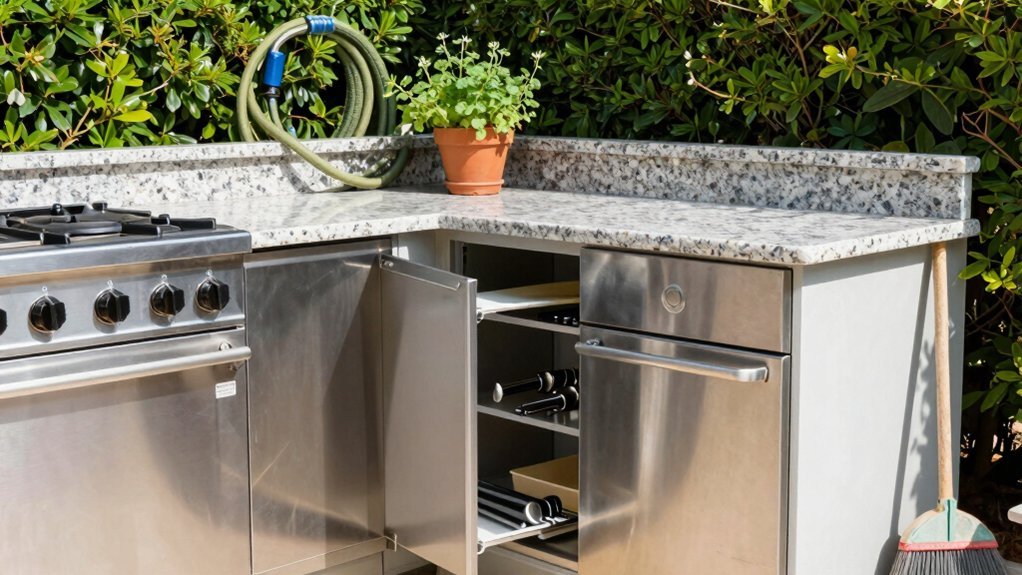
How quickly does an outdoor kitchen accumulate grime? Faster than you’d think. That’s why you’ll want to establish a weekly or biweekly cleaning routine to keep everything fresh and functional.
Start by wiping down countertops, cabinet fronts, and sinks with mild soap or multi-surface outdoor cleaner. This removes daily grime before it hardens.
Next, tackle your grill grates and side burners—removing grease and residue prevents dangerous flare-ups and buildup that compromises cooking quality.
Don’t overlook your trash and recycling bins. Empty and rinse them regularly to avoid odors and pest attraction.
Sweep or hose off your patio, pavers, or deck to maintain a clean outdoor space.
Finally, check for pests, food debris, and standing water. Catching issues early prevents damage and keeps your kitchen operating smoothly.
Monthly Maintenance: Inspect and Protect
While weekly cleaning keeps your outdoor kitchen looking sharp, monthly inspections are what actually protect your investment. During these deeper checks, you’ll examine propane lines, gas hoses, and regulators for wear or leaks that could compromise safety.
Monthly inspections protect your investment by catching propane line wear, gas hose damage, and regulator leaks early.
Clean inside drawers, cabinets, and appliance interiors thoroughly to remove dust, spills, and grime that accumulate over time.
Check weather seals on under-counter refrigerators and storage areas to ensure they remain airtight and functional. Lubricate hinges, door handles, and casters on grills or carts to maintain smooth operation and prevent rust.
These monthly tasks catch potential problems early, extending your equipment’s lifespan. As you perform maintenance, note any upgrade ideas or layout changes you’d like to explore. Consider visiting a showroom for professional design advice and layout planning to maximize your space’s potential.
Seasonal Maintenance Checklist — Spring & Summer
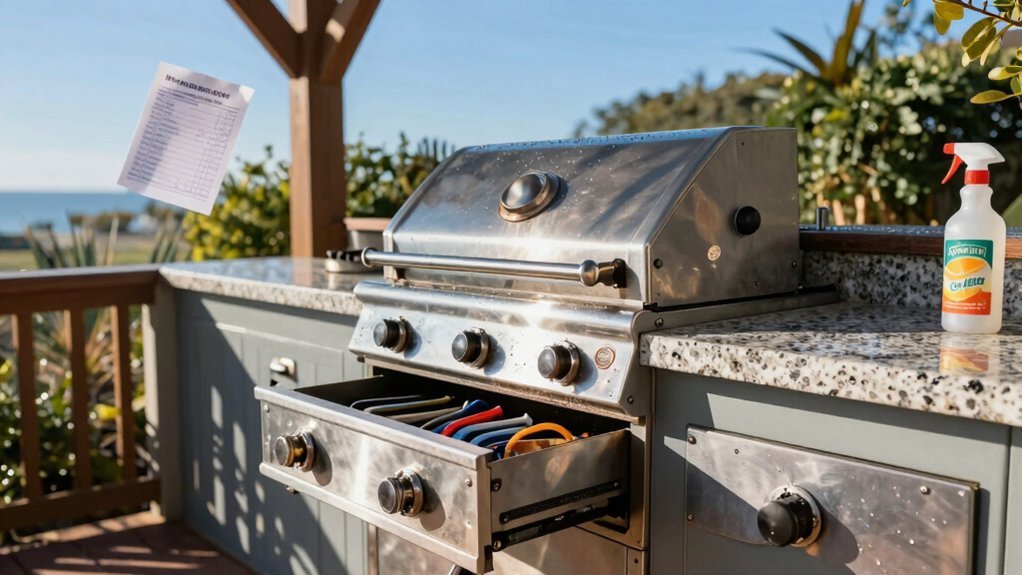
When spring arrives, it’s time to shift your outdoor kitchen from hibernation mode to peak performance. Start by power washing your deck, pavers, and backsplash to remove winter’s grime and buildup. Deep clean your grill inside and out, eliminating accumulated grease and residue that can affect cooking quality and safety.
Next, inspect all hardware—tighten loose bolts and replace corroded components before they cause equipment failures. Restock your fuel tanks, utensils, seasonings, and serving essentials so you’re fully prepared for entertaining.
Don’t overlook your refrigerators or coolers. Clean them thoroughly and test their cooling performance to ensure proper food safety throughout the warm months. These spring preparations establish a solid foundation for enjoying your outdoor kitchen all season long.
Seasonal Maintenance Checklist — Fall & Winter
As temperatures drop, you’ll need to winterize your outdoor kitchen by turning off water lines, draining pipes, and insulating them against freezing. You should remove loose accessories and fabric covers, storing them in dry spaces to prevent moisture damage. Finally, you’ll protect your grill and appliances with weatherproof covers while clearing gutters to keep leaves and debris from accumulating near your equipment.
Winterization and Storage
How do you protect your outdoor kitchen from harsh winter conditions? Start by shutting off water supplies and flushing remaining water from pipes to prevent freezing damage. Turn off your gas line or propane supply as well.
Next, store loose accessories, fabric covers, cushions, chairs, and towels in dry, protected spaces to prevent mildew and deterioration. Cover grills and appliances with weatherproof covers that shield them from moisture and cold.
Clear gutters and surrounding vegetation to eliminate leaf and moisture buildup that could damage equipment or cause clogs.
If you’re planning winter use, invest in wind barriers, patio heaters, or insulated covers to maintain safety and efficiency during cold months.
Weather Protection Measures
Why do so many outdoor kitchen owners overlook seasonal weather protection until damage occurs? You’ll want to shield your investment from fall and winter’s harshest conditions.
Start by using weatherproof covers for your grill and appliances. These barriers protect against rain, dust, and UV exposure that can degrade materials and finishes.
Store cushions, chairs, and towels indoors in dry spaces to prevent moisture and mildew growth.
Don’t neglect your gutters—clear them regularly along with surrounding vegetation to prevent leaves and moisture from accumulating near your kitchen. This buildup can cause rust and structural damage.
If you’re planning winter cooking, install wind barriers or insulated covers to maintain both safety and efficiency. These measures ensure your outdoor kitchen stays protected and functional throughout the cold months.
Long-Term Maintenance and Professional Care
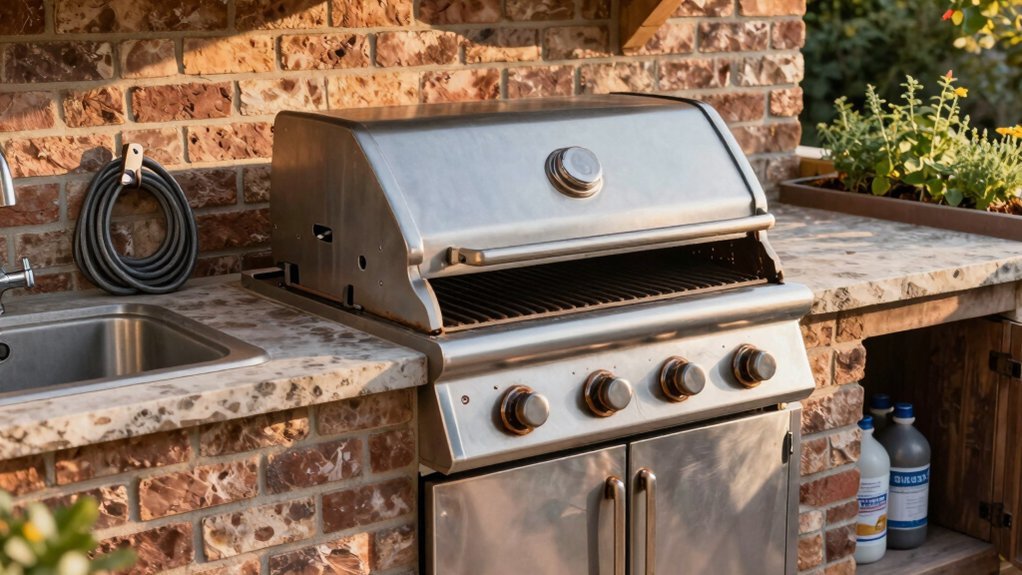
You’ll want to schedule professional appliance tune-ups periodically to keep your gas or electric units running safely and efficiently, especially since these components are central to your outdoor kitchen’s performance.
Don’t overlook your warranty coverage—reviewing the terms ensures you’re maximizing service benefits and catching repairs that manufacturers or extended plans will cover.
Combining regular expert inspections with your seasonal upkeep creates a sustainable maintenance strategy that protects your investment for years to come.
Professional Tune-Ups and Inspections
When’s the last time you’d your outdoor kitchen professionally serviced? Regular professional tune-ups and inspections protect your investment and ensure safe operation. You’ll want to schedule these services annually, especially before heavy usage seasons.
Professional inspections should include:
- Appliance evaluation – Technicians examine gas and electric units for optimal performance, checking connections, burners, and safety features
- Warranty verification – Review your coverage terms to determine if repairs qualify for warranty service, potentially saving you thousands
- System assessment – Professionals inspect plumbing, electrical components, and structural integrity to catch problems early
Don’t overlook this crucial maintenance step. Professional inspections identify issues you’d miss during routine cleaning, preventing costly repairs down the road.
Warranty Coverage and Repairs
How well do you understand your outdoor kitchen’s warranty coverage? Most outdoor kitchen components come with limited lifetime structural warranties for frameless builds, though specific terms vary by manufacturer. You’ll want to review your warranty documentation carefully to identify what repairs are covered and when service should be scheduled.
Keep all paperwork organized for future claims. Many warranties require you to follow manufacturer guidelines for cleaning and maintenance to remain valid. This includes proper winterization, avoiding indoor cleaners on outdoor surfaces, and scheduling professional inspections for gas or electric appliances.
Don’t overlook natural stone countertops—you’ll need to reseal them periodically as the initial seal wears off. Understanding these coverage details now prevents costly surprises later and ensures your outdoor kitchen stays protected long-term.
Common Maintenance Mistakes to Avoid
What separates a well-maintained outdoor kitchen from a deteriorating one often comes down to avoiding preventable errors.
You’ll damage your island by making these costly mistakes:
- Using power washers on all surfaces – You risk etching stone, concrete, and brick. Stick with soap and water for most materials.
- Neglecting stainless steel care – Avoid steel wool and harsh abrasives that scratch and promote rust. Use Bar Keepers Friend or dedicated stainless steel polish instead.
- Skipping seasonal prep – Failing to winterize, cover accessories, or perform deep cleans before fall exposes your kitchen to UV damage, moisture, and pest infiltration.
Regular inspections of hinges, handles, and burner ports prevent blockages and mechanical failures. These preventive steps protect your investment and extend your island’s lifespan markedly.
Protective Covers and Storage Solutions
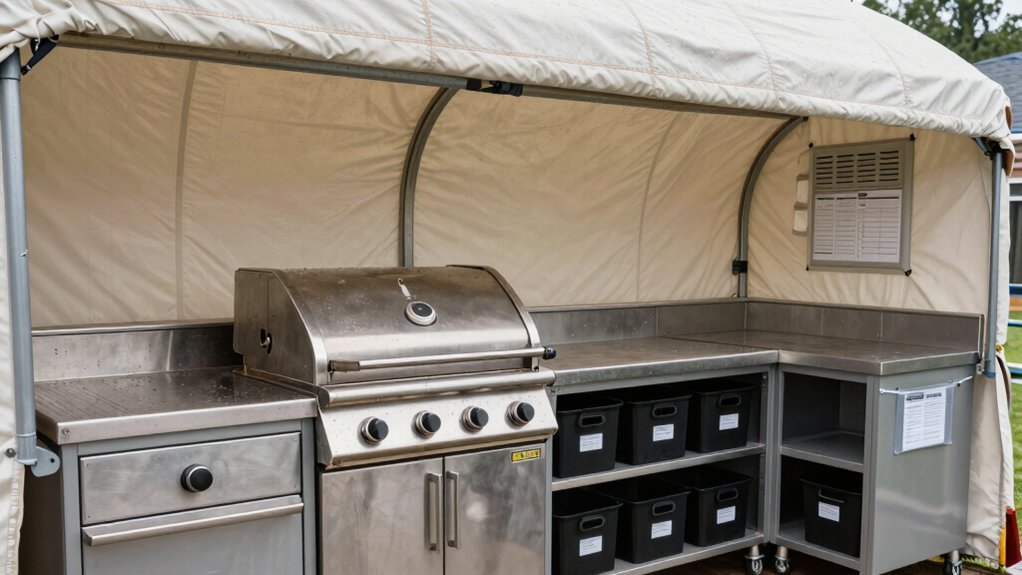
Investing in quality protective covers is one of the most effective ways you can safeguard your outdoor kitchen during harsh weather and off-season months. You’ll want snug-fitting covers for your grill, islands, and exposed surfaces to minimize moisture intrusion and corrosion.
Before storing your kitchen for winter, you should deep clean the grill and cabinetry thoroughly. Next, shut off your gas supply and disconnect propane tanks completely. Store or enclose accessories indoors to prevent weather-related deterioration and keep everything ready for seasonal entertaining.
Quality covers shield appliances and cabinetry from rain, dust, and harmful UV exposure. This investment protects your equipment’s longevity and appearance, ensuring your outdoor kitchen remains in excellent condition year-round.
Safety Clearance, Ventilation, and Insulation
Why should you prioritize safety clearance and proper ventilation in your outdoor kitchen design? These elements directly protect your property and family from fire hazards and equipment failure.
You’ll want to implement these critical safety measures:
- Maintain clearance around combustibles – Keep grills and side burners away from wood, fabric, and other flammable materials to prevent ignition hazards.
- Install ventilation systems – Add vent hoods and island vents to reduce fire risk and eliminate cooking smoke and heat.
- Insulate combustible islands – Protect wooden or composite islands with insulated jackets that prevent heat transfer and damage.
Additionally, ensure proper airflow around cooling equipment like refrigerators and ice makers to prevent heat buildup and premature failure. Leave adequate space for grill hoods and doors to open fully. Always check local building codes—they’ll guide your safety requirements and ensure your outdoor kitchen meets all legality standards.
Your Outdoor Kitchen Maintenance Goals
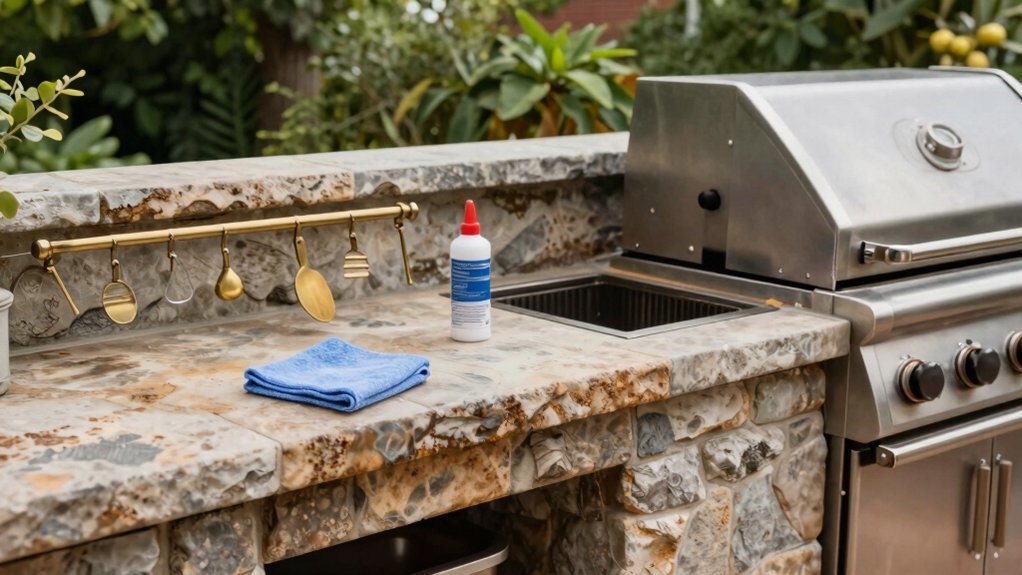
How you approach maintenance will determine whether your outdoor kitchen stays functional and attractive for decades. Your primary goal should be preserving both appearance and longevity through consistent care routines.
Start by establishing a regular cleaning schedule. You’ll want to wipe countertops, cabinets, and sinks frequently, removing grease from grill grates to prevent buildup and deterioration. Tailor your cleaning methods to your specific materials—gentle soap and water with a soft sponge work best for concrete finishes, while stainless steel appliances respond well to mild soap or Bar Keepers Friend for stubborn stains.
Beyond routine cleaning, plan seasonally. You should reseal countertops when needed, inspect hardware and seals, and schedule professional tune-ups. This proactive approach maximizes your investment’s lifespan significantly.
Frequently Asked Questions
How to Maintain an Outdoor Kitchen?
You’ll maintain your outdoor kitchen by cleaning grates after each use, deep-cleaning monthly, using appropriate polish for stainless steel, resealing materials periodically, and performing seasonal storage. You’ll also shut off gas and cover accessories before winter.
What Should Every Outdoor Kitchen Have?
You’ll want a grill, refrigeration, sink, and storage as essentials. Include a durable countertop, weather-resistant cabinetry, proper lighting, and ventilation. Consider adding a frameless island design to minimize maintenance points and maximize your outdoor entertaining space.
Do You Need to Winterize an Outdoor Kitchen?
Yes, you’ll need to winterize your outdoor kitchen. You should shut off gas supplies, cover or store accessories indoors, and perform deep cleaning before winter arrives to protect your investment from harsh weather damage.
How Long Do Outdoor Kitchens Last?
Your outdoor kitchen can last 15-20+ years with proper maintenance. You’ll extend its lifespan by performing regular cleaning, periodic resealing, seasonal upkeep, and protective coverings that shield it from weather damage and UV exposure.