You’ll transform your patio into a functional entertainment hub by combining a pergola with weather-resistant countertops, a central grill station, and layered lighting. Position your cooking area to direct smoke away from seating zones while leveraging prevailing winds for natural ventilation. Choose durable materials like concrete or quartz countertops paired with automated louvers for flexible shade control. Integrate storage, a sink, and thoughtful layout that connects your indoor kitchen for seamless workflow. Discover how strategic planning and material selection create year-round outdoor living spaces.
Why Add a Pergola to Your Outdoor Kitchen
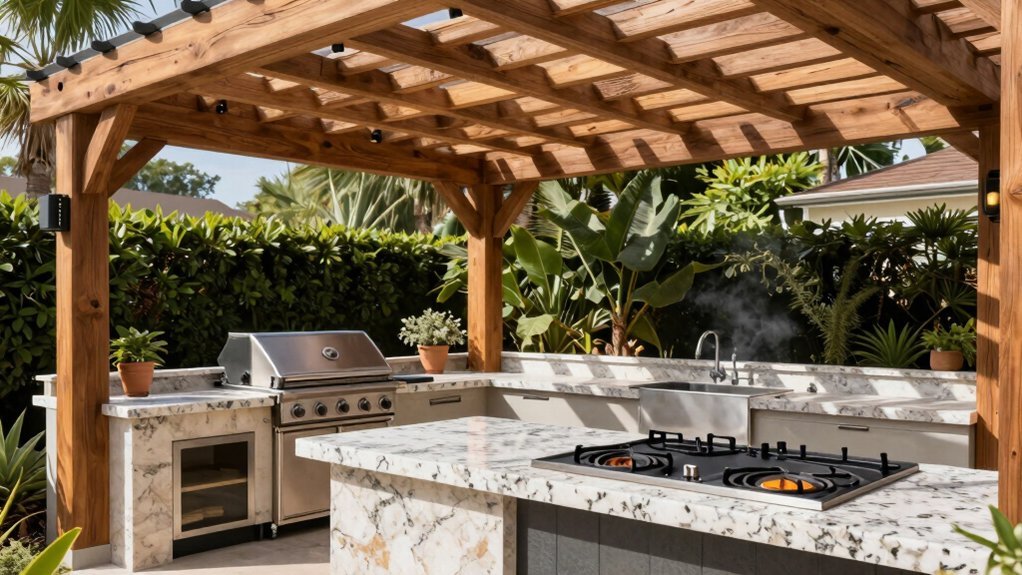
When it comes to creating an outdoor kitchen that’s both functional and inviting, a pergola isn’t just an accessory—it’s a game-changer. You’ll gain essential shade and weather protection, allowing you to cook and entertain year-round. Automated louvers like StruXure’s Pergola X let you adjust sun, rain, and wind exposure on demand, keeping you comfortable regardless of conditions.
Beyond protection, a pergola transforms your patio into a cohesive entertainment hub. It creates a seamless transition between indoor and outdoor living while serving as an aesthetic focal point. You can integrate lighting and furniture to define distinct cooking, dining, and lounging zones within one unified space. This strategic layout maximizes your outdoor kitchen’s functionality while enhancing your home’s overall appeal and usability.
Essential Components for Your Outdoor Kitchen With Pergola
To maximize your pergola’s potential as an entertainment hub, you’ll need to thoughtfully integrate several key components that work together seamlessly.
| Component | Function | Benefit |
|---|---|---|
| Cooking & Grill Station | Food preparation and cooking | Core functionality for meal creation |
| Weather-Resistant Countertops | Work surfaces and durability | Longevity and low maintenance |
| Sink | Cleaning and convenience | Easy access to water for prep |
| Storage Solutions | Organization of tools and ingredients | Keeps essentials within reach |
| Lighting Fixtures | Illumination and ambiance | Extended entertaining into evening |
You’ll want these elements positioned strategically within your layout. The cooking station serves as your anchor, with countertops and sink nearby for efficiency. Strategic storage keeps utensils and cookware accessible without cluttering your workspace. Integrated lighting and decor transform your pergola into an inviting gathering space that flows naturally between cooking, dining, and relaxation zones.
Planning Your Outdoor Kitchen Pergola Location and Layout
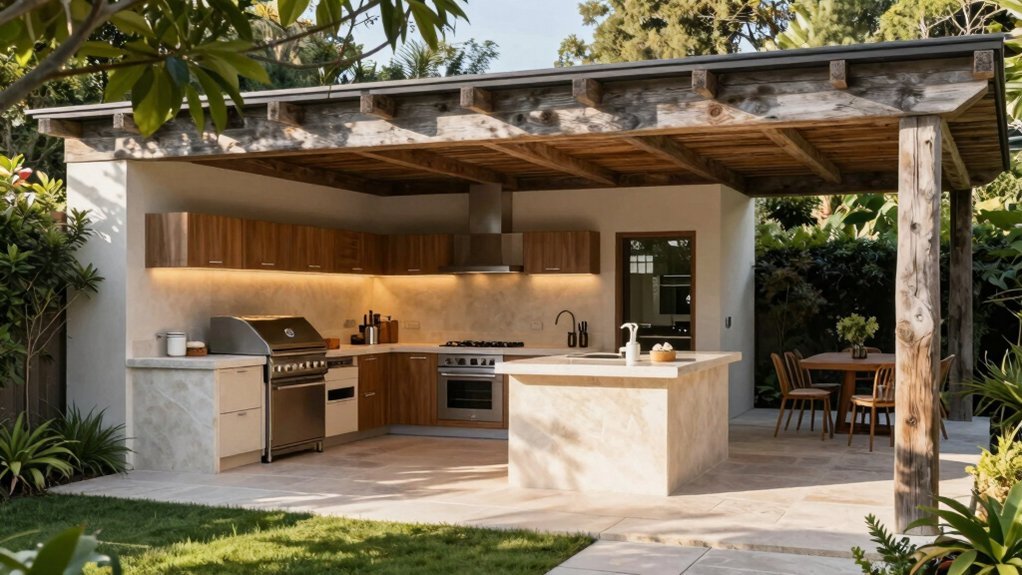
Where you position your pergola kitchen can make or break its functionality and enjoyment. You’ll want to evaluate sun exposure and wind direction first, ensuring comfort during meal prep and dining. Position your cooking area to direct smoke and odors away from seating zones and your home’s windows.
Align your pergola with existing patios or indoor kitchens to create seamless workflow between prep, cooking, and entertaining spaces. This proximity reduces movement friction and keeps everything accessible. You should also verify that utilities—electricity and water—reach your cooking station without extensive modifications.
Choose a pergola size that accommodates multiple zones: grilling, prep areas, and comfortable seating. Adequate space prevents congestion and allows you to entertain guests without restriction. Strategic placement transforms your outdoor kitchen into an integrated entertaining hub.
Determining the Ideal Size and Shade Coverage
How much space does your outdoor kitchen actually need? Back your pergola into your available backyard space and planned activities, ensuring it spans your patio or terrace width for uniform coverage.
Aim for shade that ranges from partial to extensive. Automated louver systems like Pergola X let you adjust coverage, blocking peak sun hours when you need relief most.
Size your structure to accommodate functional zones—grill, prep, and dining areas—within easy reach while maintaining open sightlines. This layout prevents congestion during entertaining.
Choose durable materials: aluminum, steel, or treated wood with weather-ready finishes. These withstand year-round elements while maintaining structural integrity. Consider adding panels or fencing on two or more sides for wind protection, shielding your cooking and seating areas from unwanted gusts.
Selecting Suitable Materials for Durability and Style
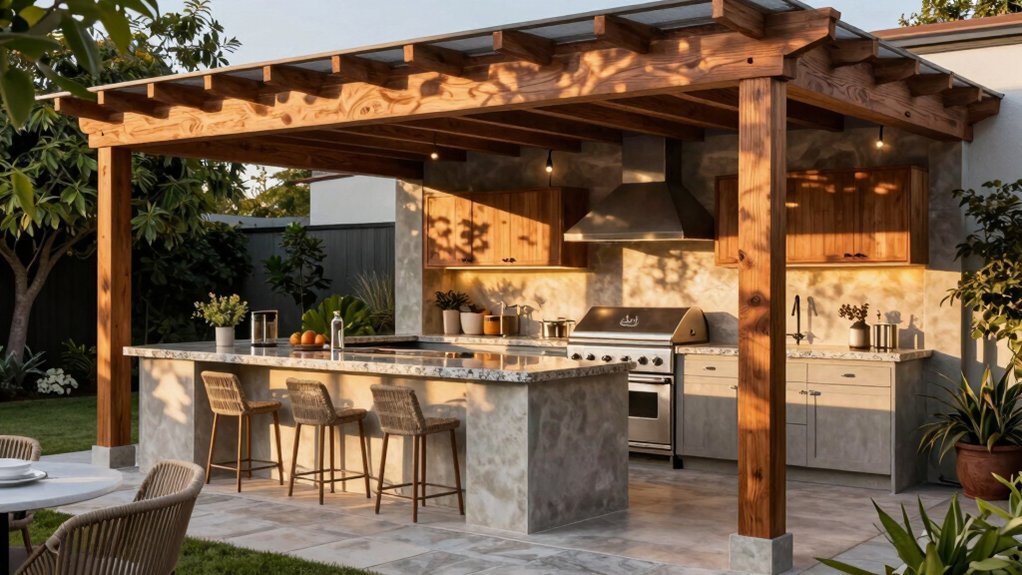
What materials will best serve your pergola kitchen’s needs? You’ll want to balance aesthetics with practicality, selecting options that withstand outdoor elements while maintaining visual appeal.
For your pergola structure, consider these durable choices:
- Aluminum: Offers rust resistance and minimal upkeep, ideal for low-maintenance designs
- Vinyl: Delivers a modern appearance with excellent weather protection
- Wood: Provides natural beauty but requires regular maintenance to prevent rot
Your countertops deserve equal attention. Concrete works well for weather resistance and customizable shapes with integrated sinks. Stone or quartz countertops provide superior longevity and seamless finishes in outdoor settings.
When selecting materials, prioritize rot resistance for wood components, corrosion resistance for metals, and moisture resistance across all exposed surfaces. This strategic approach ensures your pergola kitchen remains both stunning and functional for years.
Outdoor Pergola Kitchen Design Inspirations
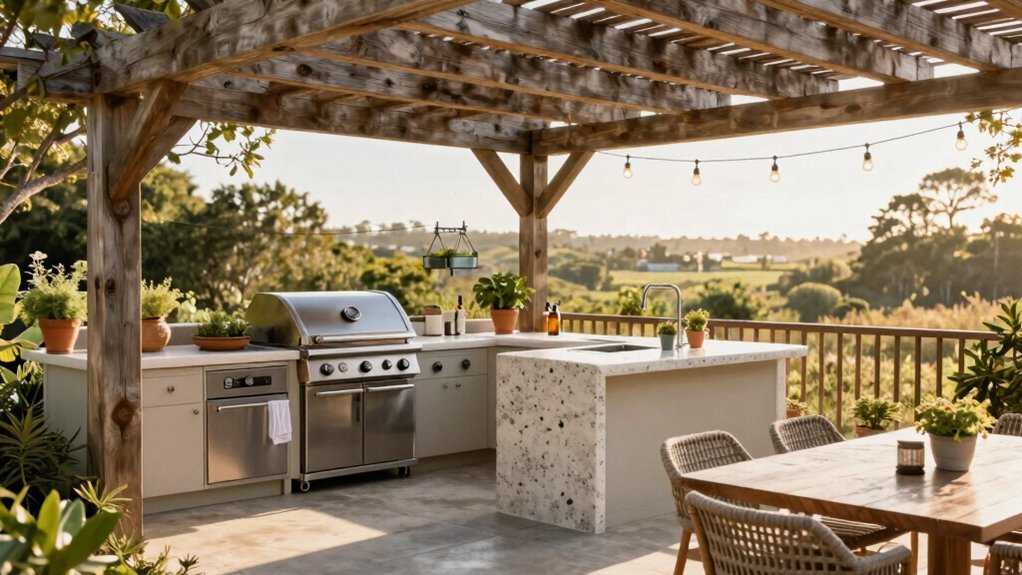
Now that you’ve selected materials built to last, it’s time to envision how your pergola kitchen will actually look and function. You can draw inspiration from design aesthetics ranging from rustic wood-and-stone combinations to contemporary aluminum and steel with dark finishes. Consider how automated louvers—like those in StruXure’s Pergola X or Cabana X—create flexible spaces that adapt to sun, rain, and wind conditions. Layer in functional elements: cantilevered grill stations, floating countertops, and integrated dining tables define distinct cooking and entertaining zones. Enhance nighttime appeal with string lights, lanterns, or integrated LEDs beneath pergola beams. Balance weather protection with access to your cooking features. These design choices transform your outdoor kitchen into a seamless extension of your home where form meets function.
Maximizing Space: Best Outdoor Kitchen Layouts
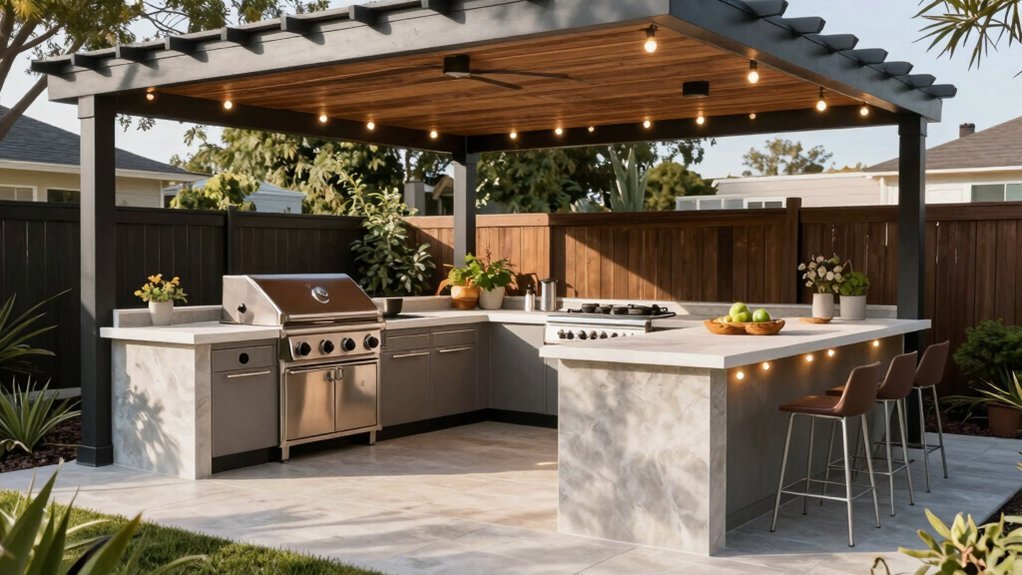
The layout you choose determines whether your pergola kitchen’ll function as an efficient cooking hub or feel cramped and cluttered.
You’ll maximize your space by selecting a design that suits your area’s dimensions. Consider these proven layouts:
- Compact Corner Kitchen: Stack vertical storage to free counter space while keeping your grill, sink, and prep zones within arm’s reach
- L-Shaped Design: Optimize counter space and accessibility by creating distinct cooking and prep zones while preserving open flow
- Multi-Functional Zone: Combine cooking with lounge seating, a fireplace, or garden areas to enhance social interaction without sacrificing workflow
Prioritize easy access between your grill, sink, and prep stations. This ensures efficient movement during cooking, cleaning, and serving. Your pergola’s shade, lighting, and weather protection should seamlessly integrate into your kitchen workflow, transforming your outdoor space into a fully functional entertainment destination.
Ventilation and Smoke Management Strategies
You’ll want to position your grill strategically away from seating areas and your home’s main entrances to keep smoke from drifting where you and your guests gather.
Open panel designs in your pergola structure—think slatted roofs or gazebo-style frameworks—let smoke escape naturally rather than pooling overhead where partially enclosed roofs would trap it.
Aligning your ventilation system and exhaust components with prevailing wind patterns ensures you’re working with nature to move fumes and heat away from your entertainment space efficiently.
Proper Grill Placement Strategy
Where should your grill sit within a pergola kitchen to manage smoke and odors effectively?
You’ll want to position your grill strategically to direct smoke and odors away from seating areas and your house. This placement ensures your guests enjoy the space without discomfort. Consider these positioning priorities:
- Orient the grill to leverage prevailing wind patterns that naturally carry smoke away
- Maintain clearance from the house and dining zones to prevent smoke infiltration
- Ensure proximity to utilities, prep zones, and storage for convenient cooking workflow
Install a noncombustible backsplash behind your grill to reduce heat transfer and enhance safety. Pair this with a larger-than-standard cooking hood designed for outdoor use. This combination effectively repels smoke and odors from gas, wood, or charcoal appliances, creating a comfortable, functional entertainment space.
Open Panel Design Benefits
Why do so many pergola kitchens underperform when it comes to smoke control? You’re likely choosing a closed or partially enclosed roof, which traps smoke and fumes directly above your cooking area. Instead, you’ll want open-panel designs that allow smoke to escape freely while you cook.
Open pergolas promote superior ventilation for gas, wood, or charcoal grills. You should pair this design with a cooking hood larger than standard kitchen models to effectively repel smoke and odors. Strategic placement matters too—position your grill to direct fumes away from seating areas and your home’s entrance.
This combination of adjustable panels and thoughtful kitchen layout creates continuous airflow, keeping your entertainment space comfortable while you entertain guests.
Smoke Direction and Airflow
While open-panel designs solve the structural problem of smoke entrapment, strategic positioning determines whether that smoke actually leaves your entertaining space or drifts toward your guests.
You’ll want to position your cooking area to direct smoke and odors away from seating zones and your home. Consider prevailing wind patterns when placing grills, ovens, and fire features. Install a cooking hood larger than standard kitchen hoods to effectively repel smoke and odors.
Your ventilation strategy should account for all appliances:
- Grills and charcoal cookers requiring consistent updraft
- Wood-burning ovens needing robust exhaust management
- Fire features that demand adequate clearance
Combine these positioning techniques with open-roofed structures to ensure safe airflow throughout your entertainment space while maintaining convenient access to dining and utilities.
Weather-Resistant Countertops and Work Surfaces
How do you keep your outdoor kitchen functional through seasons of sun, rain, and frost? You’ll want weather-resistant countertops sealed to withstand harsh elements while simplifying cleanup.
Concrete countertops offer versatility—you can mold them into integrated work surfaces and serving areas tailored to your space. Stone or quartz provide durability, seamless aesthetics, and superior stain resistance against cooking residues. For maximum protection, match your outdoor sink’s material to your countertops, creating a cohesive maintenance routine and easier cleaning of greasy prep zones.
Stainless steel surfaces excel in high-heat areas and splash zones, resisting rust while easily removing oil-based residues. By selecting complementary, weather-resistant materials, you’ll create a functional kitchen that handles year-round entertaining without constant upkeep.
Lighting Options to Enhance Your Entertainment Space

Once the sun dips below the horizon, the right lighting transforms your pergola kitchen from a daytime cooking zone into an enchanting evening retreat. You’ll want to layer your lighting strategically for both function and ambiance.
Consider these essential lighting elements:
Strategic layering of string lights, LED strips, and pendant lights transforms your pergola kitchen into a functional and beautiful evening space.
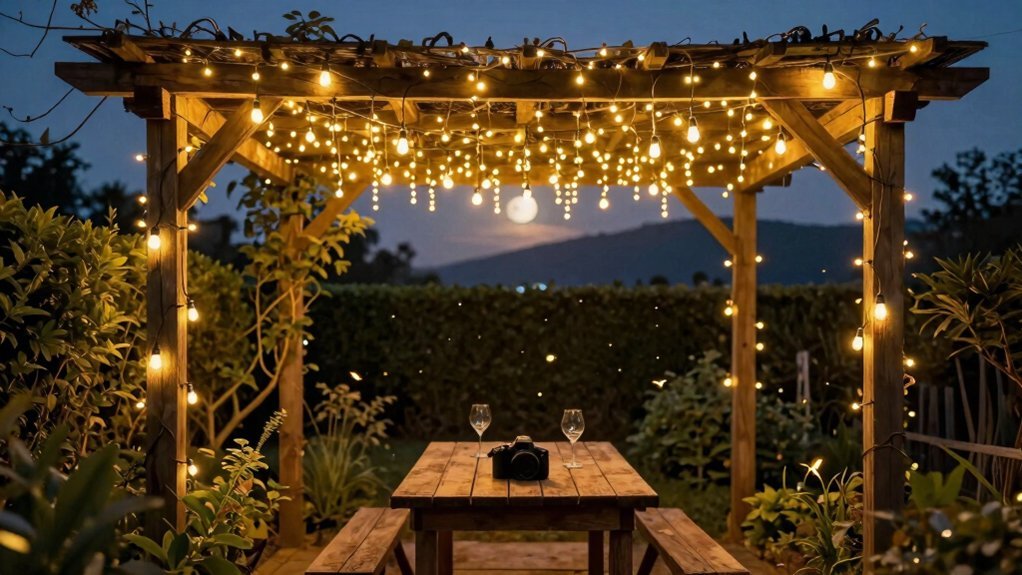
- String lights strung across pergola beams create warm, ambient glow without interfering with cooking activities
- Integrated LED strips along countertops and under cabinets eliminate shadows during prep work and grilling
- Pendant lights positioned over your dining area provide focused illumination and serve as design focal points
Recessed lighting hidden within planters or slats highlights your pergola’s architecture while enhancing nighttime safety. Opt for weatherproof, dimmable options that let you adjust brightness based on whether you’re cooking, dining, or entertaining—ensuring year-round versatility for your outdoor kitchen.
Entertainment Features and Customization Ideas
You’ll want to layer your lighting design with string lights, pendant fixtures, and integrated LEDs to create ambiance that shifts from daytime functionality to evening entertainment. Consider integrating audio and visual elements—outdoor speakers and a built-in TV transform your pergola into a true media hub for hosting. These customizable features let you establish interactive zones where guests can gather around a fire pit, prepare food at a floating countertop, and relax in designated lounging areas.
Lighting Design and Ambiance
Strategic lighting transforms your pergola kitchen from a daytime cooking space into an enchanting evening entertainment venue. You’ll want to layer your lighting approach for maximum functionality and atmosphere.
Install task lighting over your grill and prep counters to ensure safe food preparation. Simultaneously, integrate string lights or LED fixtures across pergola beams to highlight dining areas and create ambient warmth. Consider these lighting elements:
- Wall washers on stone or timber surfaces that emphasize texture and safety
- Programmable, dimmable controls that shift from bright prep illumination to cozy dining atmosphere
- Accent lighting around fire features, TVs, and landscape elements that enhance social gatherings
Subtle under-counter LEDs at floating countertops add sophistication while maintaining visibility. This comprehensive approach ensures you’re never compromising between cooking efficiency and entertaining ambiance.
Audio and Visual Integration
How can you seamlessly blend cooking, dining, and entertainment without cluttering your pergola kitchen with unsightly wires and equipment? Install weatherproof outdoor speakers and TVs within protective enclosures that preserve your electronics while maintaining aesthetic appeal. Position AV equipment to align with sightlines from both your grill station and seating areas, ensuring comfortable viewing whether you’re cooking or socializing.
Consider built-in solutions like wall-mounted TV cabinets integrated directly into your kitchen design for a cohesive appearance. Plan dedicated power and data access points near your pergola or cabana structure to support speakers, televisions, and holiday lighting installations. Use weatherproof connections throughout to protect all equipment from the elements while keeping your entertainment space functional and visually streamlined.
Interactive Entertainment Zones
Beyond positioning your audio and visual equipment, the real magic happens when you design zones that encourage guests to move, gather, and participate throughout your pergola space. You’ll want to create distinct areas that serve different purposes:
- A cooking station where guests can watch food preparation and interact with the chef
- Comfortable lounge seating arranged to face entertainment displays and the fire feature
- A fire pit or fireplace that naturally draws people together for conversation
Weatherproofing and Year-Round Protection Solutions
What makes a pergola kitchen truly functional across all seasons? Strategic weatherproofing and protective solutions. You’ll want to invest in StruXure’s automated louvered systems like the Pergola X or Cabana X, which give you precise control over sun, rain, and wind exposure year-round.
Choose aluminum framing for your structure—it’s durable, rust-resistant, and requires minimal maintenance. Pair it with roofing options like tempered glass or polycarbonate to maximize natural light while safeguarding your cooking and dining areas from the elements.
For added protection, incorporate PVC or composite materials in your design. These resist rot and termite damage, ensuring long-term weatherproofing. Don’t overlook ventilation either. You’ll need proper airflow and open panels or sides to safely vent grills in enclosed or semi-enclosed configurations, preventing smoke and fume buildup.
Frequently Asked Questions
What Permits or Building Codes Must I Comply With Before Constructing a Pergola Kitchen?
You’ll need to check your local building department’s requirements, which typically include setback regulations, height restrictions, electrical codes for outdoor kitchens, and foundation specifications. You’re responsible for obtaining necessary permits before construction begins.
How Much Does It Typically Cost to Build a Functional Pergola Outdoor Kitchen?
You’ll typically spend $3,000 to $15,000 building a functional pergola outdoor kitchen, depending on your materials, appliances, and size. Budget more for built-in grills, countertops, and premium finishes that’ll enhance your space’s durability and functionality.
Can I Install a Pergola Kitchen on a Rental Property or Apartment Patio?
You can install a pergola kitchen on a rental patio, but you’ll need your landlord’s written permission first. Choose portable, removable components you can take with you when you move. Always check your lease agreement’s modification policies beforehand.
What Maintenance Schedule Keeps My Pergola Kitchen in Optimal Condition Year-Round?
You’ll maintain your pergola kitchen best by inspecting it quarterly, cleaning debris monthly, sealing wood annually, checking fasteners seasonally, and addressing weather damage promptly. You’ll extend its lifespan markedly through consistent, proactive care and timely repairs.
How Do I Connect Gas, Electrical, and Water Utilities to My Pergola Kitchen Safely?
You’ll need to hire licensed professionals—electricians, plumbers, and gas fitters—to safely install utilities in your pergola kitchen. They’ll ensure proper permits, codes, and inspections. Don’t attempt DIY utility work; it’s dangerous and illegal without proper licensing and credentials.