
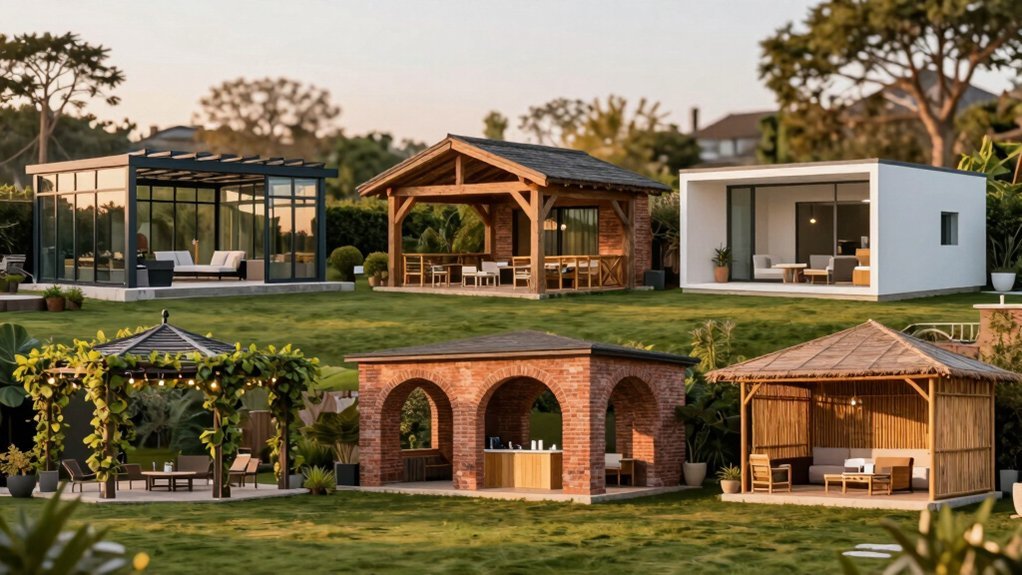
Explore seven pavilion designs that elevate outdoor entertaining. You’ll find a Timber Frame Pavilion with an integrated outdoor kitchen, a Modern Flat-Roof Pavilion for minimalist entertaining, a Gable-Roof Pavilion with a dining terrace and fire feature, and a Poolside Pavilion for shade and lounging. Also consider a Hot Tub Pavilion for year-round comfort, a Pergola-Style Open Pavilion with seating nook, and Outdoor Dining Pavilion with a bar and seating. Each blends form, function, and landscape—awaits.
Timber Frame Pavilion With Integrated Outdoor Kitchen
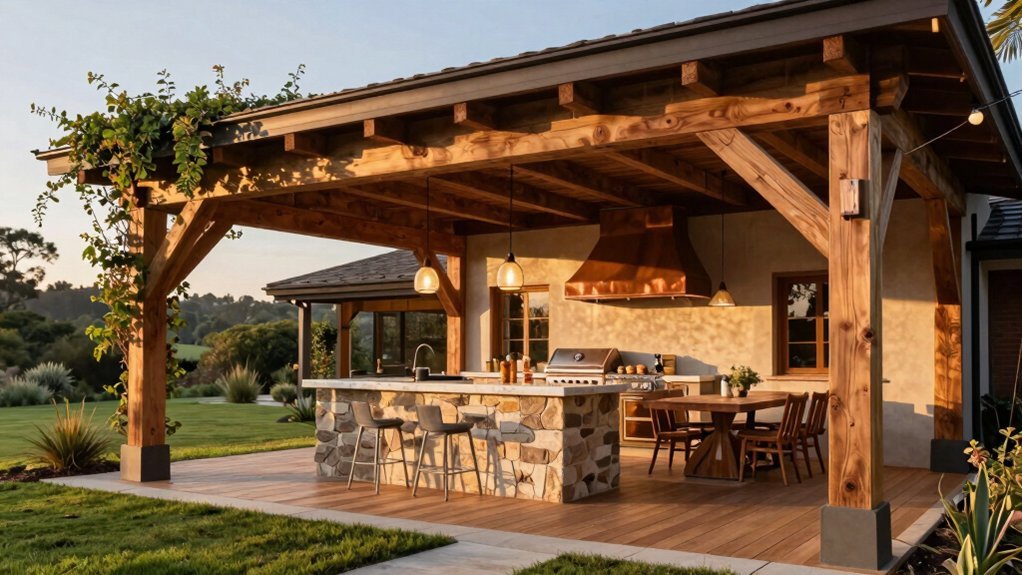
How does a timber-frame pavilion with an integrated outdoor kitchen streamline entertaining? You get a sturdy frame that supports built-in culinary stations—countertops, a grill, and storage—that keep prep and service in one flow. With multiple cooking zones under a single roof, you can prep, grill, and dine without stepping indoors, so guests move naturally from one area to the next. The open, airy timber frame blends with your landscape and architecture, creating a cohesive backdrop for gatherings. Integrated features like outlets, lighting, and seating in the counters boost social interaction while you cook.
Durability and price shape your plan, too: timber-frame kits offer load-bearing, while finishes, appliances, and size push costs from mid-range to premium. The design doubles as space for guests and cooks.
Modern Flat-R Roof Pavilion for Minimalist Entertaining
With its flat, level—or slightly pitched—roof, a modern flat-roof pavilion delivers a sleek, contemporary silhouette that suits urban or modern homes. You’ll notice a minimalistic look, with clean lines and a flat ceiling line thanks to recessed lighting and optional retractable panels that shade without clutter. The structure typically uses weather-treated wood, steel, or aluminum with low-maintenance finishes, so you can enjoy durability with little upkeep.
The open design preserves sightlines and airflow, creating an airy outdoor room that feels visually light against the landscape. Integration is seamless when you combine this pavilion with outdoor kitchens or seating under one unobstructed roof. Electricals—outlets, lighting, and fans—are tucked in for easy use, while neutral colors keep the focus on form and function. That simplicity supports versatile entertaining, from casual chats to minimalist dinners, without competing architecture; it adapts with subtle lighting and a breathable feel everywhere.
Gable-Roof Pavilion With Dining Terrace and Fire Feature
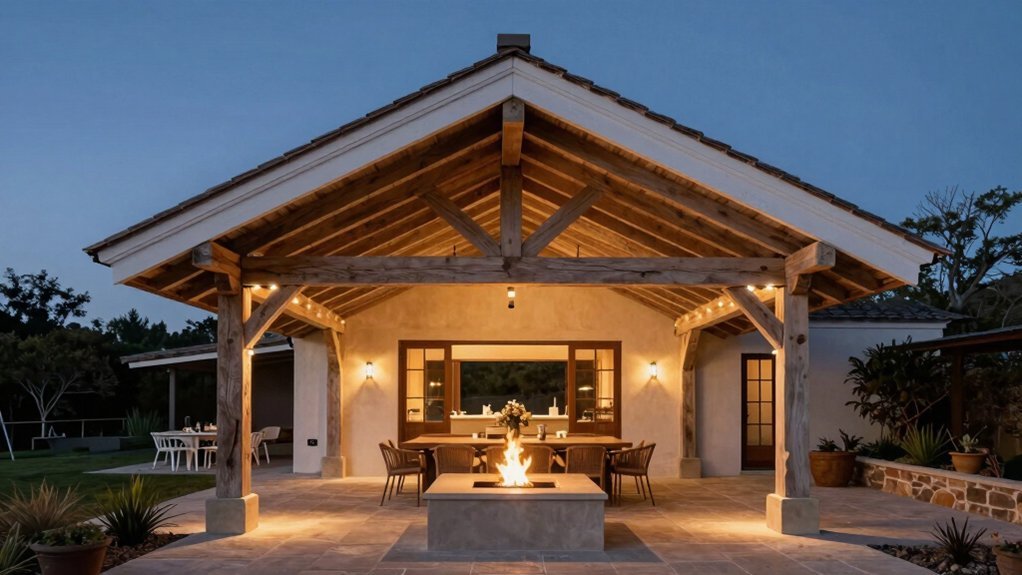
A gable-roof pavilion brings a classic, symmetrical silhouette to outdoor entertaining, with two sloping sides meeting at a ridge to shed rain efficiently. When you pair it with a dining terrace, you define a sheltered eating area that extends outdoor entertaining from home while keeping an open-air feel. Integrating a fire feature adds ambient warmth and a focal gathering point, enabling year-round use even on cooler evenings. The structure supports built-in dining elements like counters or a bar, optimizing circulation and social interaction around meals. Roofing and styling harmonize with landscape and home architecture, using timber frames for a cohesive outdoor living space.
| Aspect | Benefit | Guidance |
|---|---|---|
| Dining terrace | Defines space | Align with doors |
| Fire feature | Warms nights | Check clearance |
| Built-in counters | Speeds service | Keep it uncluttered |
Poolside Pavilion for Shade and Lounging
Poolside pavilions provide shaded lounging right beside the water, creating a defined retreat you can enjoy without leaving the pool area. You’ll appreciate a solid roof, integrated seating, towel storage nearby, and an outdoor shower for quick rinses after a swim. Choose a sturdy gable or hip roof to stand up to humidity and wind, and plan built-ins like a small outdoor kitchen or bar. Add a fire pit circle for evening ambiance and weatherproof lighting to extend your use. For flooring, pick water- and slip-resistant options such as timber with a weatherproof deck, vinyl, or composite that endure poolside moisture.
- Solid roof over lounging area
- Integrated seating and towel storage nearby
- Outdoor shower adjacent for quick rinses
- Water- and slip-resistant flooring choices
Hot Tub Pavilion for Year-Round Comfort
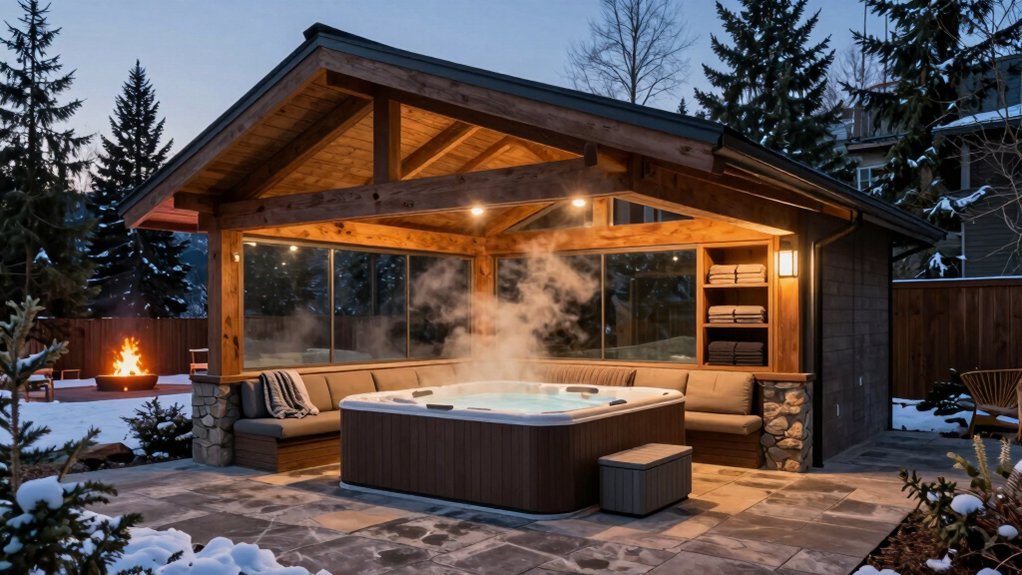
Hot tub pavilions let you soak year-round by pairing a sturdy roof with weather-resistant materials that shield you from rain and sun. Integrated features often include heated climate control or radiant heating near seating areas, so you stay comfortable during colder months. Proximity design places the hot tub under the pavilion with nearby towel storage and seating to facilitate easy access and social interaction. Durable roofing, such as a timber frame with insulated panels, helps prevent weather intrusion and reduces maintenance on hot tub equipment. Lighting and fans are commonly incorporated for evening use and improved air circulation around the hot tub area. Keep drainage clear and choose corrosion-resistant fixtures so you can enjoy year after year without worrying about maintenance in any season.
Pergola-Style Open Pavilion With Acoustic Seating Nook
Pergola-style open pavilions offer shade from beams or slats while keeping the sides open for air flow and a strong connection to your landscape.
Pergola pavilions shade with slatted beams while remaining open to breeze and the surrounding landscape.
You’ll find the acoustic seating nook tucked along shaded edges, with cushioned benches that invite intimate chats without overpowering conversations.
Lightweight framing—timber or metal—supports vines or fabric curtains, softening edges and adding seasonal color.
The layout supports flexible setups for social gatherings, small performances, or relaxed lounges, so you can switch from a quiet moment to a lively gathering without reshaping the space.
Integrated lighting, like recessed downlights, string lights, or sconces, enhances ambiance while preserving the open-air feel.
- Breathable shade with intimate seating
- Flexible layouts for gatherings and performances
- Vine-softened edges, seasonal color
- Subtle lighting for cozy evenings outdoors
Outdoor Dining Pavilion With Full-Service Bar and Seating
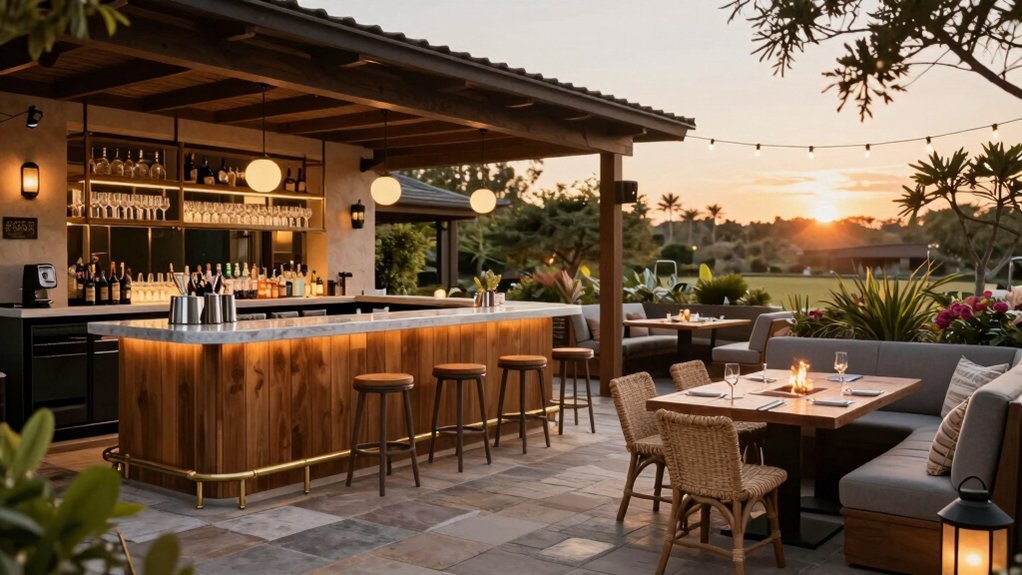
Building on that open-air, social vibe, an Outdoor Dining Pavilion with a full-service bar and seating creates a centralized hub for meals and mingling under one roof. You’ll enjoy a sheltered dining and social space with built-in countertops, a mini-fridge, and integrated outlets that power lighting and appliances. Layouts separate dining from entertaining, featuring a bar counter with stools, a dining table setup, and prep/storage areas under roof for seamless service. Lighting emphasizes ambient upward glow and task lighting over the bar and table, with weather-resistant fixtures for evening gatherings. Climate control includes ceiling fans and optional heaters or a fire feature to keep guests comfortable. Durability comes first with weather-resistant countertops, timber or aluminum framing, and a roof that blocks rain yet vents.
Frequently Asked Questions
How to Choose Weatherproof Materials for Coastal Climates?
Use weatherproof materials like marine-grade stainless steel, powder-coated aluminum, teak, and composite boards treated for salt spray. Look for UV resistance, good drainage, corrosion-resistant fasteners, hidden fasteners, and sealed seams with ongoing periodic maintenance schedules.
What’s the Typical Cost Range per Square Foot?
Typically, you’ll pay roughly $50 to $200 per square foot installed, depending on size, materials, and finishes; expect mid-range around $100–$150, with premium custom builds climbing higher. Labor, permits, and site prep can add extra.
Which Pavilion Design Yields Best Privacy?
A fully enclosed pavilion with solid walls or dense lattice panels yields best privacy. You’ll block sightlines, control airflow, and add shade, while seating and plants reinforce seclusion—choose higher walls and offset entrances for seclusion.
How to Maximize Airflow Without Compromising Shelter?
Open vents and breathable fabrics, you place adjustable louvers, and use ceiling fans. Harness cross-ventilation by aligning openings, keep rain shelters intact with overhangs, and shade with permeable canopies to balance airflow and shelter effectively.
Can These Spaces Be Wheelchair Accessible Easily?
Yes, you can make these spaces wheelchair accessible easily with a few design choices. Include level thresholds, wide paths, smooth surfaces, ramp access, and thoughtfully placed shelter that doesn’t hinder circulation or sightlines for everyone.

Leave a Reply