
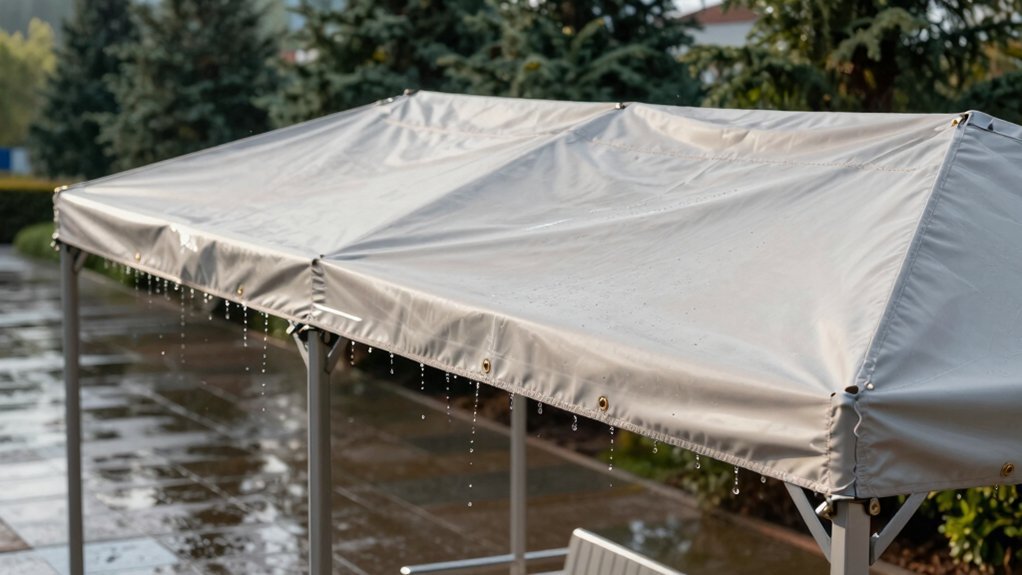
You get true year-round waterproof protection when pavilion covers pair impermeable fabrics and sealed seams with UV-stabilized materials and a secure, adjustable fit. Seams are taped or welded to stop leaks, and vents balance airflow to prevent condensation. Look for semi-custom sizing, elastic hems, straps, and buckles that hold the cover tight against wind. This setup shields you from rain, snow, and sun, with maintenance preserving performance—Keep reading for guidance and tips.
Why Waterproof Is More Than a Label
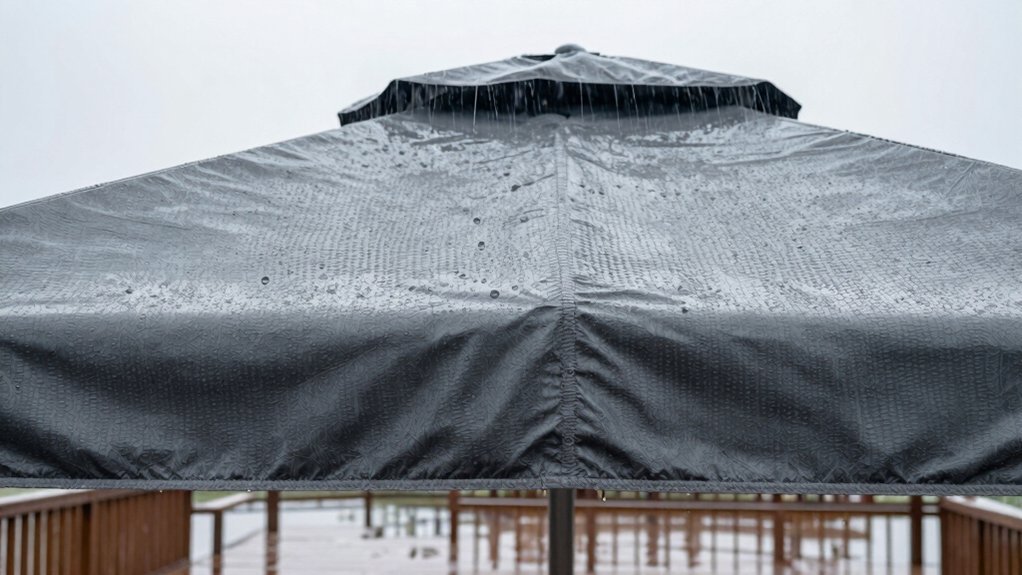
Why isn’t “waterproof” just a label you can trust at a glance? Because true waterproof covers block water entirely, using vinyl, PVC-coated polyester, or thick layers with sealed seams to stop moisture from seeping through stitching holes.
Water-resistant options, meanwhile, manage moisture by allowing airflow and evaporation, reducing mold, mildew, and rust under the cover. Yet even a waterproof design can trap condensation if ventilation is inadequate, soaking interior cushions, finishes, and metal components.
Non-breathable waterproof covers worsen mold and rust, so breathability and ventilation matter even when you pick a waterproof option. In climate terms, extreme rain or snow call for true waterproofing; breathable options balance protection with moisture escape. Choose seams, materials, and ventilation that match your pavilion’s exposure for year-round reliability.
Impermeable Fabrics and Coatings That Stand Up to Heavy Rain
Impermeable fabrics and coatings act as the first line of defense against heavy rain, using vinyl or PVC-coated textiles that block water at the surface.
Sealed seams and taped joins stop leaks at stitching holes and joins.
When the fabric, seam integrity, and fit are aligned, rain durability is maintained and water stays out.
True Waterproof Layer
Are you aiming for complete moisture protection in heavy rain? True waterproof layers rely on impermeable fabrics/coatings—vinyl, PVC-coated polyester, or sealed membranes—that block water penetration even during downpours. Sealed or taped seams prevent water from entering through stitching holes, ensuring a drip-free seal. These covers deliver full moisture protection, but poor ventilation can trap heat and moisture, causing condensation. They tend to be more expensive and often require custom fittings to fit complex shapes tightly. UV exposure and extreme temperatures can degrade materials, so many options include UV resistance to extend longevity.
| Feature | Benefit/Note |
|---|---|
| Impermeable fabrics/coatings | Block water entry |
| Sealed seams | Prevent leakage at stitches |
| Ventilation considerations | Condensation risk and performance |
| Cost and fit | Custom sizing raises price |
| UV resistance | Extends longevity |
Seams and Sealing
From the impermeable fabrics you rely on, the next line of defense is seams and sealing.
You choose fabrics like vinyl or PVC-coated polyester, then ensure every joint stays dry with sealed, taped seams that close stitch holes.
Welded or heat-sealed seams outperform stitched ones when rain keeps pouring, so look for those methods on the label.
Durable covers reinforce corners and add seam binding to maintain integrity against wind-driven spray and heavy downpours.
You’ll want seams built to resist ultraviolet degradation too, because sun exposure can weaken seals over time.
Quality waterproof options feature weather-resistant construction that extends longevity and reduces maintenance, ensuring you stay protected even during long storms.
Choose tested configurations, and replace worn seals promptly to preserve performance over time.
Rain Durability and Fit
You get rain-ready protection when your pavilion uses impermeable fabrics and coatings that stop water in its tracks, even under a pounding downpour. Snug, secure fit matters as much as material. Choose impermeable options with sealed seams and adjustable ties, hems, buckles, or Velcro to block wind-driven streams. Non-breathable fabrics trap moisture; pair with ventilation when appropriate to avoid mold. Year-round protection means it extends to cover the frame and furniture without dragging. Consider UV resistance too, so the fabric endures sun as it endures rain. Here’s a quick reference:
| Material | Feature | Benefit |
|---|---|---|
| Vinyl/PVC | Waterproof | Blocks water |
| Coated polyester | Sealed seams | Prevents leaks |
| Heavy-duty fabric | Snug fit | Stops wind-driven water |
Seams That Seal: Taped and Welded for Full Water Protection
With taped seams, you seal water entry points by applying waterproof tape over stitching holes, preventing leaks along seam lines. Taped seams reduce seam vulnerability and create a moisture barrier along edge zones, especially where fabric overlaps.
Welded seams form a continuous, adhesive bond that eliminates needle holes and lowers water seepage compared with stitched seams. Some covers pair welded seams with taped seams for extra edge protection, delivering full waterproof performance when combined with a waterproof fabric layer. Proper seam treatment matters during heavy rain or immersion, ensuring year-round protection rather than relying on a single feature. This approach supports durable, consistent waterproofing across seasons and exposure, especially at corners and edges where wear stresses the fabric for lasting use and weather resilience.
UV Stability: Preventing Fading and Frame Degradation
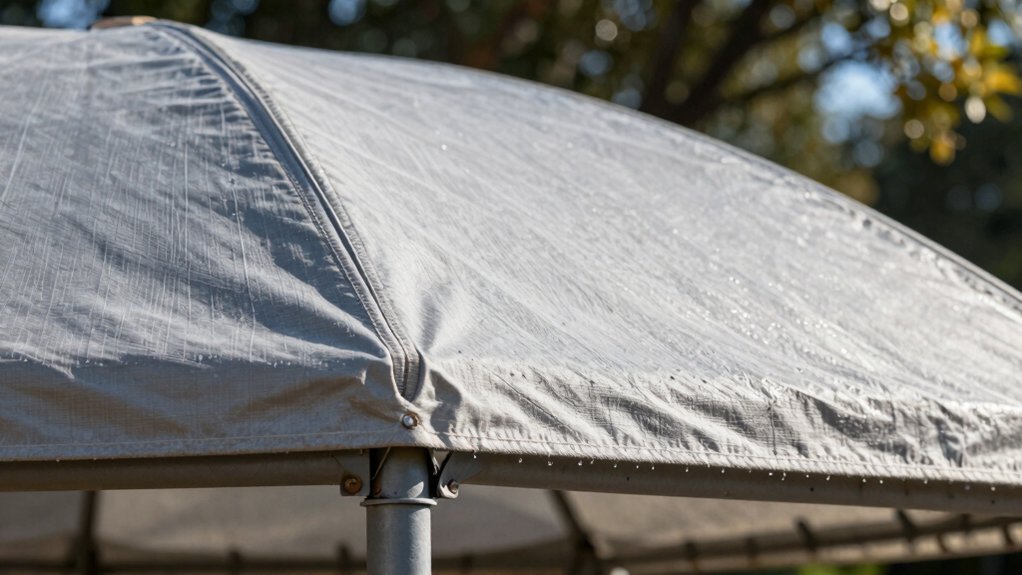
UV stability matters to you because sun exposure can fade your fabrics and weaken the pavilion frame over time. Built-in UV shielding helps you preserve color, strength, and furniture finishes, while higher-quality materials resist UV-related wear longer. In cooler climates as well, UV protection keeps fabric and frame looking newer longer, reducing your long-term replacement needs.
UV Impact on Fabrics
Ever wonder why pavilion covers stay vibrant year after year? UV exposure can fade fabrics, weaken fibers, and shorten lifespan without inhibitors. Built-in UV protection helps maintain color and frame strength, even in cooler climates. Fabrics with UV resistance reduce long-term sun damage to cushions and underlying furniture components. UV stability also prevents discoloration of solution-dyed or pigment-dyed fabrics used in pavilion covers. Selecting covers with UV protection preserves finishes on metal frames and cuts maintenance.
To maximize durability, focus on:
1) Favor built-in UV inhibitors
2) Choose solution- or pigment-dyed fabrics
3) Ensure UV protection for cushions and covers
4) Verify metal-frame protection
Together, these choices keep colors true and frames strong, season after season, so you enjoy outdoor time without worrying about fading and weathering long.
Frame Durability Under Sun
Sun exposure can fade and weaken pavilion frames unless you choose UV-stable materials and protective finishes. UV stability helps prevent frame fading and weakening, preserving color and structural integrity over years of sun exposure. Covers with built-in UV protection reduce long-term sun damage to metal finishes and wood frames alike. UV-resistant materials, such as RhinoWeave and 600-denier fabrics, resist breakdown from ultraviolet rays better than lower-denier options. Prolonged sun exposure without UV protection accelerates paint chalking, cracking, and corrosion on outdoor frames.
Even in cooler climates, UV protection remains important to maintain finish durability and prevent premature aging of pavilion frames. Choose fabrics with proven UV resilience, and ensure coatings resist chalking. Regular maintenance helps sustain color, tighten joints, and extend outdoor life overall.
Built-in UV Shielding
How does built-in UV shielding keep your pavilion covers looking new year‑round? It blocks or absorbs UV rays, preventing fabric fading and frame weakening. UV stability extends the life of both cover material and underlying furniture by reducing fiber breakdown and color loss over time. Fabrics with UV protection maintain colorfastness even in extended outdoor exposure, reducing replacements. UV-resistant coatings or fabrics (e.g., RhinoWeave or solution-dyed materials) resist sun-induced degradation more effectively than standard fabrics. Long-term UV protection supports year-round use by preserving aesthetics and structural integrity under bright sun and heat.
- Reduces fiber breakdown and fading.
- Extends material and frame life.
- Protects colorfastness during prolonged exposure.
- Favors year-round usability.
This built-in shield keeps your setup ready for any season.
Semi-Custom Sizing for a Tight, Leak-Resistant Fit
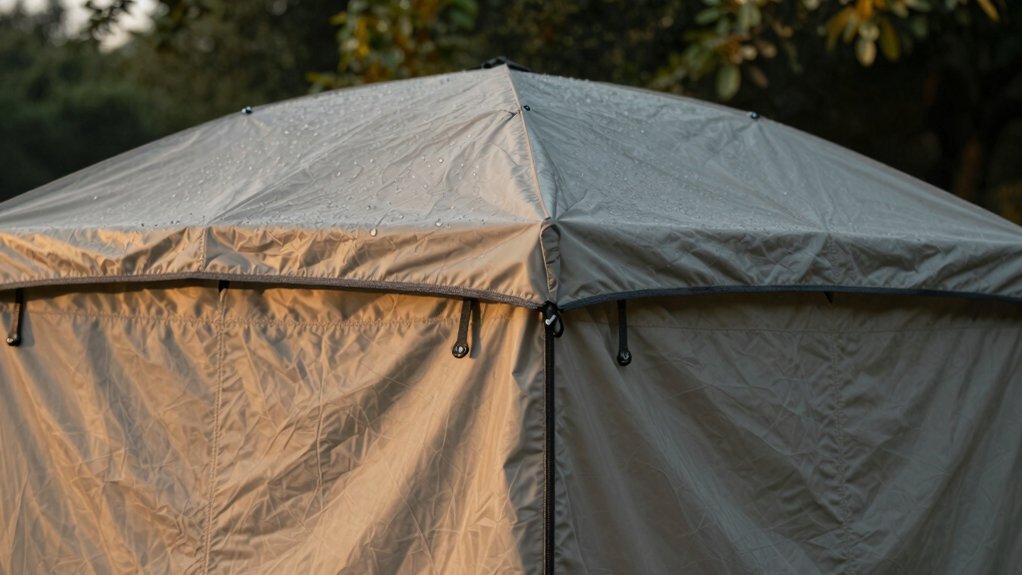
Why settle for a one-size-fits-all cover when semi-custom sizing delivers a tighter, leak-resistant seal? You gain a balanced fit that avoids the high cost of full custom options while offering better coverage than one-size-fits-all designs. These covers are built for durability and to promote airflow, helping prevent mold and mildew under the pavilion while keeping your furniture protected.
The construction blends a tough outer layer with a soft fleece inner lining to reduce friction. You get adjustable drawstrings, elastic hems, and optional buckle straps to secure the fit.
A semi-custom option often comes with a 30-day money-back guarantee and a 10-year warranty, signaling long-term reliability. This combination delivers value without compromising protection, so you can enjoy year-round use with confidence. And reliable support too.
Ventilation Without Leaks: Breathable Yet Weatherproof
Ventilation and rain protection don’t have to compete; a well-designed pavilion cover lets air flow in while water stays out. Breathable, weatherproof designs use built-in vents or mesh panels to let moisture escape while blocking water entry, reducing condensation inside. A balance of water resistance and airflow prevents moisture lock-in that can cause rust and fabric damage. Sealed or taped seams work with venting to keep rain at joints while still allowing drying. Materials with high breathability and placed vents keep you dry during rain and temperature swings.
- Vent placement optimizes airflow without letting rain in
- Seam sealing plus vents blocks leaks while enabling drying
- Fabrics deter mold on cushions and fabrics
- Condensation reduction protects metal and stitching over time
Secure Fit Features: Straps, Buckles, and Elastic Hems
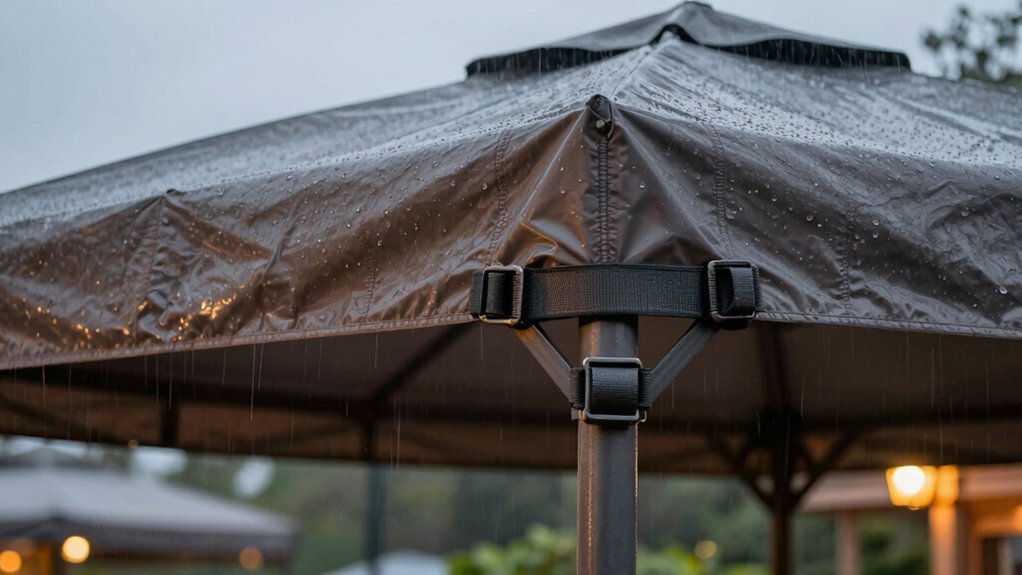
Secure fit features keep the cover in place during wind and rain, so you can rely on protection without constant readjustment. Adjustable drawstrings, elastic hems, and buckle straps anchor the cover and prevent shifting. Corner loops let you tie the cover to legs for extra stability. Tight, snug fits balance protection with minimal friction to protect finishes. Non-slip, reinforced seams and Velcro fasteners deter displacement and water seepage. A proper secure fit minimizes water intrusion by keeping the fabric taut. With these features, you gain assurance in year-round coverage and finishes. Table outlines each element’s impact.
| Feature | Benefit |
|---|---|
| Adjustable drawstrings | Anchor and stabilizes |
| Elastic hems | Hold edges taut |
| Buckle straps | Lock cover in place |
| Corner loops | Tie to legs securely |
| Non-slip seams | Resist wind, water |
Weather Resistance Across Seasons: From Rain to Snow
How does a pavilion cover stay waterproof and weather-ready across seasons? You rely on waterproofing that blocks water penetration in rain and snow, keeping furniture dry. Sealed or taped seams prevent water from seeping through stitching holes during storms.
- Seams are sealed or taped to stop leaks.
- Fabric choices stay waterproof while breathing where needed.
- Venting or breathable waterproof options reduce moisture buildup in cold periods.
- UV protection minimizes fabric degradation between wet and snowy seasons.
Non-breathable fabrics trap moisture, so vents or breathable options help prevent mold and rust in colder periods. In winter, covers extend down to shield frame parts and protect joints and components. UV protection also helps by reducing fabric degradation between wet and snowy periods.
Care and Maintenance to Sustain Waterproof Performance
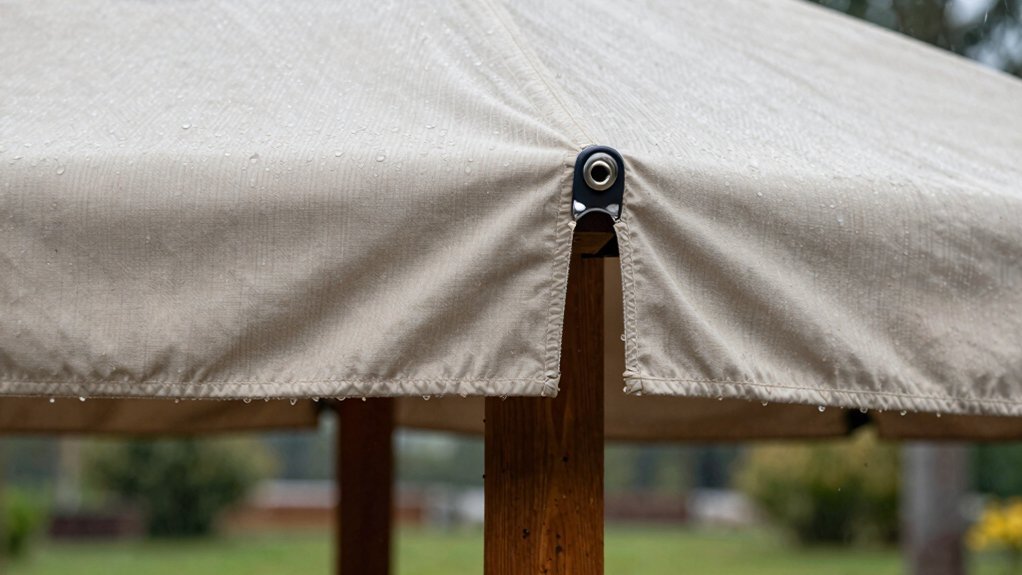
Start with a simple cleaning and drying routine to remove dirt and prevent moisture buildup. Dry the fabric thoroughly and inspect seams and vents for signs of wear. Keep ventilation active to control moisture, using built-in vents or mesh panels to promote airflow while keeping water out.
Cleaning and Drying Routine
Why regular cleaning matters: dirt buildup can compromise waterproof seams and fabric, so use mild soap and water rather than harsh detergents. You should repeat light cleanings after heavy use to maintain repellency, and avoid scrubbing aggressively that could wear coatings. Dry covers thoroughly before storage to prevent mildew, air-dry in a shaded area with good ventilation rather than direct sun to protect waterproof layers.
- Clean with mild soap and water regularly to remove grime without degrading coatings.
- Rinse completely and blot excess moisture to speed drying.
- Inspect seams and velcro and reseal or re-tape any compromised areas.
- Reapply manufacturer-recommended waterproofing treatments as needed to sustain longevity.
Store in a dry place during off-season to prevent UV degradation and mold.
Ventilation for Moisture Control
Where does moisture sneak in inside a pavilion cover, and how can proper ventilation stop it? You prevent buildup by promoting air flow and expelling trapped humidity under the fabric. Built-in mesh vents reduce condensation, keeping cushions and furniture drier and mold-free. Pair ventilation with breathable fabric to balance water resistance with air exchange, avoiding moisture lock-in. Poor ventilation allows moisture, mildew, rust on metal, and paint damage on exposed surfaces. Placement and design—vent placement and extended coverage—boost airflow and shield the structure from moisture-related wear.
| Idea | Effect | Action |
|---|---|---|
| Vent placement | Increases airflow | Install vents strategically |
| Airflow path | Reduces damp pockets | Favor continuous ventilation |
| Material balance | Prevents moisture lock-in | Use breathable fabrics |
| Conditions | Condensation drops | Check vents |
| Coverage | Protects area | Extend coverage |
Keep monitoring.
Real-World Performance in Coastal, Snow, and High-Humidity Environments
How do pavilion covers hold up in coastal, snowy, and high-humidity environments? In real use, you rely on UV-stable fabrics and durable coatings that resist sun damage while keeping water out. The key is preventing salt spray, ice dams, and mold, with breathable layers and vents to manage evaporation. Regular maintenance—drying and ventilating after damp spells—keeps rust and mildew at bay.
- In coastal areas, blocks salt spray and sand while withstanding strong winds.
- In snow, seams are sealed or taped and reinforced to stop moisture ingress and ice damming.
- In high humidity, breathable layers and vents promote evaporation and mold resistance.
- Across all conditions, UV-stable 600D+ fabrics or PVC-coated polyester preserve waterproof integrity.
Reality check: choose fabrics, sealings, and airflow suited to your climate.
Frequently Asked Questions
What Is the Most Durable Material for Outdoor Furniture Covers?
RhinoWeave is the most durable material for outdoor furniture covers, offering breathability, abrasion resistance, and long-lasting protection, especially when paired with double-stitched seams, reinforced bindings, and robust construction. It’ll withstand wind, sun, and rain reliably.
How Do I Stop Water Collecting on My Patio Furniture Covers?
Open vents slightly, pick breathable, waterproof fabric, and ensure a snug fit with drawstrings and straps. Keep covers full-height, ground-to-edge, and angle fabrics for drainage; never trap water, adjust regularly and store dry after rain.
Is There Any Outdoor Furniture That You Can Leave in the Rain That Doesn’t Rot?
Yes, you can leave metal with protective coatings, vinyl, or coated aluminum furniture out in rain longer without rot, especially if you elevate it, dry promptly after downpours, and cover cushions with breathable, water-resistant fabric.
What Are Waterproof Covers Made Of?
They’re made of vinyl, PVC-coated polyester, or heavy-duty waterproof fabrics with sealed seams, sometimes tapes; you get reinforced seams, snug fits, and full-coverage panels to block water, resist UV, and survive frequent folding and wind.

Leave a Reply