Your gazebo foundation matters because frost depth, soil type, and drainage drive footing depth and type. Start by assessing drainage and slope so runoff stays away from footings, and grade the area to keep it dry. Typical footing depths range from 2 to 3 feet, deeper in cold or clay soils; extend below frost depth as needed. Choose a foundation type—slab, deck, pier/sonotube, or spikes—and check permits and codes before you build. More specifics ahead.
Why a Gazebo Foundation Matters
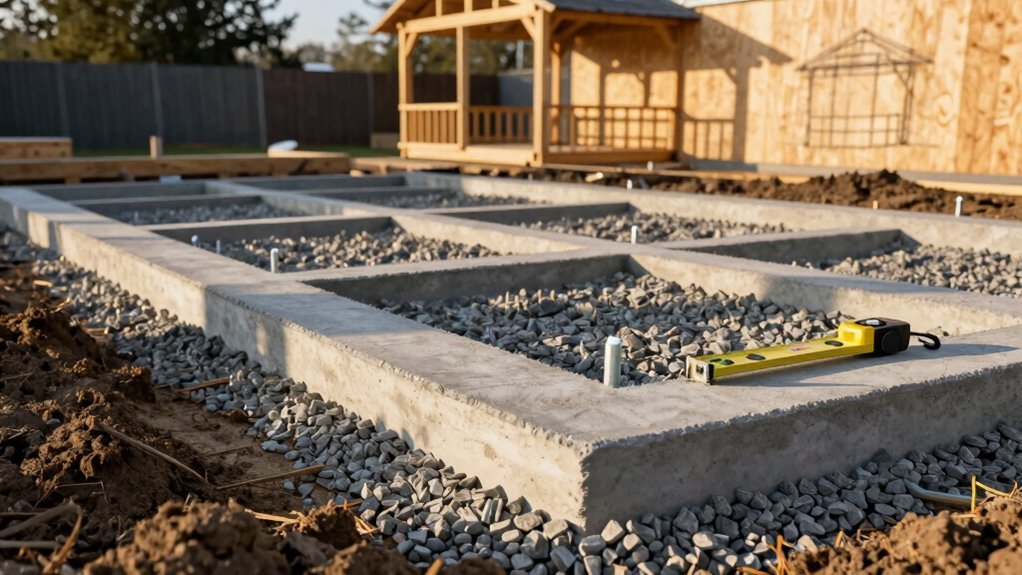
A solid gazebo foundation matters because it keeps your structure from sinking, tilting, or shifting on soft or uneven ground.
With the right base, you prevent wood rot and warping caused by moisture, and you reduce the risk of instability during storms or high winds.
A proper foundation also improves drainage, so standing water won’t soak into the framing or create soft spots under the legs.
You gain safety and long-term durability when you commit to a stable, well-constructed base, especially for permanent installations.
Permanent gazebos demand a solid foundation, because lightweight or temporary setups can’t offer the same level of support or protection against moisture, pests, or ground movement.
That commitment pays off in fewer repairs and more peace of mind over time.
Assessing Site Conditions and Drainage
First, assess soil drainage to see whether water pools around the footprint.
Next, evaluate the site slope so runoff directs water away from the foundation.
Then plan water runoff paths and grading to keep the area dry after installation.
Assess Soil Drainage
Because proper drainage around the foundation prevents water pooling and extends the gazebo’s life, begin by assessing your site’s drainage. You’ll want soil behavior to match footing needs. Soil type drives drainage: sandy drains well but is lighter, while clay holds moisture and may demand deeper footings. Conduct test holes to gauge soil characteristics and load capacity before selecting a foundation. Frost line depth and climate alter footing requirements, with colder regions needing feet below the frost line. A level, well-drained site reduces settling and wobble, ensuring long-term stability. This informs your build.
| Concern | Action |
|---|---|
| Soil type | Sandy drains; clay retains moisture. |
| Test holes | Gauge soil characteristics first. |
| Frost line | Below-frost-footing needed in cold regions. |
| Site drainage | Keep the area level and well drained. |
Evaluate Site Slope
Evaluating site slope is essential for proper drainage and to prevent water pooling around the gazebo foundation. You assess slope to ensure rain and irrigation runoff won’t creep toward the base. A sloped or uneven grade may require piers or a raised deck to maintain level support. Slopes should be minimized and directed away from the structure to reduce erosion and frost heave risk. Conduct site grading and consider adding a compacted base material to achieve a uniformly level foundation plane. If significant slope or instability is present, use soil testing or a professional evaluation to determine the appropriate foundation type. You’ll also verify drainage paths, ensuring grading directs runoff away from footings and avoids creating new low spots. Consistency matters for long-term stability.
Plan Water Runoff
How you plan water runoff starts with evaluating site conditions and drainage to keep the foundation dry and stable. Proper drainage around the foundation is crucial to prevent water pooling and erosion, so plan slopes or swales to direct surface water away from posts and footings. Ensure the ground is level and well-drained before pouring footings or placing a slab to minimize water-related movement. Water runoff planning affects base choices: concrete slabs and footings need stable, dry subgrades, while gravel pads require good drainage under the surface. Clear vegetation and debris and create adequate landscape grading to maintain positive drainage around the gazebo foundation over time. Use runoff plans as living guidelines, checking after storms and adjusting as site conditions change for ongoing effectiveness.
| Area | Action | Rationale |
|---|---|---|
| Slope away | Ensure site slopes away from posts | Directs water away, prevents pooling |
| Edges | Use gravel or crushed rock at edges | Improves edge drainage and stability |
| Ground prep | Verify level and well-drained ground | Minimizes movement and settling |
| Vegetation | Clear debris; maintain grading | Maintains positive drainage |
Key Factors That Determine Footing Depth
Where should you start when deciding footing depth for a permanent gazebo? Begin by assessing soil type and load‑bearing capacity, since clay needs deeper footings (3 feet or more) and sandy soils may require 1.5–2 feet. Next, check the climate and frost line depth, because footings must extend below the local frost line to prevent freeze‑thaw heaving. Consider gazebo size and weight, plus your materials, as heavier structures demand greater depth to resist settlement. Note that your foundation type matters too: anchored gazebos can sometimes use slightly shallower footings than freestanding ones. Finally, always perform test holes and consult local building codes for precise depth recommendations tailored to your site conditions. Your plan should reflect soil tests, frost data, and local wind exposure patterns.
Typical Footing Depths by Gazebo Size and Climate
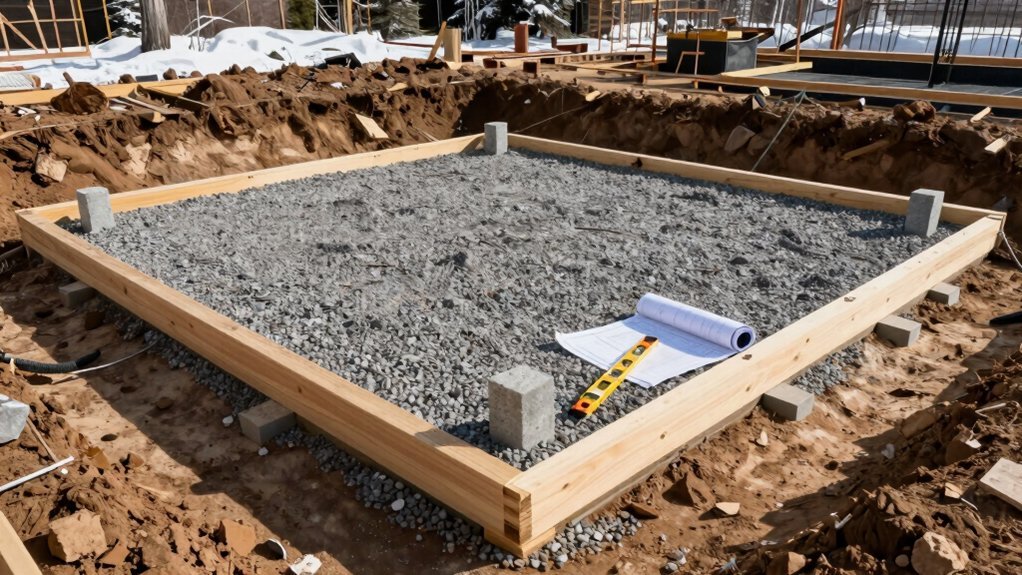
Typically, footing depths range from 2 to 3 feet for most gazebos, with larger or heavier structures needing 4 feet or more in cold climates. General climate plays a big role: warm regions often settle at about 2 feet, while most regions require 3 feet to resist frost action. In cold climates, you’ll typically anchor at 4 feet or deeper to prevent frost heave. If you’re building a heavier or larger gazebo, plan for deeper footings to keep the frame from shifting under wind or use. Heavier materials demand more support, and larger footprints spread loads more. For clay soils, you may need deeper footings because they shift more; lighter sandy soils can tolerate shallower depths. Anchored gazebos sometimes allow slightly shallower footings than freestanding ones, depending on attachment method and local codes. Consult your local building department for exact requirements before pouring concrete. This ensures compliance and safety overall.
Soil Types and Their Impact on Foundations
From footing depths in warm and cold climates, you’ll see that soil type plays a major role in foundation design. Clay soils are heavy and prone to shifting, often requiring 3 feet or more of footing depth to achieve stability. Sandy soils drain well but are lighter, typically needing about 1.5–2 feet of footing depth. Loam offers balanced drainage and stability, with 2–3 feet usually sufficient. Frost line depth varies by region, and footings must extend below it to prevent freeze-thaw heaving. Conduct test holes to assess soil characteristics and load capacity, possibly with a structural engineer’s input, for a tailored footing depth. By identifying soil type up front, you avoid surprises during installation and future maintenance costs for long-term gazebo stability.
| Soil Type | Recommended Depth | Notes |
|---|---|---|
| Clay | 3 ft+ | Heavy, shifts; stabilize |
| Sandy | 1.5–2 ft | Drains well; lighter |
| Loam | 2–3 ft | Balanced drainage and stability |
| Frost depth | Below frost line | Prevents freeze-thaw heaving |
| Testing | Soil and load checks | Engineer input recommended |
Concrete Slab Foundations: When They Make Sense
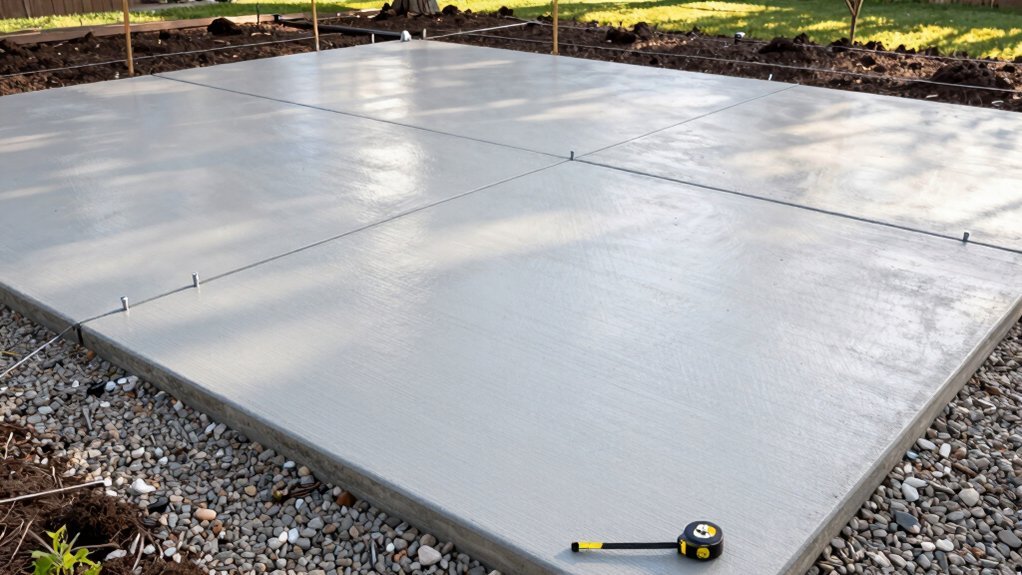
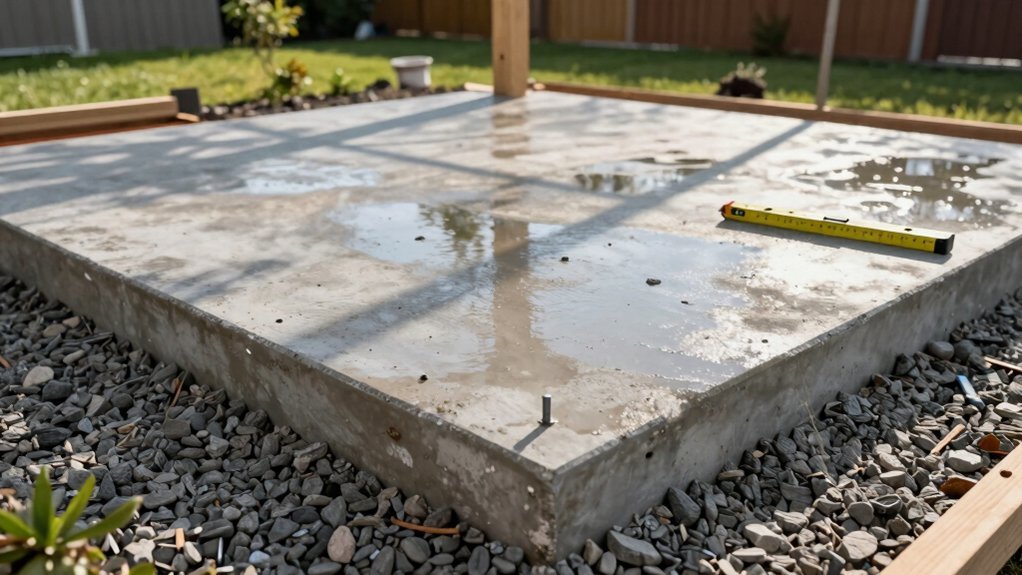
Concrete slabs make sense when you need a solid, level base that can handle heavy foot traffic and ground movement. You’ll find it the most common gazebo foundation, delivering a stable base in areas with freeze-thaw cycles or frequent use. Your slab depth is 3–4 inches of concrete over 4 inches of gravel or crushed rock, and an 8’×10′ slab needs about 1 cubic yard of premixed concrete. Slabs should be fully set and dry before you assemble, generally taking 7–10 days in good weather. They’re durable, low maintenance, ideal for gazebos, especially hardtop and wall-mount varieties. For ground or when permits are required, you can use concrete footings as part of a slab-based system. This option preserves stability while keeping future access options.
Wooden Deck and Other Raised Base Options
Since you’re weighing foundation options after discussing concrete slabs, a wooden deck foundation provides stability for smaller gazebos while usually costing less upfront. A wooden deck base adds aesthetic warmth and can elevate the gazebo, helping with drainage and level support on uneven ground. For deck foundations, you must build the structure to bear the gazebo’s size and weight, with proper framing to distribute loads across the deck. Raised decks require appropriate footings and encasing to resist moisture, rot, and insect damage, and they incur higher long-term maintenance despite lower initial cost.
| Benefit | Consideration |
|---|---|
| Aesthetic warmth | Higher maintenance |
| Elevates for drainage | Requires proper footings and moisture protection |
| Distributes load | Long-term durability varies with maintenance |
If you prioritize upfront savings, expect more upkeep and periodic refinishing later over the years.
Pier/Sonotube and Super Spike Alternatives
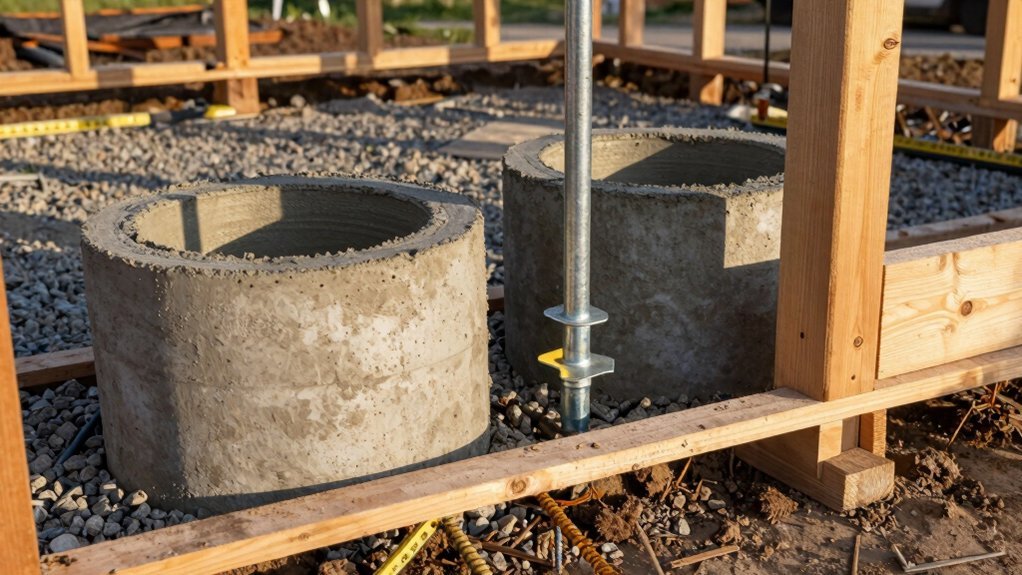
How do pier/sonotube and super spike foundations stack up for gazebos on varied terrain?
Pier/sonotube foundations rely on concrete piers poured into the ground, yielding high load capacity and solid stability on slopes or uneven surfaces. They’re environmentally friendlier when you choose suitable materials, and they’re ideal for heavy structures, though they can cost more and limit size.
Super Spikes, metal spikes driven deep into soil, install quickly and with little maintenance, and you can pair them with other foundations. They offer solid load-bearing for heavier setups but may be less stable on rocky or unstable soils and might require replacement over time.
A combined approach uses piers for primary support with spikes helping initial stabilization on uneven sites. This gives flexibility in terrain conditions.
Installing on an Existing Slab: Bolts, Extensions, and Safety
When you’re installing a gazebo on an existing slab, start by evaluating the slab’s suitability for the load.
- Check thickness and capacity: typical patio slabs are 3–4 inches, with heavier gazebos potentially needing up to 6 inches.
- Bolt strategy: use masonry anchor bolts drilled into the slab perimeter to secure the gazebo to the surface.
- If the slab’s edge is insufficient, extend the foundation beyond it and connect new footings with rebar dowels to the existing slab for stability.
If the slab is unsuitable, consider pouring a new freestanding slab foundation sized for the gazebo, and always follow manufacturer guidance or obtain an engineer evaluation for thick slabs or heavy structures before bolting. Always document your steps for future reference purposes.
Special Considerations for Frost Lines and Cold Climates
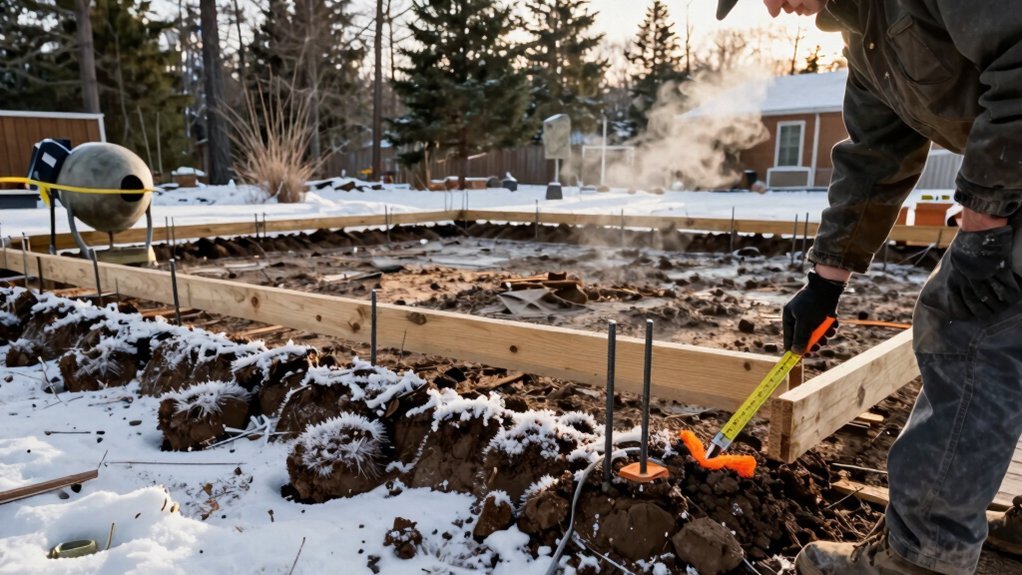
Frost lines determine how deep you must place gazebo footings to prevent movement from freeze–thaw cycles. You tailor footing depth to local frost depth; deeper footings curb heaving in colder climates. Footings should extend 6–12 inches below the local frost line to ensure stability. In very cold areas, such as Maine, frost lines reach 4–5 feet, necessitating similar-depth footings. Structural engineers can provide tailored recommendations based on soil strength and frost depth.
| Aspect | Typical Depth | Notes |
|---|---|---|
| Regional Variation | Varies by region | Must be checked for local frost depth |
| Colder Climates | Deeper required | To stay below frost depth |
| Below Frost Line | 6–12 inches | Add margin for stability |
| Very Cold Areas | 4–5 feet | May equal minimum frost depth |
Consult an engineer for your site before pouring footings.
Planning, Permits, and Professional Guidance
Start by checking local building codes and HOA rules, then map out the permit process and required setbacks. Gather drawings, labeled dimensions, and site photos to speed approvals and show alignment with requirements. Bring in professionals early to confirm placement, drainage, and foundation options, and consider whether the gazebo will be anchored or freestanding to define permit scope.
Planning and Site Prep
Plan ahead by selecting a level, well-drained site and checking township and HOA requirements for permits, size limits, and attachment rules. Then assess the gazebo’s intended use and placement to guide foundation type decisions, while accounting for access paths and nearby hazards. Prepare the area by clearing debris, ensuring drainage away from the foundation, and outlining the gazebo perimeter with stakes and guidelines. Consider professional guidance or contractor assistance for site prep, foundation design, and ensuring compliance with local building codes.
- Verify utilities (811) before digging
- Create a realistic timeline and budget
- Decide between DIY or contracted installation
Permits and Approvals Required
Where do you stand with permits and approvals for a permanent gazebo installation?
First, check your local building codes to determine permit requirements and size limits.
Then verify any HOA rules or approvals needed before you start, including height and proximity restrictions.
Prepare thorough project documentation—drawings with labeled dimensions and site photos—to improve your approval chances.
Ensure your plans specify the foundation type, frost-line considerations, and anchoring method as part of compliance.
Finally, consult with a licensed professional, like an engineer or contractor, for tailored guidance and to meet code requirements.
With clear documentation and professional input, you’ll streamline the review process and reduce the chance of surprises during inspections.
Stay organized, document changes, and keep records accessible for authorities throughout the project phase.
Frequently Asked Questions
What Makes a Gazebo Permanent?
You make a gazebo permanent when you anchor it to an engineered foundation (concrete slab, footings, or a raised deck) that extends below frost line, provides adequate drainage, stays level, and complies with building codes.
What Type of Foundation Is Needed for a Gazebo?
You’re looking at a foundation tailored to your site, typically a concrete slab; alternatives include a gravel base, a wooden deck, or a pier/sonotube system that reaches below the frost line for lasting stability too.
What Are the Footing Requirements for a Gazebo?
Footings should reach below the frost line and match your gazebo’s weight and soil. Typical depths range from 1.5 to 5 feet, with 2–4 feet common; heavier gazebos demand deeper, wider footings and proper anchoring.
How Thick of a Concrete Slab Do I Need for a Gazebo?
Typically, you’ll want a 4-inch concrete slab over a 4-inch gravel base. If your gazebo is large, heavy, or you’re in climates, go thicker or deeper, and allow 7–10 days to cure properly before construction.