
Start by checking if your pavilion is permanent or freestanding, and what that means for permits. Verify setbacks with your municipality and whether it counts as an accessory structure. Decide if you’ll build freestanding or attach it to a deck or house, since that affects approvals. Prepare a site plan with setbacks, wind or snow loads, plus footing details. Gather drawings, engineering if needed, plat records, then map permit process and inspections—more tips await today.
Determine Permit Requirements Based on Permanence and Ground Bearing
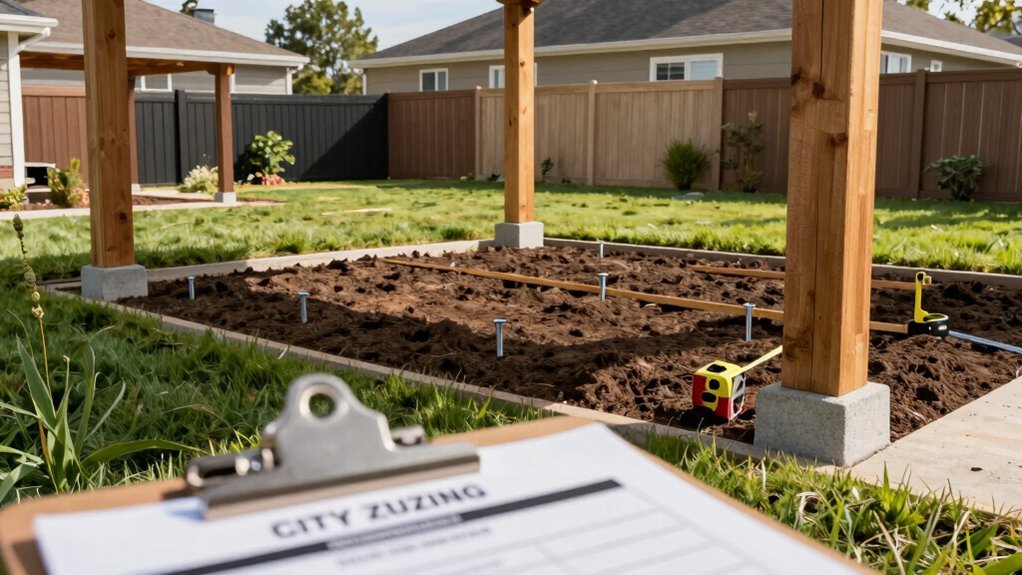
Is your outdoor structure permanent and ground-bearing, or is it a simple freestanding feature? The key factor for permits is permanence. If you attach the structure to your house or it sits on a fixed foundation, most jurisdictions treat it as permanent and likely require a permit.
Smaller freestanding pergolas under typical exemption thresholds—often around 100–120 square feet—may not need a permit in some townships, but rules vary. If your design is deck-integrated or part of an existing deck, it’s more likely to be considered a structural addition, and you’ll probably need one.
Always verify exemption criteria with your local building or zoning department for your municipality, because height limits and setbacks still influence the outcome. Keep records of approvals for future inspections if.
Check Local Municipality Rules for Setbacks and Property-Line Distances
Where you place it matters for setbacks and property-line distances. Local setback distances for pergolas and pavilions typically range from 5 to 15 feet from property lines, varying by jurisdiction. Height limits around 8–10 feet are common in permit-exemption scenarios for freestanding structures. Attached pergolas or pavilions have a higher likelihood of requiring permits and may face stricter setback and connectivity rules. Deck-integrated pergolas/pavilions are often treated as structural additions and may mandate a building permit and deck capacity verification. Always verify exemption criteria and exact setback rules with the local building or zoning department before construction.
Setbacks vary 5–15 ft; freestanding limits 8–10 ft; verify permits with your department.
- Check local setback ranges (5-15 ft) by jurisdiction.
- Note height limits around 8-10 ft for freestanding permits.
- Distinguish attached vs freestanding and deck rules; verify with department.
Decide Between Freestanding Versus Attached Pavilion and How It Affects Approvals
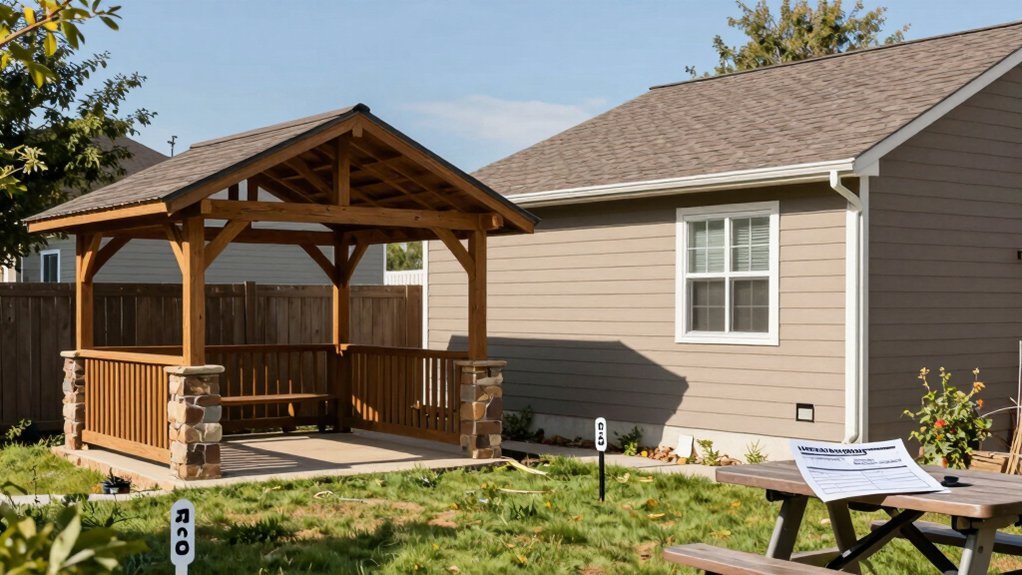
You’ll compare freestanding and attached designs because your choice affects whether you’ll need a permit.
Freestanding structures under common sizes often qualify for exemption, while attached ones usually want permits and stricter reviews.
Check local rules for setbacks and deck integration, since height, placement, and connection to the house can tilt approvals toward stricter scrutiny.
Freestanding Vs Attached
How you choose between a freestanding pavilion and an attached one affects permit eligibility more than you might think. Freestanding pergolas under 100–120 square feet and not attached are more likely to be exempt, but attachability raises permit chances. Deck-based options can count as structural additions, so a permit may be required if the deck can’t support weight. Local rules vary by township, so you’ll need to verify with your building office for freestanding versus attached installs. Height and setbacks influence decisions, with dwelling-connected structures drawing scrutiny. Even freestanding, deep footings or attachments near the house can trigger permits.
- Assess size to gauge exemption risk.
- Check if the structure is deck-based and load-bearing.
- Verify local exemptions and placement rules with township.
Approval Implications
When you choose freestanding versus attached, it directly shapes your approval path. Freestanding pergolas under about 100–120 square feet often qualify for permit exemptions in many townships, trimming time and cost. If you attach to the house or deck, expect a formal permit because your structure connects to the dwelling and bears additional load. Exemption criteria hinge on local rules, height limits (roughly 8–10 feet for exempt structures), and whether the design is temporary or decorative. Deep footings or any attachment to the home raise permit risk, so you’ll want to verify with the local building office. Deck-based installations are usually treated as structural additions and may require permits and deck-capability checks to ensure safety. This choice also guides inspection timelines and fees upfront.
Prepare Precise Site Plans Including Dimensions, Setbacks, and Wind/Snow Loads
Precisely drawn site plans reveal every dimension, the setbacks, and how the pavilion sits on the property line in relation to nearby structures, with wind and snow loads, design pressures, and required structural considerations clearly specified. You’ll include anchoring details for footings, frost-line depth (typically 30–36 inches), and footing type, so foundations stay sound. Represent utilities and drainage considerations, such as stormwater paths, and show how the pavilion affects them. Verify compliance with zoning, setbacks, maximum coverage, and HOA rules to streamline permitting. Use the following checklist to organize critical details:
- Dimensions, setbacks, and siting relative to lines and structures
- Wind/snow loads, pressure calculations, and structural notes
- Frost depth, footing type, and anchoring methods
Keep plans precise to avoid delays later.
Understand Zoning Classifications and Accessory-Structure Regulations
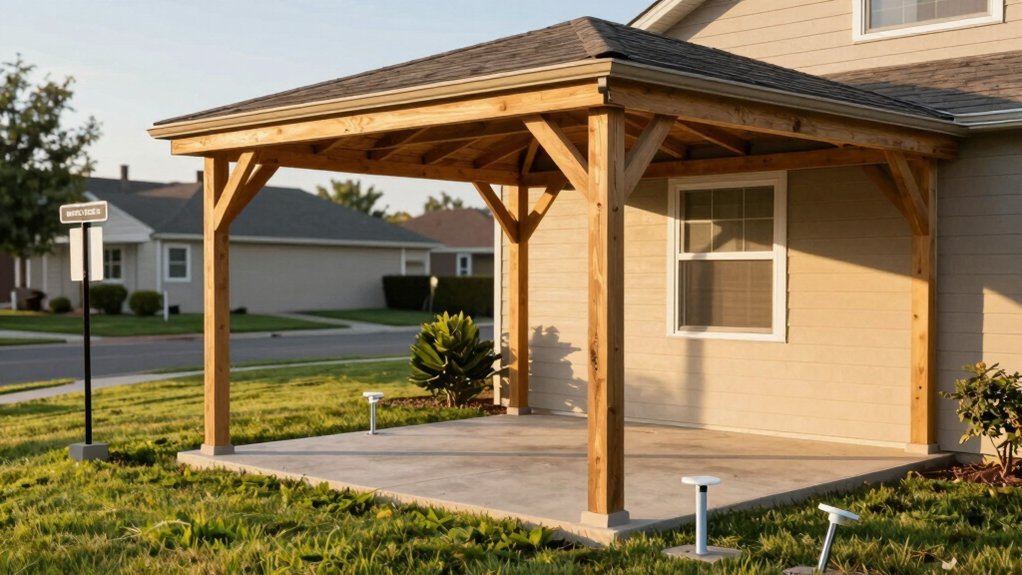
Understanding zoning classifications helps you determine whether your pavilion counts as an accessory structure and which rules apply.
Accessory-structure regulations guide size limits, setbacks, and permitting requirements so you can plan accordingly.
Since setbacks and permits vary by jurisdiction, check your local zoning office early to confirm what’s needed for your site.
Zoning Classifications Overview
Zoning classifications define what you can build where, and they shape whether accessory structures like pergolas or pavilions are allowed, how big they can be, and where they must sit on your property. In Pennsylvania, exemptions exist for freestanding structures under about 100–120 square feet, but size, height, and placement near or away from the house affect eligibility. Deck-integrated units may need permits, since decks are structural and must meet code for added loads. Local rules also set setbacks, height limits, and whether you can attach or keep a structure freestanding, which influence permit needs. Always check your township or building office for exemption criteria and requirements, as rules vary across municipalities.
1) Setbacks and attachment rules
2) Size and height limits
3) Deck integration or utilities triggering permits
Always assess professional advice early, carefully.
Accessory Structures Rules
Do you know how accessory structures like pergolas and pavilions are regulated under zoning rules? Accessory structures are treated separately from the house, and permit requirements hinge on size, height, whether they’re attached, and local regulations. In Pennsylvania, many freestanding pergolas under roughly 100–120 square feet and heights around 8–10 feet may qualify for permit exemption, though exact rules vary by township. Deck-integrated pergolas or pavilions are often considered structural additions and may require permits and structural compliance with the deck. Local HOAs can impose additional restrictions on size, location, color, materials, and architectural review; violations can lead to fines or removal. Always verify exemption criteria and height requirements with the local building or zoning department before planning for approval and permits as needed.
Setbacks and Permits
Setbacks and permits hinge on your municipality’s rules, and the specifics can change by jurisdiction. Permits depend on size, permanence, and whether your pergola is attached to the house or has a foundation. In Pennsylvania, freestanding pergolas under about 100–120 square feet often qualify for permit exemptions, while attached or deeper-footing installations typically trigger permitting. Setback requirements vary by jurisdiction and commonly range from 5 to 15 feet from property lines, increasing for taller or attached structures. Deck-integrated pergolas/pavilions are often treated as structural additions and may require deck-related permits and load considerations. Always verify exemption criteria, setbacks, and connectivity rules with the local building or zoning department before construction.
1) Verify exemptions with city.
2) Confirm setbacks for lot.
3) Check attachment rules.
Navigate HOA Rules and Neighborhood Restrictions That Impact Permitting
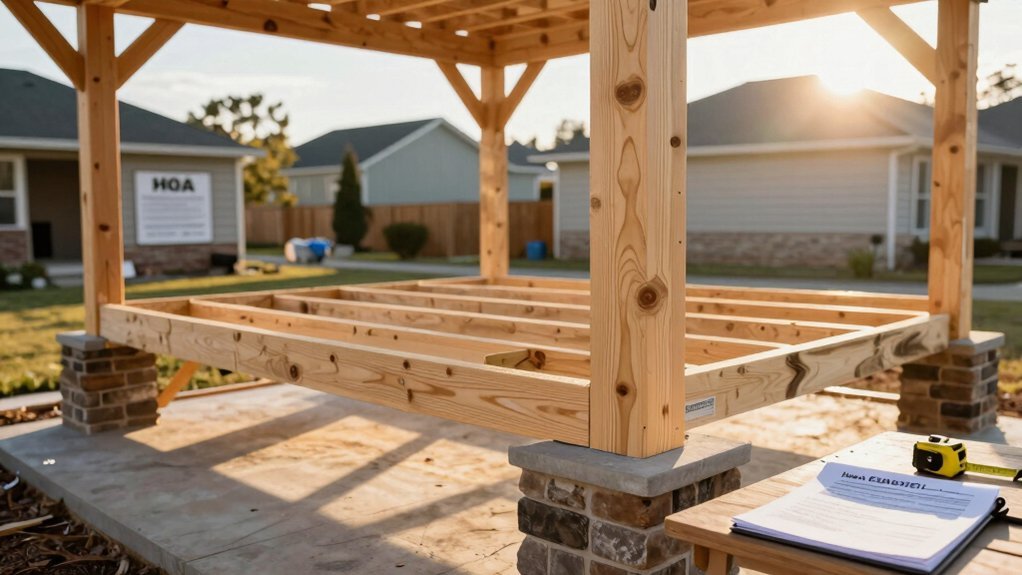
Where do HOA rules fit in when you plan a pergola? HOA covenants and neighborhood guidelines can add or subtract permit hurdles beyond the town’s rules. In Pennsylvania, small freestanding pergolas under 100–120 square feet and not attached to a house often qualify for permit exemptions, but rules vary by township, so verify with the local code office.
Deck-integrated pergolas or pavilions are more likely to require permits because they’re treated as structural additions to an existing deck. Exemption considerations usually hinge on distance from the house, height limits (often 8–10 feet), and whether the structure is temporary or decorative. If the pergola is attached to the dwelling or has deep footings, permitting risk rises and oversight tightens. Always check zoning guidelines before construction.
Gather Necessary Drawings: Blueprints, Engineering Details, Plats, and Who Provides Them
Typically, you’ll start by gathering several types of drawings that spell out what you’re building and how it’ll go up, including blueprints, engineering details if needed, and plats showing your lot. Construction drawings outline the proposed structure, methods, materials, and techniques, while engineering details show the nuts-and-bolts when required. Plat drawings depict boundaries, utilities, and existing structures, and may be free if you already have them.
Who provides them matters, and the offering varies. Consider these sources:
- Blueprints from a design professional or contractor
- Engineering drawings from an engineer if required (costs often $800+ depending on scope)
- Plat drawings from the local municipality or your records (may be free)
Understanding who provides them helps you plan timing and costs ahead effectively.
Learn the Permit Application Process, Required Documents, and Typical Fees
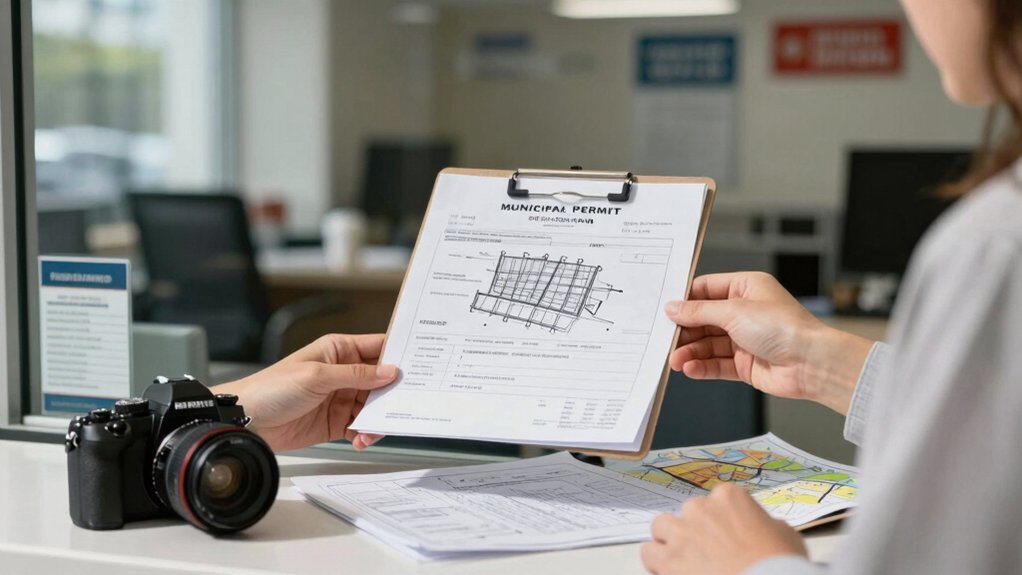
First, you’ll review the Required Documents List and assemble plans, site layouts, setback calculations, and evidence of structural integrity.
Then you’ll check the Typical Permit Fees for your municipality and budget accordingly, since fees can vary widely.
Finally, you’ll submit everything to your local building department and prepare for any zoning clearances and inspections that may follow.
Required Documents List
Ever wonder what documents you’ll need to pull together for an outdoor pavilion permit? The exact list hinges on your municipality, size, permanence, and whether the structure attaches to your dwelling. Small freestanding pergolas under about 100–120 square feet and not attached are often exempt, depending on local rules. For deck-integrated pavilions, you’ll likely face additional documentation because they affect a structural element of the deck. Exemptions usually hinge on whether the structure is permanent and physically tied to the ground or house. When a permit is required, prepare a concise package that typically includes:
- Site plans showing footprint and setbacks
- Layout drawings with dimensions
- Any engineering or zoning clearance the authority asks for. Ask your local official to confirm specifics.
Typical Permit Fees
Where do permit fees land for outdoor pavilions? Fees vary by location and project scope, influenced by whether the structure is detached or attached and by local processing requirements. In practice, you’ll see higher costs for attached designs or projects that trigger engineering, safety, or review upgrades. The application process usually requires site plans, layout drawings, dimensions, and, depending on the project, engineering documentation.
For freestanding pavilions, many jurisdictions classify them as accessory structures, which can affect review timelines and permit calculations. Exemption thresholds exist, often for freestanding structures under 100–120 square feet or certain heights, but you’ll need to verify with your local office. In some areas, deck-integrated pergolas may require deck-related reviews even if the pavilion itself could be exempt for you.
Plan for Inspections at Multiple Construction Stages
How can you keep a project on track while meeting every requirement for safety and approvals? Plan for inspections at key milestones to prove compliance with local codes and permit conditions. Common inspection points include foundation/footing verification, framing or structural connections, and final occupancy or use clearance. In larger or ground-anchored projects, local jurisdictions may require engineered drawings to be reviewed and approved before inspections. Schedule inspections to align with milestones: after footing pour, after framing, and after final completion with site clean-up. Keep documentation—plans, permits, approvals—accessible for inspectors at each stage to streamline review and avoid delays. By coordinating with your contractor and the building department, you ensure a smoother process and fewer surprises. This proactive approach saves time, money, and headaches overall.
Consider Permit-Free or Alternative Options for Non-Permanent Setups
Non-permanent setups can fall under permit-free options, but you must verify local exemptions and remaining requirements with your township. In Pennsylvania, freestanding pergolas under 100–120 square feet not attached to the house often qualify for exemption, but exact rules vary by township. Height limits range around 8–10 feet; deeply footing or deck-attached installations increase permit risk. Deck-integrated pergolas are usually treated as structural additions and may require a permit depending on codes and whether the deck can support the added load. Always confirm exemption criteria with your building or zoning department, as rules differ between Cheltenham and Abington Townships. Even if it seems permit-free, check setbacks and connectivity rules to avoid later issues. For clarity.
| Type | Likelihood | Note |
|---|---|---|
| Freestanding | Exempt | Verify |
| Decked | May | Check |
Frequently Asked Questions
Do You Have to Pull a Permit to Build a Pergola?
It depends on your location, but you usually need a permit for attached or sizable pergolas; check your township’s rules, as exemptions vary, and confirm with the building department before starting to avoid fines later.
How Close Can a Pavilion Be to a House?
How close you can place it depends on your local codes; generally, freestanding pavilions must maintain several feet from the house, and attached or large ones often require setbacks or a permit before construction approval.
Do You Need a Permit for Pavers in FL?
Yes, it’s likely you may need a permit for pavers in Florida, especially if they affect drainage, slope, or create hardscape. Check with your building department, because some decorative projects are exempt in your area.
Do I Need a Permit for a Free Standing Gazebo?
Depends on your area, but you usually won’t need a permit for a freestanding gazebo under size limits. Verify with your building department, ensure height and setbacks meet code, and confirm exemptions before you build.