
Design your outdoor kitchen as a seamless extension of indoors, with large glass walls, matching stone or wood finishes, and straight sightlines to the dining lounge. Plan zones for prep, cooking, service, and cleanup, using weatherproof materials that stay stylish year after year. Layer lighting for tasks, ambiance, and safety, and add infrared heat and fire features for year‑round comfort. Plant-forward dining and movable planters keep seats flexible. Keep exploring, and you’ll uncover more ideas.
Seamless Indoor–Outdoor Flow With Garden Integration
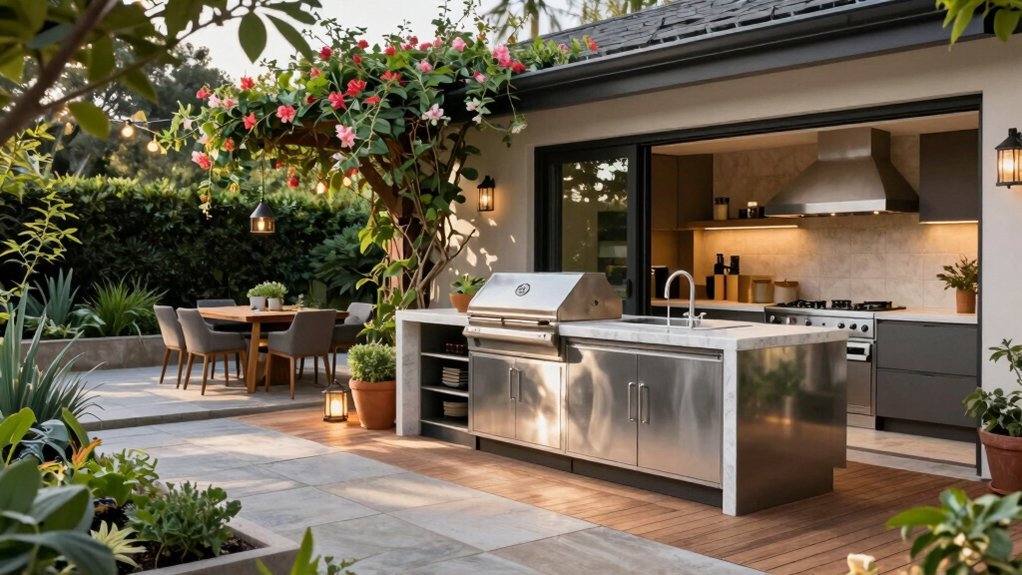
Ever wondered how to make your outdoor kitchen feel like a natural extension of your home? You connect indoor and outdoor spaces with large kitchen windows and glass walls so you can service from inside while you cook outside.
Match materials and textures—stone, wood cabinetry—so the transition feels cohesive and intentional. You’ll gain direct access routes and uninterrupted sightlines to your dining and living areas, supporting fluid entertaining. Biophilic views of the garden and landscape reinforce that continuity, making the outdoor space feel like part of the home.
Plan layouts place prep, cooking, serving, and cleaning zones in logical proximity, and use weather-resistant finishes to keep durability without sacrificing style. This approach invites easy hosting while preserving comfort, weather resilience, and a seamless look.
Layered Lighting and Fire Features for Year‑Round Ambiance
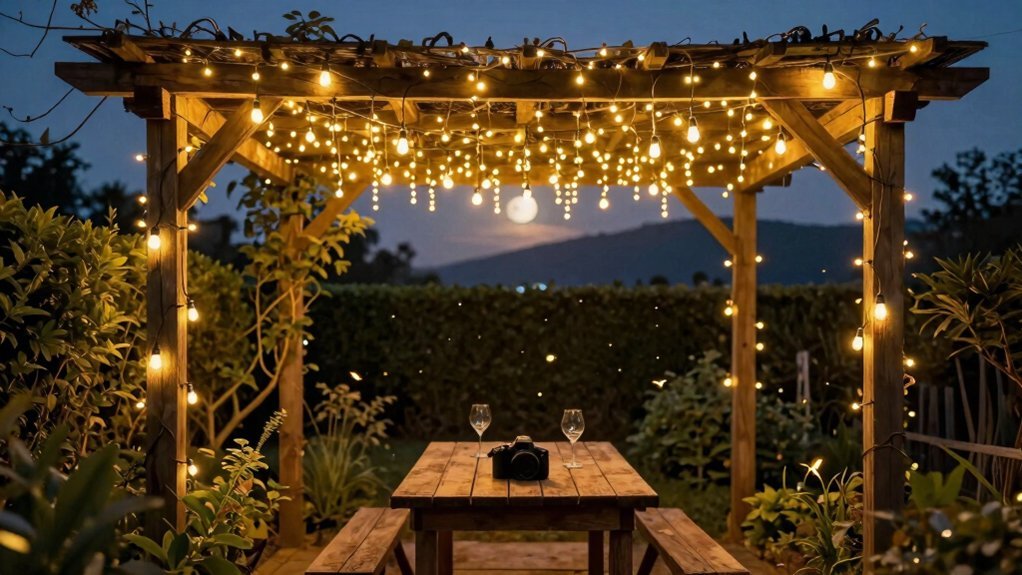
How can layered lighting and fire features transform your outdoor kitchen into a usable, inviting space year round? Use bright task lighting for cooking, plus ambient and ornamental lighting for dining, with dimmable controls to tune mood as activities change. For year‑round comfort, add infrared ceiling heaters and adjustable louvers or weather shades so heat and shade adapt with the seasons. Fire features—integrated fireplaces or fire pits—extend cooler evenings and create focal points near cooking and dining zones. Plan lighting near stairs, pathways, and openings to interiors, keeping visibility high while preserving safety and visual flow. Choose weather‑resistant materials and finishes for fixtures and fire features, coordinating with stone, wood, and brick textures used in your outdoor kitchen. This ensures durability and cohesive style.
Flexible, Plant‑Forward Dining Zones and Seating
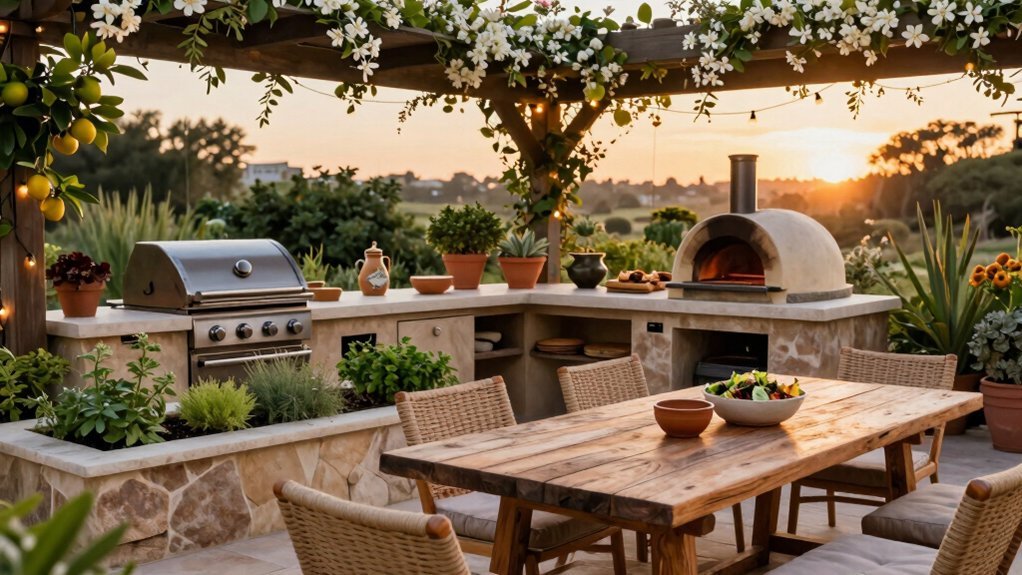
Why settle for fixed seating when you can create flexible, plant-forward dining zones that adapt to any gathering? You’ll mix lush greenery with seating that can be rearranged for small dinners or big parties, keeping the flow open and inviting.
Create flexible, plant-forward dining zones that adapt to any gathering.
Place fresh herbs and edible plants near prep spaces to cut trips for ingredients and boost flavors, while movable planters and raised beds carve a gentle barrier between cooking and dining without feeling closed in.
Seasonal container gardens soften hardscape edges, creating evolving visual interest around the table.
Coordinate lighting and shade with your plantings so you can dine comfortably from day into night, rain or shine, with diners protected yet connected to the garden.
This approach keeps gatherings flexible and deliciously fresh today.
Frequently Asked Questions
How to Conceal Kitchen Clutter From Guests During Events?
Hide your kitchen clutter by tucking gadgets into cabinets and using a rolling cart, then set up staging area off to side. Clear counters, use decorative trays, and keep trash and recycling out of sight.
What Are Durable, Weatherproof Materials for Year-Round Use?
Choose materials like stainless steel, powder-coated aluminum, and concrete for frame work; porcelain or ceramic tiles, quartzite or granite countertops; teak or polymer wicker; and polymer decking, all designed to withstand year‑round weather without warping.
How Can I Optimize Circulation Without Crowding Work Zones?
You should map clear paths, keep traffic lanes at least 3 feet wide, and place work zones with 4–5 feet buffer gaps. Use islands, movable seating, and zoning cues to guide flow and prevent bottlenecks.
Which Edible Landscape Features Attract Pollinators to the Kitchen Garden?
Plant flowering herbs, nasturtiums, borage, dill, fennel, and cosmos around edibles; include nectar-rich veggies like squash blossoms and berry shrubs to attract pollinators, ensure blooms, don’t use pesticides, and provide water sources nearby for them.
How Can Seating Be Versatile for Different Group Sizes?
Use modular benches and movable stools, mix fixed seating with folding chairs, and keep an expandable central table. You’ll adjust layout easily for small or large groups, storing extras out of sight when not needed.